



Carved Hope Chest
A carved hope chest offers solid construction and deep storage, bringing historical character and practical utility into any room.
Carved Hope Chest
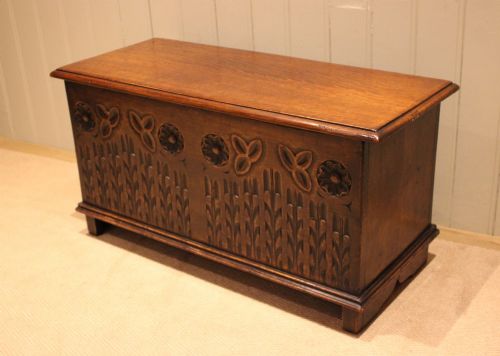
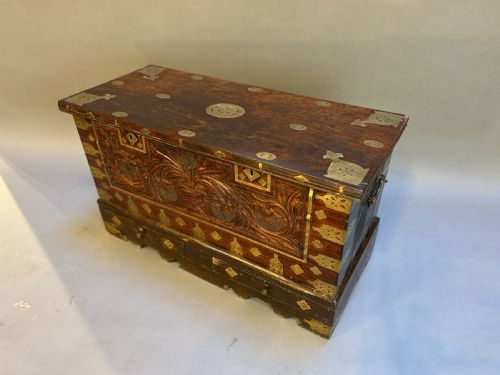
A carved hope chest, frequently listed as a coffer, trunk, or blanket box, serves as a traditional storage piece designed to hold household linens and personal belongings. These items range from early seventeenth century oak examples to later oriental camphor wood trunks and nineteenth century colonial imports.
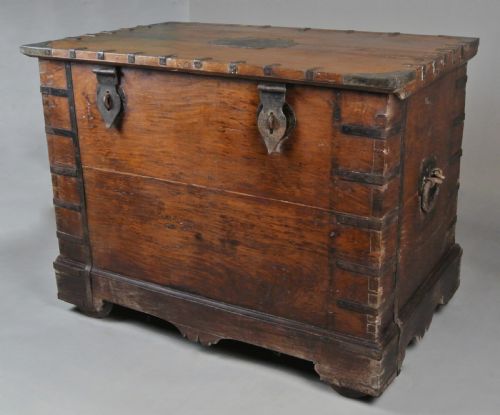
The most common forms on this page include seventeenth century oak coffers alongside twentieth century Chinese export camphor wood chests and nineteenth century hardwood pieces. Buyers encounter various regional interpretations, including Spanish painted blanket chests and Anglo-Indian teak trunks.
Makers and workshops constructed these storage pieces for domestic utility, often utilising robust timber framing to ensure longevity. The variety spans simple regional panels to heavily carved oriental surfaces and iron bound constructions.
Assessing Quality
Quality rests in the integrity of the timber framing, the crispness of the hand carving, and the retention of original hardware such as brass mounts or iron hinges. Pieces retaining their original structural joints and untreated timber surfaces command greater interest.
The sophistication of the decorative carving and the selection of materials distinguish standard utility boxes from monumental dowry chests. Secondary alterations or replaced panels affect the overall integrity of period pieces.
Listings span from the 17th Century to the 1930s, featuring oak, camphor wood, teak, and pine across diverse regional styles.
The Carved Hope Chest Glossary
- Coffer
- A traditional wooden chest used for storing valuables and household goods. These pieces often feature hinged lids and sturdy panelled construction.
- Dowry chest
- A storage box prepared for a bride to hold her wedding linens and personal possessions. They typically display richer ornamentation and substantial proportions.
- Camphor wood
- An aromatic hardwood utilised extensively in oriental trunk production to deter insects. The timber releases a distinctive fragrance and takes a fine carved finish.
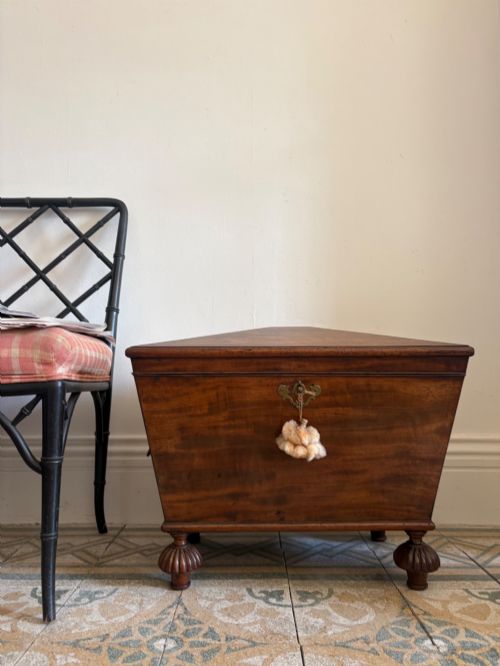
- Sarcophagus cellarette
- A container shaped like a classical sarcophagus, designed for cooling or storing bottles. These items often include lead liners.
- Limed oak
- A wood finish treatment applied to oak to lighten the tone and highlight the grain. This technique appears in Arts and Crafts and Cotswold school pieces.
Carved Hope Chest: Frequently Asked Questions
What is a carved hope chest?
A carved hope chest is a traditional storage box used historically to accumulate household linens, clothing, and valuables for marriage. These pieces function today as versatile coffee tables, blanket boxes, and focal storage items in living spaces.
They appear in various regional styles, ranging from British oak coffers to oriental camphor wood trunks and Spanish painted blanket chests.
How do I date an oak coffer?
Dating relies on examining the construction methods, tool marks, timber shrinkage, and style of carving. Early seventeenth century pieces display pegged mortise and tenon joints and hand-riven panels.
Later nineteenth century pieces mimicking earlier styles often reveal machine sawn timber and different internal construction details upon closer inspection.
Where were camphor wood chests made?
Camphor wood chests were produced primarily in China and the wider East for export to Western markets during the nineteenth and early twentieth centuries. The fragrant wood protected stored textiles from moths and damp conditions.
These trunks frequently feature intricate relief carvings depicting figures, landscapes, and maritime scenes.
Can I use a chest as a coffee table?
These chests provide excellent proportions and flat lids that make them ideal for use as coffee tables in domestic interiors. Their sturdy construction easily supports books and decorative objects while offering hidden storage.
Ensure the lid remains stable and consider placing felt pads beneath items to protect the historic timber surface.
What is the difference between a coffer and a trunk?
A coffer generally denotes a heavy wooden box of joined or panelled construction associated with European domestic and ecclesiastical interiors. A trunk or chest often implies travel utility, sometimes featuring metal bindings, carrying handles, or exotic timbers like teak and camphor.
Both terms overlap considerably in historical inventories and modern marketplace descriptions.