

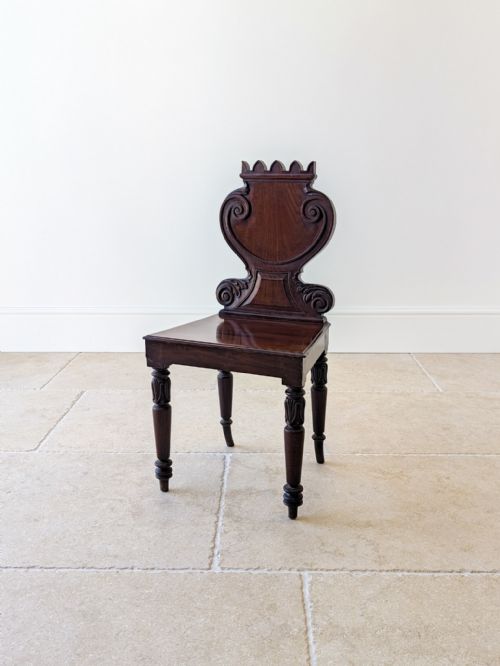
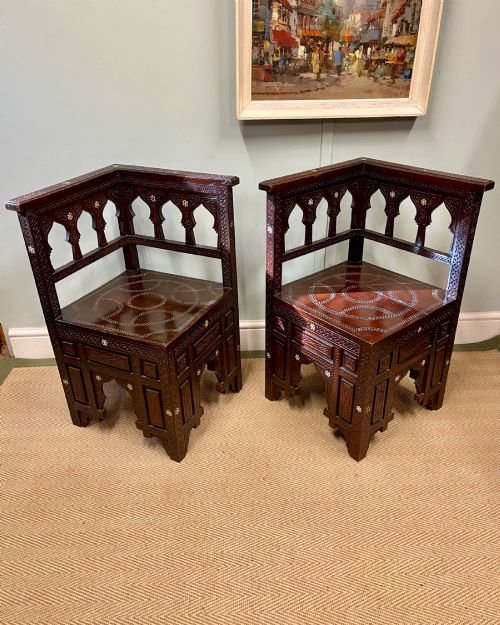
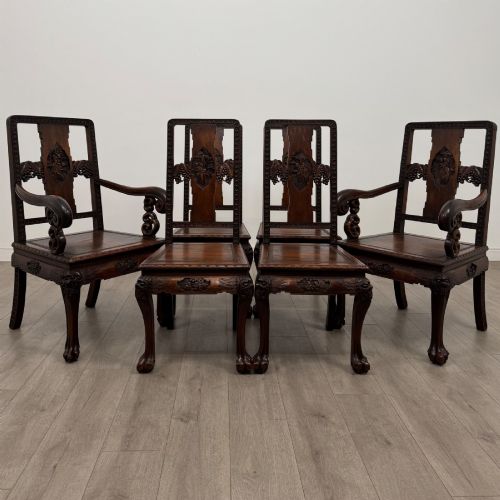
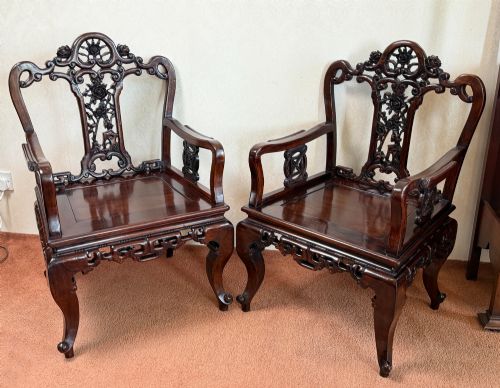



Carved Hardwood Side Chairs
These carved hardwood side chairs span diverse regional workshops from the seventeenth century through the twentieth, offering robust timber frames and intricate relief work for modern interiors.
Carved Hardwood Side Chairs
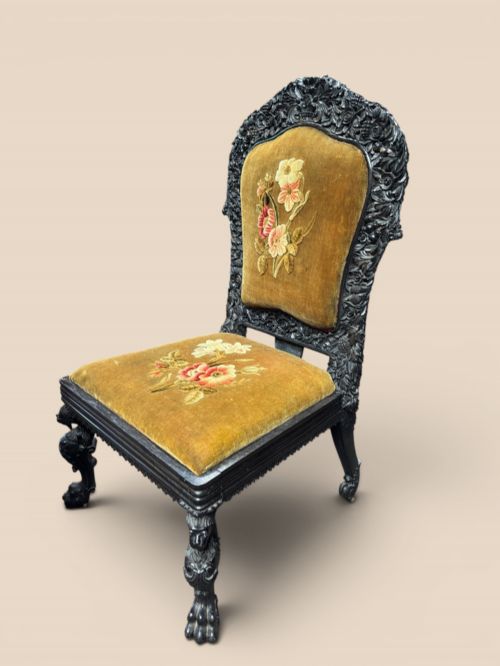
Carved hardwood side chairs encompass seating furniture produced across various global regions, featuring dense timber structures ornamented with detailed chisel work. When exploring carved hardwood side chairs on this page, buyers regularly encounter nineteenth-century examples alongside seventeenth-century survivals and twentieth-century interpretations.
The selection ranges widely in regional design, taking in Anglo-Indian, Chinese Qing Dynasty, Indo-Portuguese, and Art Nouveau influences. Forms vary from straightforward side and hall chairs to grander throne chairs and elbow seats.
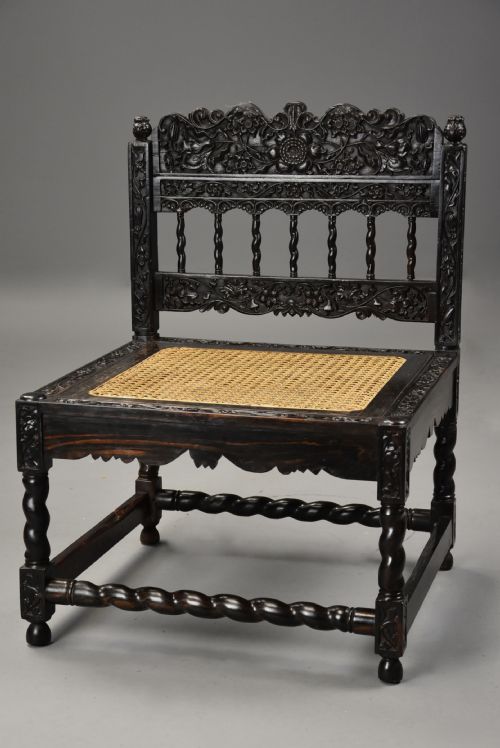
Makers utilised resilient timbers such as mahogany, rosewood, ebony, padouk, and hongmu to construct these sturdy frames. Many pieces incorporate secondary elements like cane seating, marble inserts, or textile upholstery including velvet and thread.
Materials and Construction
Makers relied upon dense tropical and native hardwoods, notably rosewood, mahogany, ebony, and padouk, to build stable frames capable of supporting deep, intricate relief carving. These heavy timbers were selected for their natural strength and rich grain patterns, which responded well to hand-chiselling.
Construction techniques combined traditional joinery with surface ornamentation, including pierced woodwork, lacquering, and turning. Certain regions added supportive elements such as woven cane panels or contrasting marble inserts to seat and back components.
Carved Hardwood Side Chairs Retail Price Guide 2026
Typical asking prices for carved hardwood side chairs among the pieces listed under this phrase on Sellingantiques today, from the lower quarter to the upper quarter. They describe what is for sale here now, not the wider market.
Listings feature timbers including mahogany, rosewood, ebony, and padouk, alongside decorative cane and marble elements.
Judging Quality and Execution
The distinction between ordinary and exceptional examples rests in the depth and crispness of the hand-carved ornamentation. Superior pieces display fluid, deeply undercut motifs where the artisan has worked the timber with confident precision, whereas lesser items show shallow, mechanical stamping.
Structural integrity and the selection of dense, unblemished hardwoods further separate the finest work from standard production. Well-preserved original surfaces, whether polished timber or traditional lacquer, retain a depth of character that heavy restoration or modern refinishing obscures.
The Carved Hardwood Side Chairs Glossary
- Side Chair
- A chair without arms, designed primarily for dining or occasional use around a room. These forms make up a significant portion of the regional varieties seen here.
- Hardwood
- Timber derived from broad-leaved angiosperm trees, valued for its density and durability. Rosewood, ebony, mahogany, and padouk fall into this category.
- Cane
- Material woven from the peeled outer bark of rattan palms, utilised to create breathable seat and back panels. It appears frequently on regional seating from various periods.
- Anglo-Indian
- A style describing furniture made in India by local artisans for British patrons during the colonial period. These pieces often fuse traditional Indian carving motifs with European chair forms.
Carved Hardwood Side Chairs: Frequently Asked Questions
How do I identify a nineteenth-century chair?
Nineteenth-century examples typically display specific timber choices, construction methods, and regional carving styles associated with the period. Examining the underside and joinery reveals hand-tool marks and natural ageing consistent with the era.
Comparing the decorative motifs to documented regional pieces helps confirm the date and origin. Artisans of this time often combined traditional local techniques with influences from trade and colonisation.
Where were these chairs used historically?
These seating items served multiple functions in domestic and official settings, acting as hall furniture, dining seats, or decorative accent pieces. Grand reception rooms and parlours often housed matching pairs or larger sets.
In colonial and trade contexts, they furnished residences of merchants and officials, reflecting both local craftsmanship and international tastes. Their robust timber construction made them suitable for daily use in diverse climates.
How should I care for hardwood furniture?
Maintaining dense timber frames requires stable environmental conditions away from direct heat sources and extreme humidity fluctuations. Regular dusting with a soft, dry cloth prevents particulate build-up on intricate carvings.
Applying occasional appropriate wax preserves the natural finish of woods like rosewood or mahogany without sealing the grain. Avoiding harsh chemical cleaners protects both the timber surface and any integrated cane or lacquer work.
What is the difference between an armchair and a side chair?
Side chairs are built without armrests, making them compact and versatile for placement around dining tables or along hallways. Armchairs include integrated elbow supports, offering a more formal or commanding presence.
Both forms utilise similar dense hardwoods and regional carving vocabularies within the same stylistic groups. The choice between them depends on the intended placement and the desired seating comfort.