









Carved Hardwood Panels
These carved hardwood panels bring deep relief, intricate joinery and rich timber grain straight from nineteenth-century workshops into modern rooms.
Carved Hardwood Panels
When you search for carved hardwood panels, you encounter architectural fragments, room dividers and decorative inserts from various Asian and Victorian traditions. These objects range from deep relief wall sections and folding screen segments to standalone display pieces.
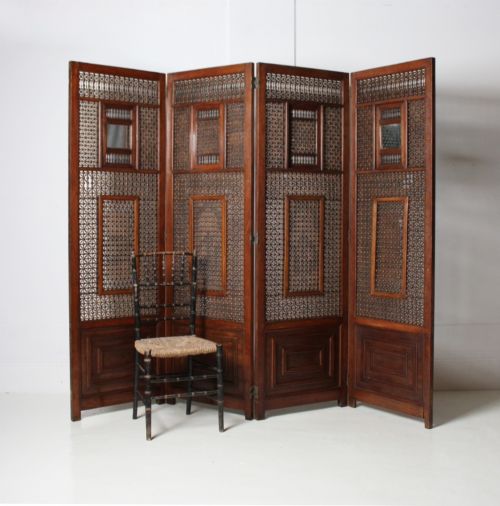
The pieces on this page lean heavily towards nineteenth-century Chinese and Indian origins, alongside Japanese screens and Indonesian tribal doors. You will frequently find them functioning as wall art, panel inserts or standalone partitions.
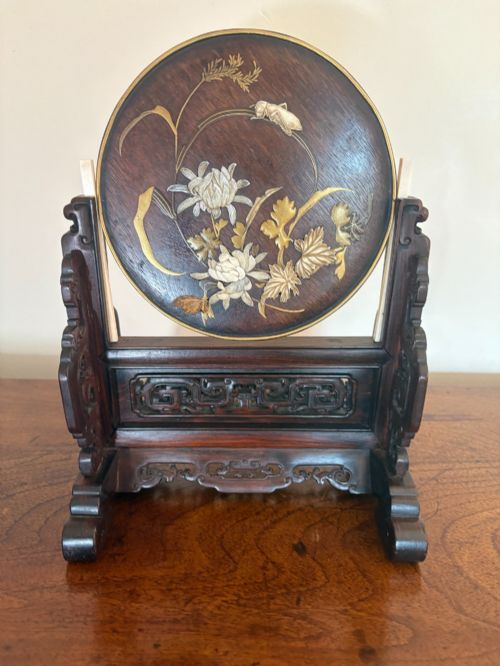
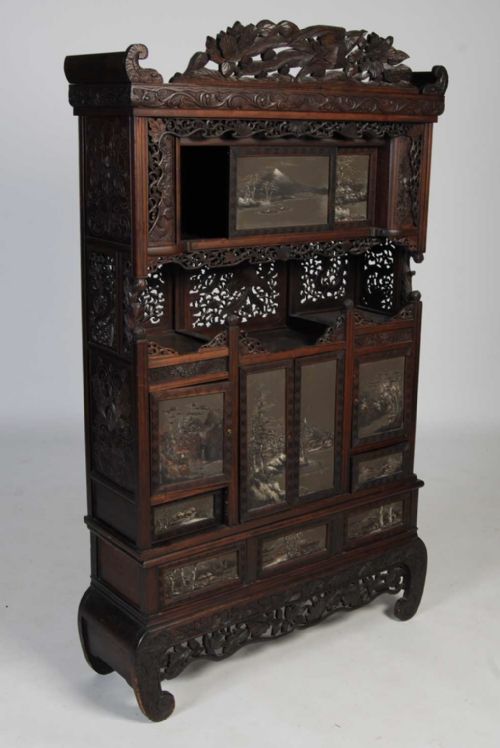
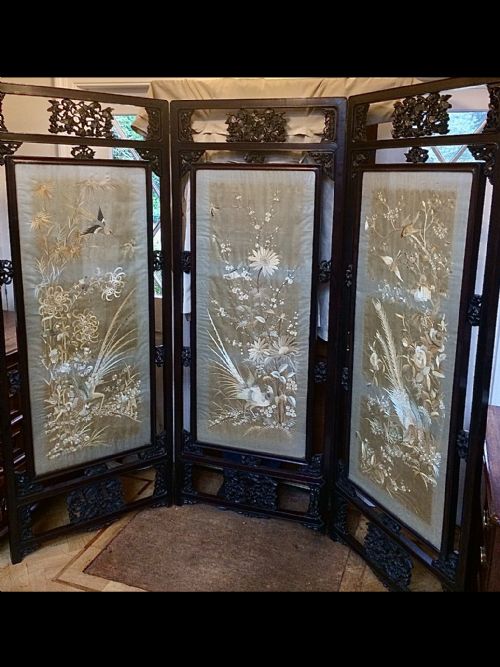
Many examples incorporate dense timbers alongside secondary materials such as silk, bone, brass and marble inserts. Their forms vary from flat wall-mounted carvings to multi-fold screens and table screen components.
How they were made
Maker-carvers utilised dense tropical timbers such as teak, padauk and rosewood, which allowed for crisp undercutting and sharp relief without splintering. These heavy woods were seasoned carefully before being worked with chisels and gouges.
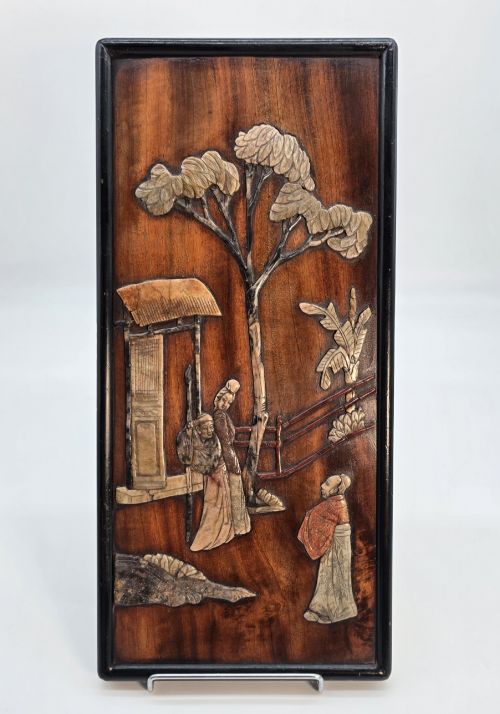
Many items combine the carved timber framework with contrasting decorative elements, integrating silk embroidery, inlaid bone, brass wire or carved stone panels. Joinery relied on traditional mortise and tenon techniques rather than metal fasteners.
Carved Hardwood Panels Retail Price Guide 2026
Typical asking prices for carved hardwood panels among the pieces listed under this phrase on Sellingantiques today, from the lower quarter to the upper quarter. They describe what is for sale here now, not the wider market.
Listings feature items spanning the Victorian era through the 1930s, utilising rosewood, teak, brass and silk.
What varies in quality
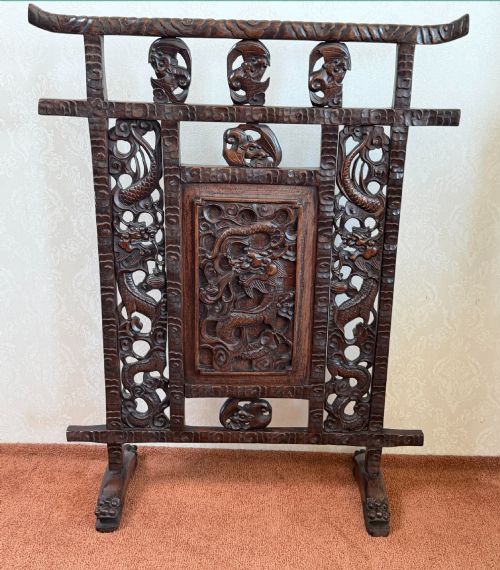
The depth and undercut definition of the carving separate standard decorative work from master craftsmanship. Superior panels show crisp detail in foliage, dragons or figures without relying on surface putty to hide faults.
The selection and stability of the timber dictate longevity, with well-figured grain and tight joints commanding greater respect. Panels that retain their original inset panels, whether silk or stone, hold more integrity than modified examples.
The Carved Hardwood Panels Glossary
- Mashrabiya
- An architectural element of turned wood grilles used in windows and screens. It provides ventilation and shade while maintaining privacy.
- Shibayama
- A Japanese craft technique using inlaid precious materials such as shell, bone, ivory and horn. These are set into wood or lacquer to create pictorial scenes.
- Padauk
- A heavy, durable tropical hardwood noted for its reddish-brown colour and fine grain. It accepts deep carving exceptionally well.
- Mortise and tenon
- A traditional joint where a projecting tenon fits tightly into a matching cavity, securing wooden frames without nails.
- Cloisonné
- An enamelwork technique where metal wire forms compartments on a base, which are then filled with coloured paste and fired.
Carved Hardwood Panels: Frequently Asked Questions
How do I hang a heavy wooden panel safely?
Heavy panels require sturdy wall anchors and brackets screwed directly into timber studs or masonry supports. Distribute the weight evenly across multiple fixing points to protect the ancient joinery.
Avoid hanging large carvings from single picture wires attached only to decorative upper moulding. Consult a professional installer if the timber weight exceeds standard domestic drywall capacity.
How should I clean carved hardwood?
Dust the deep recesses regularly with a soft-bristled brush or a dry microfiber cloth. Prevent moisture buildup in the carved crevices by avoiding wet cloths and chemical polishes.
Apply a light coat of microcrystalline wax sparingly once a year if the timber appears dry. This protects the historic surface without attracting dust or altering the natural patina.
What is the difference between a table screen and a wall panel?
Table screens sit on dedicated carved stands and were traditionally used on scholar desks to block drafts or frame views. Wall panels are flat or framed sections designed specifically for architectural mounting.
While both feature intricate carving, table screens often incorporate delicate silk embroidery or stone inserts. Wall panels generally possess heavier framing suited for vertical display.
How can I tell the period of a carved panel?
Examine the tool marks, timber shrinkage and wear patterns visible on the reverse side of the panel. Nineteenth-century pieces often display hand-sawn board marks and authentic patination from age.
Compare the stylistic motifs, such as Qing Dynasty dragon carvings or Meiji period inlay work, with documented examples. Tool technology and assembly methods also provide clear clues to the manufacturing era.