


Carved Hardwood Elephant
A carved hardwood elephant brings the weight of colonial workshops and nineteenth-century craftsmanship directly into a room.
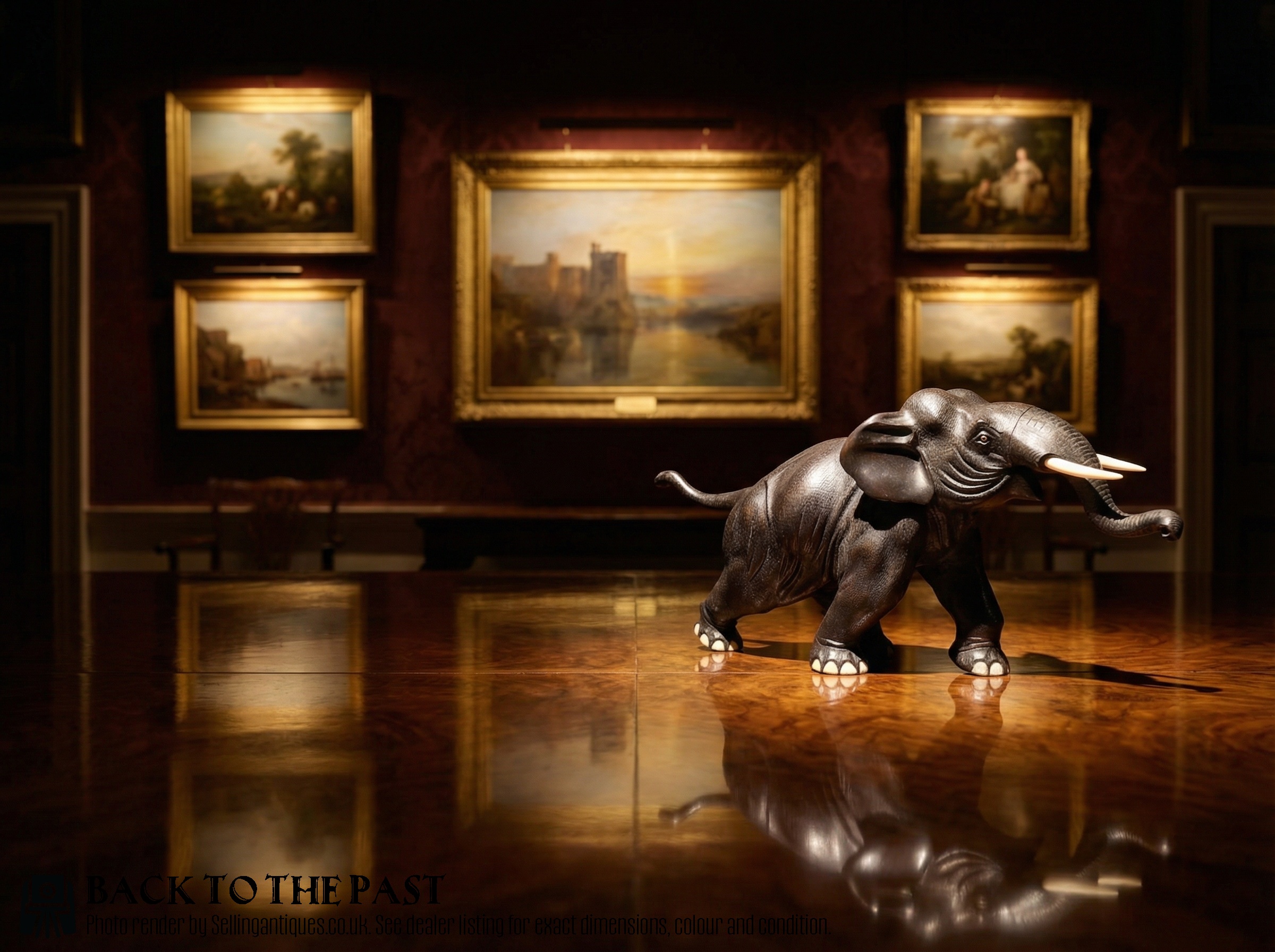
Carved Hardwood Elephant
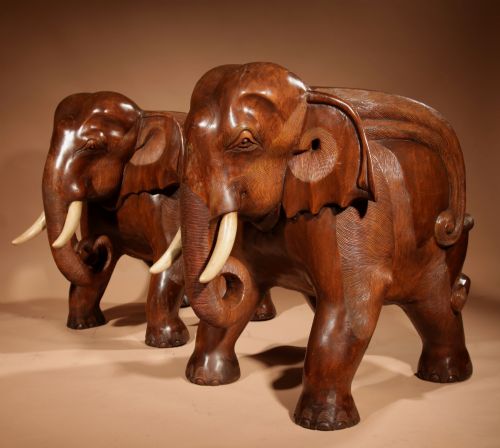
A carved hardwood elephant typically manifests as a decorative figure, a study, or a functional table supported by animal legs. The most common format on this page is the Indian elephant table originating from the nineteenth century or the Edwardian era.
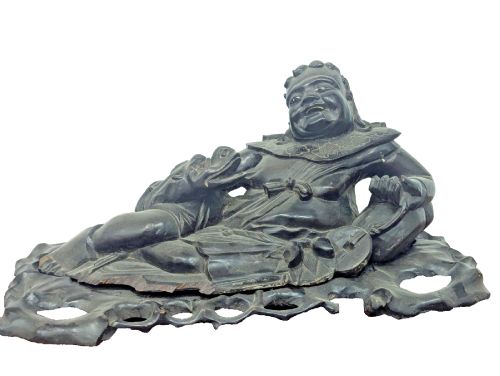
Makers produced these works across various regions, including Anglo-Indian and Anglo-Burmese colonial centres, alongside Qing Dynasty Chinese workshops. Forms range from small studies and bookends to large ceremonial armchairs and occasional tables.
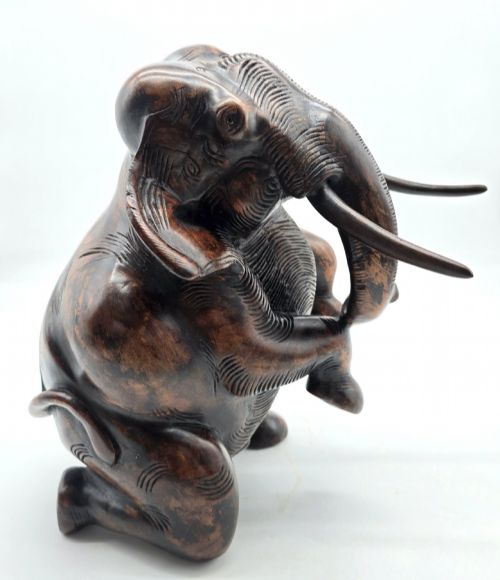
The materials span dense timbers such as teak and ebony, frequently complemented by bone inlay or bronze components. Buyers encounter items ranging from simple studies of seated animals to complex furniture pieces featuring multiple figures and keepers.
Materials and construction methods
Artisans relied on dense timbers, primarily hardwoods like teak and ebony, which accepted deep, crisp chisel work without splintering. These woods provided the structural integrity required for both freestanding sculptures and weight-bearing table legs shaped as elephant trunks and feet.
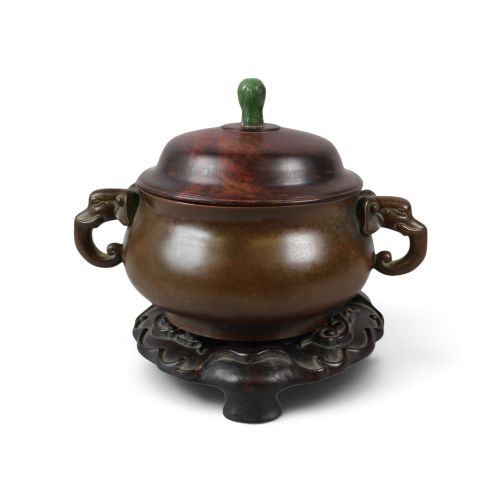
Makers enhanced the timber surfaces with contrasting inlays of bone or incorporated carved jade finials and bronze elements. Carvers utilised hand tools to render realistic skin folds, ceremonial trappings, and human figures accompanying the animals.
Listings feature items spanning the eighteenth century through the Art Deco period, utilising teak, ebony, bone, and jade.
Assessing quality in carved figures and furniture
Quality depends on the depth and precision of the carving, distinguishing stiff, repetitive lines from anatomically convincing musculature and detailed ceremonial trappings. Superior examples display careful proportion in the head, ears, and trunk rather than generic shaping.
The choice of material dictates the baseline quality, with dense ebony and finely figured teak outperforming softer woods. Furthermore, the integration of structural elements, such as how table tops join animal-form legs, marks the division between standard production and masterwork execution.
The Carved Hardwood Elephant Glossary
- Anglo-Indian
- Describing decorative arts and furniture produced in India during British rule, combining British furniture forms with local carving traditions. These pieces frequently utilise native hardwoods such as teak and ebony.
- Qing Dynasty
- The final imperial dynasty of China, spanning from the seventeenth to the early twentieth century. Objects from this period often display archaic bronze influences or intricate figural carving.
- Archaistic
- A stylistic choice where makers deliberately imitate ancient forms and decorative motifs. This style appears in Chinese metalwork and related hardwood stands.
- Ebony
- A dense, heavy black or very dark brown wood prized by carvers for its fine grain and ability to hold sharp detail. It is frequently seen in studies and bookends.
- Bone inlay
- The technique of embedding small pieces of bone into a wooden surface to create geometric or floral patterns. This method adds pale contrast to dark hardwood bodies.
Carved Hardwood Elephant: Frequently Asked Questions
What are carved hardwood elephants?
These pieces are three-dimensional representations of elephants or furniture items featuring elephant motifs, produced primarily during the nineteenth and early twentieth centuries.
They encompass freestanding studies, bookends, and functional tables where the legs take the form of carved trunks and feet.
Where were these items made?
The evidence points to workshops operating within British colonial India, Burma, and Qing Dynasty China. Anglo-Indian and Anglo-Burmese pieces reflect the cross-cultural design exchanges of the Raj period.
Craftsmen in regional centres such as Bombay utilised local timbers to supply both domestic markets and British officers returning home.
How do I date a carved elephant table?
Dating relies on stylistic markers, timber choice, and construction techniques associated with periods like the Raj, the Victorian era, or the Edwardian years. Nineteenth-century examples often display deep, hand-carved detailing in heavy teak or ebony.
Later pieces from the early twentieth century may incorporate Art Deco influences or simpler production methods.
How should I care for hardwood furniture?
Maintain these items in stable environmental conditions away from direct heat sources and strong sunlight to prevent the timber from drying and splitting. Dust the carved surfaces gently with a soft, dry cloth rather than applying modern liquid polishes.
Bone inlay requires particular caution to avoid moisture ingress around the joints.