




Carved Gothic Throne Chair
Carved gothic throne chairs offer commanding architectural forms and heavy timber construction, appealing directly to collectors seeking dramatic seating with ecclesiastical roots.
Carved Gothic Throne Chair
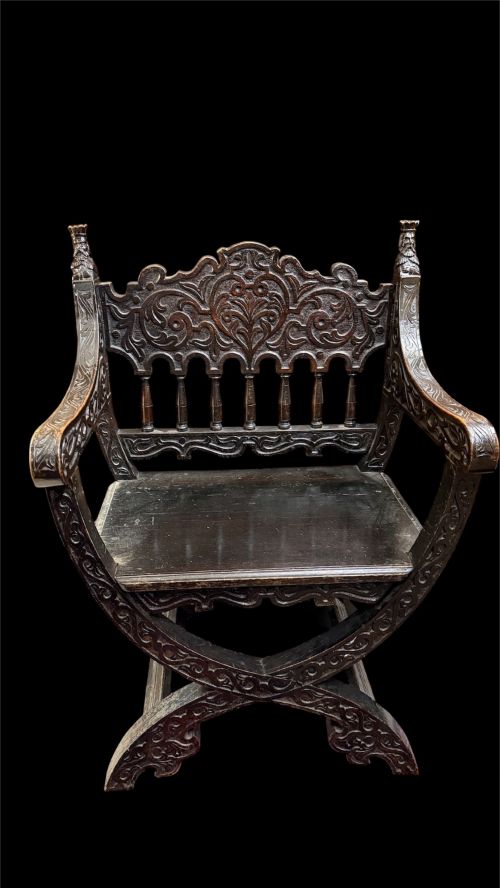
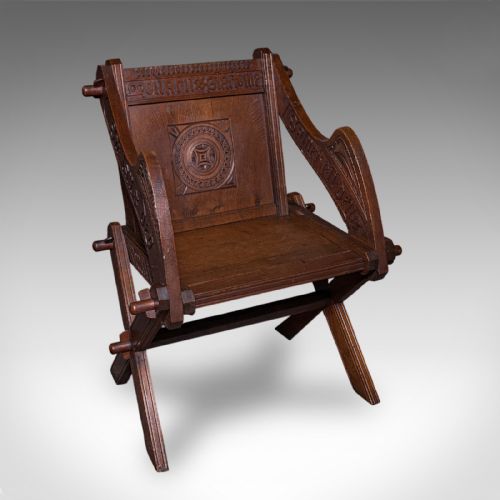
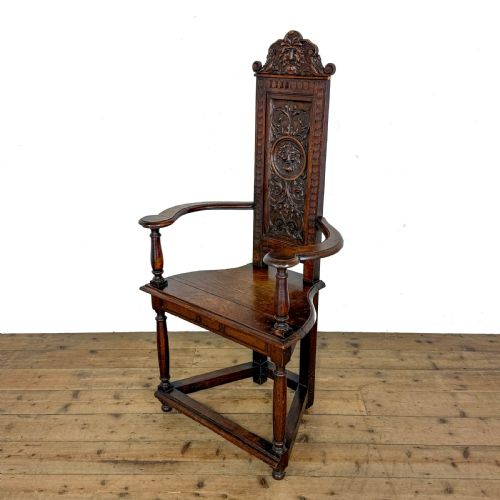
A carved gothic throne chair is a substantial seating form typically appearing in nineteenth-century revival styles alongside earlier oak examples. These pieces frequently manifest as tall-backed armchairs, wainscot seats, or X-frame Glastonbury designs drawing on medieval ecclesiastical traditions.
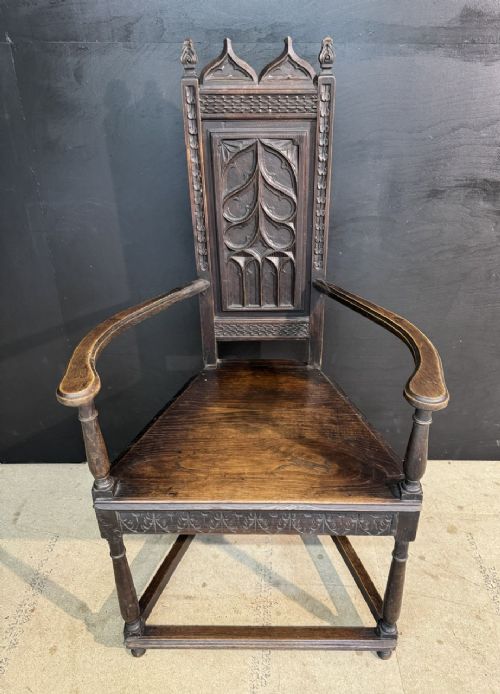
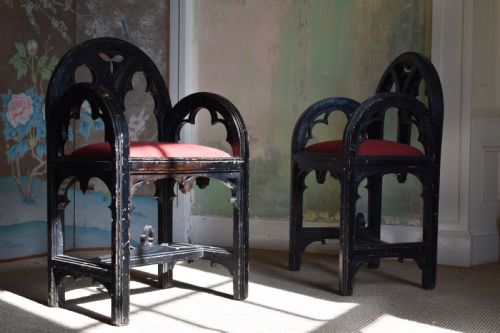
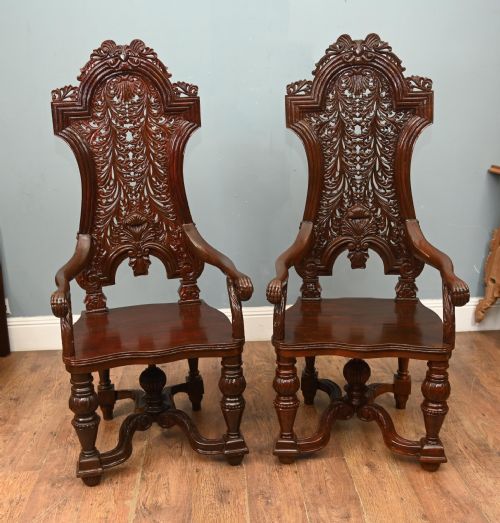
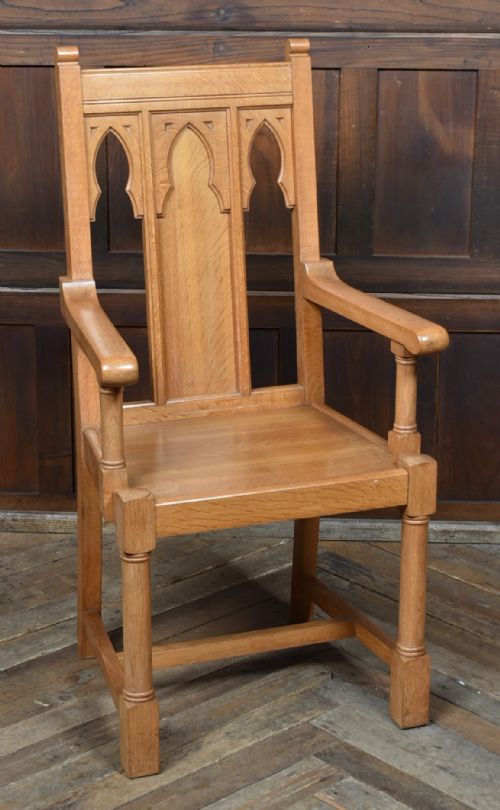
Most pieces encountered on this page date from the Victorian era and the nineteenth century, executed in solid timber with high backs and deep arm rests. Makers incorporated architectural motifs such as pointed arches, tracery, and green man carvings into the heavy oak framework.
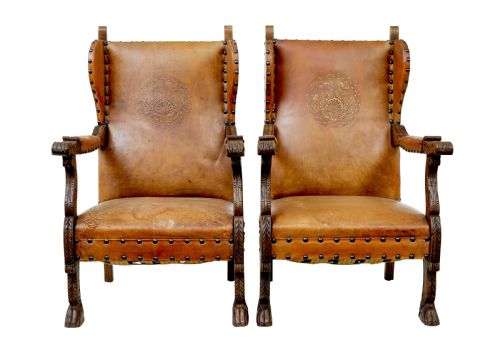
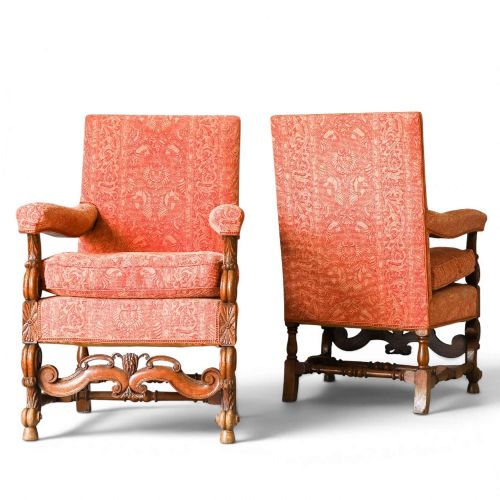
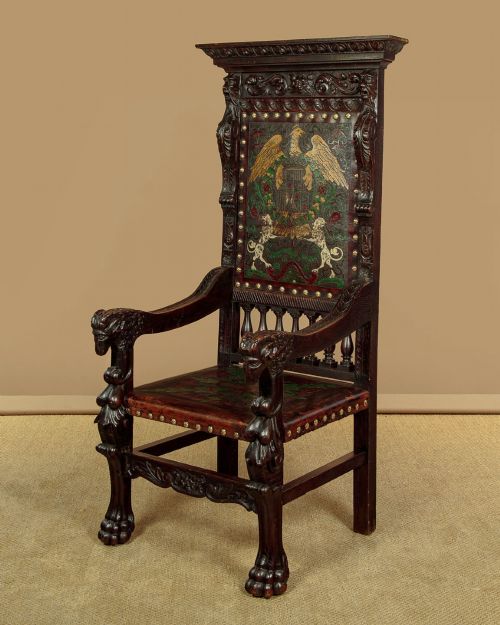
Forms range from simple chapel and hall seating to grand bishop chairs upholstered in embossed leather, fabric, or tapestry. The selection includes Continental examples alongside British pieces ranging from Scottish chapel thrones to English elbow seats.
Materials and construction methods
Oak dominates the construction of these items, selected for its strength and ability to take deep hand carving, though occasional pieces utilise walnut, pitch pine, beech, or painted wood. Timber frames are joined using traditional methods to support the immense weight of high backs and solid panel arms.
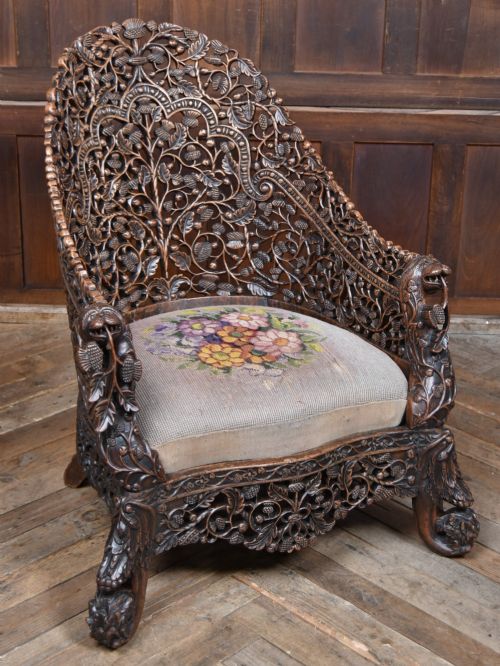
Surface decoration relies heavily on relief carving executed directly into the wood, depicting foliage, hounds, and heraldic or religious iconography. Upholstery materials such as brown leather, fabric, and tapestry are secured with brass detailing or buttoning to padded panels.
Keep a sharp eye out for hidden hounds carved into the woodwork, quietly hunting across the arms of Victorian library chairs.
Judging execution and integrity
Quality rests primarily on the depth and crispness of the hand carving, where superior examples display three-dimensional relief work with distinct detailing on faces, foliage, and tracery. Plain or shallow timber work indicates standard production, whereas exhibition pieces feature elaborate figures and structural complexity.
The choice of primary wood and the integrity of the joinery further separate grades of manufacture, with dense seasoned oak retaining stability across large panels. Original upholstery materials and period leather panels contribute significantly to the preserved state of a piece.
A.W.N. Pugin
The Carved Gothic Throne Chair Glossary
- Glastonbury chair
- A pegged X-framed armchair with a sloping back and panel arms, popular during the Gothic Revival. This folding form is traditionally associated with ecclesiastical origins.
- Wainscot chair
- An early wooden armchair characterised by a panelled back and solid seat, constructed like wood panelling. These heavy seats often date to earlier centuries or revival periods.
- Caquetoire
- A light sixteenth-century style conversational armchair featuring a high narrow back and trapezoidal seat. Continental examples frequently appear in oak and walnut.
- Green man
- A sculptural architectural motif depicting a face carved from leaves and foliage, symbolising rebirth. This ornament often crowns the top rail of Victorian church and throne chairs.
- X-frame
- A structural chair design utilising intersecting curved or straight wooden members to form the base. This medieval support system underpins Glastonbury and folding throne types.
Carved Gothic Throne Chair: Frequently Asked Questions
What is a gothic throne chair?
A gothic throne chair is a heavy wooden armchair featuring high architectural backs, tracery, and medieval motifs. They were designed to mimic church seating and medieval bishop stalls.
Most surviving examples date to the nineteenth century during various gothic revival periods. They serve as monumental accent pieces in libraries and hallways.
How were gothic chairs used historically?
These imposing seats were originally placed in studies, chapels, and principal reception rooms to project authority and status. Their high enclosed backs protected sitters from draughts in large medieval and Victorian halls.
Later revival examples functioned as ceremonial seating or decorative library furniture. They were built to command attention rather than for casual lounging.
How do you style a throne chair today?
A throne chair works best as a single statement piece in a spacious room, library, or hallway. Pairing the dark oak timber with plain walls lets the intricate relief carving stand out.
Avoid crowding these massive seats with too many scatter cushions. They anchor a room visually and pair well with simpler traditional or modern minimalist furnishings.
How to tell original Victorian gothic from later copies?
Original nineteenth-century pieces display genuine timber shrinkage, hand-cut joinery marks, and authentic patination on the oak surfaces. Machine-cut elements and modern adhesives usually point to twentieth-century reproductions.
Examine the back panels and underside for signs of age and tool marks consistent with nineteenth-century workshop practices. Period upholstery techniques and brass tacks also help confirm the era of manufacture.