

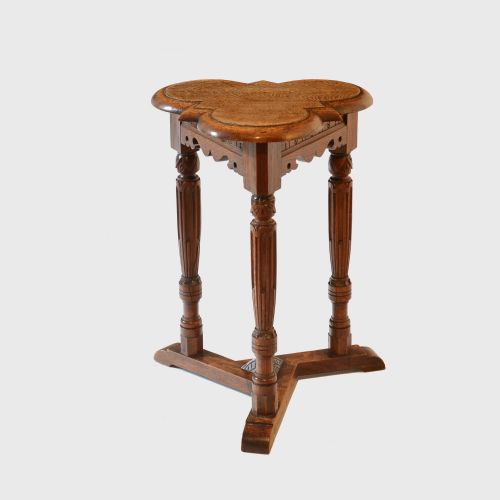


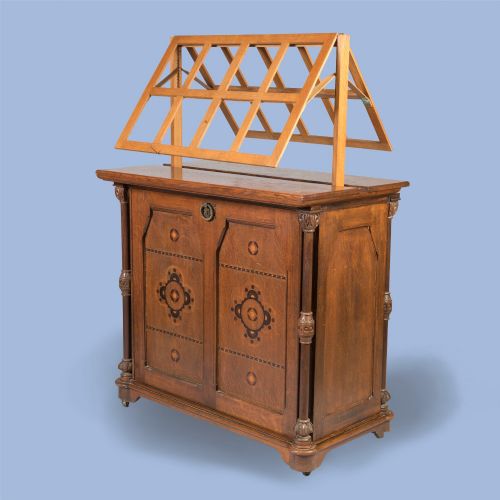


Carved Gothic Display Stand
These carved gothic display stand pieces are architectural timber works built to hold curiosities, uniting heavy religious ornament with domestic display.
Carved Gothic Display Stand
A carved gothic display stand brings together heavy oak pedestals, cabinets on stands, and small tables rooted in revival styles. Buyers examining these listings meet Victorian and Edwardian interpretations alongside earlier 18th century forms.
The dominant forms on this page include oak pedestals, side cabinets, and architectural stands designed for sculptural display. These pieces draw heavily upon Gothic Revival ornament, featuring trefoil motifs, caryatids, and structural timber framing.
Cabinetry ranges from tall glazed bookcases with lower drawers to small occasional tables and torchere jardiniere stands. Oak and walnut serve as the primary woods, often shaped with deep relief carving and structural colonnettes.
Materials and construction methods
Makers relied primarily on solid oak and walnut, fashioning heavy carcasses and structural supports by hand. Timber was selected for grain density to sustain deep relief ornamentation, architectural mouldings, and spiral columns.
Surface decoration combines hand-carved vegetal motifs, tracery, and applied bone elements or ebonised wood details. Joinery employs traditional framing methods to support heavy glazed doors, marble or wooden tops, and projecting cornices.
Listings feature oak as the dominant material, complemented by walnut, ebonised wood, and wrought iron across the Victorian and Edwardian periods.
Assessing quality in construction and ornament
Quality rests upon the depth and crispness of the hand-carving across structural elements like caryatids, columns, and panels. Superior examples display sharp undercutting and harmonious integration of architectural details rather than shallow surface scoring.
The choice of timber and the integrity of the joinery dictate longevity in larger pieces such as cabinets on stands and tall pedestals. Heavier woods combined with balanced proportions separate utilitarian storage from ambitious cabinet work.
Benjamin Taylor & Sons
The Carved Gothic Display Stand Glossary
- Gothic Revival
- An architectural and decorative style drawing on medieval forms, pointed arches, and heavy ecclesiastical ornamentation. This aesthetic defines the primary character of these stands and cabinets.
- Trefoil
- A graphic ornament composed of three overlapping rings or lobes, commonly carved into panels and table tops. It serves as a signature geometric motif of medieval design.
- Caryatid
- A sculpted female figure serving as an architectural support in place of a column or pilaster. These figures frequently appear on pedestals and cabinet corners.
- Torchere
- A tall stand or pedestal originally designed to hold a light source or candle. In later periods, these pieces transitioned to holding sculptures and plants.
- Folio Cabinet
- A specialised piece of furniture built to store large papers, prints, or books flat. These cabinets feature shallow drawers or vertical storage compartments.
Carved Gothic Display Stand: Frequently Asked Questions
What rooms suit a carved gothic display stand?
These architectural pieces require substantial wall space and high ceilings to balance their heavy timber presence. Libraries, studies, and grand hallways provide the appropriate Victorian context for displaying objects upon them.
Smaller tables and torchere stands adapt more easily to corner placements or as independent pedestals for sculpture. Their dark woods and carved details anchor lighter modern interiors through strong textural contrast.
How do I care for antique oak furniture?
Solid oak and walnut demand stable indoor humidity levels to prevent timber splitting or joint movement. Regular dusting with a dry, soft cloth preserves the carved crevices without dulling the timber.
Avoid placing these stands near direct heat sources or strong sunlight, which dries out old wood and fades surface patination. Occasional application of a traditional wax feed maintains the lustre of the timber.
How do I distinguish Victorian gothic from earlier work?
Victorian Gothic Revival pieces often exhibit machine-assisted precision alongside hand carving, reflecting industrial production methods of the 19th century. They utilise heavier proportions and standardised architectural motifs drawn from medieval pattern books.
Eighter-century work relies entirely on hand tools, showing subtle irregularities in joint construction and timber preparation. The carving styles on earlier pieces tend to be less uniform and deeply integrated into the structural frame.
What objects were these stands built to hold?
Cabinets on stands and folio cabinets were designed to protect and exhibit valuable books, prints, and natural history specimens. They functioned as private repositories for scholarly collections.
Pedestals and torchere stands served to elevate sculptures, urns, and decorative ceramics to eye level. Their sturdy timber columns provided stable platforms for heavy bronze and carved bone items.