


Carved Gold Leaf Lamps
Carved gold leaf lamps bring warmth and storied light into a room, combining tactile wood and metal surfaces with centuries of European craftsmanship.
Carved Gold Leaf Lamps
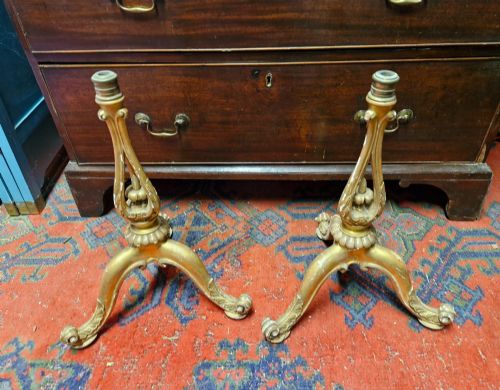
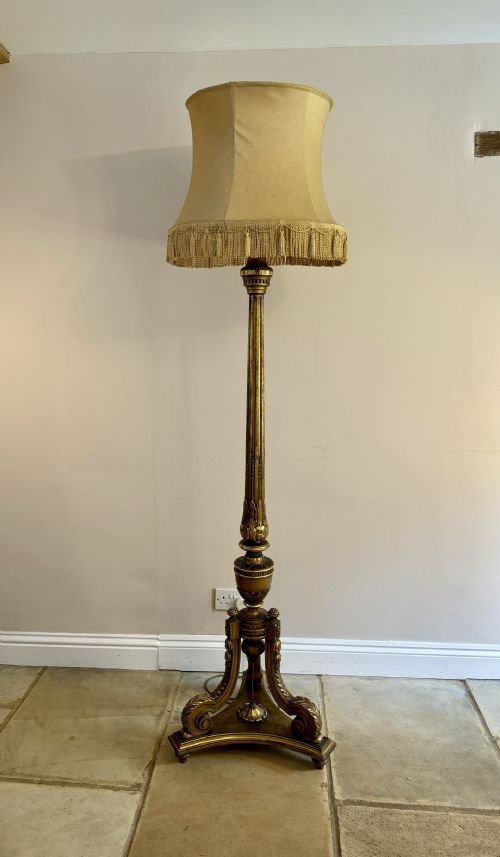
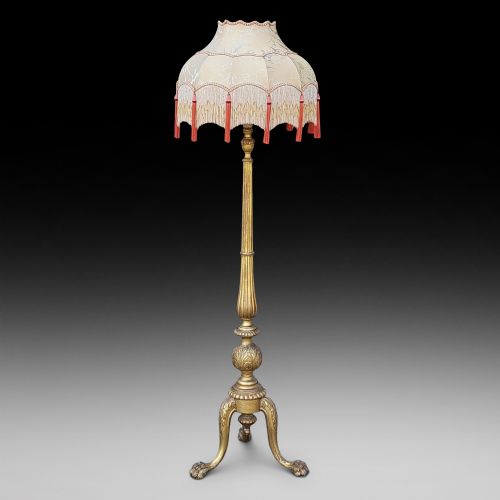
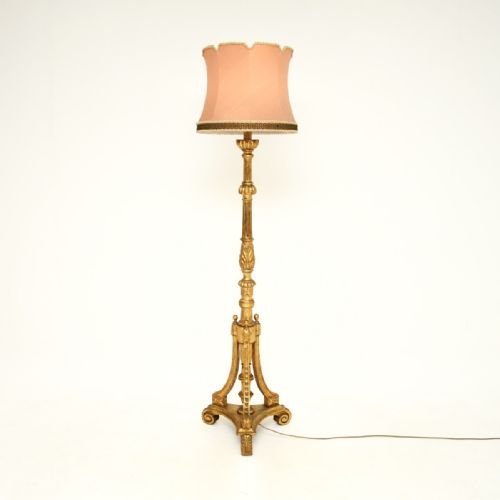
Carved gold leaf lamps span table lamps, floor lamps, and standard lamps fashioned from timber and metals, often adapted from earlier lighting fixtures or architectural elements like altar candlesticks. These pieces arrive from various periods, stretching from the eighteenth century through the 1930s, reflecting continental European tastes.
The selection here encompasses items originating from France, Italy, and Spain, displaying styles ranging from French Rococo and Neoclassical to Spanish Baroque and Italian Florentine designs. Buyers frequently encounter standard lamps and table lamps dating to the nineteenth and early twentieth centuries alongside earlier conversions.
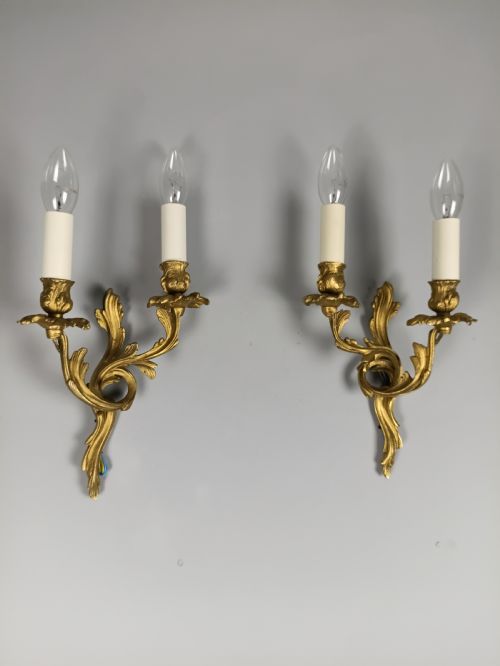
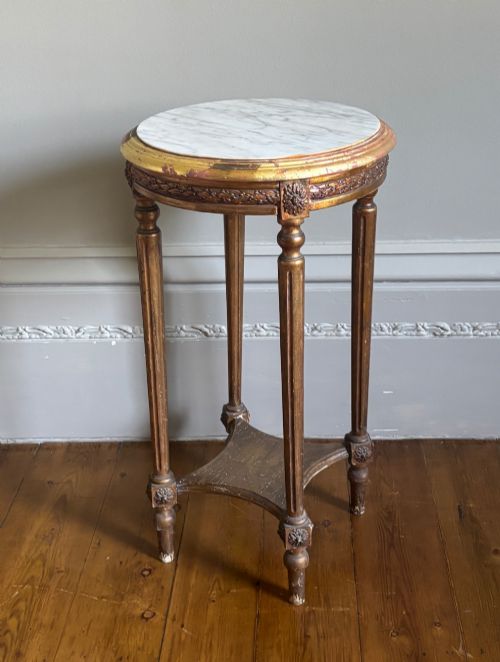
Alongside dedicated lighting, the listings include related giltwood furnishings such as side tables, wall lights, and chandeliers that share the same decorative vocabulary. This grouping allows collectors to match illumination with complementary carved and gilded furniture pieces.
How they were made
Carved wooden foundations, typically fashioned from softwoods or hardwoods, provide the structural core for these pieces before receiving layers of gesso to smooth the surface. Artisans then apply delicate sheets of gold leaf over the prepared ground, burnishing the metal to achieve a luminous finish.
Certain items incorporate parcel gilt techniques where exposed wood or painted polychrome details contrast with gilded areas. Metal elements such as brass or bronze occasionally integrate with the carved wooden components, particularly in standard lamps and wall sconces.
Listings feature items spanning the eighteenth century through the 1930s, utilising materials such as giltwood, gesso, marble, and brass.
What varies in quality
The depth and crispness of the carving distinguish finer examples from simpler production, as skilled hand-carving yields organic movement in acanthus leaves and scrolls. Crisp gesso work beneath the gold leaf ensures that intricate details remain sharp rather than softened by thick preparatory layers.
The integrity of the original gilding and the subtlety of its ageing process play a major role in a piece's visual success. Patination earned through time, showing gentle wear that reveals the warm bole beneath the gold, elevates the character of the object.
Whytock and Reid
The Carved Gold Leaf Lamps Glossary
- Giltwood
- Wood that has been coated with gold leaf or gold powder. This surface treatment was widely used on decorative furniture and lighting to create a rich, reflective appearance.
- Gesso
- A plaster mixture applied to wood as a base for gilding or painting. It provides a smooth, uniform surface that carvers and gilders can refine before applying gold leaf.
- Parcel Gilt
- A decorative technique where only specific parts of an object are gilded, leaving other areas painted, stained, or exposed in their natural wood state.
- Standard Lamp
- A tall freestanding floor lamp designed to hold a single light source or cluster at eye level. These pieces often serve as focal points in period interiors.
- Altar Candlestick
- A large liturgical candle holder designed for church use. Many antique examples are later converted into table lamps or floor lamps while retaining their monumental proportions.
Carved Gold Leaf Lamps: Frequently Asked Questions
How do I date an antique giltwood lamp?
Dating relies on examining the timber type, the composition of the gesso base, and the style of the carving. Eighteenth-century pieces often display deeper, hand-chiselled forms, whereas later nineteenth- and twentieth-century examples draw heavily on revival aesthetics.
Hardware, wiring channels, and the wear patterns on the gold leaf also offer vital clues regarding age. Comparing the decorative motifs to documented furniture styles of the period helps narrow down the decade of manufacture.
Were all these lamps originally made for electricity?
Most older pieces began life as candlesticks, oil lamps, or architectural ornaments before undergoing conversion to electrical fittings later in their lifespan. This practice preserves decorative antique objects by giving them a practical purpose in modern homes.
Conversions often happened during the twentieth century when electricity became standard in domestic interiors. Expert rewiring ensures that these historic bases can be used safely today without compromising their original structure.
How do I clean and maintain gold leaf?
Maintenance requires minimal intervention, primarily involving gentle dusting with a soft, dry brush or a feather duster. Moisture and chemical cleaners must be avoided entirely, as they can strip the delicate metallic leaf from the gesso underneath.
Placing the lamp away from direct sunlight and heat sources protects the underlying wood and gesso from shrinking or cracking. Treating the surface with care preserves the historic patination accumulated over the decades.
What is the difference between Italian and French styles?
French designs, particularly those influenced by Rococo and Louis XVI tastes, tend to feature refined symmetry, delicate floral garlands, and restrained classical proportions. They emphasise elegance and precise decorative control.
Italian pieces, including Venetian and Florentine variants, often showcase more theatrical scrollwork, bolder figures, and rich polychrome highlights. Their aesthetic leans towards dramatic presence and exuberant carving traditions.