
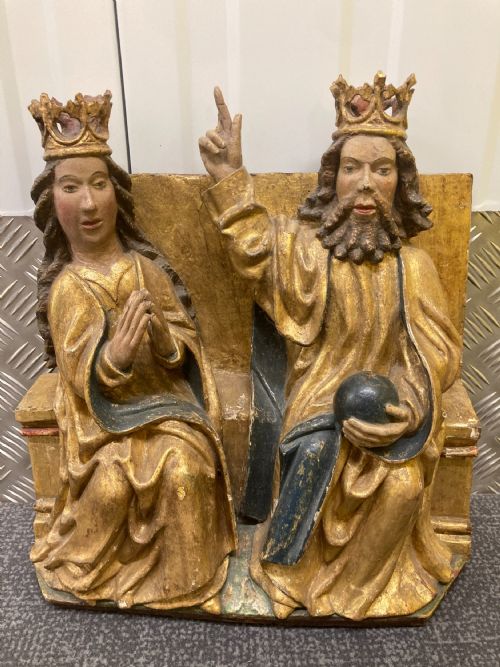


Carved Giltwood Figures
Carved giltwood figures bring warmth and metallic brilliance to an interior through layered gold leaf over carved wood.
Carved Giltwood Figures
When you search for carved giltwood figures, you encounter sculptural objects, religious statues, and decorative ornaments formed from timber and finished with gold leaf or metallic paint. These pieces range from seventeenth-century devotional carvings of saints to nineteenth-century decorative animals and architectural figures.
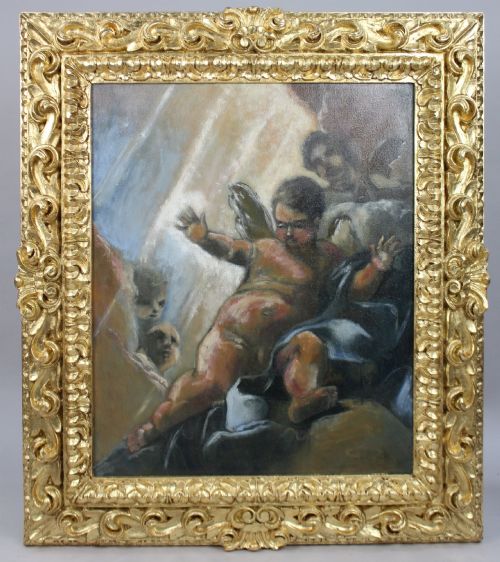
Religious subjects dominate the earlier centuries, featuring figures of the Virgin Mary, Saint Barbara, and devotional groups with polychrome paint under the gilding. Secular pieces emerge later, including eagles, lions, swans, and putti that reflect Baroque, Neoclassical, and Rococo styles.
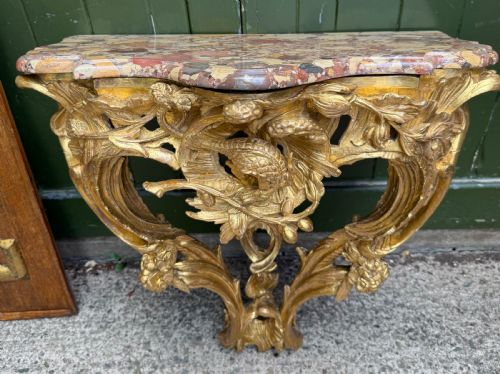
The versions you are most likely to meet on this page date from the eighteenth and nineteenth centuries, often taking the form of standalone statues, console table supports, or architectural ornaments. European workshops, particularly Italian and Venetian ones, produced many of these items alongside English and Chinese export pieces.
How they were made
Artisans carved the primary forms from timber, working woods such as oak, pine, or fruitwood to create the foundational shape before applying surface decoration. This carving determined the depth of drapery, the expression of faces, and the musculature of animals.
Workers applied a smooth layer of gesso over the timber base to prepare the surface for the application of gold leaf or metallic paint. Polychrome paint layers sometimes appear beneath or alongside the gilding, particularly on religious figures from the sixteenth and seventeenth centuries.
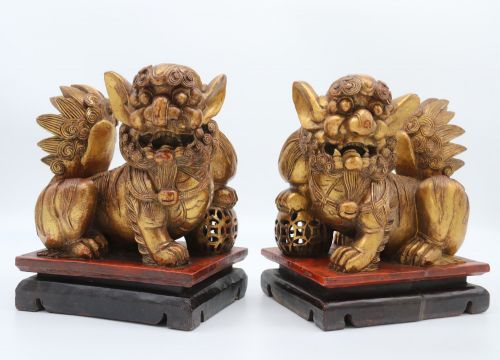
Swans, centaurs, and Chinese Buddhist lions share the page with solemn saints and classical eagles.
What varies in quality
The crispness of the initial wood carving dictates the success of the piece, as sharper chisel work retains definition beneath multiple layers of gesso and gold leaf. Softer, shallower carving results in a blunted appearance where details of hair, drapery, and anatomical structure blur together.
The integrity and application of the gilding layer also separate fine examples from simpler workshop output. Skilled guilders laid gold leaf over a carefully prepared gesso ground, allowing the metallic sheen to age naturally, whereas heavy or unsympathetic later repaint obscures the original texture of the carved surface.
BENJAMIN BARKER OF BATH
The Carved Giltwood Figures Glossary
- Giltwood
- Timber that has been decorated with gold leaf or gold paint applied over a prepared ground. This finish provides a luminous metallic surface that reflects light within an interior.
- Gesso
- A plaster-like mixture applied to wood surfaces as a smooth base for gilding and paint. It fills microscopic pores in the timber to create an even foundation.
- Polychrome
- The practice of decorating architectural elements, sculptures, or furniture with multiple colours in paint. It frequently accompanies gilding on religious statues from earlier centuries.
- Console table
- A table designed to stand against a wall, often supported by ornate carved figures, brackets, or pedestals. These tables frequently incorporate marble tops.
- Putto
- A plump, winged child figure, often depicted in pairs or groups on clouds. These motifs appear regularly in Baroque and Rococo decorative schemes.
Carved Giltwood Figures: Frequently Asked Questions
What are carved giltwood figures?
Carved giltwood figures are sculptural wooden objects finished with gold leaf, gesso, or polychrome paint. They encompass religious statues, architectural ornaments, and decorative animals.
Craftsmen across Europe produced these items for domestic interiors, churches, and grand furniture mounts. Their designs follow prevailing artistic movements from the Renaissance through to the Victorian era.
How were religious figures used?
Religious figures served as devotional objects in private chapels, domestic shrines, and ecclesiastical settings. They often depicted saints or biblical scenes to inspire contemplation.
Many of these devotional carvings combined giltwood surfaces with polychrome paint to enhance the lifelike appearance of robes, hair, and flesh.
How do I care for giltwood?
Giltwood requires protection from moisture, direct sunlight, and physical abrasion. The thin gold leaf and underlying gesso layers remain sensitive to environmental shifts.
Dust these pieces gently with a dry, soft brush rather than a cloth. Avoid liquid cleaners entirely, as moisture penetrates the gesso and causes the gilding to flake.
How can I tell the period?
Determining the period involves examining the tool marks on the wood, the composition of the gesso ground, and the stylistic vocabulary of the carving. Baroque and Rococo pieces show different approaches to movement compared to Neoclassical or Victorian examples.
Subtle indicators include the ageing of the gold leaf, the type of timber used in the core, and the presence of original polychrome paint layers.