



Carved Giltwood Eagle
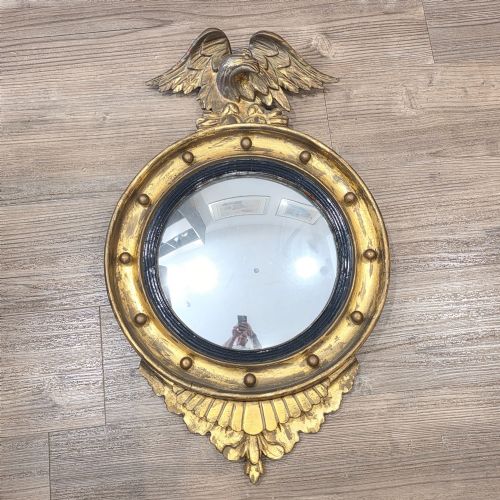
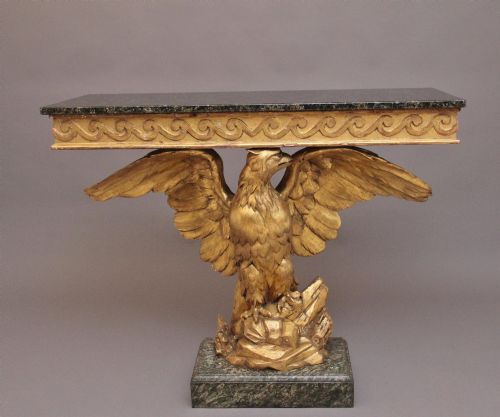
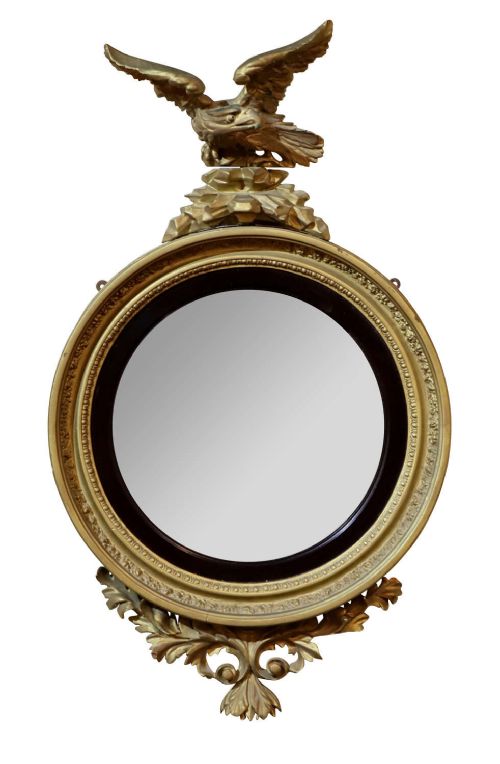
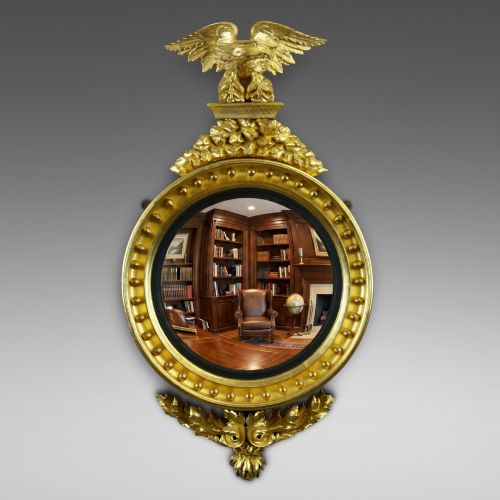
A carved giltwood eagle brings fierce classical presence to a room, perched atop a convex mirror or standing as a standalone sculpture.
Carved Giltwood Eagle
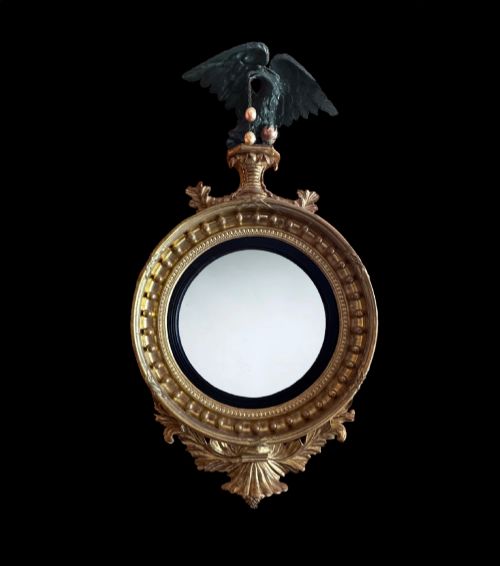
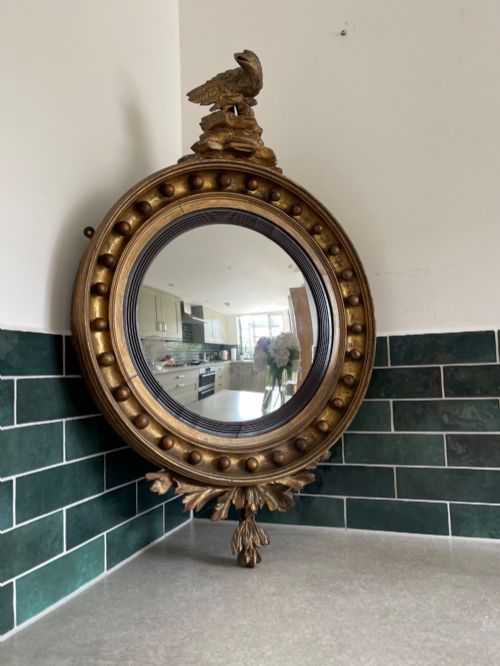
A carved giltwood eagle most commonly appears as the fierce, winged surmount perched above the circular frame of a Regency convex mirror or girandole. These arresting ornaments draw the eye upward, turning a functional looking glass into a commanding neoclassical statement piece for the wall.
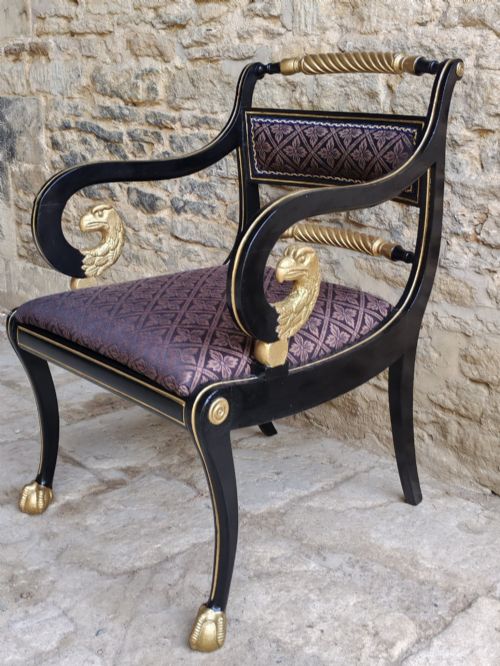
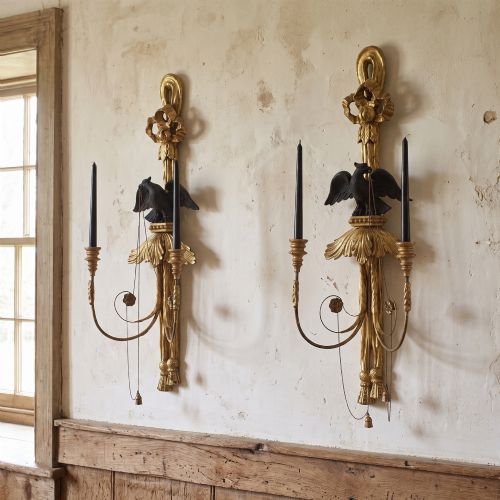
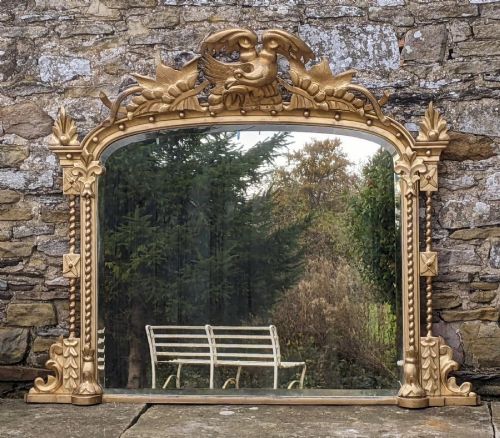
Beyond mirrors, you will encounter this search phrase fulfilled by matching wall sconces, console tables, console supports, architectural wall brackets, and independent wooden sculptures from the eighteenth, nineteenth, and early twentieth centuries.
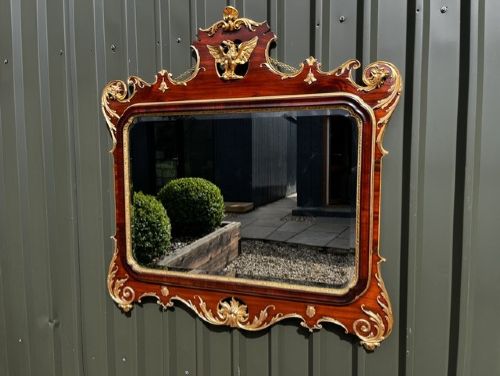
The dominant aesthetic draws heavily on Georgian, Regency, and Chippendale vocabularies, where the bird of prey symbolises power, vigilance, and classical authority within domestic interiors.
Materials and Carving Techniques
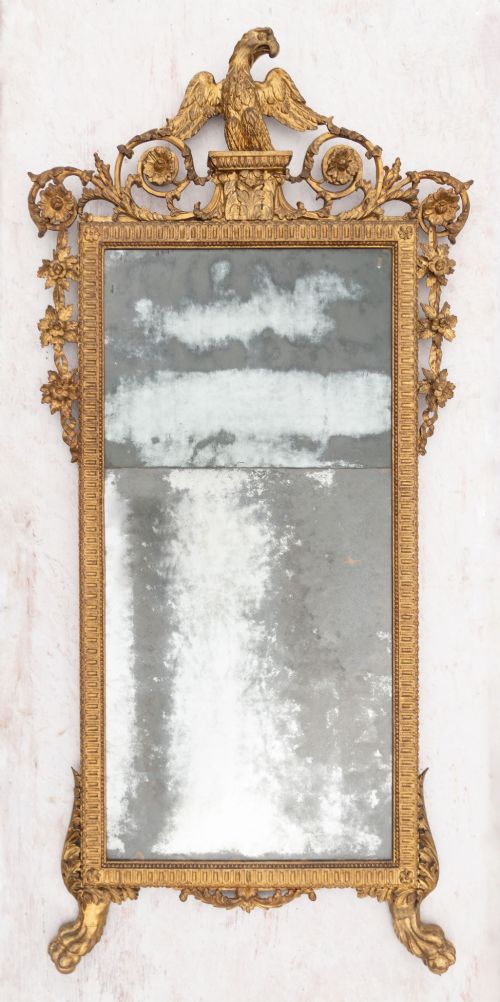
Artisans carved these birds and frames from pine, mahogany, or general hardwoods, building up intricate relief details with layered gesso before applying gold leaf. This combination of carved wood and gesso allowed craftsmen to achieve razor-sharp feather plumage and muscular talons that hold their crispness over the centuries.
The characteristic golden glow comes from delicate sheets of gold leaf laid over a coloured bole base, which occasionally shows through where rubbing occurs naturally with age. Secondary elements incorporate ebonised wood details, brass candle arms on girandoles, and convex glass plates that distort the room in a wide-angle reflection.
Listings feature items spanning the eighteenth, nineteenth, and early twentieth centuries, with a strong concentration of Regency convex mirrors.
Assessing Craftsmanship and Proportion
The distinction between ordinary and exceptional pieces rests entirely in the anatomical vigour of the bird and the crispness of the carving. Superior eagles display deeply undercut wing feathers, alert glass or painted eyes, and a commanding stance rather than a flat, stiff silhouette.
Proportion dictates success, as the scale of the eagle must balance the massive weight of a convex mirror frame or console table beneath it. Finer examples exhibit hand-tooled gesso work where decorative borders and acanthus leaves remain sharp, whereas lesser items rely on heavy, dull plaster moulding that mutes the fine details.
The Carved Giltwood Eagle Glossary
- Giltwood
- Wood that has been decorated with gold leaf applied over a prepared surface. This finish gives antique mirrors and brackets their warm, reflective metallic sheen.
- Convex Mirror
- A round looking glass with a spherical surface that reflects a wide, curved view of the entire room. These mirrors frequently feature eagle crests.
- Gesso
- A plaster-like mixture applied to wood frames to provide a smooth, absorbent base for gilding. It is easily carved and moulded before setting hard.
- Girandole
- A decorative wall mirror fitted with attached candle sconces or branches. The candle arms multiply the light within the room.
- Surmount
- An ornamental feature placed at the very top of a mirror frame or piece of furniture. The eagle acts as the most dramatic form of surmount.
- Parcel-Gilt
- Woodwork that is partially gilded, leaving areas of exposed dark wood like mahogany or walnut visible alongside the gold leaf.
Carved Giltwood Eagle: Frequently Asked Questions
What rooms suit a convex mirror?
Convex mirrors excel in hallways, dining rooms, and smaller studies where their wide-angle reflection opens up tight spaces. They bounce available natural light across the room effectively.
Position the glass at eye level so guests can appreciate both the distorted reflection and the carved eagle perched above.
How do I clean giltwood surfaces?
Dust giltwood frames and carved eagles gently using a very soft, dry artist brush or ostrich feather duster. Avoid all commercial cleaning sprays and water.
Moisture and aggressive wiping will dissolve the delicate water-gilding and lift the historic gold leaf from the underlying gesso.
How do I distinguish Regency from Victorian pieces?
Regency pieces tend to display leaner, sharper neoclassical restraint with crisp gesso work and aggressive, well-defined bird carving. Victorian reproductions often feel heavier and softer in their botanical and avian details.
Examining the backing boards, fixings, and the oxidation of the gold leaf helps confirm the active period of production.