


Carved Gilt Foyer Table
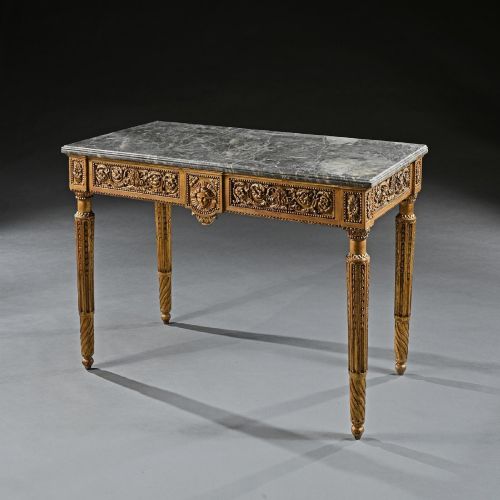
A carved gilt foyer table brings weight and surface into an entrance, and the pieces found here span from grand Italian Baroque revival designs to restrained Louis XVI styles.
Carved Gilt Foyer Table
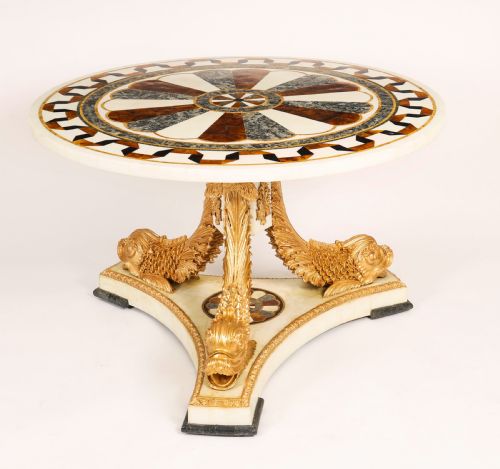
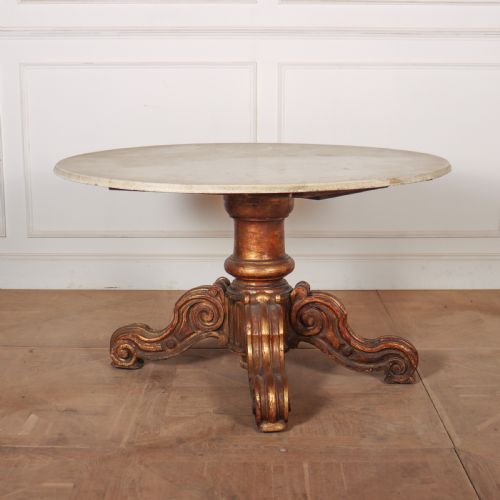
When you search for a carved gilt foyer table, you meet console tables designed to stand against a wall and freestanding centre tables that anchor a large entrance hall. The pieces on this page appear in forms such as console tables with matching mirrors, console tables with marble tops, and round centre tables.
The materials recorded in these listings show a preference for giltwood, gold leaf, and gesso applied to timber frames, frequently paired with inset marble tops including breccia and porphyry. You will find objects originating from French, Italian, English, German, and Japanese workshops across periods from the eighteenth century to the twentieth century.
The style vocabulary spans French Rococo, Italian Baroque Revival, Neoclassical, Regency, and Empire. A buyer is most likely to encounter nineteenth-century interpretations of earlier French and Italian designs alongside twentieth-century revivals.
Materials and construction methods
Makers shaped the structural carcass from timber such as mahogany, rosewood, burr walnut, and painted wood, upon which they laid grounds of gesso. The decorative surface relies on gold leaf or giltwood applied to carved details like lion's paw supports and dolphin motifs.
Heavy stone slabs of marble, including breccia and porphyry, form the inset tops of many console and centre tables. Bronze ornaments and marquetry inlay appear on selected pieces to punctuate the wood and gilt surfaces.
Materials recorded across the inventory include solid mahogany, burr walnut, porphyry marble, and traditional gold leaf.
Assessing craftsmanship and finish
The depth and definition of the hand-carving separate standard production from superior examples, particularly on complex motifs like acanthus leaves, scrollwork, and figurative supports. Crisp edges in the gesso beneath the gold leaf indicate a disciplined hand before gilding took place.
The selection and fit of the stone top reveal much about the original commission, as thick slabs of breccia or porphyry fitted flush to the wooden frame signify higher ambition. The integration of parcel-gilt details with painted or polished wood bodies demonstrates control over contrasting textures.
The Carved Gilt Foyer Table Glossary
- Giltwood
- Timber that has been coated with gold leaf or gilt powder over a prepared gesso ground. This finish provides the characteristic metallic sheen seen across the frames.
- Console table
- A table designed to stand flat against a wall, frequently secured to it with brackets. These pieces often feature shaped marble tops and ornate front legs.
- Gesso
- A plaster-like mixture applied to wood surfaces to create a smooth base for carving and gilding. It allows craftsmen to achieve sharp relief details.
- Breccia marble
- A stone composed of broken fragments of minerals cemented together in a fine-grained matrix. It provides a variegated, multicoloured surface to table tops.
- Parcel gilt
- A decorative treatment where only specific portions of an object are gilded while the rest shows painted or polished wood.
Carved Gilt Foyer Table: Frequently Asked Questions
Where should I place a console table?
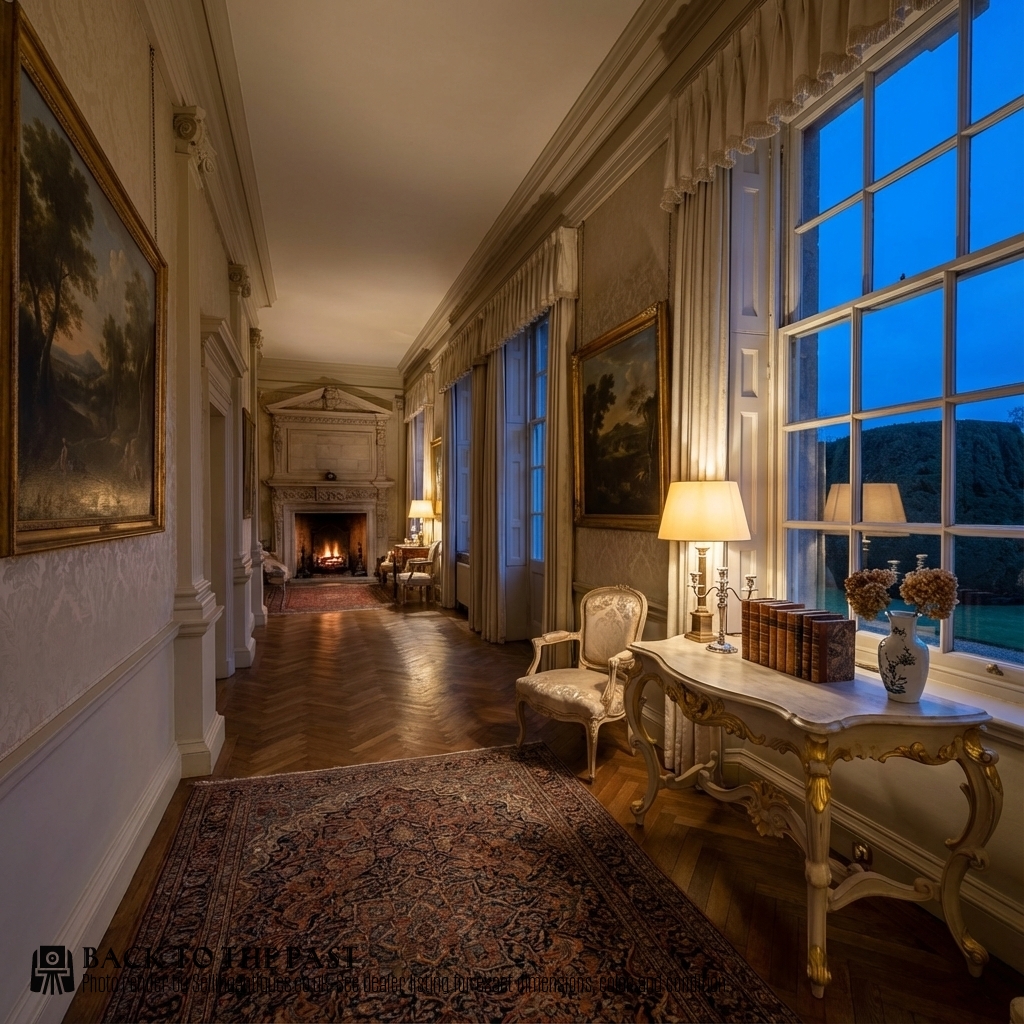
A console table sits against an entrance wall or beneath a mirror to establish a focal point as you enter the room.
The shallow depth of these tables ensures they occupy minimal floor space while offering a surface for decorative objects.
How do I care for a giltwood surface?
Dust the giltwood gently with a dry, soft cloth to prevent the accumulation of dirt within the carved recesses.
Avoid liquid cleaners and moisture, as water can lift the delicate gold leaf and gesso ground from the timber beneath.
What is the difference between a console and a centre table?
A console table stands against a wall with finished decoration primarily on the front and sides. Centre tables are finished on all sides to stand freely in the middle of a room.
Both forms utilise carved giltwood and marble tops across the historical periods represented in these listings.
How do I identify a Neoclassical style table?
Neoclassical pieces rely on straight architectural lines, symmetry, and classical motifs derived from ancient Greek and Roman art. Look for fluted legs, restrained gilding, and geometric marquetry.
This aesthetic developed in opposition to the asymmetry of earlier Rococo designs.