





Carved Gilt Bed
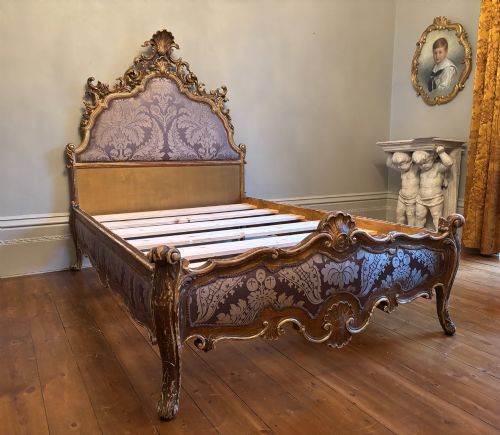
When you search for a carved gilt bed, you are looking at substantial wooden frames shaped with ornamental detail and finished in gold leaf or metallic paint.

Carved Gilt Bed
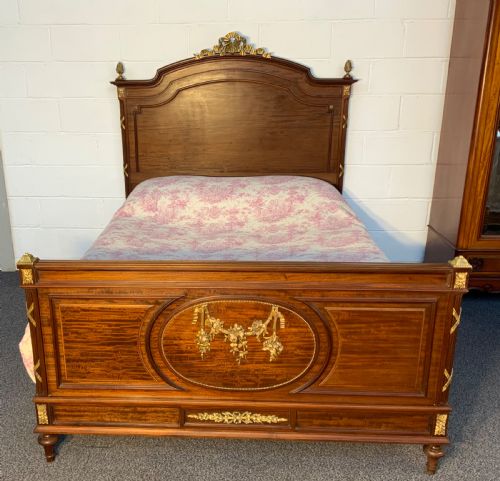
A carved gilt bed encompasses full-scale wooden bedframes, day beds, and headboards produced across the eighteenth, nineteenth, and early twentieth centuries. European workshops, particularly in France and Italy, dominate the heritage of these grand sleeping quarters.
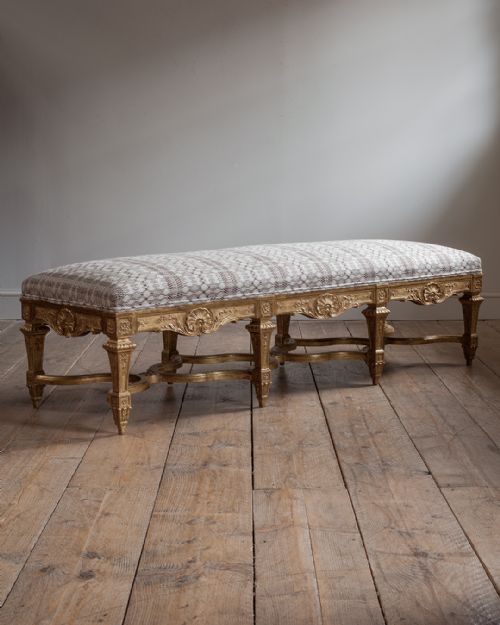
Buyers will encounter full-size and king-size bedsteads alongside day beds, window seats, and related bed crowns or cresting rails. French Neoclassical, Louis styles, and Italian Rococo designs supply the prevailing aesthetic vocabulary across the selection.
Materials and Construction
Carvers shaped timber substrates from solid woods like mahogany, walnut, and general hardwoods before applying ornamental surface treatments. Giltwood, painted wood, and parcel-gilt finishes define the visual character, often enhanced with gesso layers and brass detailing.
Decorative schemes incorporate hand-painted portrait panels, textile inserts such as tapestry, and caned panels set within the carved wooden framework. Artisans utilised traditional joinery suited to large domestic furniture alongside intricate surface gilding.
Carved Gilt Bed Retail Price Guide 2026
Typical asking prices for carved gilt bed among the pieces listed under this phrase on Sellingantiques today, from the lower quarter to the upper quarter. They describe what is for sale here now, not the wider market.
Listings feature eighteenth-century Italian elements, nineteenth-century French bedroom suites, and twentieth-century day beds in mahogany, giltwood, and painted timber.
Markers of Distinction
The depth, crispness, and continuity of the hand-carved ornamentation separate standard framework from exceptional examples. Relief work executed with high definition along cresting rails and headboards indicates superior craftsmanship in the workshop.
The integrity of the original gilt surface or the execution of parcel-gilt and painted decoration dictates visual impact. Uniformity in the application of gold leaf and the preservation of underlying gesso layers distinguish finer historical pieces.
Morel and Hughes
The Carved Gilt Bed Glossary
- Giltwood
- Timber that has been decorated with gold leaf applied over a prepared gesso ground. This technique creates a luminous metallic surface common on formal European furniture.
- Gesso
- A plaster mixture applied to wood surfaces to provide a smooth base for gilding or painting. It allows carvers to achieve sharp, intricate relief details.
- Parcel-gilt
- Woodwork that is partially gilded, leaving portions of the natural or painted wood visible. This method highlights specific carved motifs against a contrasting background.
- Caned
- Woven rattan or similar material utilised for bed panels and seating inserts. It provides lightweight ventilation and textural contrast to solid timber frames.
- Cresting rail
- The decorative upper moulding or horizontal wooden member of a headboard or mirror frame. It often bears the primary carved ornament of the piece.
Carved Gilt Bed: Frequently Asked Questions
How do I style a carved gilt bed in a modern room?
Pair the ornate wooden frame with neutral walls and simple bedding to let the gilded details stand out as the primary focal point of the bedroom.
Keep surrounding furniture understated so the historical character of the headboard or day bed remains prominent without cluttering the space.
Will a historic gilt bed support a standard modern mattress?
Many antique frames accommodate standard sizes like king or double, though interior dimensions can vary slightly depending on their European origins.
Check the internal measurements carefully and consult with a specialist if custom slats or base adjustments are needed for modern mattress depths.
How do I clean and maintain giltwood surfaces?
Dust the carved woodwork gently with a soft, dry cloth or a feather duster to prevent particulate buildup in the recessed areas of the carving.
Avoid liquid cleaners, moisture, and chemical polishes entirely, as these substances can lift the delicate gold leaf and underlying gesso.
How can I tell a Louis XVI style bed from a Rococo one?
Louis XVI style pieces display straight tapered legs, symmetry, and classical geometric motifs derived from architectural antiquity.
Italian and French Rococo designs favour asymmetrical curves, C-scrolls, and flowing organic forms with exuberant floral carving throughout the frame.