


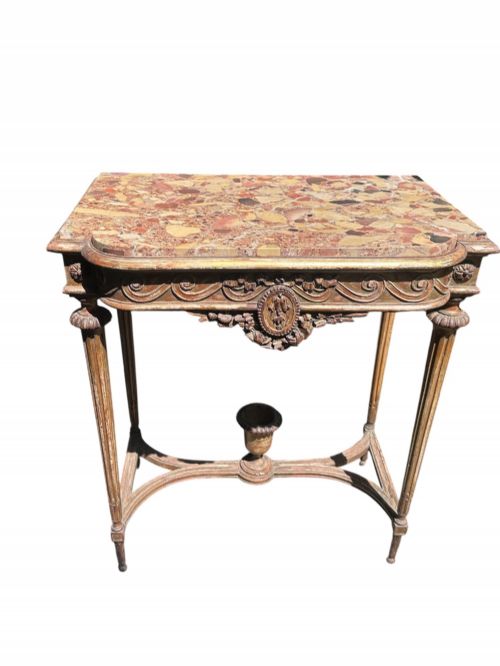


Carved Gilded Accent Table
A carved gilded accent table brings gold leaf and sculpted wood together to lift a corner or anchor a seating group.
Carved Gilded Accent Table
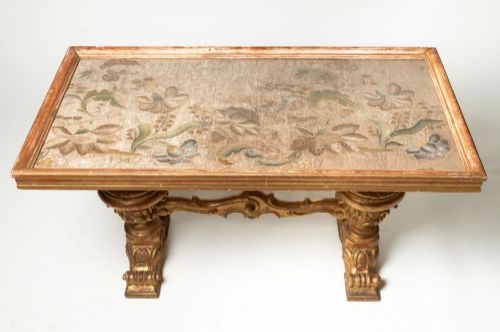
A carved gilded accent table is a small surface designed for practical use and decorative impact, taking forms such as side tables, occasional tables, coffee tables, and console tables. These pieces serve as functional furniture while introducing metallic warmth and carved detail into a room.
The selections span several centuries and regional traditions, featuring Italian Baroque and Neoclassical designs alongside French Rococo and Louis XVI styles. Pieces range from grand 18th-century examples to later 19th-century and early 20th-century interpretations.
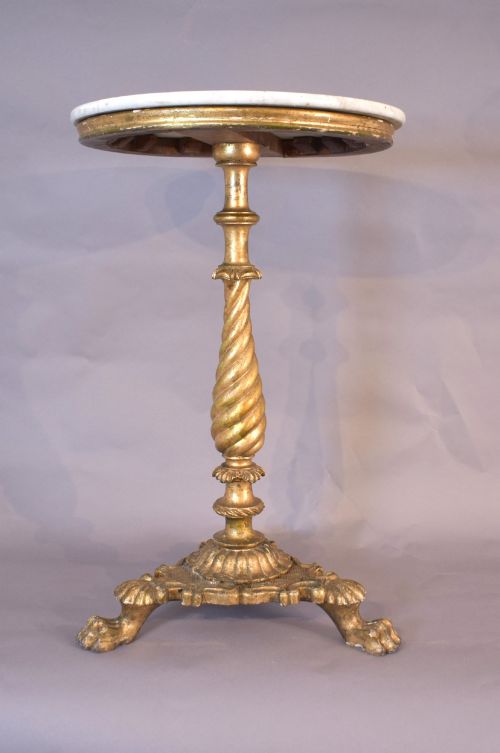
Buyers encounter diverse configurations, including tripod stands with marble tops, console tables supported by carved dolphins, and low coffee tables. Each form reflects the specific decorative requirements of domestic interiors across different periods.
How they were made
Wood serves as the foundational substrate, utilising materials such as lime wood, mahogany, rosewood, and general timber shaped by hand carving. Artisans apply gesso over the carved wooden surfaces to create a smooth, prepared ground for subsequent decoration.
Gilding involves the application of gold leaf or paint to achieve a metallic surface finish, often combined with painted or parcel-gilt details. Many tables incorporate fitted marble tops that sit directly within the carved wooden frame.
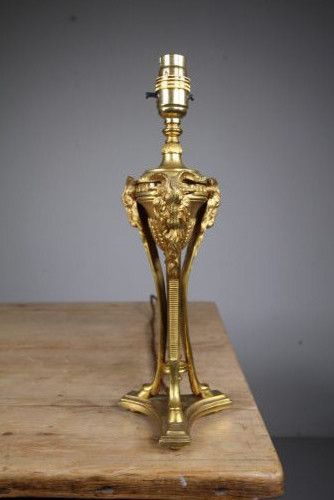
Dolphins and rams pop up as table supports, proving that historical woodcarvers rarely let a standard leg go unadorned.
What varies in quality
The crispness and depth of the hand carving dictate the visual refinement of the structure, separating surface decoration from genuinely sculptural work. Vigorous undercutting and detailed motifs indicate higher execution standards by the maker.
The application and retention of the gold leaf or gesso layers influence the character of the surface over time. Original gilding that shows subtle wear carries a different visual weight compared to later repainting or heavy restoration.
Whytock and Reid
The Carved Gilded Accent Table Glossary
- Giltwood
- Wood that has been coated with gold leaf or gold paint. This technique provides a luminous metallic finish that catches ambient light in a room.
- Gesso
- A plaster mixture applied to wood as a base for gilding or painting. It creates a smooth surface that allows fine details to be carved and defined.
- Ormolu
- Gilded bronze or brass applied as mounts or decorative elements on furniture. It adds contrasting metallic highlights to wood and marble structures.
- Tripod table
- A small freestanding table supported by three legs. This form balances portability with stable placement on uneven floors.
- Parcel-gilt
- A decorative treatment where only specific portions of an object are gilded while the rest is painted or left as exposed wood. This creates a contrasting two-tone effect.
Carved Gilded Accent Table: Frequently Asked Questions
Where should I place a gilded accent table?
These tables suit hallways, drawing rooms, or beside seating where a small surface is required. Their reflective finishes work effectively in spaces with lower natural light.
Position them away from heavy foot traffic to protect delicate carved edges and gold leaf surfaces from accidental knocks.
How do I care for a marble top?
Marble surfaces require regular dusting with a soft, dry cloth to prevent grit accumulation. Avoid acidic liquids, as they etch the polished stone.
Use coasters under glasses and place protective pads beneath decorative items placed on the table.
How do I identify a Louis XVI style table?
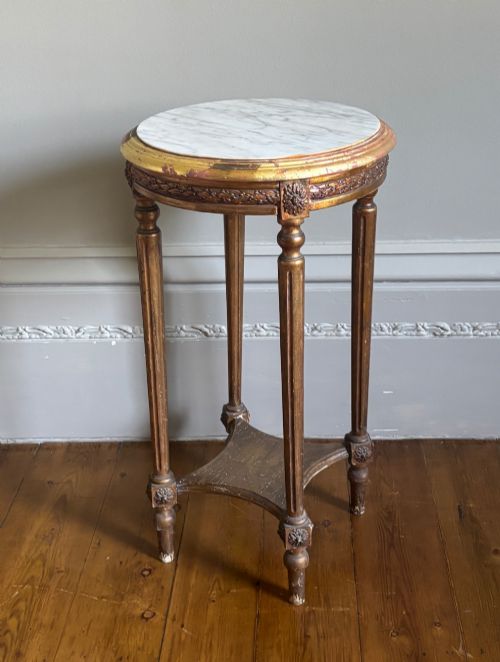
Louis XVI style pieces typically feature straight tapered legs, often fluted, drawing inspiration from classical antiquity. The ornamentation leans toward geometric symmetry and restrained floral motifs.
Carvings incorporate ribbons, pearls, and acanthus leaves rather than the asymmetrical curves associated with earlier Rococo designs.
What is the difference between a console and a side table?
Console tables are traditionally designed to stand against a wall, sometimes requiring wall fixings for absolute stability. They often feature elaborate front legs with a flat rear edge.
Side tables are fully freestanding pieces intended to sit beside chairs or sofas within an open room.