
Carved Front Writing Desk
A carved front writing desk brings together centuries of cabinet-making skill, offering a private writing surface alongside concealed drawers and pigeonholes.
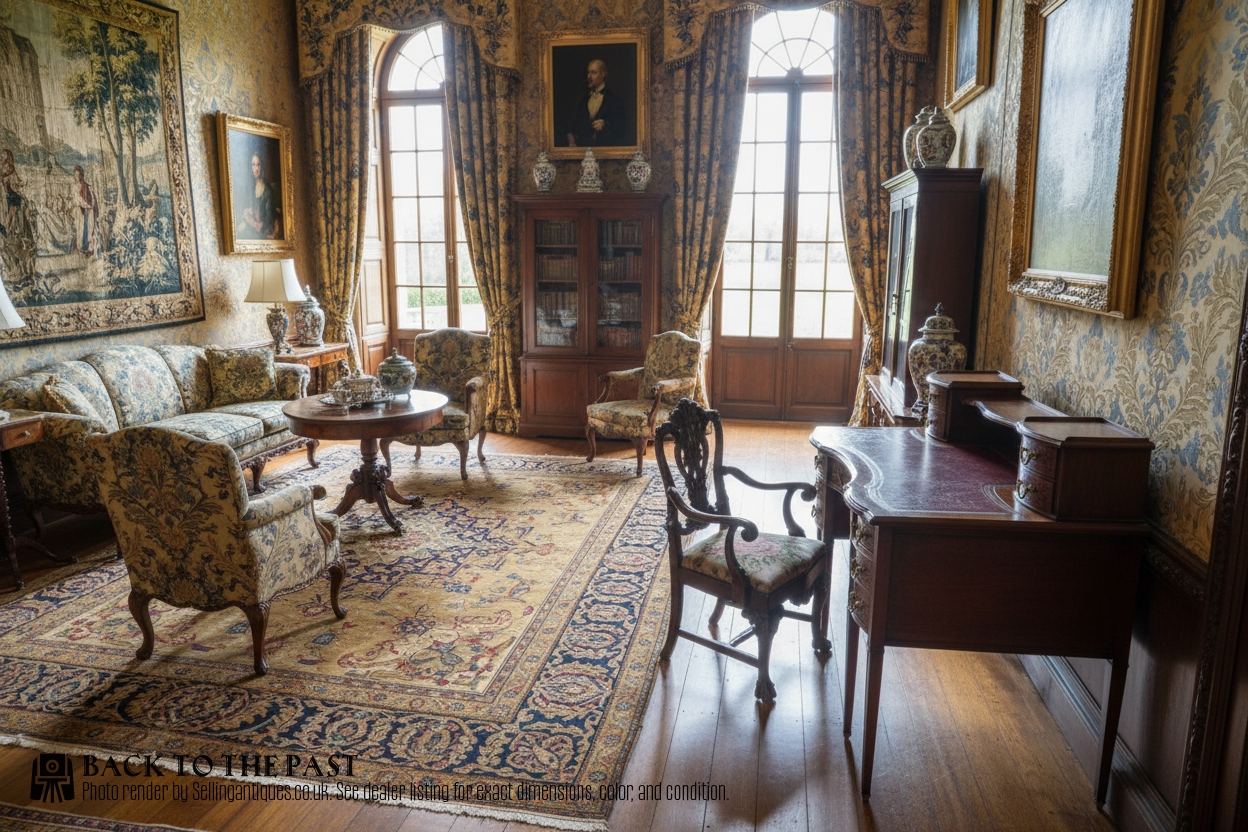
Carved Front Writing Desk
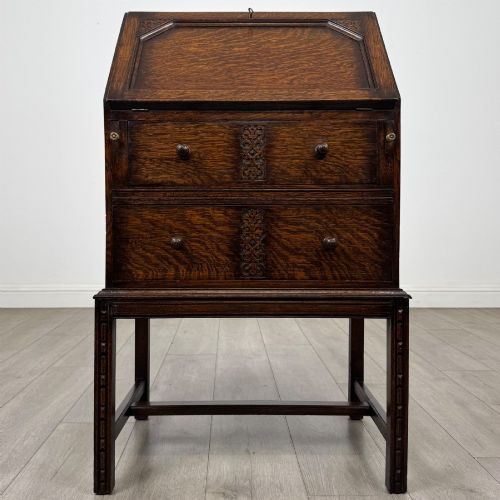
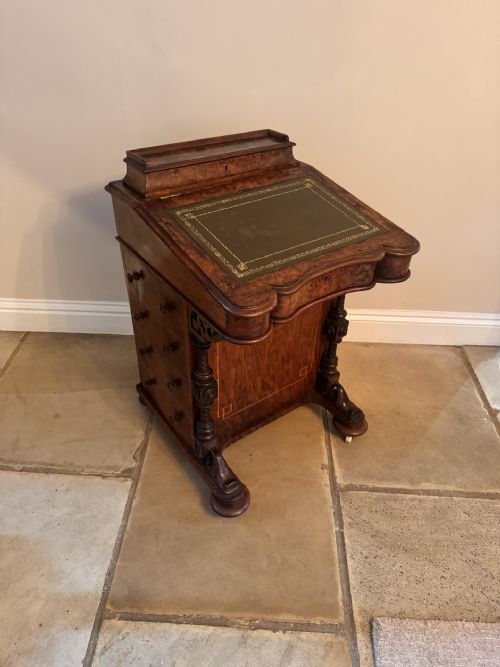
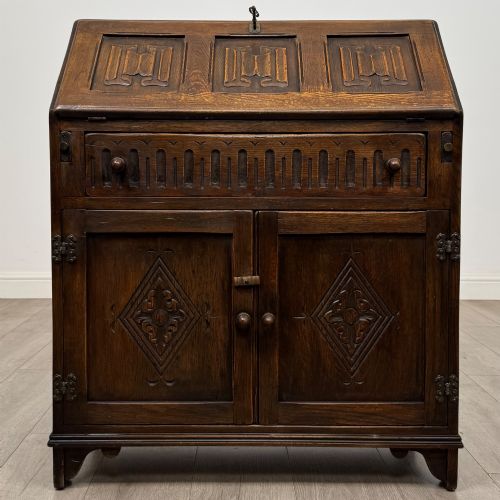
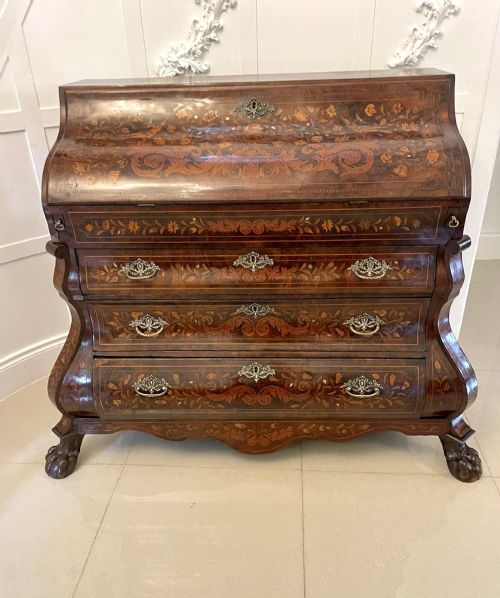
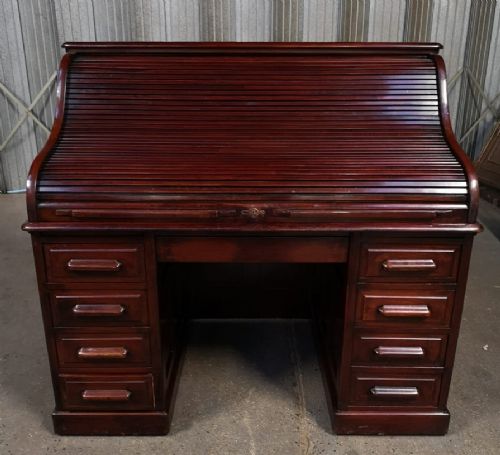
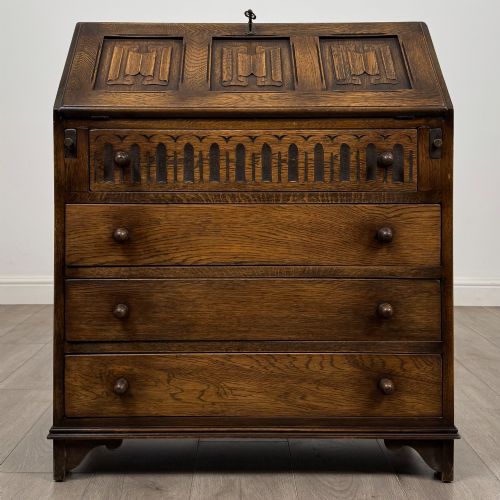
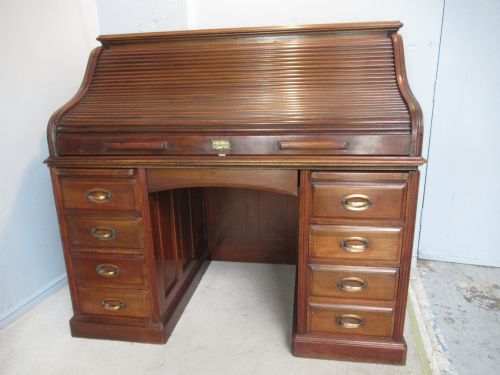
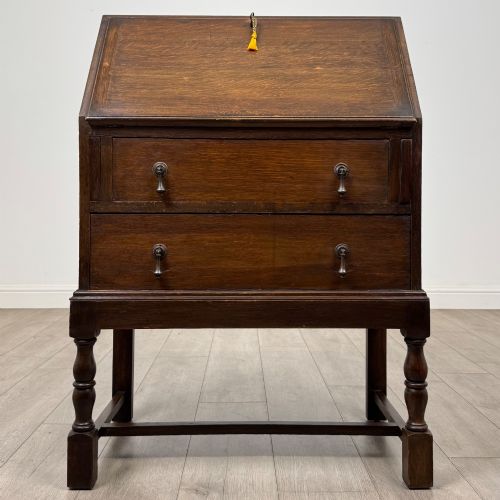
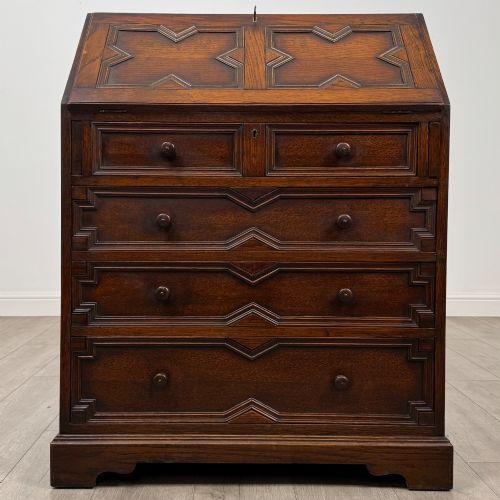
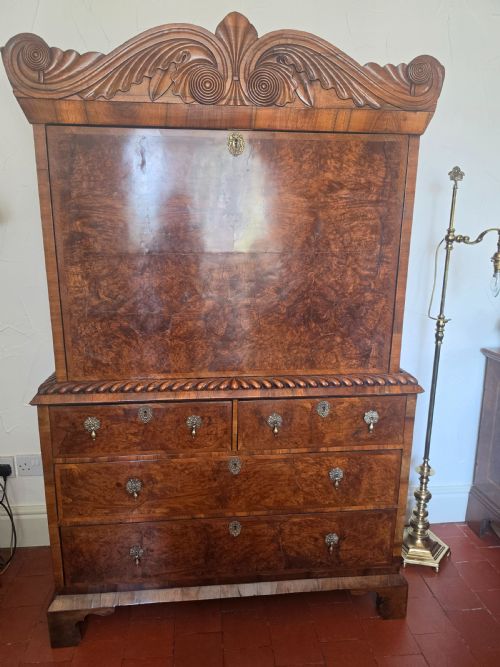
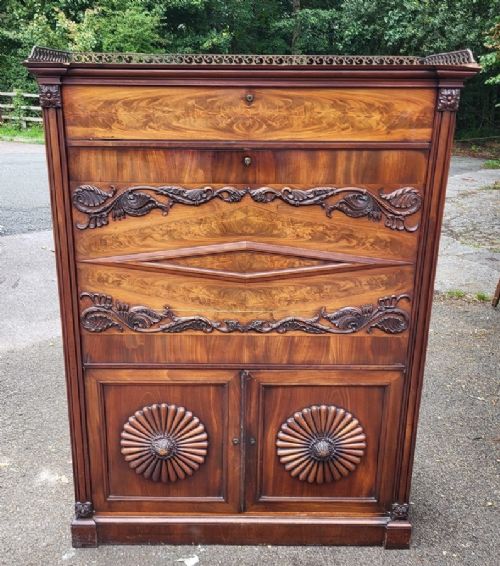
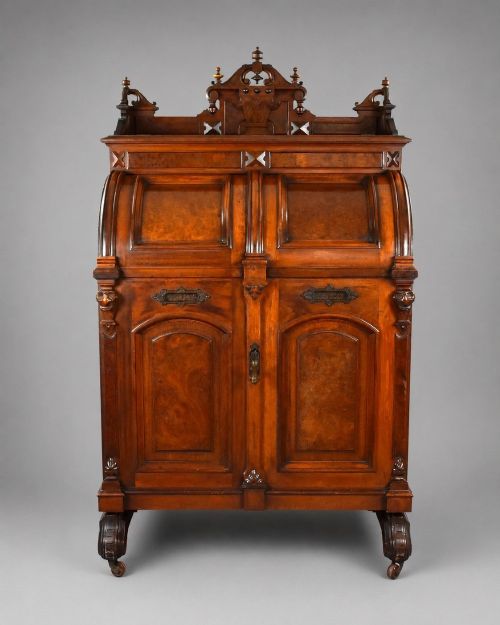
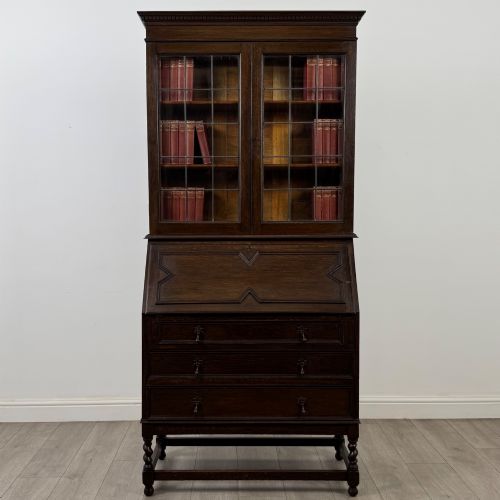
A carved front writing desk encompasses forms ranging from early oak slant front Bible boxes and seventeenth-century bureaux to Edwardian linenfold examples and Victorian Davenport desks. The pieces met most often on this page are sturdy oak bureaux and walnut writing desks bearing carved panels, linenfold motifs, or floral marquetry inlay.
Makers through the periods utilised dense hardwoods to construct writing cabinets that doubled as secure storage for correspondence and valuables. From compact writing tables to large bureau bookcases, these pieces combine a fall-front flap or sliding tambour with internal compartments suited to daily use.
How they were made
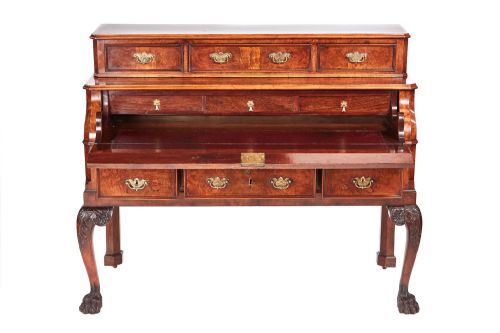
Cabinet makers relied principally upon solid oak, mahogany, and walnut, frequently applying burr walnut veneers or floral marquetry to enhance the exterior surfaces of finer desks. Brass handles, hinges, and key escutcheons punctuate the dark timber, while secondary interiors often incorporate fitted leather writing inserts and secret compartments.
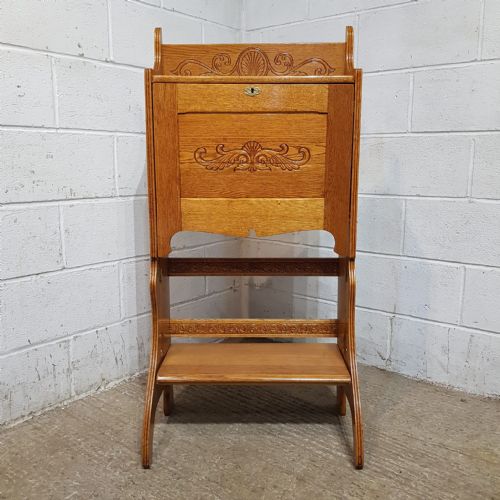
Structural integrity depended on traditional joinery, dovetailing drawer carcases, and hand-carving decorative elements such as linenfold panels or green man motifs directly into the timber. Surfaces received hand-applied finishes that highlighted the natural grain and figure of the wood over centuries of wear.
Secret drawers tucked behind pigeonholes rewarded persistent owners with hidden hiding spots for love letters and coin purses.
What varies in quality
The distinction between ordinary and exceptional pieces lies in the crispness of the hand-carving and the choice of timber veneer, such as highly figured burr walnut or flame mahogany. Superior examples display meticulous attention to internal drawer construction and well-matched grain patterns across the fall-front and writing surfaces.
Proportion and decorative restraint dictate the standing of a desk, with balanced proportions and restrained marquetry inlay achieving greater harmony than heavy or cluttered ornamentation. The survival of original brass hardware and fitted writing compartments further separates standard cabinet work from master-level production.
The Carved Front Writing Desk Glossary
- Bureau
- A writing desk featuring a sloping hinged lid that opens to reveal a fitted interior of small drawers and pigeonholes. This form evolved from simple desk boxes placed on tables into freestanding cabinets.
- Escritoire
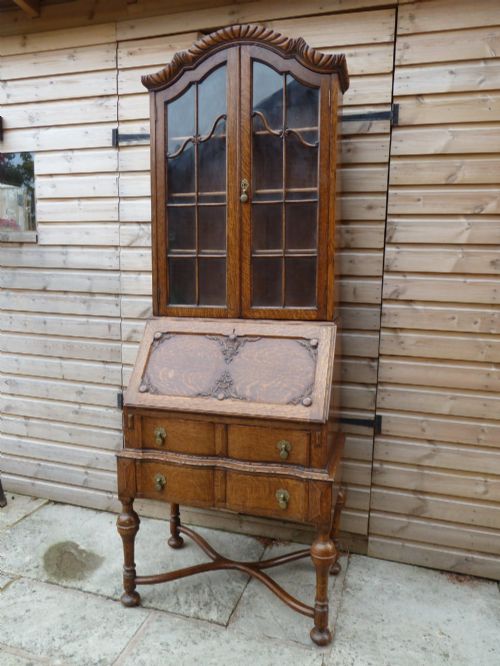
- A tall writing cabinet or secretary with a drop-front panel that conceals a writing surface and internal compartments. It typically stands on tall legs or a matching base chest.
- Linenfold
- A style of wood carving used on panels to imitate folded linen fabric. It appears frequently on Edwardian oak furniture drawing inspiration from earlier Tudor and Jacobean motifs.
- Marquetry
- The art of applying decorative pieces of veneer to a structure to form intricate floral or geometric patterns. Skilled artisans cut contrasting timbers together to achieve seamless pictorial designs.
- Davenport
- A small compact desk featuring a sloping writing surface above a pedestal of side drawers. It gained popularity during the Victorian era for boudoir and study use.
Carved Front Writing Desk: Frequently Asked Questions
What is a carved front writing desk?
A carved front writing desk is a piece of furniture designed for correspondence, featuring an ornamented exterior facade and a writing surface. These range from early oak slant-front boxes to elaborate walnut bureaux.
They combine enclosed storage with a fold-down or sliding desk area, keeping stationery and documents organised.
How do I identify the period?
Period identification relies on observing the timber species, construction methods, and decorative motifs present on the piece. Seventeenth-century examples use vernacular oak with hand-carved details, whilst Victorian and Edwardian desks often show machine-assisted joinery alongside revival styles.
Hardware styles, secondary woods inside drawers, and overall proportions offer further clues to the decade of manufacture.
Where were these desks placed?
These desks served as functional writing stations in libraries, studies, and principal rooms of grand houses. Their enclosed compartments allowed private letters to be secured away from household view.
Today, they function effectively as standalone writing tables or laptop stations in domestic home offices and living spaces.
How do I care for walnut veneer?
Walnut veneer requires protection from direct sunlight and extreme humidity changes to prevent the timber from drying out and lifting. Regular dusting with a soft, dry cloth preserves the polished surface without stripping natural oils.
Applying microcrystalline wax periodically maintains the lustre of the wood grain and protects against minor moisture marks.