
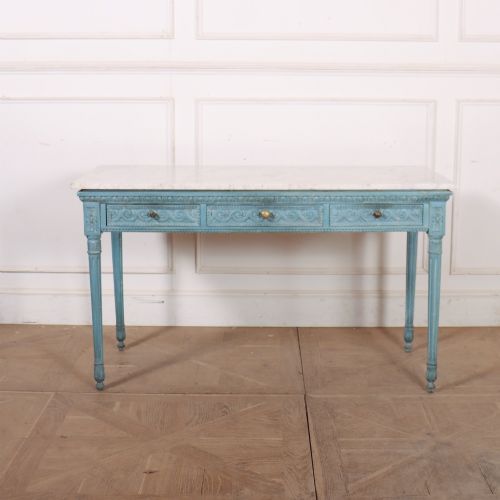
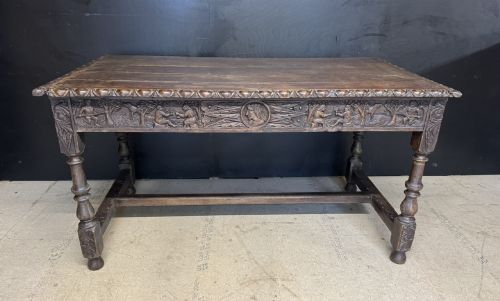
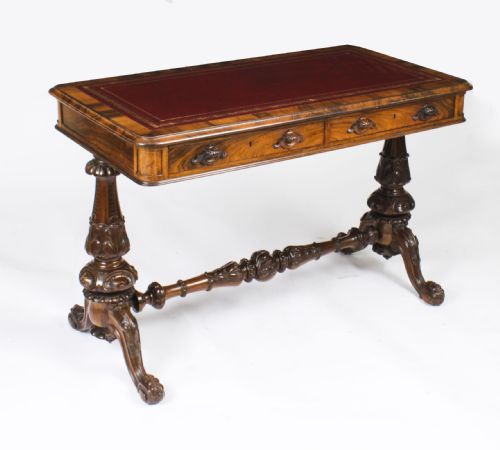


Carved Frieze Writing Table
A carved frieze writing table brings architectural depth and rich timber grain to a room, offering a sturdy surface designed for correspondence and study.
Carved Frieze Writing Table
A carved frieze writing table is a desk or library table defined by sculptural relief work along its horizontal underframe. The selections on this page span the eighteenth, nineteenth, and early twentieth centuries, capturing periods from Regency and William IV to Victorian and Italian Neoclassical.
Most examples you encounter here are constructed from hardwoods like mahogany, oak, walnut, or rosewood. Alongside traditional writing tables, the evidence includes related forms such as library tables, pedestal desks, side tables, and sofa tables.
Origins stretch across British workshops and continental makers, incorporating styles from Renaissance Revival to Flemish Renaissance Revival. Each piece functions as a primary workspace or a decorative centrepiece featuring integrated drawers and carved detailing.
How they were made
Cabinetmakers utilised dense timbers including mahogany, walnut, oak, and rosewood, often selecting well-figured grain for the primary top surfaces. Brass hardware, leather writing inserts, and occasional marble elements provide contrasting texture and functional utility.
Carving was executed by hand directly into the solid wood of the frieze or applied in relief, following stylistic idioms from Gothic Revival to Italian Neoclassical. Joinery relied on traditional methods suited to heavy pedestals, stretcher bases, and deep drawers.
A nineteenth-century rosewood library table doubles as a sturdy desk for a modern laptop while hiding centuries of ink stains.
What varies in quality
The distinction at the upper tier lies in the crispness and depth of the frieze carving and the selection of timber veneers. Master workshops employed richly figured rosewood, walnut, or mahogany that commands visual attention across the whole piece.
Proportion and structural integrity separate robust library desks from simpler side tables. Superior examples display balanced joinery, finely chased brass details, and original leather surfaces that integrate harmoniously with the carved frame.
Edwards & Roberts·William Trotter
The Carved Frieze Writing Table Glossary
- Frieze
- The horizontal architectural band situated immediately beneath the top surface of a table, frequently decorated with carved motifs. In these desks, this area houses the primary drawer fronts and sculptural relief work.
- Pedestal desk
- A heavy freestanding desk supported by two vertical columns or sets of drawers resting on the floor. This form provides substantial storage capacity beneath the main writing surface.
- Library table
- A large freestanding table designed for the centre of a room rather than against a wall, accessible from multiple sides. These often feature frieze drawers and finished backs.
- Sofa table
- A rectangular table traditionally placed against the rear of a sofa, typically featuring drop leaves and double pedestals or end supports. They share the refined timbers and detailed joinery of contemporary writing tables.
- Padouk
- A heavy, durable tropical hardwood with a distinctive reddish-brown colour used in fine cabinetmaking. It offers exceptional stability and takes a high polish.
Carved Frieze Writing Table: Frequently Asked Questions
What is a carved frieze writing table?
A carved frieze writing table is a desk or library table featuring ornamental relief carving along the horizontal band beneath the top surface. These pieces combine practical workspace with decorative woodwork characteristic of nineteenth-century revival styles.
They serve as functional desks or centre tables in studies and living spaces, offering surface area and integrated drawers. The carved woodwork distinguishes them from plain utilitarian tables.
How do I date a nineteenth-century desk?
Dating relies on examining the timber species, construction methods, and stylistic vocabulary present in the carved decoration. Pieces from the Regency and William IV periods display specific classical motifs, whereas Victorian examples often incorporate Gothic or Renaissance revival details.
Secondary woods inside the drawers and the style of the brass hardware provide further clues to the decade of manufacture. Comparing the proportions to documented pieces helps narrow down the era.
Where should I place a library table?
Library tables are designed to stand free in the middle of a room rather than pushed against a wall. Because their ornamentation and drawers often continue around multiple sides, they look best when viewed from all angles.
Ensure there is sufficient clearance around the table for chairs and movement. Placing a lamp or desk accessories on top completes the traditional arrangement.
How do I care for antique rosewood and mahogany?
Maintain these timbers by keeping them away from direct sunlight and sudden temperature changes that can dry out the wood. Regular dusting with a soft, dry cloth preserves the finish without building up residue.
Apply a traditional wax polish sparingly only when the wood appears dry. Avoid placing hot or wet items directly on the polished surface to protect the timber grain.