





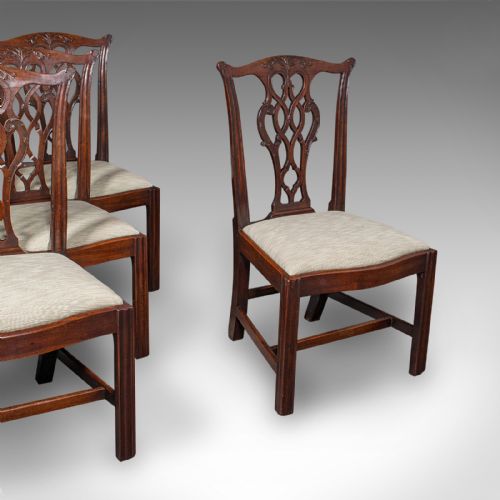


Carved Fretwork Side Chair
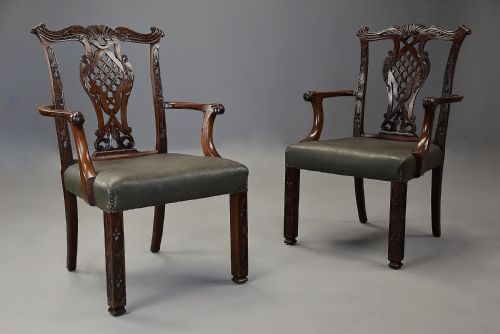
A carved fretwork side chair brings intricate pierced splats and distinct architectural lines straight into a room.
Carved Fretwork Side Chair
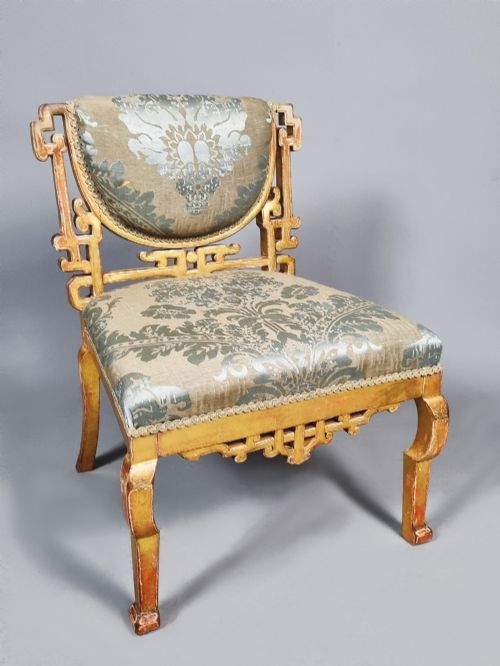
The form typically manifests as a dining chair or occasional seat with straight or cabriole legs, supporting an intricately pierced backrest. Mahogany remains the predominant wood across these listings, occasionally joined by giltwood or Chinese hardwood.
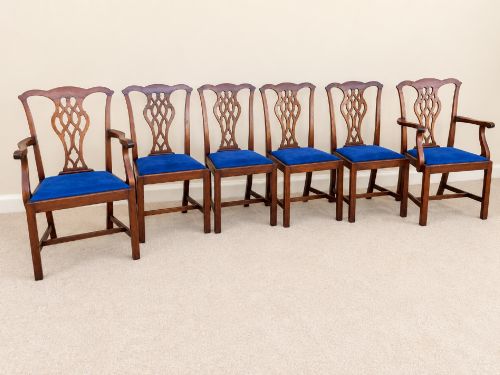
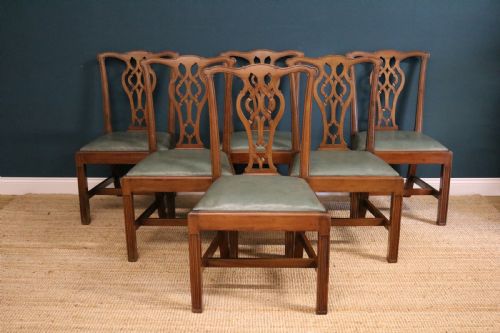
Revival pieces from the Edwardian era and the early twentieth century sit alongside nineteenth-century interpretations on the page. These later iterations often appear in sets, reflecting the enduring appeal of Chinese Chippendale and George II aesthetics in period interiors.
Materials and construction
Makers relied heavily on dense mahogany to achieve the crisp edges required for pierced fretwork backs. The material allowed artisans to cut intricate geometric and architectural patterns into the splat without compromising structural integrity.
Upholstered drop-in and fixed seats utilise traditional textiles including fabric, velvet, leather, silk damask, and cane. These coverings were secured over padded frames designed for formal dining or parlour use.
Carved Fretwork Side Chair Retail Price Guide 2026
Typical asking prices for carved fretwork side chair among the pieces listed under this phrase on Sellingantiques today, from the lower quarter to the upper quarter. They describe what is for sale here now, not the wider market.
Listings feature mahogany predominantly, alongside alternative materials such as giltwood, cane, leather, and silk damask.
Distinguishing quality
The depth and sharpness of the hand-carved detailing separate superior examples from simpler production. Master carvers achieved clean, undercut lattice work that catches the light, whereas lesser pieces display softer, shallower incisions.
Timber selection and timber figure dictate visual weight, with well-figured mahogany providing rich grain depth across the rails and stiles. Cohesion within a set of dining chairs also governs desirability, as matched proportions and uniform patination command greater attention.
Thomas Chippendale·Waugh & Son
The Carved Fretwork Side Chair Glossary
- Fretwork
- Ornamental work consisting of interlaced or pierced patterns resembling lattice. This technique defines the pierced backrests found on Chinese Chippendale chairs.
- Splat
- The central vertical strip of wood in the back of a chair. In these pieces, the splat is pierced and carved into intricate geometric designs.
- Chippendale Revival
- A late nineteenth and early twentieth century movement recreating the styles associated with Thomas Chippendale. These pieces draw heavily on mid-eighteenth-century Chinese and Gothic motifs.
- Bergere
- An enclosed upholstered armchair with wooden framing, occasionally featuring cane work panels. It provides a distinct seating form compared to the standard open side chair.
- Giltwood
- Wood that has been treated with gold leaf or gilt preparation. This finish appears on high-status decorative seating from the nineteenth century.
Carved Fretwork Side Chair: Frequently Asked Questions
What defines a Chinese Chippendale chair?
A Chinese Chippendale chair incorporates pierced fretwork splats, straight legs, and often pagoda or lattice motifs derived from eighteenth-century pattern books. These elements reflect a distinct taste for Asian-inspired design within British furniture making.
Makers reinterpreted these oriental motifs through robust mahogany construction, creating striking silhouettes that endured across multiple revival periods.
How do I date a revival chair?
Dating revival pieces requires examining secondary timbers, tool marks, and the uniformity of the carving. Edwardian and late nineteenth-century interpretations often exhibit machine-assisted precision alongside hand finishing.
Comparing the construction methods of the seat frame and stretcher joints to known period examples helps clarify whether a piece is eighteenth-century or a later revival.
Were these chairs used for dining?
Many carved fretwork side chairs served around large dining tables in formal houses. Their sturdy mahogany frames and upholstered drop-in seats were engineered for daily gathering and entertaining.
Some lighter low nursing chairs and armchairs were designed for bedroom or parlour use, offering lower seating positions and refined decorative carving.
How should I care for mahogany and cane?
Mahogany benefits from occasional dusting and application of appropriate wax to nourish the grain and preserve the patination. Avoid placing these chairs in direct sunlight or near heat sources to prevent timber splitting.
Cane seats require gentle cleaning with a damp cloth and should not be overloaded, as tensioned natural cane dries out and snaps over time in overly arid environments.