



Carved Fretwork Cabinet
A carved fretwork cabinet brings intricate openwork timber into a room, offering display space with a distinct architectural outline.
Carved Fretwork Cabinet
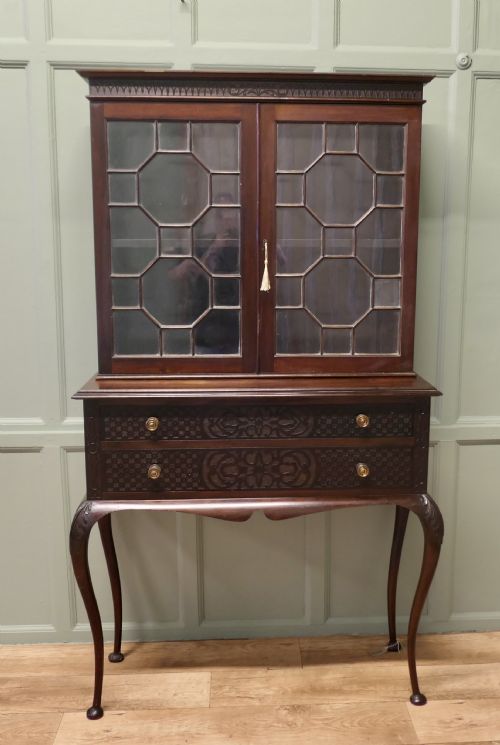
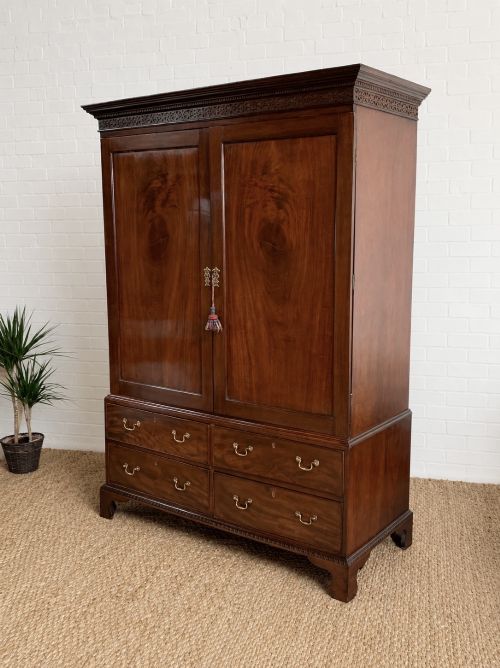
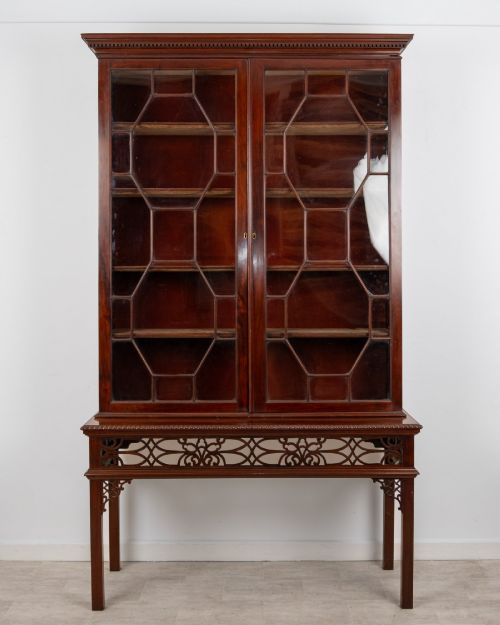
When you search for a carved fretwork cabinet, you encounter display cases, bookcases, corner units, and linen presses defined by pierced wooden decoration. These pieces predominantly date from the nineteenth century, including Victorian, Edwardian, and specific revival periods, alongside eighteenth-century examples.
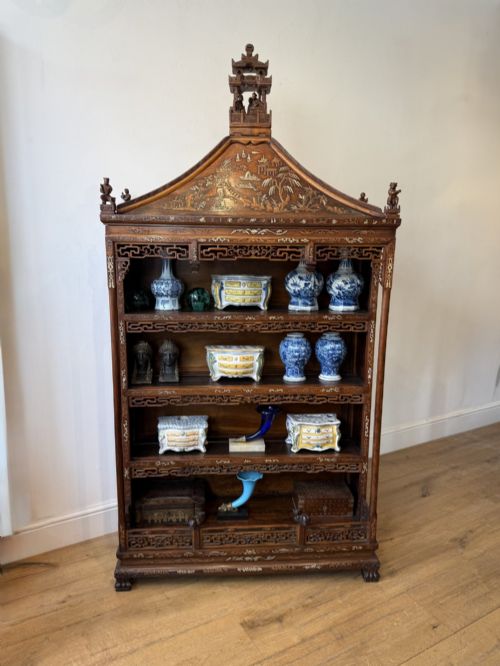
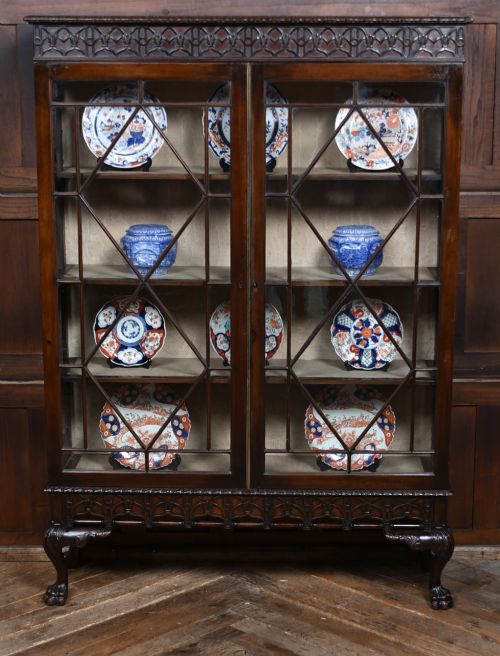
The aesthetic leans heavily toward Chippendale Revival, Chinese Chippendale, and Chinoiserie styles, incorporating pagoda details and hardwood construction. You are most likely to meet mahogany and walnut display cabinets and bookcases carrying open fretwork cornices or glazed doors.
Forms extend beyond standard storage to include canterburys, sideboards, and wall-hanging corner cupboards. Each piece utilises openwork panels to lighten heavy timber frames, creating a visual rhythm across doors and cornices.
What varies in quality
The refinement of the pierced carving separates standard production from exceptional examples, as hand-cut lattice work displays sharper internal angles and cleaner depths than machine-sawn alternatives. The choice of timber also dictates grade, with figured burr walnut and dense padouk commanding greater substance than plain secondary hardwoods.
Proportion and architectural balance define the upper tier of these cabinets, where cornices, astragal glazing bars, and bracket feet align harmoniously. Lower quality pieces often rely on applied surface ornament rather than structural pierced work integrated directly into the carcase or cornice.
Music canterburys occasionally still retain their original internal dividers designed to keep loose sheet music upright and orderly.
Gabriel-Frederic Viardot·Robert Strahan
The Carved Fretwork Cabinet Glossary
- Fretwork
- Ornamental perforated timber cut into flat patterns. This technique creates lightweight decorative screens across cornices and cabinet doors.
- Astragal
- Moulding framing glass panes within a cabinet door. It divides the window into smaller glazed segments.
- Canterbury
- Low stand fitted with partitions for sheet music or magazines. Victorian examples often incorporate under-tiers and drawer storage.
- Chinoiserie
- European decorative style reflecting Chinese artistic motifs. It frequently appears alongside fretwork in pagoda forms and lacquered surfaces.
- Breakfront
- Cabinet design where the central section projects forward from the flanking wings. This format adds architectural depth to large bookcases.
Carved Fretwork Cabinet: Frequently Asked Questions
What is a fretwork cornice?
A fretwork cornice is an ornamental band running along the top edge of a cabinet, featuring pierced wooden patterns.
Cabinet makers used this openwork technique to transition smoothly from the vertical sides to the top moulding without adding excessive weight.
How do I identify a Chippendale revival piece?
Chippendale revival pieces emulate eighteenth-century designs through carved mahogany frames, pierced fretwork, and classical cabriole legs.
These later interpretations date predominantly from the Victorian and Edwardian eras, combining earlier motifs with contemporary construction methods.
Where were corner cabinets placed?
Corner cabinets were designed to fit snugly into room junctions, making efficient use of overlooked domestic space.
Victorian homes utilised these hanging or floor-standing units to display ceramics and glassware without blocking walking paths.
What timber was used most often?
Mahogany and walnut form the majority of these cabinets, valued for their strength and rich colour.
Makers also incorporated exotic hardwoods, rosewood, and satinwood when producing specialised display cases or Japanese style furniture.