



Carved French Pot Cupboard
A carved french pot cupboard brings practical bedside storage and continental character to a room.
Carved French Pot Cupboard
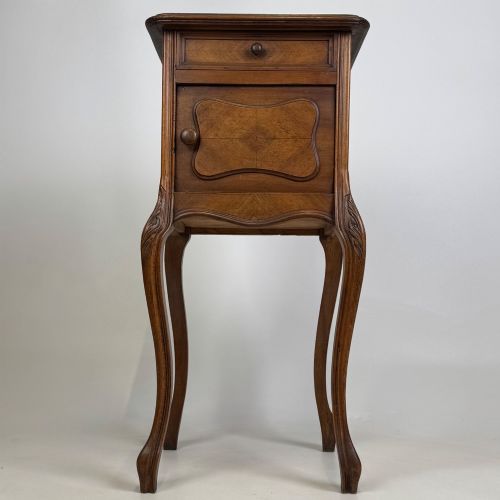
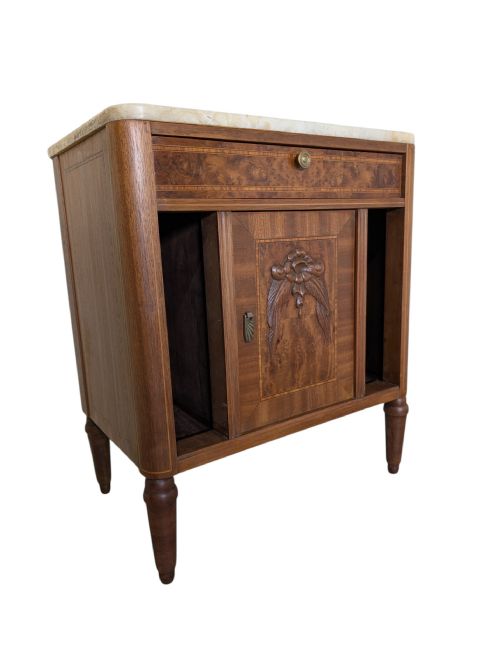
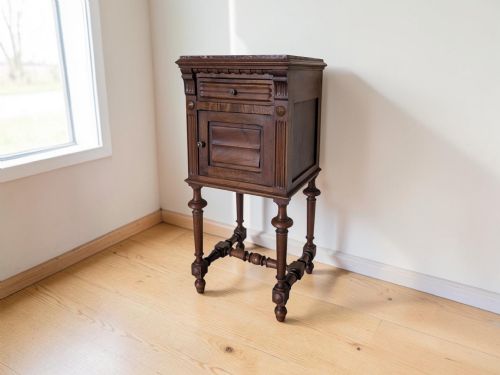
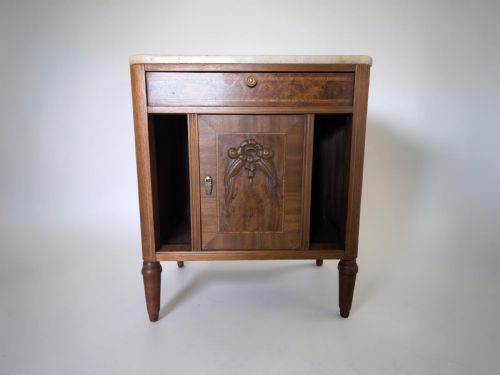
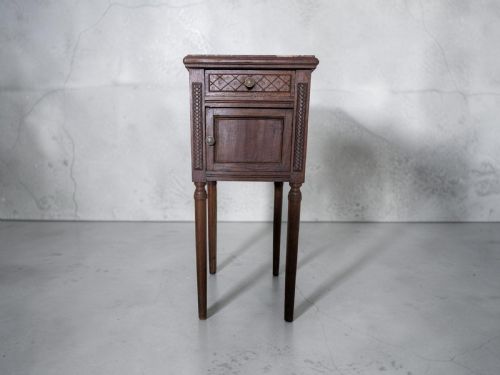
A carved french pot cupboard is a compact bedside cabinet designed for continental bedrooms, functioning as a nightstand or small side cupboard. These pieces typically stand beside a bed to house small personal items behind a single door or within a drawer.
The versions met most often on this page date from the nineteenth century through the early twentieth century, spanning periods like the Edwardian era and the 1930s. They appear in forms such as bedside cabinets, night tables, and side cabinets.
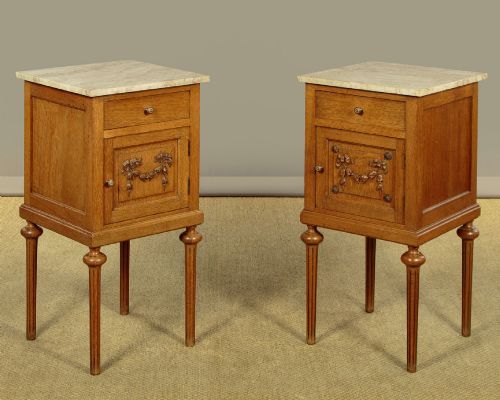
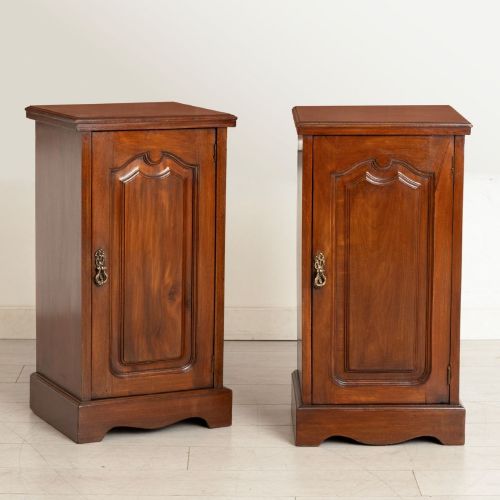
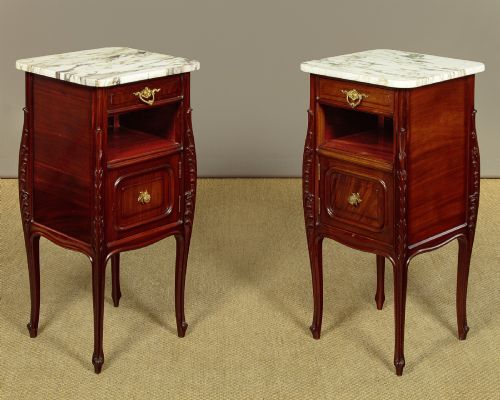
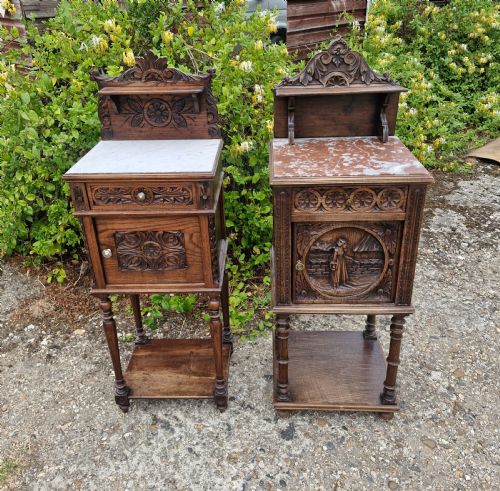
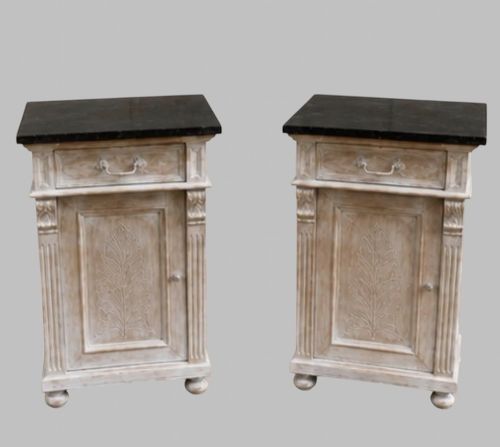
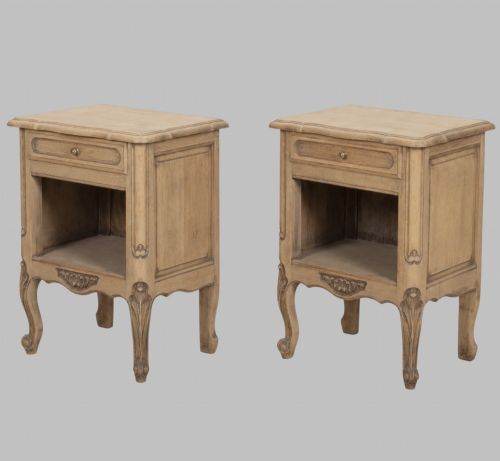
Makers and regional workshops produced these cabinets in distinct regional aesthetics, including French Provincial, French Henri II, and revival styles such as Louis XV. Buyers encounter both single cabinets and matched pairs ready for domestic placement.
How they were made
Cabinet makers utilised dense hardwoods such as walnut, oak, and mahogany for the main carcase and framing, frequently applying burr walnut or quarter veneers to decorative surfaces. These timbers provided the structural integrity needed for daily bedside use.
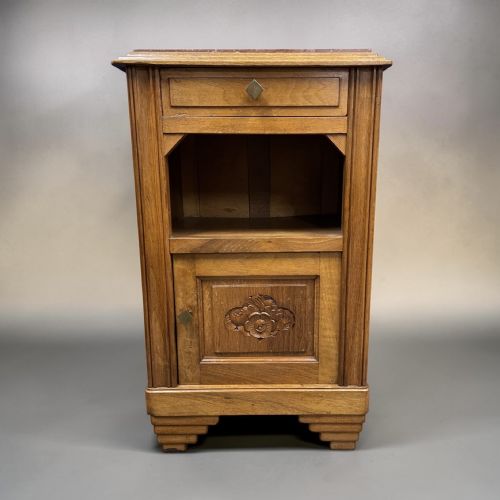
Many examples incorporate fitted marble tops in white or coloured stone, paired with brass handles and hinges on the doors and drawers. Wood carving, barley twist turnings, and painted finishes define the exterior ornamentation of the cabinets.
Inside some cabinets, hidden compartments once kept midnight necessities discreetly tucked away from morning guests.
What varies in quality
The grade of timber selection and the depth of hand-carved detailing distinguish standard utility pieces from finer examples. Heavier mouldings, crisper floral or geometric carvings, and well-figured walnut veneers indicate superior workshop production.
The integration of heavy fitted marble slabs and quality brass hardware elevates the finishing standard of individual cabinets. Preservation of original surface finishes, whether polished wood, painted details, or bleached oak, dictates the desirability of each piece.
The Carved French Pot Cupboard Glossary
- Pot cupboard
- A small bedside cabinet originally constructed to house a chamber pot behind its single door. Modern owners repurpose them as general bedside tables.
- Marble top
- A fitted slab of stone set into the upper surface of the cabinet. This provided a durable, wipe-clean surface resistant to water and spills.
- Louis XV Revival
- A nineteenth-century decorative style emulating the curves, cabriole legs, and naturalistic carving of the mid-eighteenth-century French court. It appears frequently on walnut cabinets from this era.
- Barley twist
- A woodworking technique turning timber into a spiral column shape. It is commonly found on the legs or upright supports of nineteenth-century French tables.
- Quarter veneer
- Slices of timber veneer arranged so the grain patterns meet in symmetrical quadrants. This technique creates geometric decorative panels on cabinet doors.
Carved French Pot Cupboard: Frequently Asked Questions
What did people use a pot cupboard for?
These compact cabinets served bedside functions in nineteenth-century bedrooms, specifically holding a chamber pot in the enclosed lower compartment. A small drawer above typically held personal nighttime items.
Today, buyers use them as standard bedside tables or small hallway storage units. The interior space suits books or modern bedroom accessories while maintaining a small footprint.
How do I identify a French style?
French cabinets from the nineteenth and early twentieth centuries often feature specific regional design cues, such as shaped panels, carved scrolling foliage, and distinct hardware. Elements like marble tops and turned barley twist supports frequently accompany these continental forms.
Revival designations link the decorative motifs to earlier French periods like Louis XV or Henri II. These styles guide collectors on the ornamental vocabulary used by period cabinet makers.
Are marble tops original to the cabinets?
Many nineteenth-century French bedside cabinets were manufactured specifically to receive fitted stone slabs. The marble provided a practical surface for water jugs and washing equipment before indoor plumbing.
Examining the rebate in the wooden top reveals whether the stone sits flush as intended by the maker. Most period pieces retain their original marble inserts.
How do I care for a wood and marble cabinet?
Polished timber surfaces require occasional treatment with suitable wax to nourish the grain and protect against moisture. Avoid placing damp items directly onto unsealed wood.
Marble tops need simple wiping with a damp cloth and mild soap to prevent staining. Acidic liquids like citrus juice can etch stone surfaces and should be cleaned up immediately.