
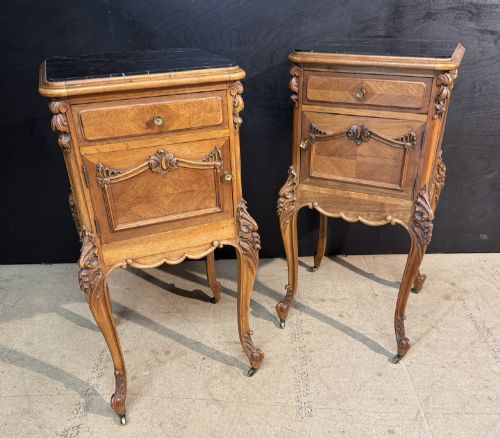
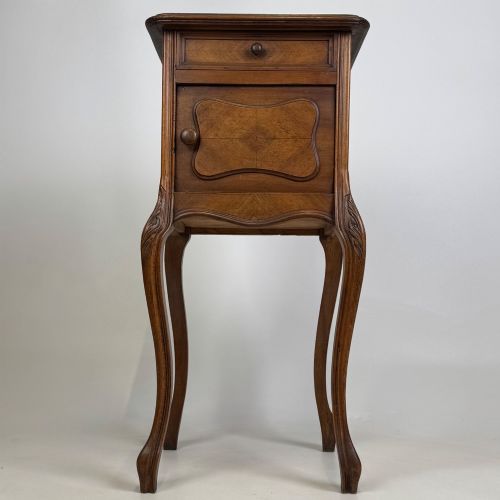
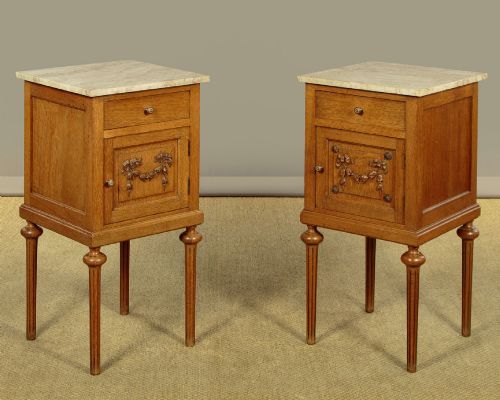
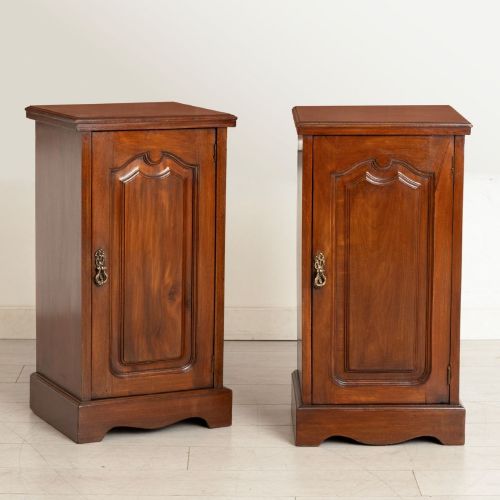

Carved French Bedside Cupboards
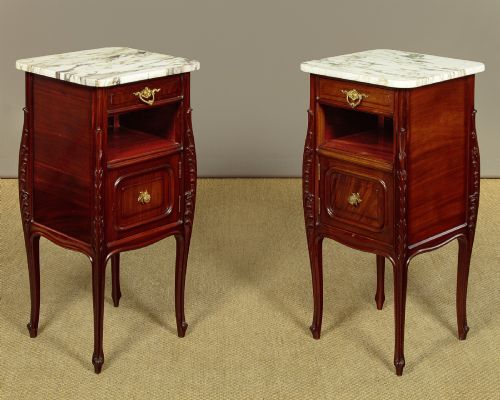
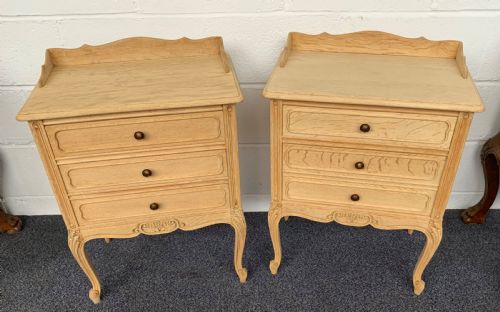
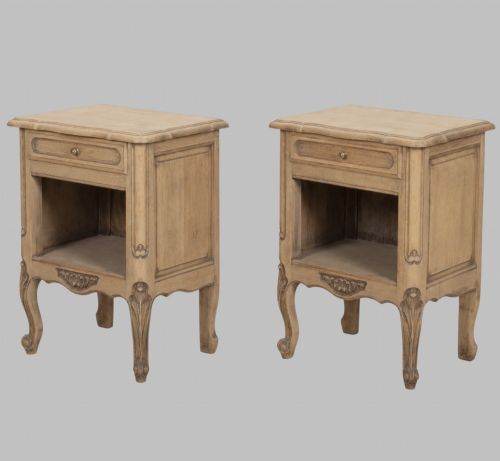
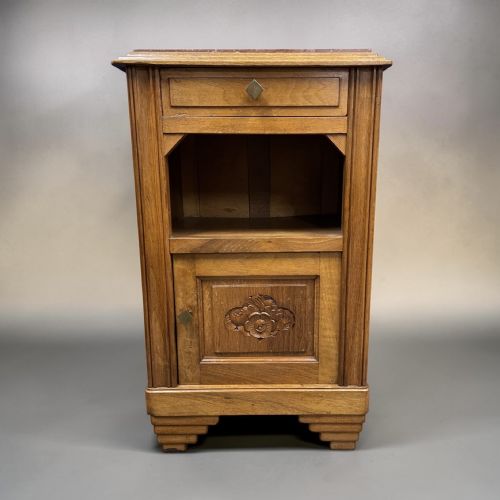
These carved french bedside cupboards bring practical surface space and traditional continental character to a bedroom.
Carved French Bedside Cupboards
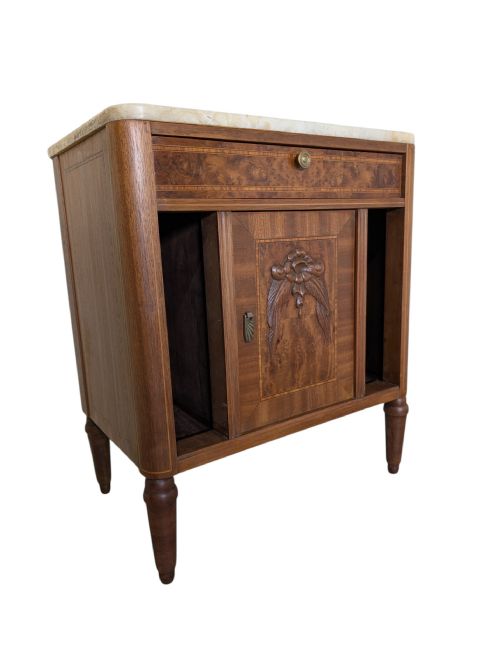
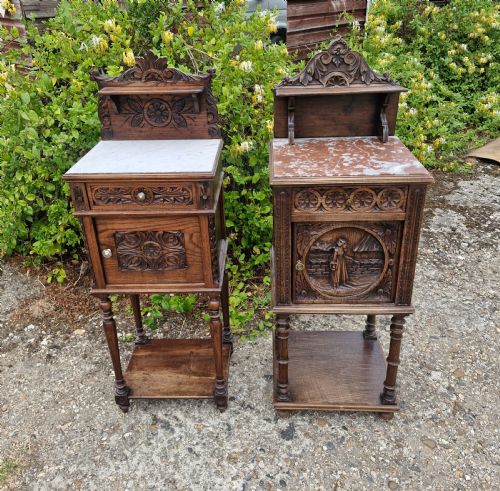
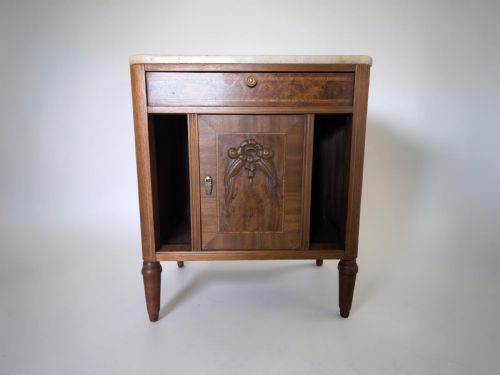
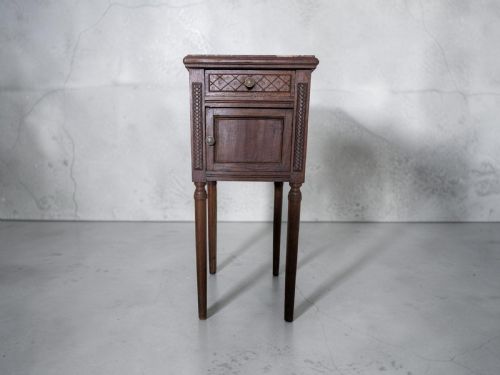
Carved french bedside cupboards include bedside tables, side cabinets, and chests of drawers designed for nocturnal storage. These pieces emerge across periods spanning the nineteenth century through to the art deco era of the nineteen thirties.
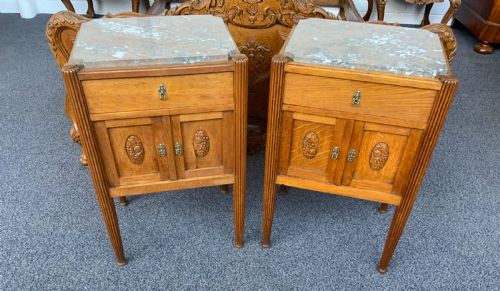
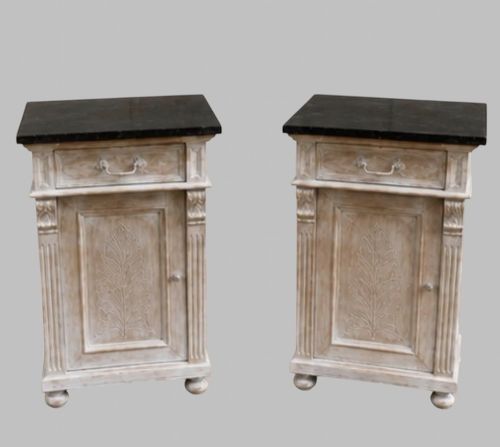
Buyers frequently encounter matching pairs alongside single cabinets. The forms span regional styles like French Provincial and French Chateau alongside revival aesthetics such as Louis XV and Henri II.
Woods such as walnut, oak, and mahogany form the primary carcasses. Many examples incorporate fitted marble tops and brass hardware.
How they were made
Cabinetmakers utilised dense timbers including walnut, oak, and mahogany for the structural frames. These woods were carved by hand with panels, moulding, and decorative motifs characteristic of French cabinetmaking traditions.
Heavy stone inserts such as Belgian Sainte-Anne marble were cut and polished to fit precisely into the top surfaces of the cabinets. Brass handles, mounts, and hinges were secured to complete the functional hardware of the doors and drawers.
The listings show these cupboards utilising walnut, oak, and mahogany alongside marble and brass across the nineteenth and twentieth centuries.
What varies in quality
The standard of carving defines the distinction between standard production and superior craftsmanship. Crisp, deep relief work executed directly into the timber demonstrates greater skill than shallow or mechanically pressed decoration.
Materials also separate tiers of production, particularly the selection of figured burr walnut veneers or thick slabs of polished marble. The integration of structural joinery that maintains stability over decades indicates higher workshop standards.
The Carved French Bedside Cupboards Glossary
- Louis XV Revival
- A nineteenth-century style imitating the flowing curves, cabriole legs, and asymmetrical ornamentation of the mid-eighteenth-century French court. This aesthetic influenced many bedside cabinets produced during the Victorian and Edwardian eras.
- Belgian Sainte-Anne Marble
- A dark, distinctive grey or black limestone with white calcite veins commonly quarried in Belgium. Cabinetmakers frequently used this specific stone for the inset tops of continental tables.
- Barley Twist
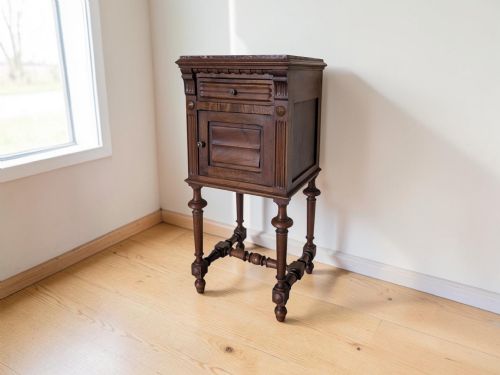
- A carved wooden column or furniture leg turned in a spiral resembling a twisted rope. This detail appears on nineteenth-century side cupboards and night tables.
Carved French Bedside Cupboards: Frequently Asked Questions
What are carved french bedside cupboards?
These pieces are small bedside cabinets and nightstands originating from continental design traditions. They offer enclosed storage and surface space next to a bed.
Craftsmen built them using traditional hardwoods and frequently topped them with fitted marble slabs. They appear in styles ranging from provincial rustic to elaborate revival periods.
How were they used historically?
Bedside cupboards served to hold chamber pots, nightlamps, and personal items out of sight before modern plumbing and electrification. The enclosed cabinet section kept chamberware concealed.
The upper surface provided an accessible platform for a candle or water jug during the night.
How do I live with them?
These cabinets integrate easily into modern bedrooms as functional nightstands with distinct character. Their compact proportions allow them to fit beside beds of varying heights.
Marble tops offer durable surfaces for nighttime water glasses and lamps, requiring only simple cleaning. The internal shelving accommodates books and personal items.
How do I tell periods apart?
Dating relies on observing structural characteristics, timber choices, and decorative styles. Nineteenth-century examples often display heavy carved walnut or mahogany with traditional joinery.
Later pieces from the nineteen twenties and thirties introduce art deco geometries or bleached oak finishes. Revival pieces mimic earlier royal French motifs but show nineteenth or early twentieth-century construction methods.