


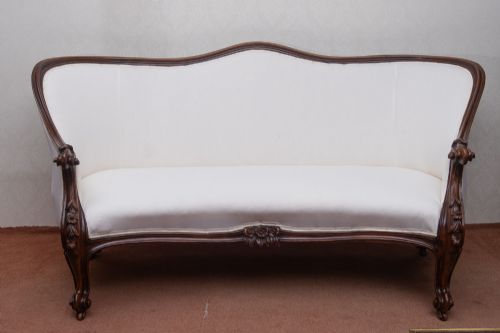


Carved Frame Salon Couch
These carved frame salon couch pieces combine historic woodwork with upholstered comfort, offering a traditional seating choice for formal rooms.
Carved Frame Salon Couch
A carved frame salon couch represents a form of formal seating designed for drawing rooms and reception spaces, appearing across nineteenth century periods. These pieces combine exposed timber structures with upholstered seats and backs, serving as both functional furniture and decorative centrepieces.
Buyers meet examples spanning Victorian, Edwardian, and Regency eras alongside French revival styles. The selection includes settees, sofas, and daybeds constructed in mahogany, walnut, giltwood, and rosewood.
Most entries on this page originate from the Victorian period, frequently utilising mahogany or walnut frames. Forms range from button-backed cameo settees to large giltwood frames and inlaid Edwardian settees.
How they were made
Maker construction relies on dense timbers such as mahogany and walnut, shaped through hand carving to form ornate show-frames. Giltwood examples utilise applied gold leaf over gesso and wood grounds, creating a reflective surface.
Upholstery techniques involve traditional stuffing secured to webbing and springs, finished with textile covers including velvet, fabric, and brass detailing. Frames incorporate joinery suited to supporting weight while displaying detailed scrollwork and floral motifs.
Some Victorian settees include hidden casters so hosts could easily rearrange the drawing room for musical recitals.
What varies in quality
Quality rests in the crispness of the timber carving and the architectural proportion of the frame. Superior pieces display deep, undercut relief work and balanced symmetry rather than shallow or mechanical shaping.
The integrity of the structural joinery and the selection of fine hardwoods or genuine gilt finish distinguish better examples from simpler workshop production. Original upholstery condition and fabric choice also alter the overall character of the piece.
The Carved Frame Salon Couch Glossary
- Giltwood
- Wood that has been coated with gold leaf or powder. This finish appears frequently on formal French and Regency salon seating.
- Cameo settee
- A small upholstered sofa featuring a carved wooden frame that resembles the profile of a cameo. The backrest often showcases elaborate cresting.
- Rococo Revival
- A nineteenth century design movement that imitates eighteenth century French curves and scrollwork. Pieces in this style feature asymmetrical ornamentation and naturalistic floral carvings.
- Chesterfield settee
- A deep-buttoned upholstered sofa traditionally finished in leather or fabric. Victorian iterations often combine this deep-buttoning with exposed walnut or mahogany frames.
Carved Frame Salon Couch: Frequently Asked Questions
Where should I place a salon couch?
These pieces suit formal reception rooms, large hallways, or living spaces where the decorative timber frame remains visible. They function effectively as statement seating away from walls.
Ensure adequate room around the furniture to appreciate the carved details and timber grain without crowding the space.
How do I care for antique upholstery?
Vacuum textile surfaces gently using a soft brush attachment to remove dust without damaging the fabric fibres. Protect older materials from direct sunlight to prevent fading.
Treat exposed wood frames with appropriate furniture wax sparingly, avoiding contact with the fabric covering.
Can these couches be re-upholstered?
Many examples accommodate new fabric choices, and some listings specifically note a need for re-upholstery. Traditional methods use webbing and springs that skilled craftspeople can restore.
Check the internal frame condition before undertaking restoration to ensure the timber supports modern padding securely.
How do I distinguish Victorian from Edwardian styles?
Victorian pieces tend to feature heavier timbers, deep buttoning, and darker finishes with elaborate, naturalistic carvings. Walnut and mahogany dominate this era.
Edwardian examples often appear lighter in scale, sometimes incorporating inlaid decoration and simpler structural lines while retaining traditional comfort.