
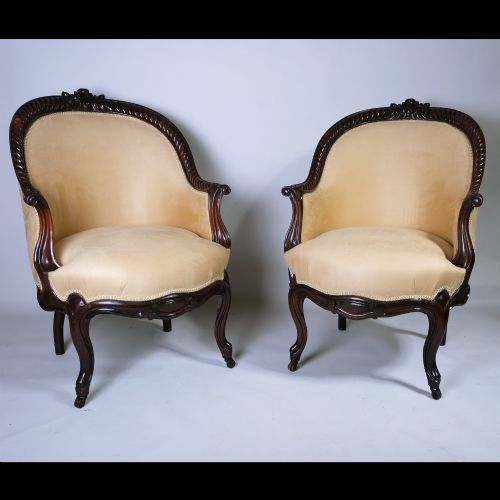
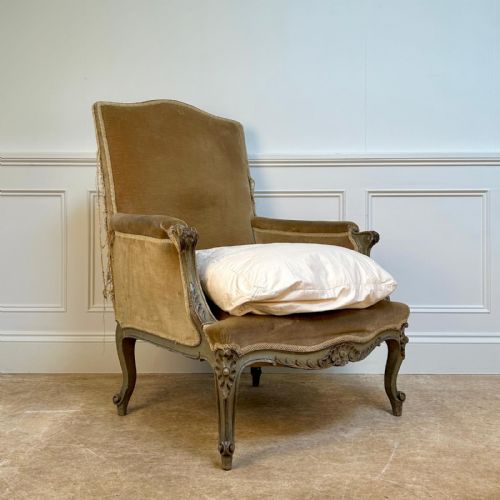
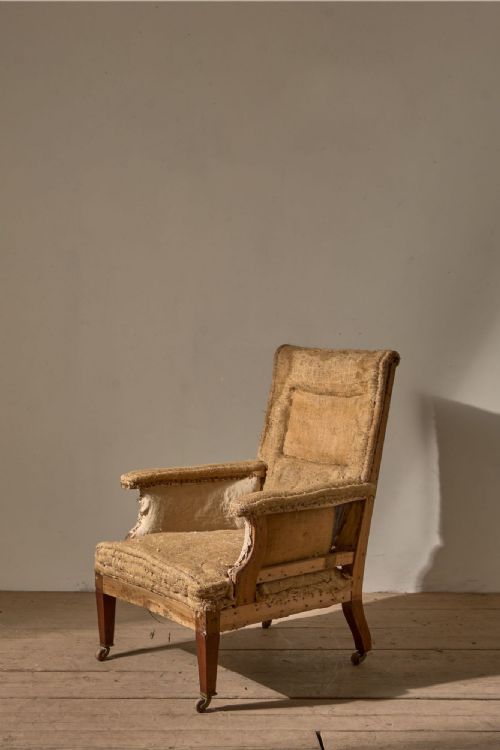
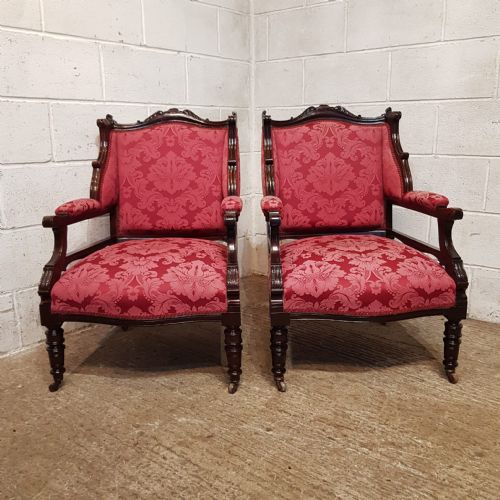



Carved Frame Fireside Armchair
A carved frame fireside armchair offers deep-seated comfort paired with timber structure, spanning Victorian, Edwardian, and Regency periods.
Carved Frame Fireside Armchair
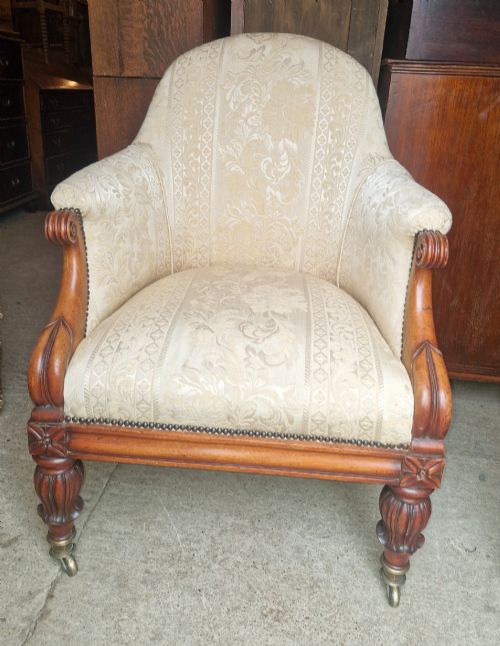
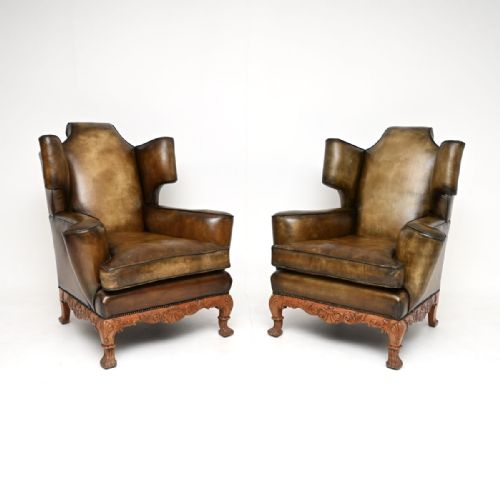
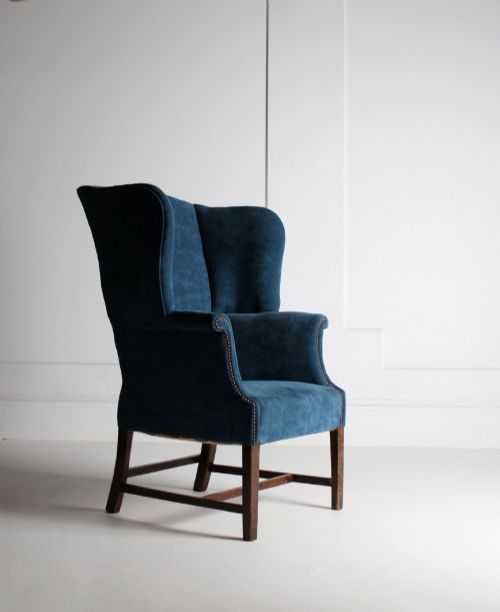
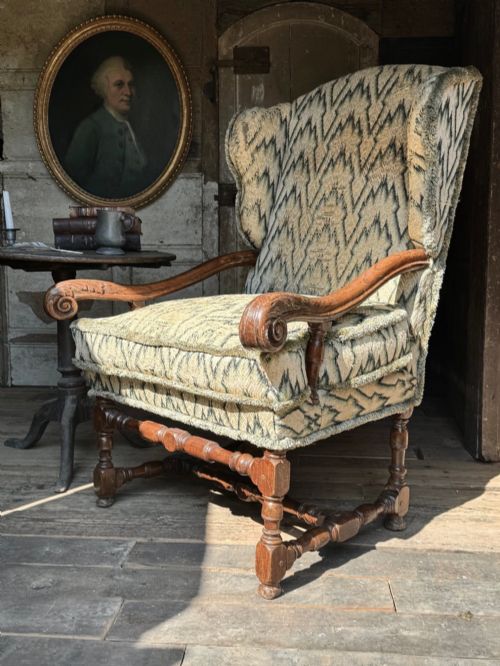
A carved frame fireside armchair combines structural woodwork with upholstered comfort designed for hearthside placement. These seats emerge across periods from Regency through to the Edwardian era, taking forms such as wingbacks, library chairs, and nursing chairs.
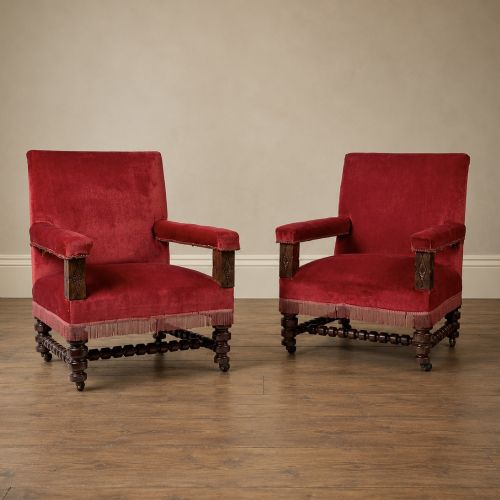
The versions most commonly met on this page feature mahogany or walnut frames with upholstered pads, textiles, velvet, or leather. They balance decorative timber carving with practical proportions suited to domestic rooms.
Makers shaped these armchairs to serve specific domestic functions, whether low-slung nursing seats or high-backed wing chairs designed to block draughts. The evidence shows styles ranging from simple Victorian mahogany frames to French revival designs.
How they were made
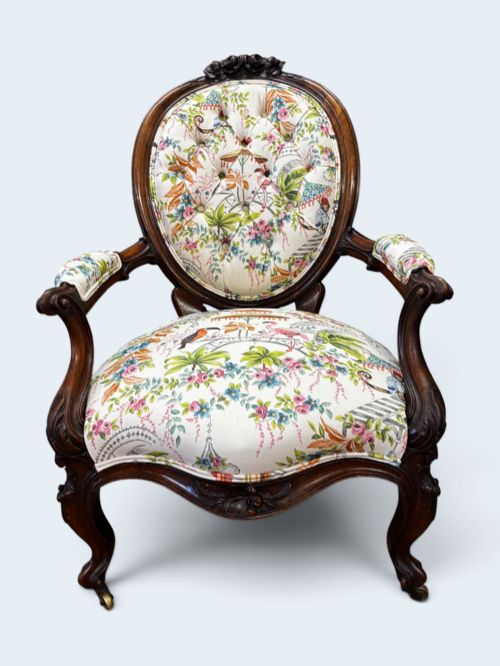
Makers utilised solid timbers including mahogany, walnut, oak, and rosewood to construct the structural frames of these armchairs. Carpenters shaped these woods through turning, joinery, and hand-carving to produce cabriole legs, open arms, and high wings.
Upholstery techniques involved webbing, stuffing, and securing fabric, velvet, or leather over the internal frame using brass tacks or piping. Bergère models incorporate woven cane panels into the wooden frames for lighter sides and backs.
Listings feature mahogany, walnut, oak, and rosewood across Victorian, Edwardian, and Regency periods.
What varies in quality
The depth and crispness of the timber carving dictate much of the visual distinction between examples. Superior pieces display fluid, hand-carved details along the crest rails, arms, and cabriole legs rather than shallow or mechanical shaping.
The integrity of the underlying frame construction and the quality of the timber selection determine longevity. Dense, well-figured mahogany or walnut paired with robust joinery separates standard production from finer workshop output.
Howard And Sons
The Carved Frame Fireside Armchair Glossary
- Bergère
- An enclosed upholstered armchair with a wooden frame, frequently featuring cane panels on the sides and back. This French form became popular in various English revivals.
- Wingback
- An armchair with high side panels designed to shield the sitter from draughts near a fireplace. Early examples often feature deep wings and scroll arms.
- Cabriole leg
- A furniture leg that curves outward at the knee and tapers inward to an ankle, derived from animal limbs. It appears frequently on walnut and mahogany seating.
- Nursing chair
- A low-seated upholstered armchair designed originally for sitting close to a nursery fire. These chairs typically feature padded backs and low seats without arms to accommodate voluminous skirts.
Carved Frame Fireside Armchair: Frequently Asked Questions
What is a fireside armchair?
A fireside armchair is a seating form built to provide comfort near a hearth, often featuring high backs or protective wings.
These chairs use wooden frames made from mahogany, walnut, or oak combined with upholstered textiles or leather.
How do I date a carved armchair?
Dating relies on identifying timber choices, stylistic revival motifs, and construction methods recorded in the evidence.
Victorian and Edwardian pieces exhibit distinct characteristics compared to earlier Regency or Georgian styles.
Are these chairs comfortable?
These armchairs were built for domestic relaxation, incorporating sprung or padded seats and supportive backrests.
Many examples survive with traditional upholstery materials such as horsehair stuffing, velvet, or leather.
What woods were used?
The listings show makers working predominantly in mahogany and walnut, alongside oak and rosewood.
These hardwoods provided the structural strength needed for carved frames and cabriole legs.