

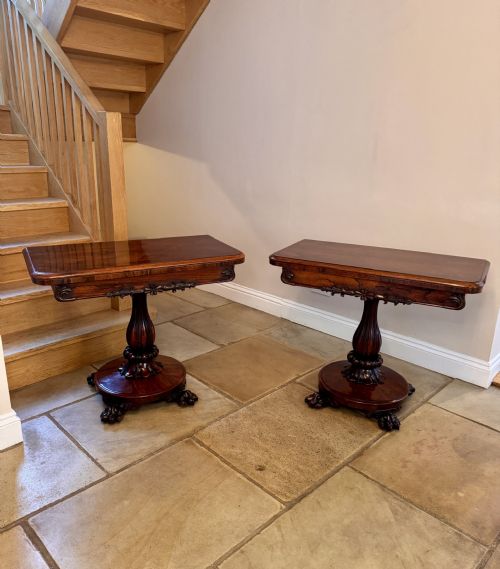
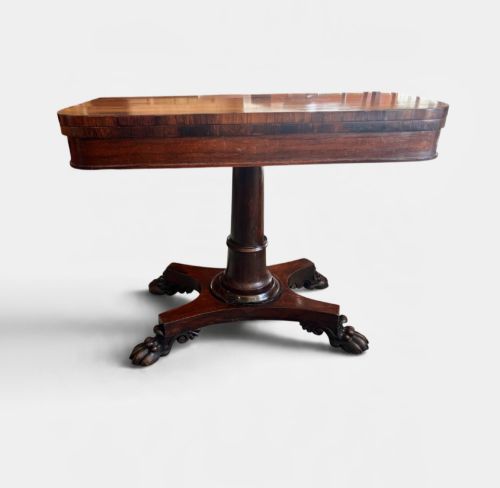
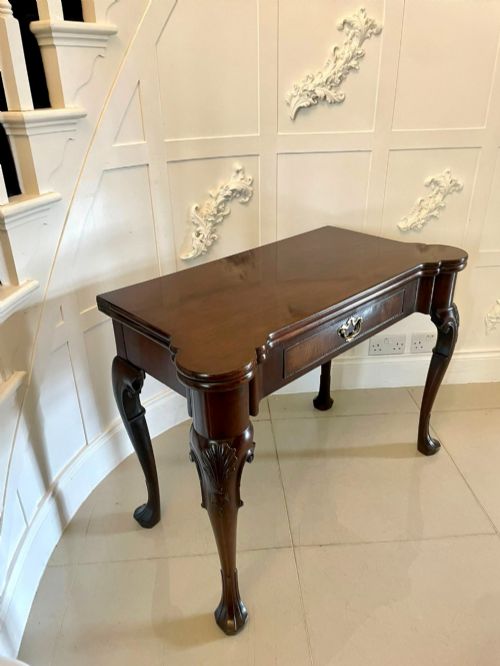
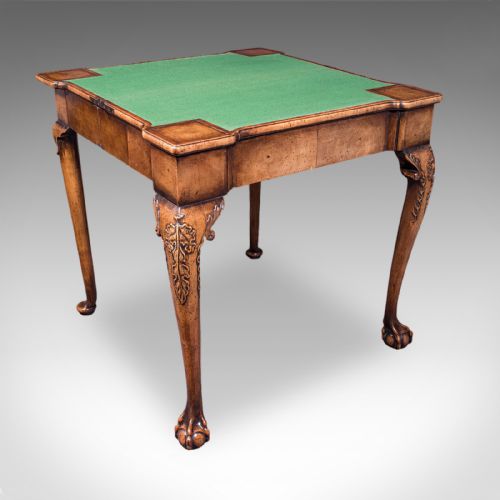


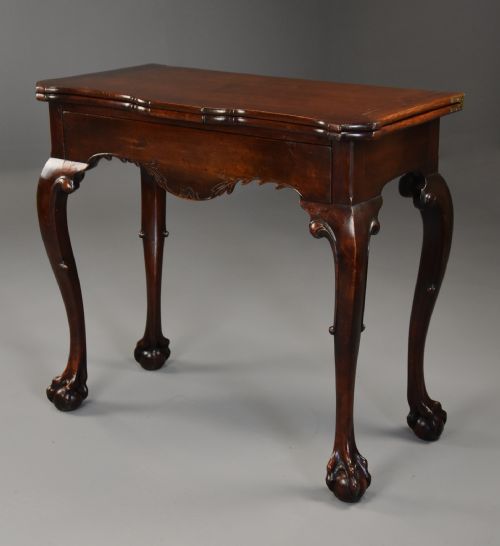


Carved Foot Games Table
A carved foot games table brings centuries of folding surfaces and social play into a room.
Carved Foot Games Table
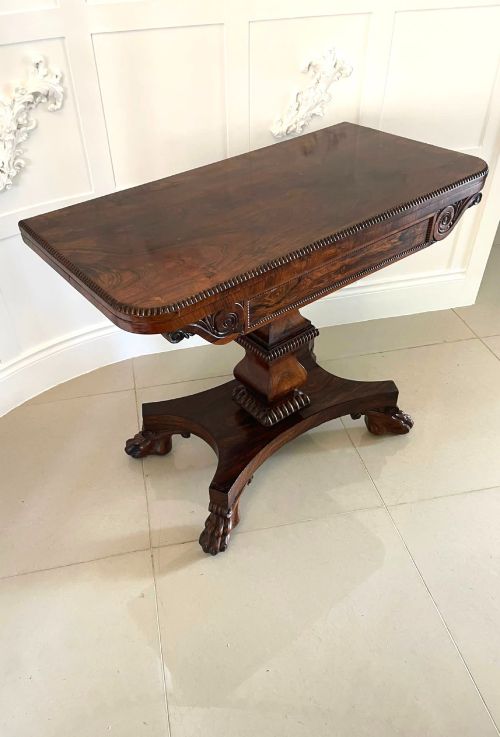
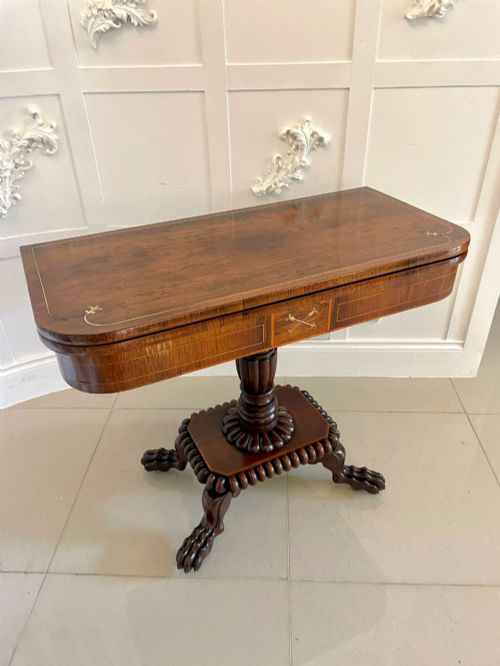
A carved foot games table is a multifunctional item designed for social play and domestic display, frequently appearing in forms like card tables, tea tables, and side tables. These pieces span periods from the eighteenth century through the nineteenth century, including Georgian, Regency, and William IV eras.
The versions most commonly met on this page feature fold-over tops or concertina actions that transform a console or side table into a baize-lined surface for cards and board games. Timber choices among these examples lean heavily towards rich dark woods such as mahogany, rosewood, and walnut.
Originating to serve the hospitality needs of prosperous households, a carved foot games table combines practical utility with decorative cabinet-making. Makers built these tables to stand against walls or sit centrally, revealing their carved details only when opened or inspected closely.
How they were made
Cabinet-makers constructed these tables primarily from solid timbers and veneers of mahogany, rosewood, and walnut, often accentuating the surfaces with burr walnut, satinwood, bird's-eye maple, or brass inlay. The primary structure relies on sturdy frame joints to support the pivoting or folding top mechanism.
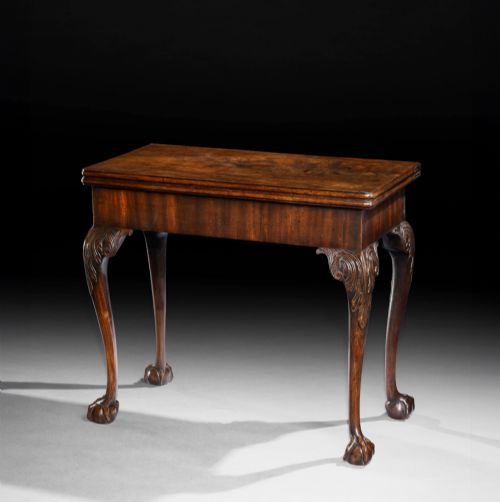
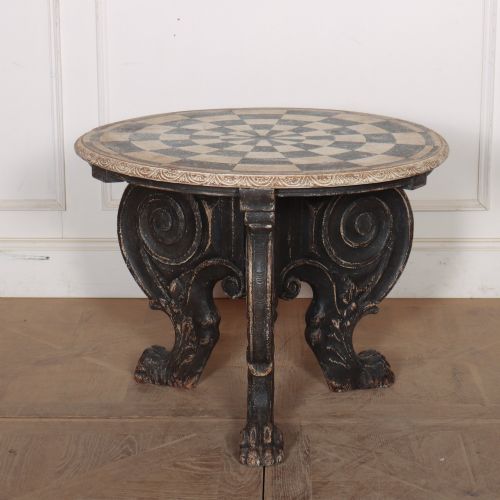
Carving serves as the principal decorative technique, applied directly to the legs, edges, and friezes in styles ranging from Chippendale to Victorian revivals. Surfaces frequently receive hand-applied polishes that enhance the natural grain and patina of the wood.
Carved Foot Games Table Retail Price Guide 2026
Typical asking prices for carved foot games table among the pieces listed under this phrase on Sellingantiques today, from the lower quarter to the upper quarter. They describe what is for sale here now, not the wider market.
Listings span multiple eras, featuring mahogany, rosewood, walnut, and satinwood across Georgian, Regency, Victorian, and Edwardian periods.
What varies in quality
Quality rests significantly in the crispness of the carving and the selection of timber veneers, where highly figured grains like burr walnut or bird's-eye maple elevate the piece. The engineering of the folding mechanism, whether concertina action or simple swivel top, dictates how cleanly the table functions under use.
The integrity of the original construction, including matched timber surfaces and well-preserved internal framing, separates standard production items from master cabinet-maker examples.
The Carved Foot Games Table Glossary
- Concertina action
- An expanding frame mechanism that allows a card table to open on an accordion-like framework, supporting all four corners equally. This design represents a superior method of construction for tables with folding tops.
- Baize
- A woolen fabric resembling felt, traditionally green, used to line the playing surface of card and games tables. It provides a soft, non-slip texture for handling cards.
- Fold-over
- A table top design where the surface hinges horizontally and rotates to open to double its closed footprint. This mechanism conceals a well or playing surface underneath.
- Palisander
- A dense, dark timber often grouped with rosewood varieties, valued for its prominent grain patterns and rich colour. Makers utilised it extensively in nineteenth-century decorative furniture.
Carved Foot Games Table: Frequently Asked Questions
What is a concertina action table?
A concertina action table uses an expanding frame that pulls outward as the top unfolds, allowing the rear legs to move with the structure. This design provides structural support to all four corners when the table is open for play.
Such mechanisms indicate higher standards of cabinet-making, frequently found on eighteenth-century and Georgian pieces designed to bear weight evenly across the extended surface.
How do I use a games table today?
A games table functions effectively as a hall console or side table when folded shut against a wall. Opening the top transforms the piece into a card table, writing desk, or display surface for gatherings.
The folding design makes these pieces adaptable for smaller rooms where permanent large tables occupy too much floor space.
What woods were used for these tables?
Makers constructed these pieces predominantly using mahogany and rosewood, alongside walnut, burr walnut, satinwood, and oak. Finer examples incorporate decorative veneers and contrasting inlay materials like brass.
The choice of timber typically reflects the prevailing style of the period, from mid-eighteenth-century mahogany to nineteenth-century rosewood and walnut.
How do I identify a Georgian games table?
Georgian games tables often feature solid mahogany construction with characteristic detailing such as carved cabriole legs, ball-and-claw feet, or crisp edge moulding. The proportions tend to remain classical and restrained.
Examining the interior frame, secondary woods, and hinge construction helps verify the period alongside the exterior stylistic markers.