




Carved Foot Armchairs
Carved foot armchairs bring together solid timber frames and substantial upholstered seating, offering both comfort and sculptural character.
Carved Foot Armchairs
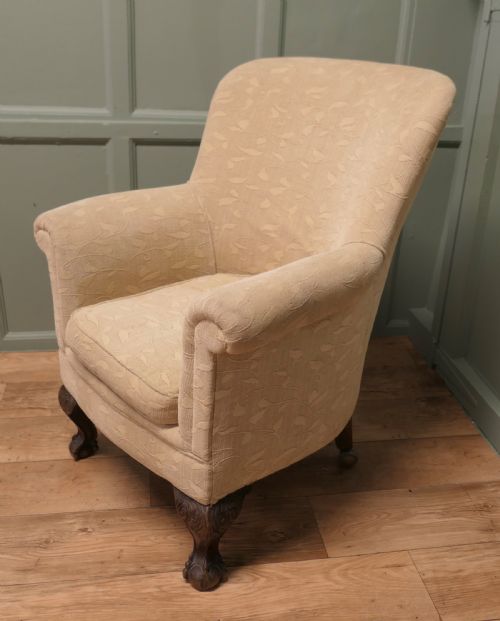
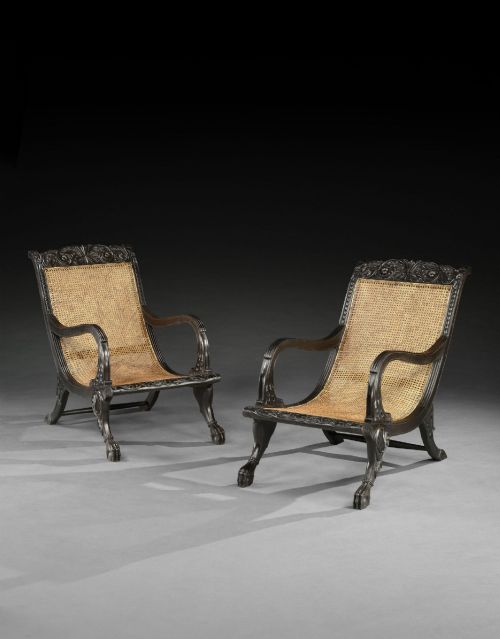
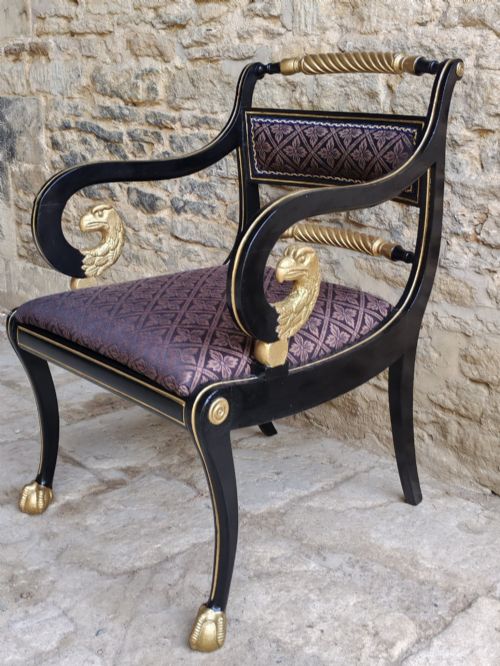
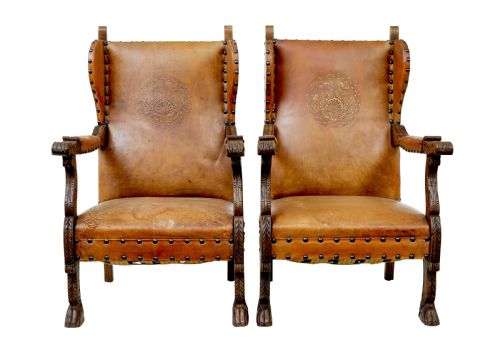
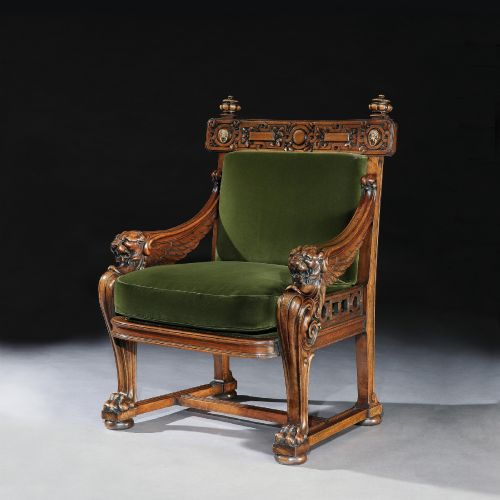
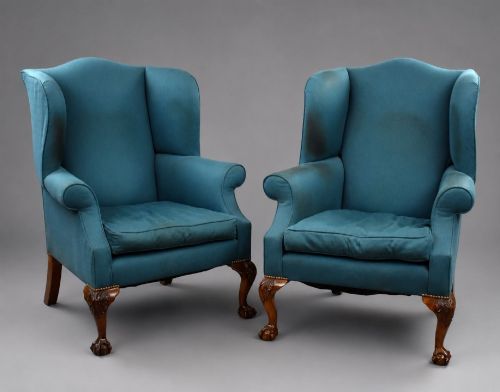
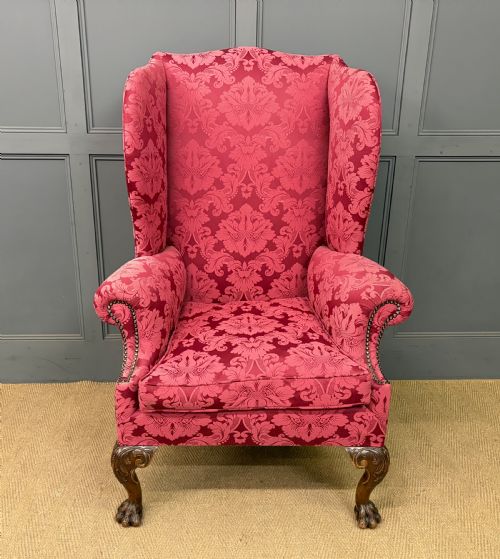
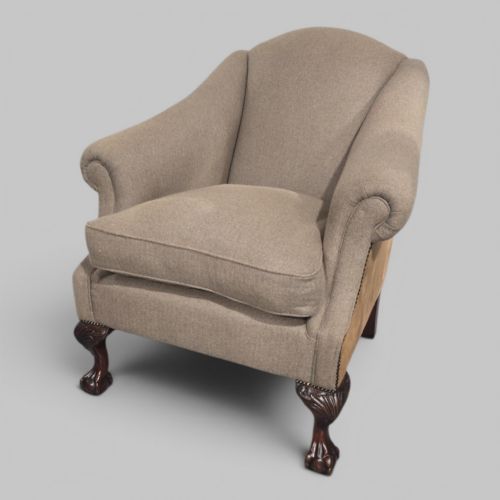
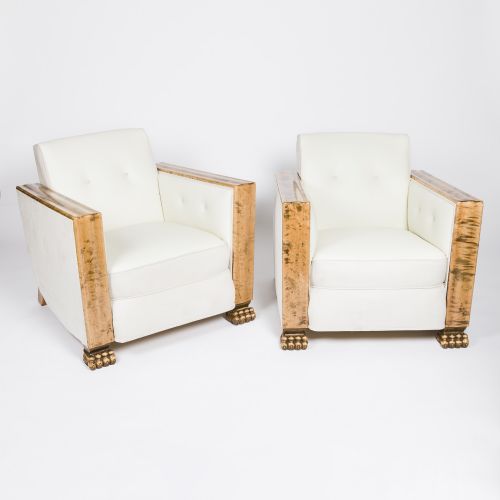
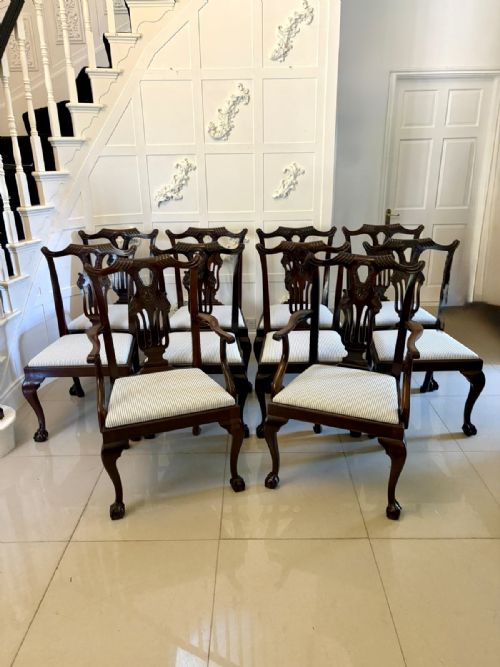
Carved foot armchairs encompass a wide variety of seating forms designed for parlours, libraries and dining spaces, drawing on periods from the eighteenth century through to the art deco era. You will encounter dining carvers with ball and claw feet alongside large library armchairs finished with lion monopodia or carved wooden paws.
The selection ranges from revival styles such as Chippendale and Georgian to nineteenth-century walnut and mahogany pieces, as well as twentieth-century club chairs. Many examples feature robust timber frames paired with leather, velvet or fabric upholstery.
Makers such as Howard and Sons appear among the listings, alongside nineteenth-century library chairs in the manner of George Bullock or George Smith. Whether you examine a Chinese export hardwood corner chair or a pair of French empire library chairs, the focus remains on the carved terminals of the legs.
Materials and construction
Makers utilised dense timbers such as mahogany, walnut, oak, ebony and birch to build the structural frames, often employing hand-carving techniques to shape the legs into ball and claw, lion paw or monopodia motifs. These carved wooden elements support substantial seats constructed with traditional upholstery stuffing.
Surfaces are finished with leather, fabric, velvet, damask or crewel work, secured to the wooden framework using brass detailing or trim where appropriate. The integration of carved woodwork with sprung or padded seating defines the construction of these chairs.
Art deco club chairs and nineteenth-century library seating represent the primary upholstered forms.
Factors of quality
The standard of carving on the feet and legs dictates much of the visual merit, where crisp, deep chisel work distinguishes superior pieces from softer, blunter moulding. Timber selection also plays a part, with well-figured mahogany or walnut enhancing the presence of the frame.
Integrity of the original upholstery materials, leather condition and the stability of the joined wooden components separate fine examples from heavily altered or restored items.
Howard and Sons·George Bullock·George Smith·Thomas Hope
The Carved Foot Armchairs Glossary
- Monopodia
- A furniture support carved to resemble a single animal leg, often ending in a claw or paw.
- Bergere
- An enclosed upholstered armchair with a wooden frame, frequently featuring cane panels.
- Carver
- An armchair designed to match a set of dining chairs, usually featuring open arms.
- Gentleman's chair
- A nineteenth-century upholstered armchair with a padded back and arms, built for parlour comfort.
Carved Foot Armchairs: Frequently Asked Questions
What defines a carved foot armchair?
These chairs are defined by wooden frames featuring distinct carved terminals on the legs, such as ball and claw, lion paws or animal monopodia.
They combine supportive timber construction with upholstered seats and backs across various historical periods.
How do I identify the period of a chair?
Dating relies on stylistic clues like Regency curves, Victorian proportions or Georgian revival detailing, alongside the choice of timber.
Examining the joinery and the specific style of the carved feet helps narrow down the century of manufacture.
Where were these chairs used historically?
Library armchairs and club chairs were traditionally placed in studies or sitting rooms for reading and relaxation.
Carver chairs served at the heads of dining tables alongside matching sets of side chairs.
Are leather and fabric upholstery original?
Many older chairs have undergone reupholstery over the decades to maintain their usability in modern interiors.
Original leather or damask survives on select pieces, while others feature newer fabric or replacement hide.