
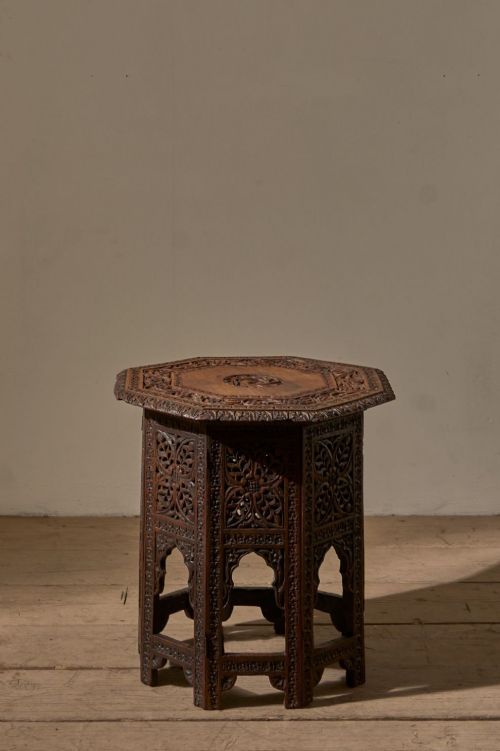
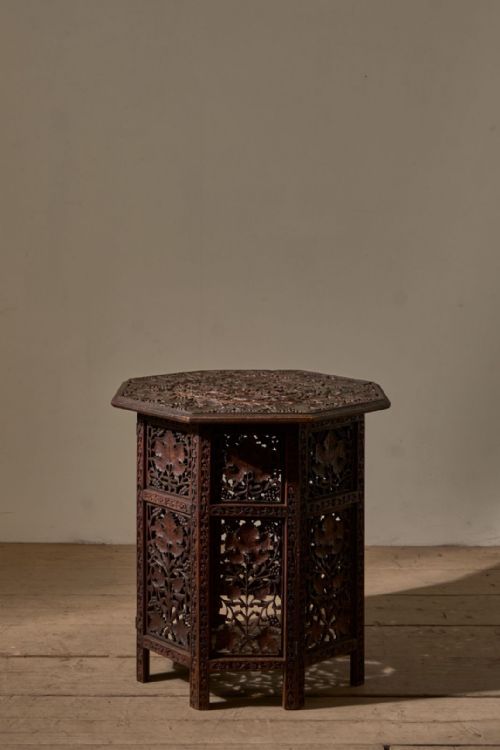


Carved Folding Accent Table
These carved folding accent table examples combine practical space-saving design with intricate woodwork, providing versatile surfaces for period interiors.
Carved Folding Accent Table
A carved folding accent table appears across multiple periods including the seventeenth century, the Victorian era, and the early twentieth century. Buyers seeking this phrase encounter drop-leaf mechanisms, gateleg frames, and hinged occasional surfaces designed for compact storage.
The selection spans diverse regional aesthetics, from Anglo-Indian padauk and teak pieces with deep relief carving to Georgian mahogany card tables and oak dining designs. Side tables, tea tables, and games tables dominate the physical forms available on this page.
Materials and Construction
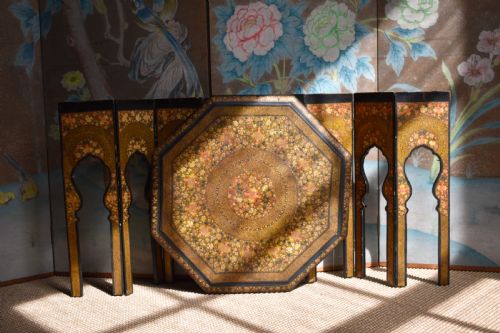
Timbers such as mahogany, walnut, burr walnut, oak, padauk, and teak provide the structural foundation for these folding items. Artisans utilised traditional joinery alongside brass inlay, ormolu mounts, bone inlay, and painted lacquer finishes to enhance the surfaces.
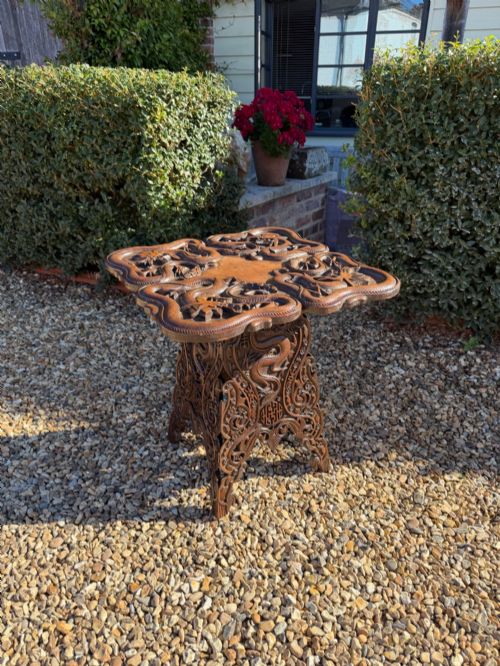
Hinged mechanisms, drop flaps, and folding bases require precise carpentry to function smoothly while supporting heavy hardwood tops. Hand-carved leaf and dragon motifs demonstrate the detailed execution characteristic of period workshops.
Several pieces feature carved dragons keeping watch beneath the tabletop.
Craftsmanship and Proportion
The depth and clarity of the carved ornamentation separate standard production from superior work. Crisp detailing on foliage or figurative elements indicates skilled hand execution rather than mechanical repetition.
Structural integrity of the folding mechanism and the grain selection in woods like burr walnut or Cuban mahogany determine the piece's success. Balanced proportions when the table is both open and closed reflect thoughtful design during initial manufacture.
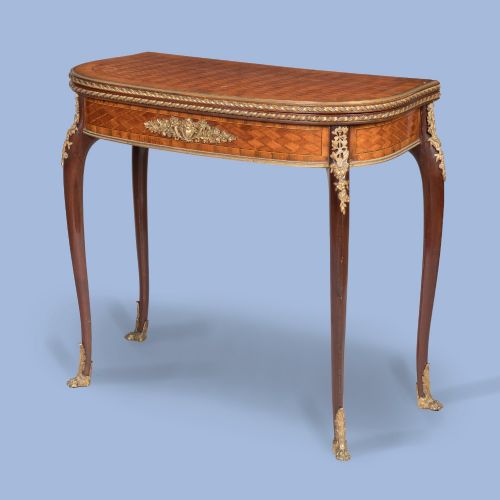
François Linke
The Carved Folding Accent Table Glossary
- Gateleg table
- A drop-leaf table featuring hinged legs that swing out to support the raised flaps. This form allows the surface to expand for dining or games and contract for storage.
- Pembroke table
- A small rectangular drop-leaf table with hinged leaves on either side and usually a drawer beneath the top. It gained popularity during the eighteenth century for versatile placement.
- Sutherland table
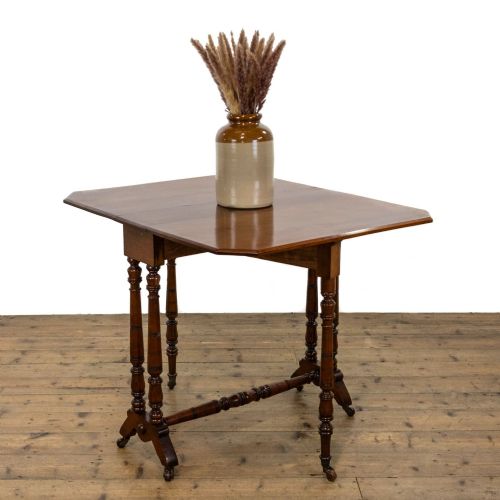
- A narrow drop-leaf table where the leaves comprise a large portion of the top and the folded legs stand very close together. It serves well as a compact occasional surface.
- Ormolu
- Gilded bronze applied as a decorative mount to furniture pieces. It requires careful casting and chasing to achieve crisp metallic definition.
Carved Folding Accent Table: Frequently Asked Questions
How do these folding tables work?
Hinged wooden leaves and pivoting gatelegs allow the surface to expand or contract easily. This mechanism provided flexibility for smaller rooms in period homes.
Owners typically fold the flaps down when floor space is required, creating a narrow console profile against a wall.
Where were Anglo-Indian tables made?
Craftsmen in regions such as Hoshiarpur and Kashmir produced these intricately carved pieces during the nineteenth and early twentieth centuries. They utilised dense regional timbers like teak and padauk.
European demand influenced the adaptation of traditional carving motifs into portable occasional tables for export.
How do I care for burr walnut?
Burr walnut veneers feature swirling grain patterns that require gentle dusting with a dry cloth. Avoid placing these surfaces near direct heat sources to prevent timber splitting.
Periodic application of appropriate wax polish maintains the natural sheen without building up thick residues.
Are these tables sturdy?
Solid hardwood construction and traditional joinery give these folding pieces remarkable stability when fully opened. The weight of dense timbers like mahogany and oak keeps the frame grounded.
Care should be taken when moving the table to avoid putting undue lateral stress on the folding leg joints.