



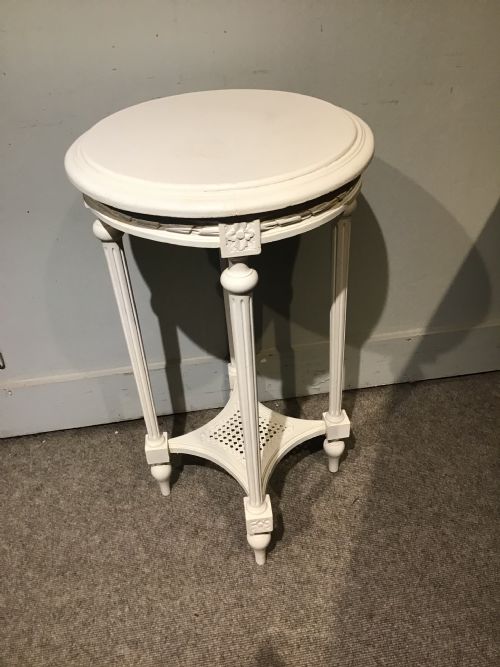

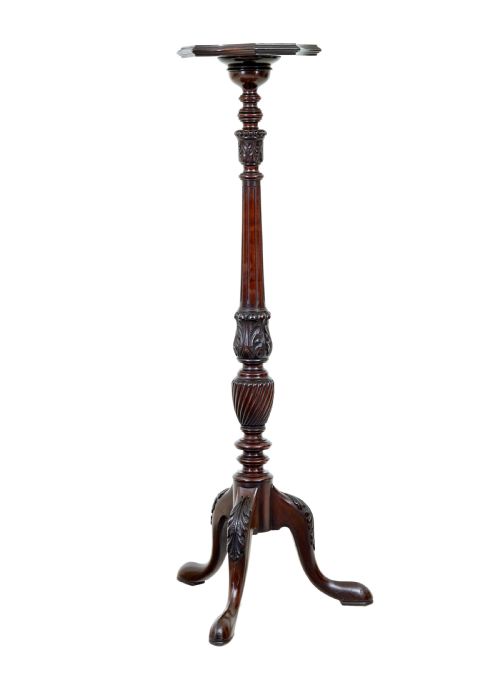
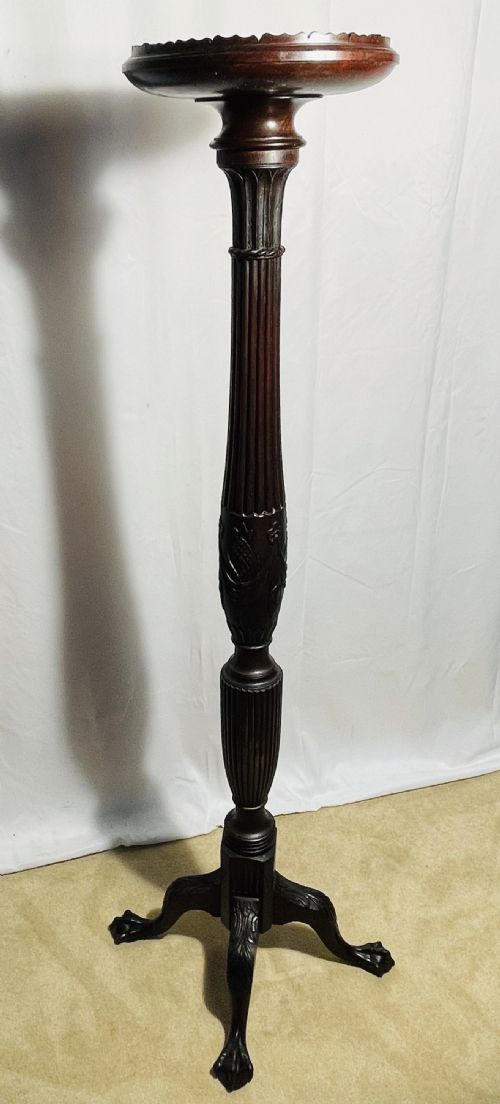


Carved Fluted Torchere
A carved fluted torchere stands ready to elevate a bust or lamp, bringing vertical emphasis and classical proportion to a room.
Carved Fluted Torchere
A carved fluted torchere provides a slender display surface for sculptures, plants or lighting, functioning as both a practical stand and a sculptural element in an interior. These tall pedestals draw the eye upward and occupy minimal floor space while making a distinct architectural statement.
The versions most commonly met on this page span the Georgian and Victorian eras, alongside revival pieces from the early twentieth century. Mahogany and gilded wood predominate, reflecting the periods when formal reception rooms required elevated stands for candleholders or decorative urns.
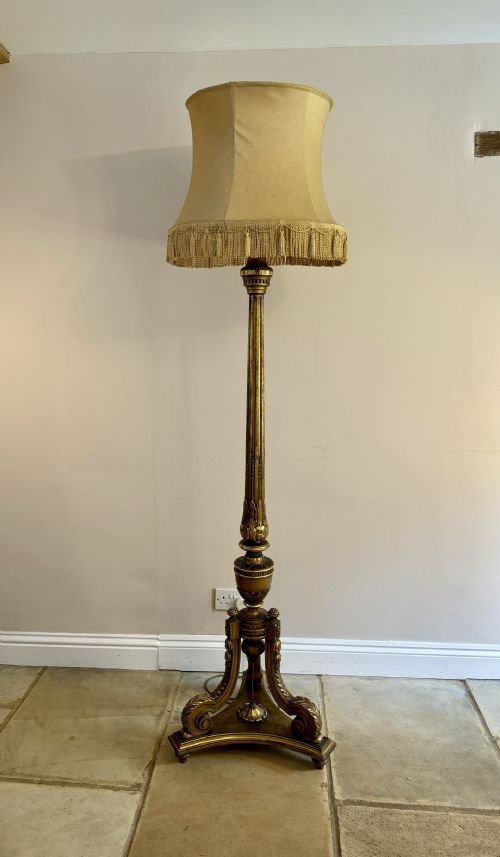
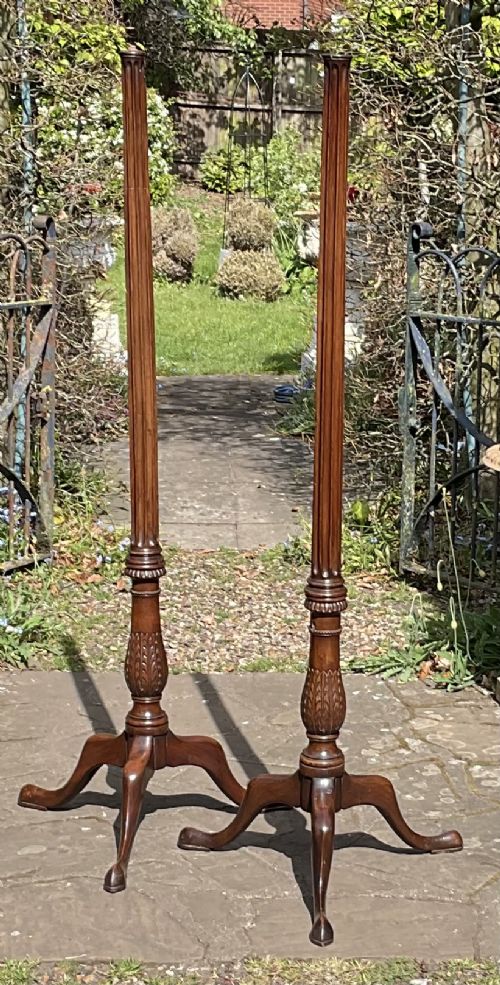
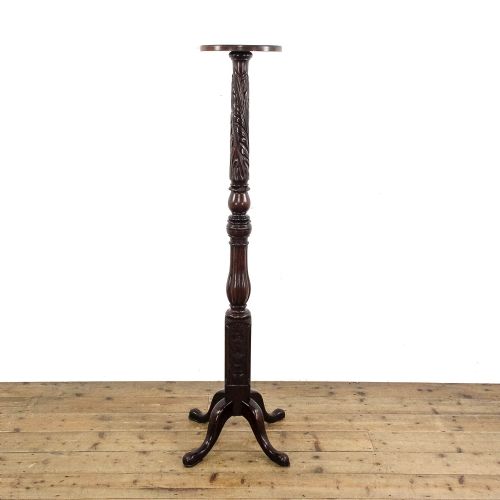
Makers shaped these stands as tall columns, tripods and slender pillars, often incorporating classical orders into the woodwork. Whether expressed as a George II mahogany example or a Victorian gilded standard lamp, each piece serves to lift an object above eye level.
How they were made
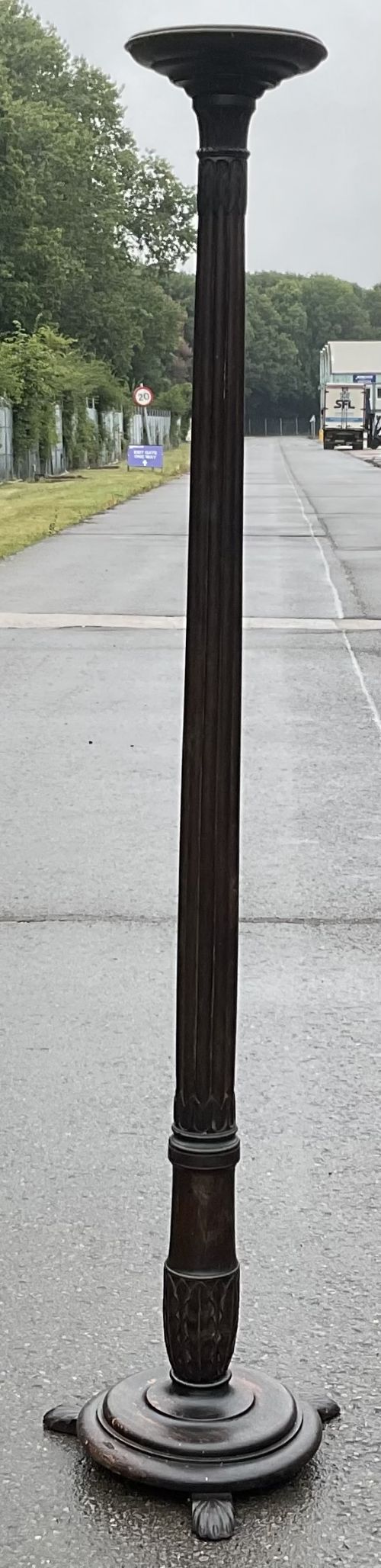
Carvers shaped these stands from dense timbers such as mahogany, turning the central columns on lathes before cutting vertical flutes into the wood by hand. This subtractive process required steady skill to maintain uniform depth and spacing along a tapering shaft.
Surface finish involved applied gesso beneath gold leaf, or hand-applied paint and clear varnish over mahogany grain. Artisans built up these layers to catch candlelight in period interiors, utilising gilding and pigment to accentuate the carved details of capitals and bases.
Listings feature mahogany and gilded wood as the dominant materials, spanning Georgian, Victorian, and Edwardian periods.
What varies in quality
The distinction between standard production and exceptional work lies in the crispness of the hand-carving along the flutes and the structural integrity of the tripod or pedestal base. Superior pieces exhibit sharp, deeply cut channels and well-proportioned capitals that do not wobble under weight.
Material selection dictates longevity, with close-grained mahogany holding finer carved edges than softer utility woods. The quality of the original gilding or surface preparation also separates utilitarian stands from grand salon pieces intended to command attention.
The Carved Fluted Torchere Glossary
- Torchere
- A tall ornamental stand originally designed to hold a torch or candle, later adapted for lamps, busts and plants. The form derives from seventeenth-century French lighting supports.
- Fluting
- A series of shallow, parallel concave grooves run vertically along the shaft of a column or pedestal. This classical decorative technique creates interplay between light and shadow.
- Gesso
- A plaster-like mixture applied to wood surfaces as a smooth base for gilding or painting. Artisans carved fine details directly into the dried gesso layer.
- Giltwood
- Timber coated with gold leaf over a prepared ground. It provides a reflective surface that mimics solid gold objects.
- Tripod base
- A three-legged support system providing stability for tall, narrow furniture forms. It prevents tipping on uneven floor surfaces.
Carved Fluted Torchere: Frequently Asked Questions
What is a torchere used for?
A torchere functions primarily as an elevated stand for displaying sculpture, urns, plants or lighting fixtures. In traditional interiors, they placed light sources at strategic heights to illuminate dark corners.
Today, they serve similar display purposes in living spaces and hallways. Their narrow footprint allows them to occupy tight corners without cluttering the room.
How do I date a mahogany torchere?
Dating relies on examining the timber density, tool marks, and stylistic indicators such as column capitals and base construction. Georgian examples often display heavier proportions and dense, dark mahogany.
Later Victorian and revival pieces frequently incorporate machine-turned elements alongside hand-carving. Comparing the decorative motifs to known architectural styles helps narrow the period of manufacture.
Where should I place a tall torchere?
These stands suit corners, flanking doorways, or positioned beside heavy seating furniture where vertical balance is needed. Their height draws the eye upward, making ceilings appear taller.
Ensure the placement avoids heavy foot traffic where the narrow base might be bumped. Placing a stable, weighted object on top helps secure the balance of the stand.
Are these stands suitable for modern lamps?
Many torcheres function effectively as standard lamps or plant stands in contemporary interiors. The sturdy wooden or gilded columns support modern electrical fittings or potted greenery with ease.
Wiring must be checked and adapted by a professional if the piece is converted to electricity. The slender column hides cords efficiently when routed thoughtfully down the back.