
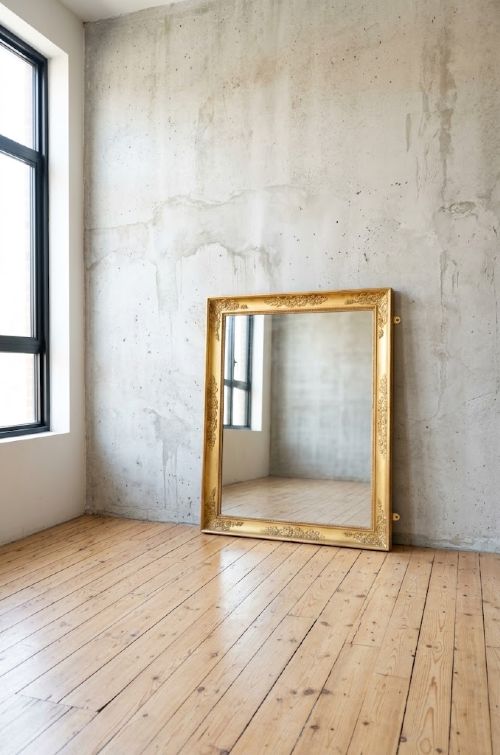
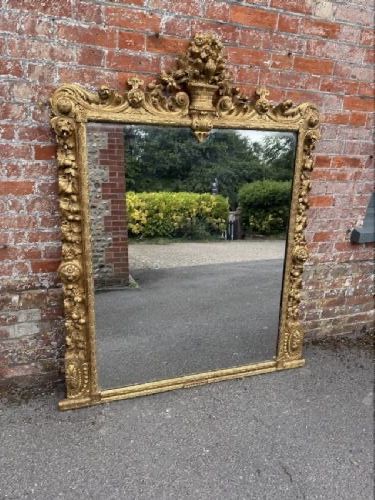
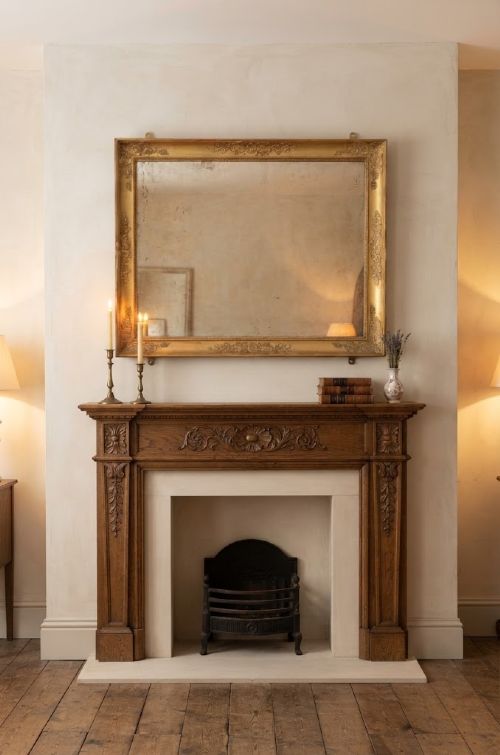


Carved Floral Overmantel
A carved floral overmantel anchors a room with botanical relief and glass, bringing period weight above a fireplace.
Carved Floral Overmantel
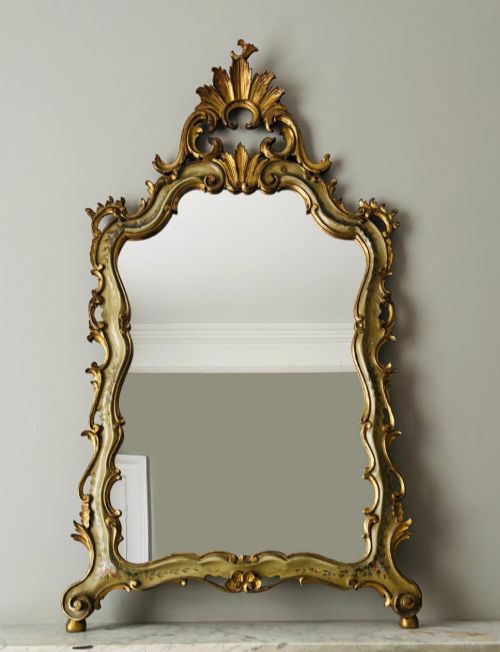
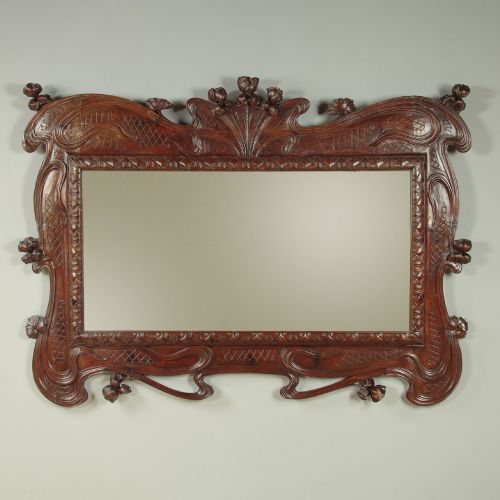
The selections available here span from eighteenth century French Rococo forms to Edwardian and Art Deco interpretations. Buyers encounter walnut and oak frames alongside heavily gilded and painted wooden constructions.
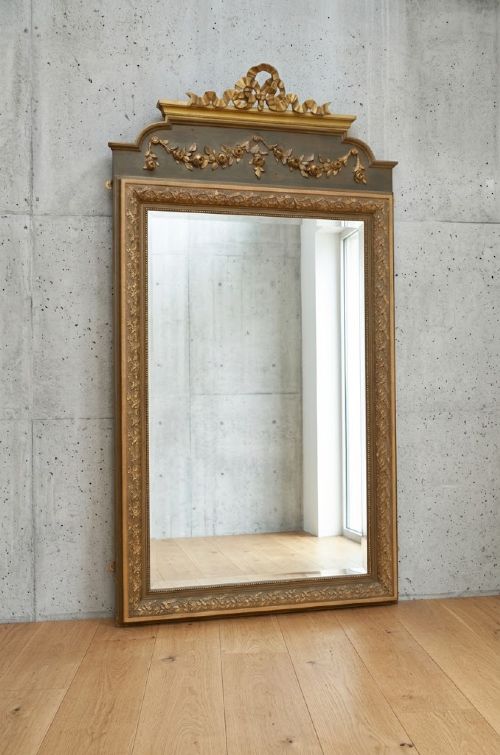
Mirrors described as overmantels in the evidence frequently incorporate arched tops, crests, and trumeau panels. Alongside these, wall mirrors with floral and lily of the valley carvings appear regularly to serve the same decorative function.
How they were made
Carved wood and gesso form the primary structural and decorative base for these frames. Artisans shaped timber before applying layers of gesso to build up high-relief floral, ribbon, and mythological carvings.
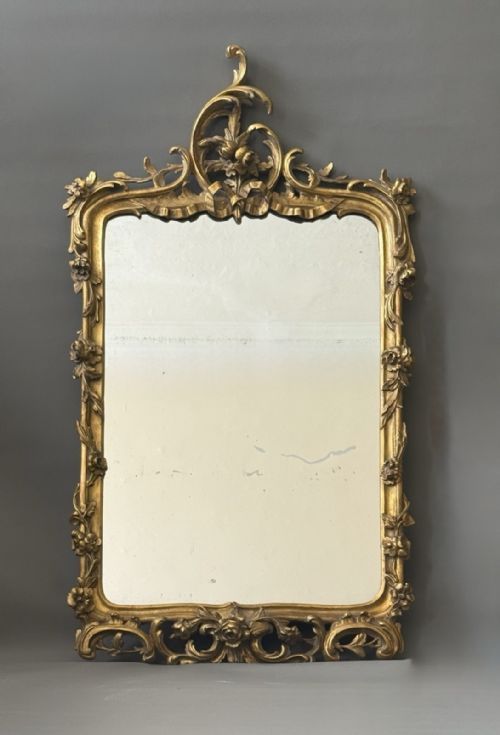
Giltwood and gold leaf finishes provide the luminous surfaces seen across French and English examples. These metallic applications sit alongside painted wood and reverse painted glass decorated with roses.
Botanical overmantels occasionally feature hidden lily of the valley carvings tucked into the corners, waiting to be spotted.
What varies in quality
The depth and definition of the carved floral motifs separate standard joinery from superior work. Crisp undercut foliage and intricate ribbon crests demonstrate a higher level of hand skill than flat, machine-profiled moulding.
The treatment of the glass plate and frame finish indicates the origin and period ambition of the mirror. Original antique plates with subtle foxing sit alongside newly replaced glass, while genuine layered gilding ages differently than modern flat paint.
The Carved Floral Overmantel Glossary
- Overmantel
- A large mirror or painting specifically proportioned to hang on the wall directly above a mantelpiece. These pieces often dominate the chimney breast.
- Gesso
- A plaster-like mixture applied to wood frames to create a smooth surface for gilding or deep relief carving. Artisans model botanical details directly into this compound.
- Trumeau
- A decorative wall mirror or panel featuring a painted or carved scene positioned above the main glass plate. These originate primarily from French interior design traditions.
- Rococo
- An ornate design style from the eighteenth century characterised by asymmetrical scrollwork, C-curves, and naturalistic plant motifs. It heavily influences French giltwood mirror frames.
- Giltwood
- Timber that has been coated with thin sheets of gold leaf or metallic powder. This finish reflects candlelight and daylight within period rooms.
Carved Floral Overmantel: Frequently Asked Questions
Where should an overmantel hang?
These mirrors traditionally mount directly to the chimney breast above a fireplace insert. Their scale balances the architectural weight of the hearth below.
In rooms without active fireplaces, they anchor low sideboards or console tables to create a similar focal point on a blank wall.
How do I identify French Rococo style?
French Rococo frames rely on asymmetrical plant forms, shell motifs, and flowing scrollwork rather than rigid symmetry. The carving feels organic and exuberant.
Gold leaf and heavy gesso build up the dimensional quality characteristic of eighteenth century production.
Can I replace the mirror glass?
Many historical frames survive with antique glass plates that show age spots, while others receive new glass to improve reflection. Both options appear within these listings.
Original plates retain historic character, whereas new glass offers clear, undistorted views of the interior.
What is a trumeau mirror?
A trumeau combines a vertical mirror plate with a decorative panel above it, often containing painted scenes or carved woodwork. They originated in grand European interiors.
This format extends the vertical line of the wall decoration while keeping the glass proportioned for human reflection.