


Carved Elephant Figures
These carved elephant figures bring character and presence to a room, ranging from substantial Victorian pairs to detailed continental works.
Carved Elephant Figures
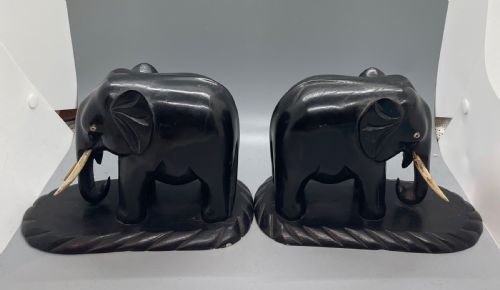
When you search for carved elephant figures, you find a diverse group of objects spanning the nineteenth and early twentieth centuries. These pieces take several forms, most frequently appearing as matched bookends, decorative sculptures, and detailed statues on dedicated bases.
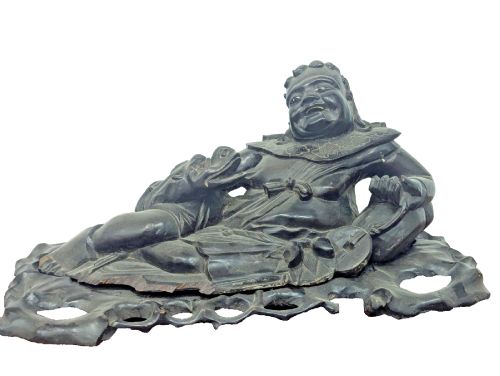
The selection includes specific regional styles such as Anglo-Indian Colonial and Qing Dynasty works. Many pieces show functional designs like book rests alongside purely decorative studies of ceremonial and performing animals.
Materials and origins vary widely across the selection, reflecting international trade and colonial craftsmanship of the period. Buyers regularly encounter figures from Indian workshops as well as Chinese carving traditions.
How they were made
Makers utilised dense timbers such as ebony, teak, hardwood, and coromandel to achieve crisp details and weighty forms. These woods allowed carvers to execute intricate surface decoration, from ceremonial trappings to realistic skin folds.
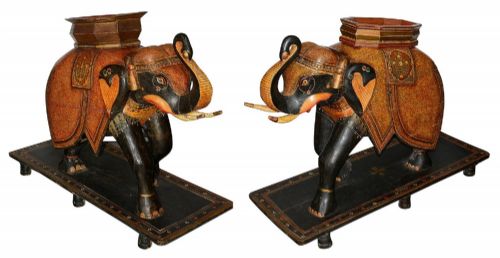
Alternative materials like bone and soapstone appear alongside wood, offering softer textures and different tonal qualities. Lacquer, gesso, and pigment are applied to selected pieces to add colour and highlight specific decorative elements.
Materials in this category span bone, hardwood, ebony, carved wood, gesso, pigment, lacquer, and soapstone.
What varies in quality
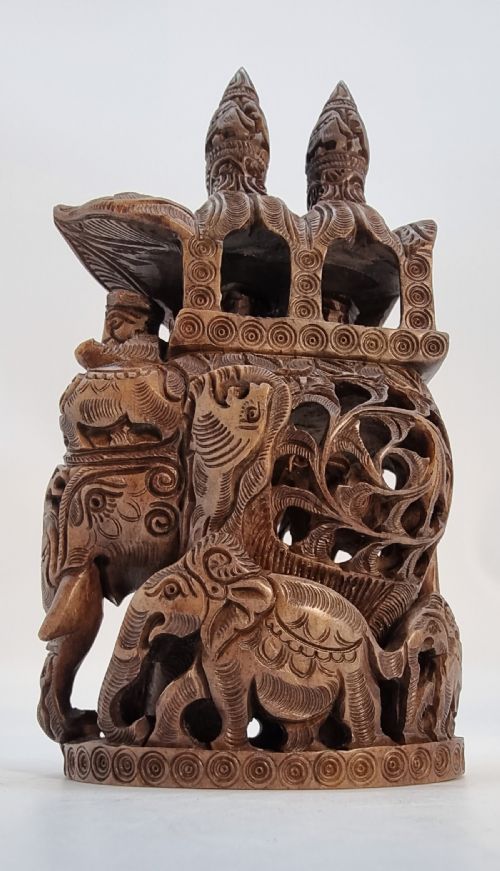
The distinction between standard examples and top-tier works rests primarily on the depth and sensitivity of the carving. Superior pieces display anatomical accuracy, expressive postures, and meticulous rendering of tusks, harness details, and attendants.
Scale and proportion also define the better examples, particularly in matched pairs where balance and symmetry are crucial. The choice of material influences the overall quality, with dense native hardwoods and refined lacquer work commanding greater attention.
The Carved Elephant Figures Glossary
- Anglo-Indian
- A descriptive term for items made in India during the British Raj, combining British furniture forms with local carving skills. These objects often utilise regional timbers like teak and ebony.
- Ebony
- A dense, heavy black hardwood prized for its dark colour and fine grain. It allows for sharp detailing in small sculptural works.
- Gesso
- A plaster-like mixture applied to surfaces to provide a smooth base for painting or gilding. It appears on decorated pieces alongside pigment and lacquer.
- Coromandel
- A heavily variegated, dark timber native to India and Southeast Asia. It is valued for its rich grain patterns and durability.
- Soapstone
- A relatively soft, talc-based stone that is easily carved into detailed figurines. Its smooth texture lends itself to tactile decorative studies.
Carved Elephant Figures: Frequently Asked Questions
What periods do these elephant figures come from?
The pieces span the nineteenth and early twentieth centuries, covering the Victorian era through to the Art Deco period. Evidence shows production from around eighteen eighty up to nineteen thirty.
Specific dates are often identified through stylistic markers, regional influences, and the specific material combinations typical of those decades.
How were these carved figures used originally?
Many examples served as decorative sculptures or studies placed on desks, mantelpieces, and cabinets. Others functioned practically as bookends or book rests in libraries and studies.
Larger statues were often created as standalone decorative items to display craftsmanship and exotic subjects in period homes.
What materials are most common for these carvings?
Hardwoods dominate the selection, with ebony, teak, and coromandel appearing frequently across Indian and Chinese pieces. Carvers also utilised soapstone, bone, and wood finished with lacquer, gesso, and pigment.
Choice of material generally relates to the geographic origin and the specific workshop traditions of the maker.
How do I distinguish between Indian and Chinese pieces?
Indian pieces often reflect Anglo-Indian Colonial styles, depicting ceremonial processions, caparisoned elephants, or local flora and fauna. These frequently utilise teak, ebony, and soapstone.
Chinese examples from the Qing period often feature distinct hardwood treatments, specific facial characteristics, and stylistic conventions associated with East Asian sculpture.
Are these figures usually found in pairs?
Many listings comprise matched pairs, particularly those intended as bookends or balanced decorative ornaments. Single studies and sculptures also appear regularly in the selection.
Pairs often show identical sizing and mirrored postures designed for symmetrical placement on shelves or mantelpieces.