



Victorian Carved Bookends
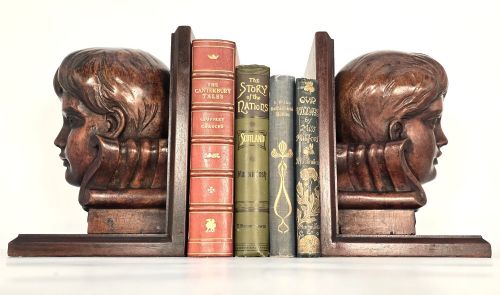
These victorian carved bookends hold heavy volumes upright on the shelf while bringing architectural and figurative carving into the room.
Victorian Carved Bookends
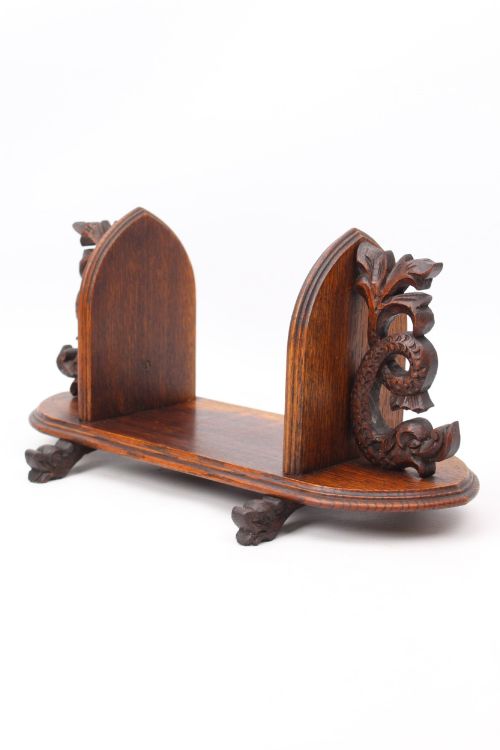
Victorian carved bookends range from substantial library pairs to extending slides designed for desk or table use. You encounter robust oak architectural forms alongside figurative designs such as griffins, lions, putti, and elephants.
The materials span native timbers like oak and mahogany to imported woods including olive wood, beech, and coromandel, often enhanced with bone, brass, and carved stone inserts. Some pieces draw on Gothic Revival, Anglo-Indian, and Chinese Export aesthetics.
Forms vary from simple upright terminals mounted on plinths to expanding concertina book slides that adjust to fit varying lengths of literature. The selection reflects both domestic English library tastes and items brought home from the Grand Tour.
How They Were Made
Woodcarving forms the primary technique across these pieces, utilising timbers like oak, mahogany, and olive wood shaped with hand chisels and gouges. Ebonised finishes and applied brass hardware frequently accent the carved elements.
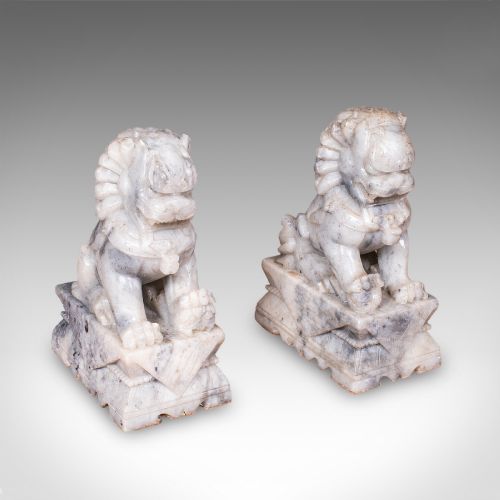
Figurative subjects such as griffins, cherubs, and lions demonstrate detailed relief work and turning, while stone elements like soapstone and jade marble are shaped and polished for specific decorative panels.
Victorian Carved Bookends Retail Price Guide 2026
Typical asking prices for victorian carved bookends among the pieces listed under this phrase on Sellingantiques today, from the lower quarter to the upper quarter. They describe what is for sale here now, not the wider market.
Listings feature oak, mahogany, olive wood, and coromandel alongside exotic soapstone and jade marble.
What Varies in Quality
Quality rests in the crispness and depth of the carving, where sharply defined details in figures and foliage distinguish superior workshop output from softer, plain production. The choice of timber also dictates character, with dense hardwoods and figured grains offering greater visual weight.
Construction integrity matters particularly in extending book slides, where smooth mechanical action and solid brass joints support the weight of heavy volumes without sagging.
The Victorian Carved Bookends Glossary
- Book slide
- An extending wooden stand with sliding ends designed to hold a varying row of books upright on a desk or table. These often feature decorative ends carved in relief.
- Gothic Revival
- A nineteenth-century design style drawing inspiration from medieval architecture and ecclesiastical motifs. Pieces in this taste display pointed arches, tracery, and heavy oak construction.
- Ebonised wood
- Timber treated with a chemical stain or finish to imitate expensive ebony. This dark surface treatment was popular during the nineteenth century for library and desk accessories.
- Anglo-Indian
- A term describing furniture and decorative objects made in India for British residents or export to Britain during the nineteenth century. These items typically employ exotic regional timbers and intricate carving.
- Dog of Fo
- A traditional Chinese guardian lion depicted as a stylized canine figure. Carved versions appear frequently in nineteenth-century decorative arts exported to the West.
Victorian Carved Bookends: Frequently Asked Questions
How do I care for wooden bookends?
Keep wooden pieces away from direct heat sources and sudden humidity changes to prevent the timber from splitting or warping.
Apply a light microcrystalline wax occasionally to nourish the surface and maintain the natural lustre of the carved wood.
What is an extending book slide?
An extending book slide is a desk accessory featuring a central platform with movable or sliding bookends that adjust to enclose a row of literature.
This mechanism allows the holder to grow or shrink according to the number of volumes placed between the terminals.
How do I identify a Gothic Revival piece?
Gothic Revival pieces display architectural elements borrowed from medieval churches, such as pointed arches, quatrefoils, and heavy carved tracery.
They are almost exclusively rendered in solid oak or mahogany to match the solemn aesthetic of nineteenth-century libraries.