

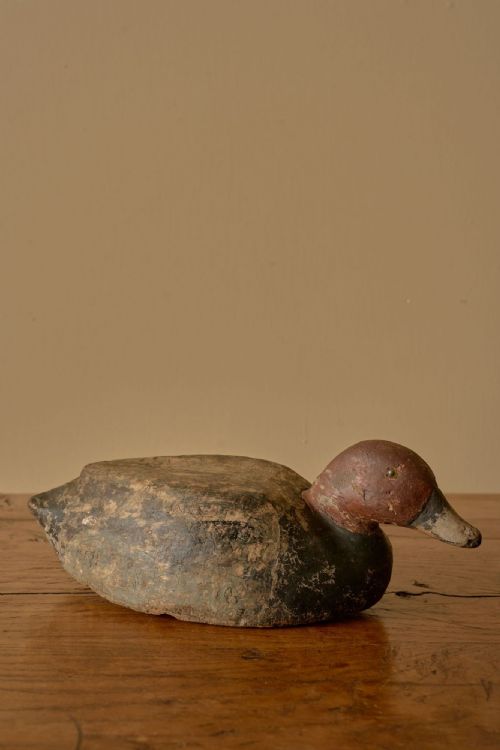
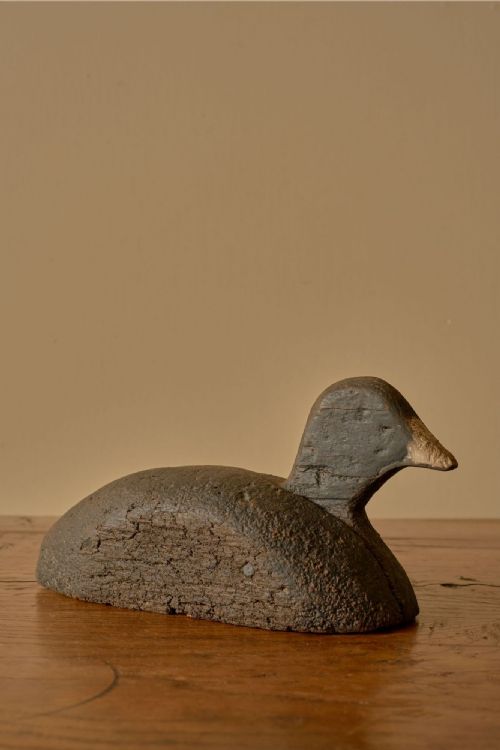
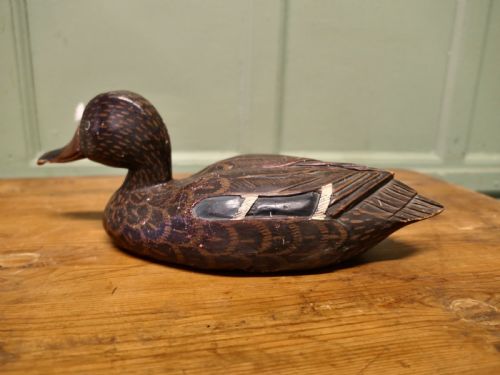
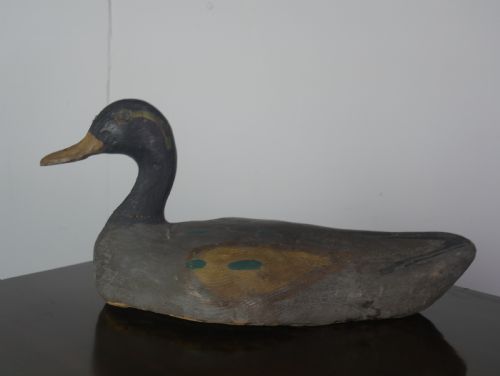


Carved Duck Decoy
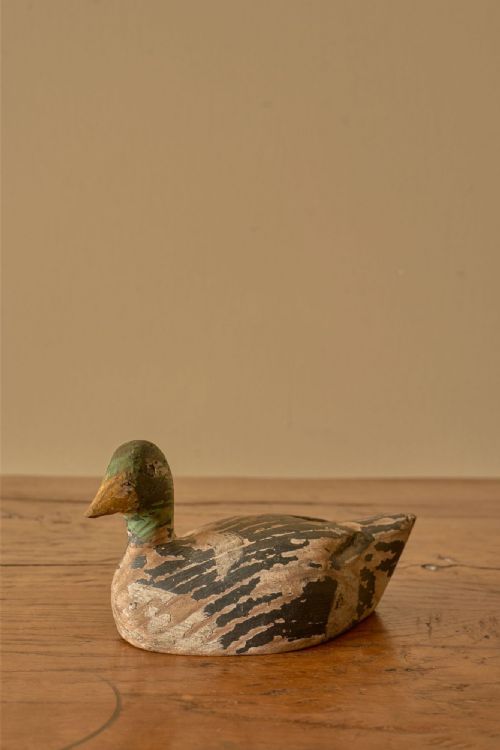
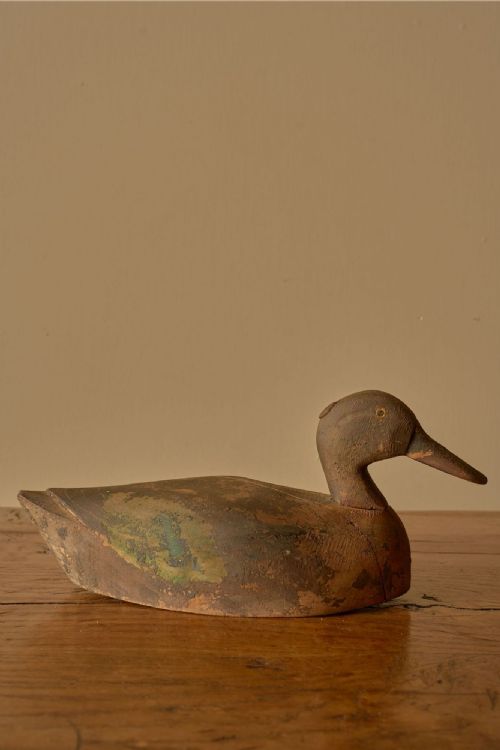
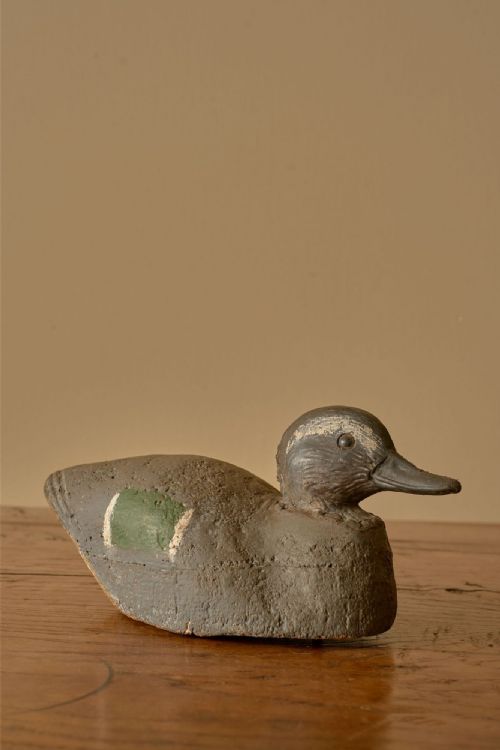
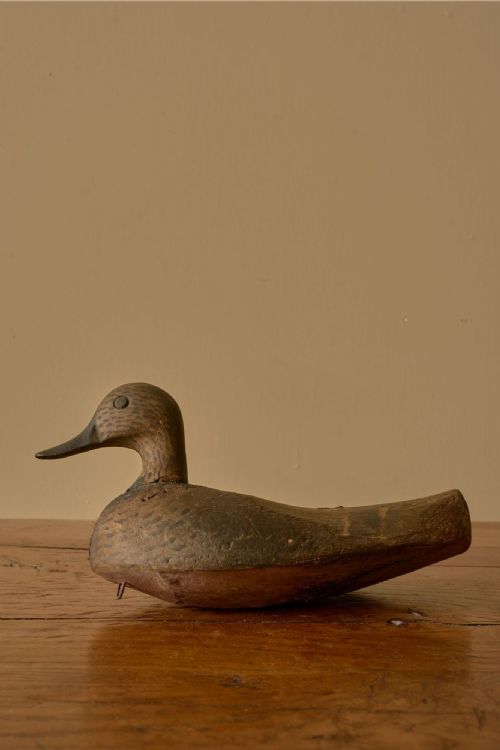
A carved duck decoy brings rustic folk art character into a modern interior through honest timber and weathered paint.
Carved Duck Decoy
A carved duck decoy is a utilitarian working object repurposed as decorative sculpture, prized for its honest sculptural form and surface history. When buyers search for a carved duck decoy, they encounter pieces originating from the nineteenth century through to the 1930s. The selection on this page is dominated by early twentieth century and Edwardian examples.
These pieces encompass standard decoy ducks as well as water birds like an American loon with her chick. Formats range from single numbered specimens to matched sets of three, originating from English, French, and general antique traditions. They sit comfortably in folk art and Edwardian aesthetic categories.
Most items on show take the form of decorative objects and folk art sculptures fashioned from timber. They display the functional shapes once relied upon by wildfowlers, now valued purely for their rustic decorative merit in domestic settings.
How they were made
Makers fashioned a carved duck decoy primarily from wood, timber, and pine, working the material into the buoyant shapes required for water use. Glass often supplied the inset eyes, adding a lifelike glimmer to the finished bird. Iron components occasionally formed internal ballasts or fixings.
The finished wooden body received coats of paint, which weathered over decades of use into complex surface patination. Hand carving defined the posture and bill, creating individuality across each piece before the final painted decoration was applied.
Carved Duck Decoy Retail Price Guide 2026
Typical asking prices for carved duck decoy among the pieces listed under this phrase on Sellingantiques today, from the lower quarter to the upper quarter. They describe what is for sale here now, not the wider market.
One notable listing includes an American loon accompanied by her tiny chick, proving that even wooden mother birds brought their families along.
What varies in quality
The distinction between ordinary and exceptional examples rests in the sculptural confidence of the carving and the survival of the original painted surface. Pieces with crisp tool marks and undisturbed layers of old paint hold greater visual presence than heavily restored specimens.
Proportion and stance dictate the success of the silhouette, separating stiffly turned timber from pieces that capture the natural posture of a water bird. The presence of original glass eyes and authentic surface wear elevates the overall character.
The Carved Duck Decoy Glossary
- Folk art
- Objects created by self-taught or traditional craftsmen for practical use rather than the fine art market. These items rely on vernacular traditions and straightforward materials.
- Decoy
- A carved or moulded figure used to attract wildfowl within range of a hunter. Surviving examples are collected today as decorative folk sculpture.
- Edwardian
- Pertaining to the reign of King Edward VII, spanning from nineteen hundred and one to nineteen hundred and ten. In antiques, this style often balances late Victorian heaviness with lighter decorative sensibilities.
- Patina
- The surface sheen and colour alteration developed by materials through age, handling, and exposure to the elements. On painted wood, it represents the accumulation of history.
- Timber
- Wood prepared for building and carpentry use. In older decoys, dense local pines and hardwoods provided the necessary weight and durability.
Carved Duck Decoy: Frequently Asked Questions
What is a carved duck decoy?
A carved duck decoy is a wooden waterfowl effigy originally used by hunters to lure birds on the water. Today, they are collected as decorative folk art sculptures.
These pieces range from simple nineteenth-century working objects to more decorative Edwardian interpretations. Their appeal lies in their sculptural presence and surface history.
How do I display a decoy?
Decoys work well placed singly on sideboards, bookshelves, or mantelpieces where their silhouette can be appreciated. Sets of three look effective grouped together on a larger surface.
Keep them away from direct heat sources and strong sunlight to preserve the integrity of the painted wooden surfaces.
How old are these decoys?
The examples on this page primarily date from the early twentieth century, the Edwardian period, and the nineteenth century. Exact manufacturing years are often attributed to broad decades based on construction.
Folk art pieces frequently lack maker marks, so dating relies on wood type, paint analysis, and traditional manufacturing traits.