


Carved Drawer Writing Desk
A carved drawer writing desk brings period timber and fitted storage together, offering a practical workspace shaped by centuries of cabinet-making tradition.
Carved Drawer Writing Desk
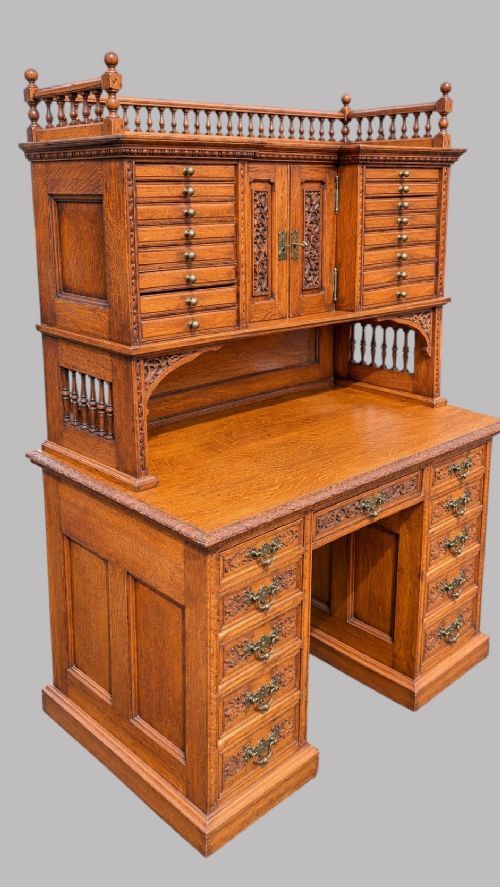
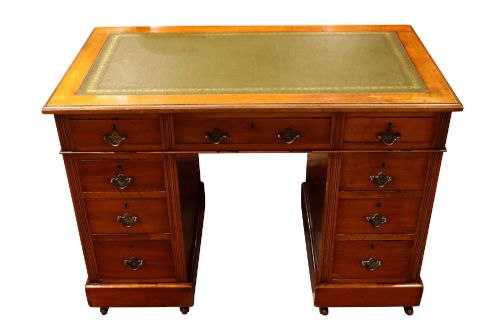
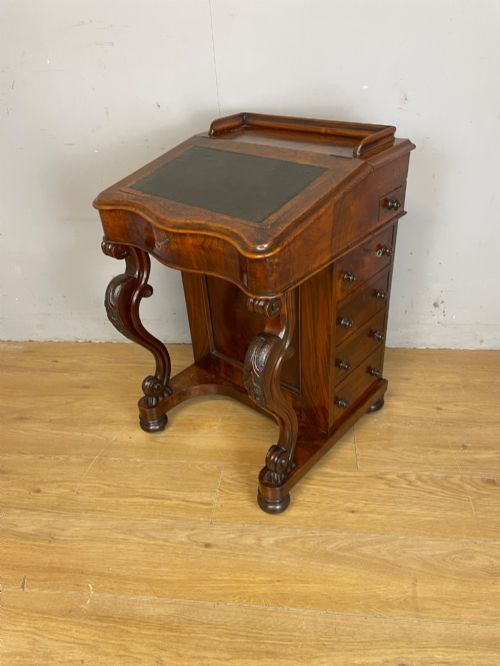
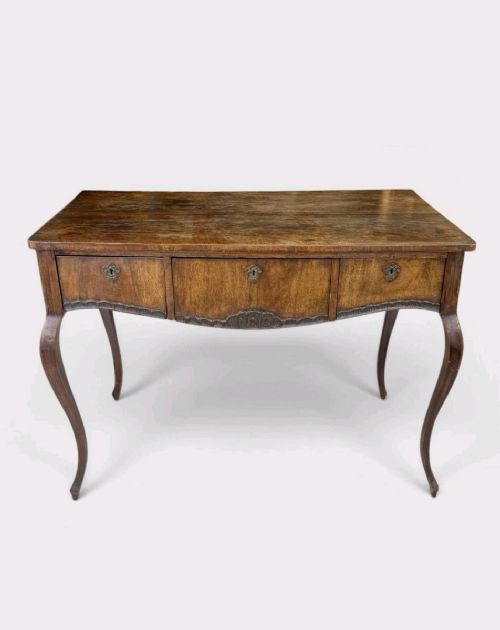
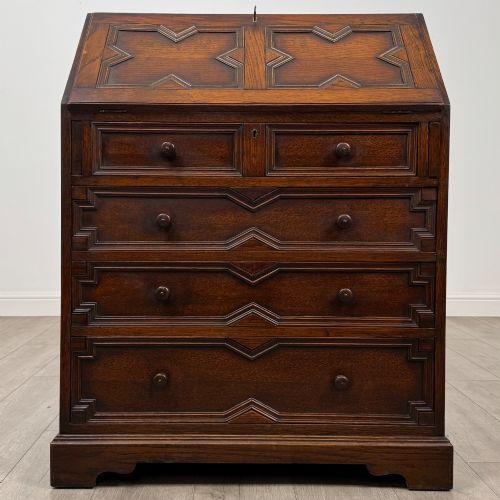
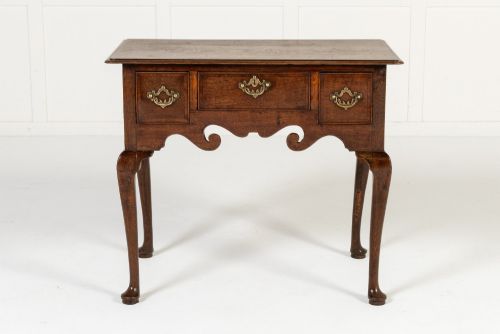
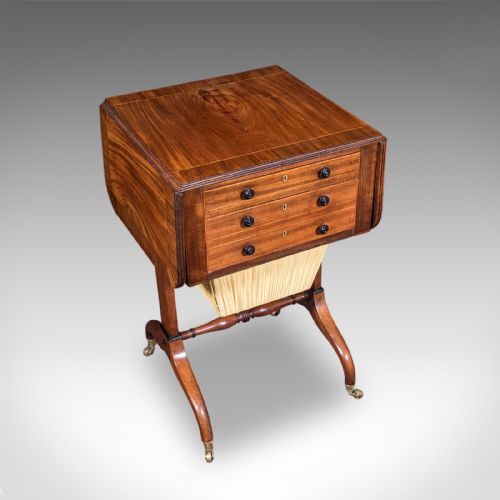
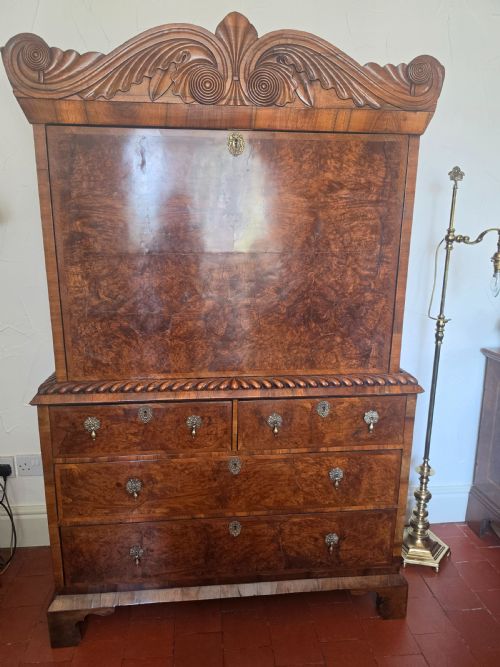
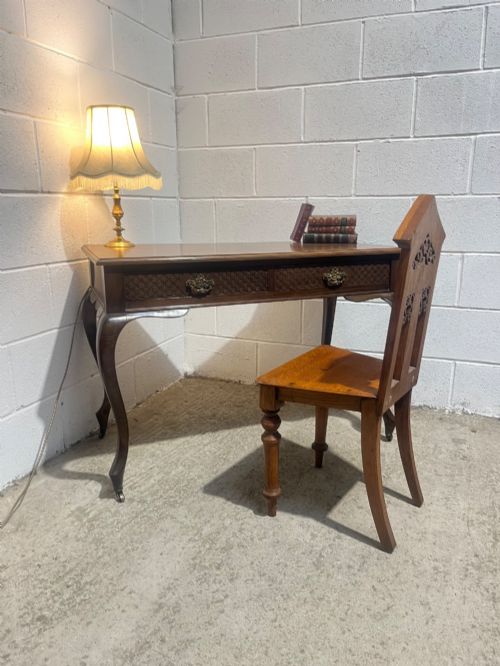
A carved drawer writing desk spans several centuries of design, encompassing forms from simple side tables with drawers to elaborate bureaus, pedestal desks and lowboys. The selection draws heavily on Victorian, Edwardian and Georgian periods, alongside earlier pieces reaching back to the seventeenth century.
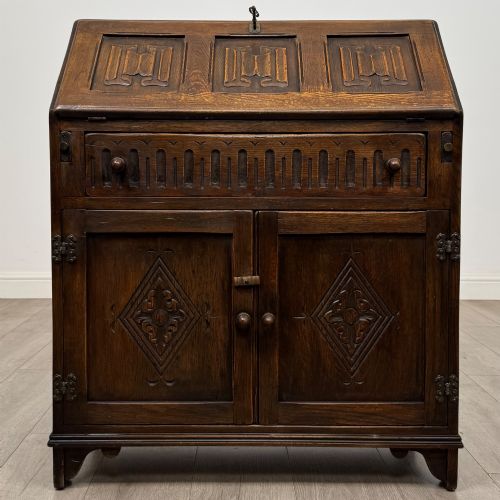
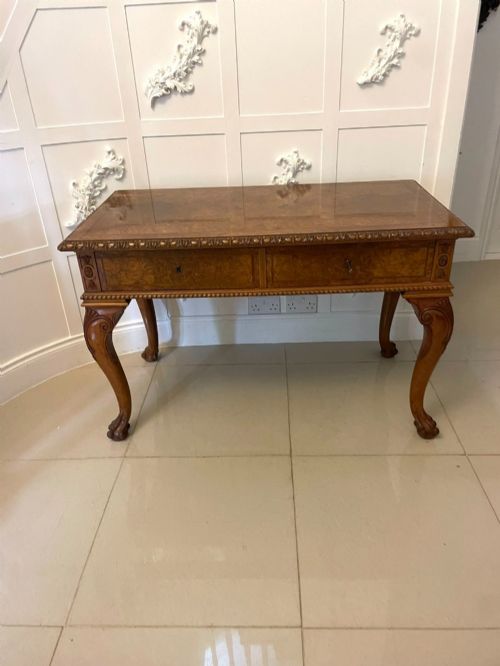
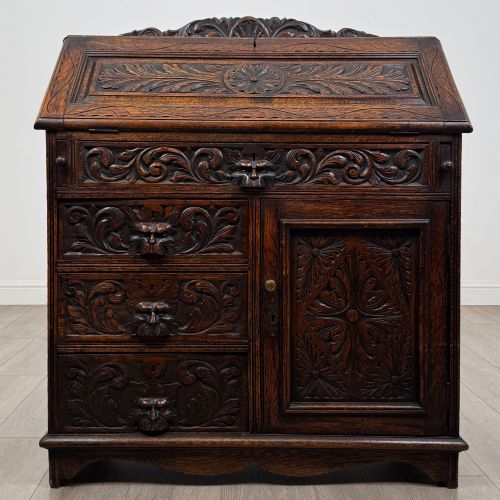
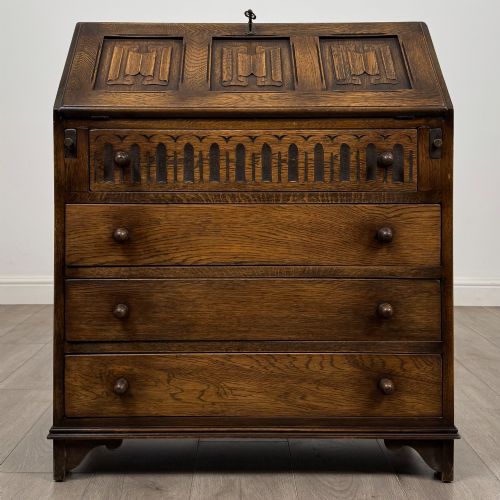
Buyers encounter numerous variations in timber and form, ranging from compact oak desks featuring carved linenfold panels and green man motifs to larger pedestal formats in burr walnut and mahogany. Side tables with single or multiple drawers and fall-front writing bureaus represent the most common configurations found in this category.
The styles reflect shifting domestic needs across eras, moving from the understated utility of eighteenth-century lowboys to the decorative exuberance of Victorian revivalism and Edwardian craftsmanship. Each piece provides a dedicated surface for correspondence alongside integrated storage within the drawer construction.
Materials and construction
Timbers such as oak, mahogany, walnut and burr walnut form the structural core of these desks, frequently paired with secondary woods and decorative veneers. Cabinet-makers utilised brass for handles, escutcheons and castors, while leather inserts provided durable surfaces for writing.
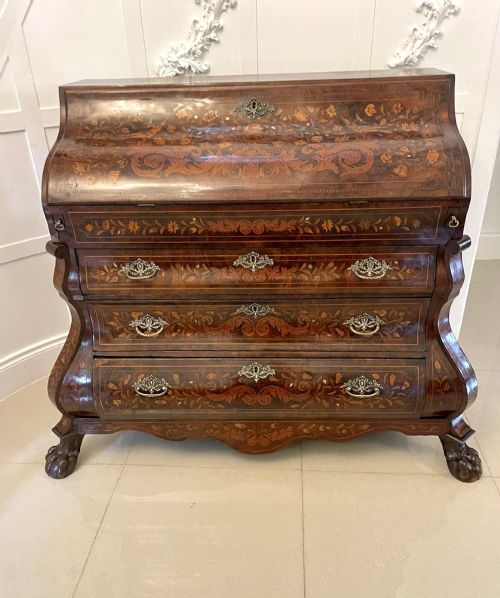
Joinery methods rely on traditional techniques including dovetailing for drawer construction and mortise and tenon joints for frames. Carved ornamentation, floral marquetry and inlaid details demonstrate the hand-worked nature of the surfaces.
Several Victorian oak desks conceal watchful green man faces carved directly into the drawer rails to oversee your daily correspondence.
Quality factors
The standard of a carved drawer writing desk depends on the selection of timber veneers, the crispness of hand-carved details and the integrity of the internal drawer construction. Finer examples display carefully matched grain patterns and harmonious proportions across the entire piece.
Maker attribution and the preservation of original hardware, brasses and leather writing surfaces distinguish exceptional items from standard workshop production. The precision of the joinery and the depth of the carved ornamentation indicate the level of skill invested by the original maker.
Edwards & Roberts·Blyth & Son·Mein of Kelso
The Carved Drawer Writing Desk Glossary
- Bureau
- A writing cabinet featuring a sloping flap that opens to reveal a fitted interior of small drawers and pigeonholes. It usually sits above a chest of drawers.
- Lowboy
- A small oak or walnut table with one or more rows of drawers, commonly produced in the eighteenth century and used as a dressing or writing table.
- Pedestal desk
- A heavy freestanding desk comprising two supporting pedestals of drawers with a central writing surface and connecting frieze drawer.
- Marquetry
- Decorative veneer work formed by fitted pieces of different coloured wood or other materials assembled to create pictorial or geometric patterns.
- Linenfold
- A style of wood carving used on panels to imitate folded fabric, frequently seen on oak pieces from the Edwardian period.
Carved Drawer Writing Desk: Frequently Asked Questions
What is the difference between a writing table and a bureau?
A writing table provides an open, flat surface supported by legs with one or more drawers integrated into the frieze beneath. It allows for immediate seating and writing access without moving covers.
In contrast, a bureau incorporates a sloping lid that drops down to create the writing plane while concealing internal letter compartments and small subsidiary drawers.
How do I identify a Victorian carved desk?
Victorian examples frequently display heavier proportions, rich timber selections like burr walnut or mahogany, and distinct decorative motifs such as green man carvings or foliate scrollwork. They often incorporate brass castors and substantial drawer locks.
Cabinet construction from this era typically utilises machine-assisted preparation combined with hand-finished joinery, distinguishing them from earlier hand-sawn Georgian furniture.
Where should I place a pedestal desk in a room?
Pedestal desks are designed to be substantial, freestanding items of furniture that function effectively when positioned centrally or against a wall. Because the back of a pedestal desk is often finished with panel detail, floating the desk away from the wall exposes the full quality of the timber.
Ensure adequate clearance around the pedestals for seating and easy operation of the surrounding drawers.
How do I care for leather-topped writing desks?
Leather writing surfaces require protection from direct sunlight and excessive heat to prevent the material from drying, cracking or fading over time. Regular dusting with a soft, dry cloth maintains the surface without stripping natural oils.
Applying specialised leather balms sparingly helps preserve suppleness, while heavy moisture should be avoided to protect the underlying timber substrate.