
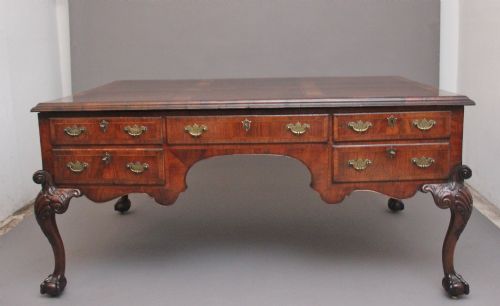
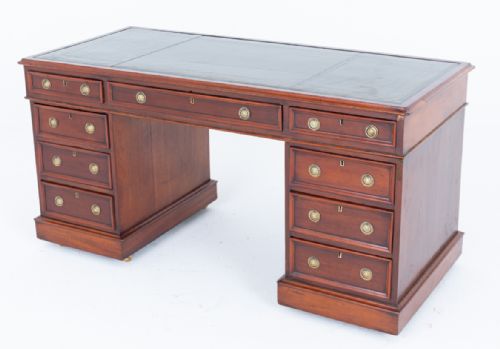


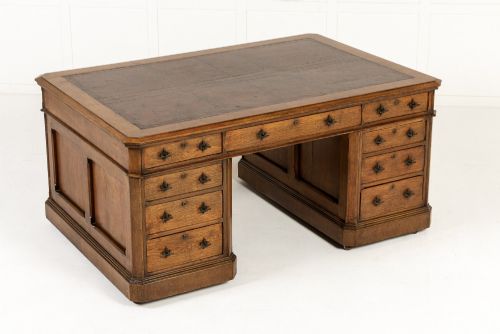

Carved Double Pedestal Desk
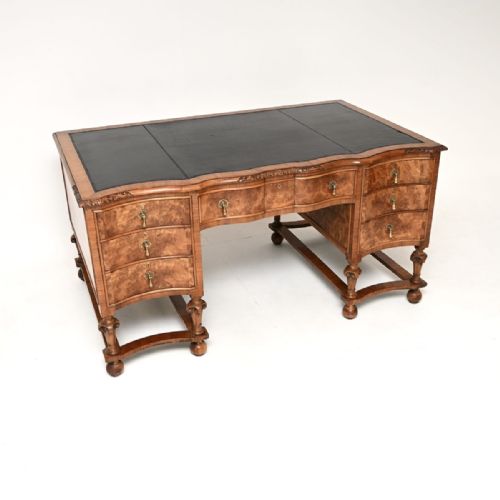
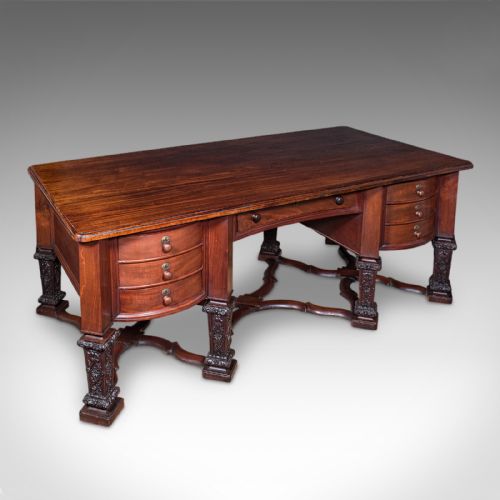
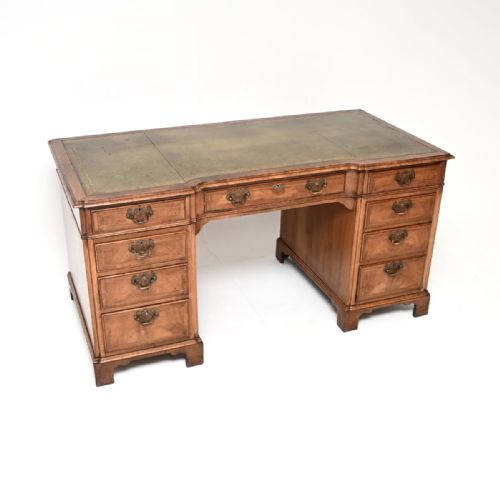
A carved double pedestal desk is a substantial writing workspace with cupboards and drawers resting on two separate bases, designed for serious study.
Carved Double Pedestal Desk
When searching for a carved double pedestal desk, buyers encounter robust writing furniture designed with two freestanding stacks of drawers supporting a broad top surface. These substantial pieces typically emerge from the nineteenth century, spanning Victorian and Edwardian eras, along with various revival movements such as Chippendale and Louis XIV.
The most common variations on this page include mahogany and oak partners desks, often featuring inlaid leather writing surfaces and elaborate carved details. Workshops also utilised burr walnut and teak to construct these dual-sided writing tables for studies and libraries.
Originating predominantly from English and Anglo-Indian traditions, these forms range from simple nineteenth century oak examples to large serpentine shaped mahogany desks. Certain pieces incorporate specific regional motifs and hand carved religious panels reflecting distinct period aesthetics.
What varies in quality
The degree of hand carving significantly separates standard utility pieces from exceptional examples, with crisp detailing and deep relief work indicating superior craftsmanship. Timber selection also dictates grade, where highly figured mahogany or well-matched burr walnut veneers demonstrate greater initial investment.
Originality of components, including matching brass hardware, fitted leather inserts, and structurally sound pedestals, distinguishes well-preserved desks from heavily altered or restored furniture. The presence of documented maker signatures or attribution further elevates the standing of a desk.
The selection includes regional styles such as Anglo-Indian Colonial alongside European revival forms like Chippendale and Louis XIV.
Maple and Co·T Wilson·Gillows
The Carved Double Pedestal Desk Glossary
- Partners desk
- A large double pedestal desk designed with drawers and cupboards on both sides so two people can work face to face. These forms were commonly utilised in institutional offices and large estate libraries.
- Pedestal
- One of the two vertical structural blocks containing drawers or shelving that support the top of the desk. Each pedestal rests directly on the floor and bears half the weight of the writing surface.
- Serpentine
- A curved shape featuring a convex centre flanked by concave curves, often seen along the front edges of high-quality desks. This intricate contour requires precise woodworking skill.
- Burr walnut
- Timber taken from the gnarled growth of a walnut tree, showing swirling and intricate grain patterns. It was sliced into veneer and applied to prominent surfaces of luxury furniture.
- Tooled leather
- Leather writing surfaces decorated with decorative gold or blind impressions stamped along the perimeter. This material provides a durable and smooth plane for writing.
Carved Double Pedestal Desk: Frequently Asked Questions
What is a partners desk?
A partners desk is a large double-sided writing table featuring pedestals of drawers on both fronts. This layout allowed two people to sit opposite each other and work simultaneously in a shared study.
Such desks were frequently placed in the centre of a room rather than against a wall. Their substantial proportions made them central fixtures in nineteenth century offices and libraries.
How do I care for the leather top?
Leather writing surfaces require gentle cleaning with a dry or slightly damp cloth to remove dust without saturating the material. Conditioning balms help maintain the flexibility of antique leather over time.
Avoid placing hot cups or sharp objects directly onto the surface to prevent staining and scratching. Proper maintenance preserves the gold tooling and overall colour of the leather.
How do I identify a Victorian desk?
Victorian desks are generally identified through construction methods, timber choices, and specific revival styles popular during the nineteenth century. Common indicators include heavy mahogany or walnut framing, hand-cut dovetails in the drawer construction, and traditional brass hardware.
Many pieces from this era also incorporate stylistic influences such as Chippendale or Louis XIV revivals. Checking for period-appropriate locks and interior secondary woods helps confirm the date.
Can these desks be disassembled for moving?
Most double pedestal desks separate into three main components for transport: the two lower pedestals and the heavy top surface. The drawers can also be removed individually to lighten the load before moving.
Care should be taken when lifting the top, as solid hardwoods and thick leather inserts add considerable weight. Securing loose internal components prevents damage during transit.