



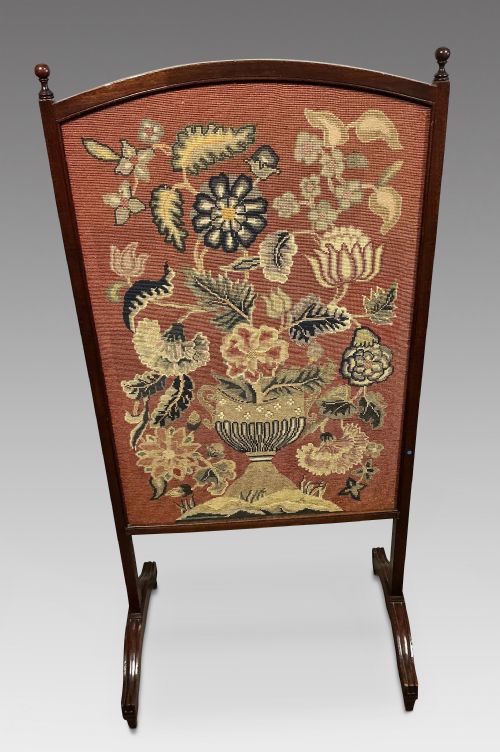


Carved Dark Wood Screen
A carved dark wood screen manages hearth drafts or divides a room, bringing rich texture and period craftsmanship into a living space.
Carved Dark Wood Screen
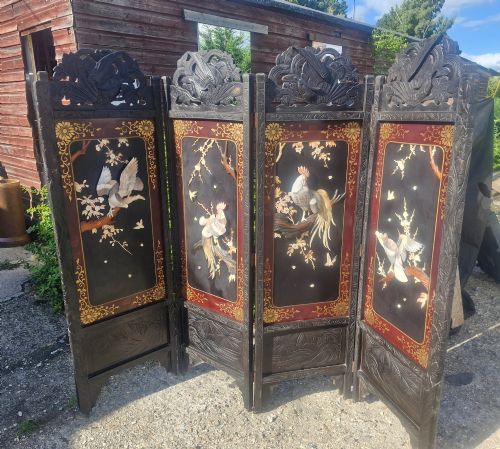
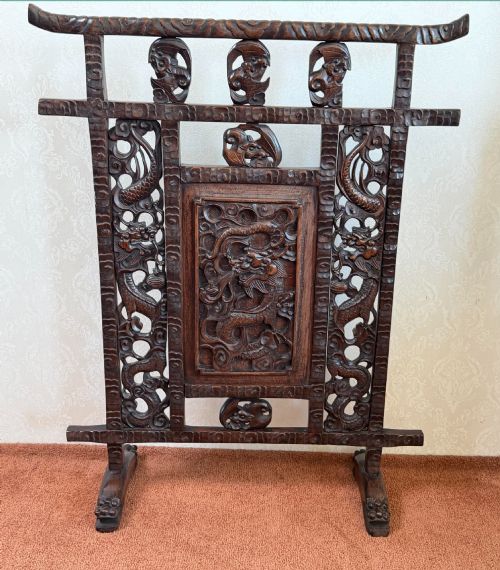
A carved dark wood screen serves primarily as a decorative room divider or a functional firescreen designed to protect from open hearth heat. The examples found here span the nineteenth century through the early twentieth century, taking forms such as folding panels, pole screens, and table screens.
Originating from English, Chinese, Japanese, and Burmese workshops, these pieces frequently combine heavy hardwood frames with intricate carving, textiles, or brass inserts. The selection relies heavily on Victorian rosewood and mahogany frames alongside imported hardwoods.
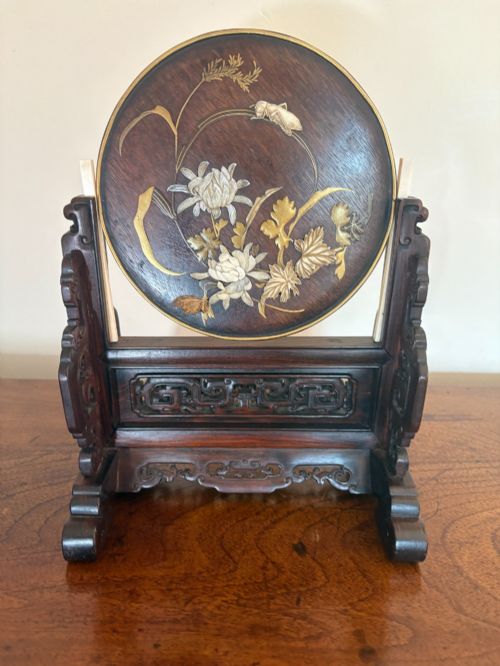
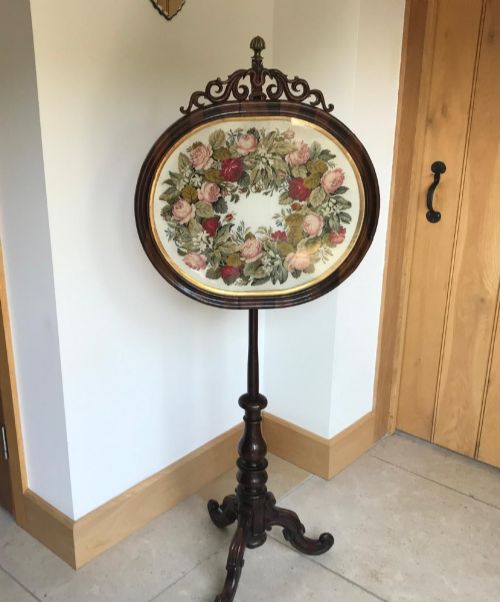
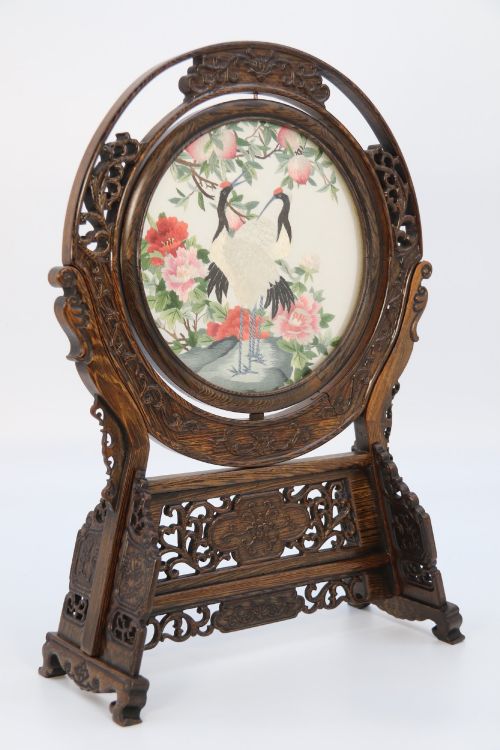
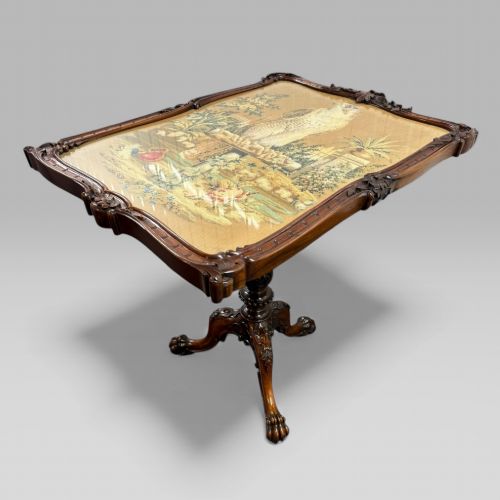
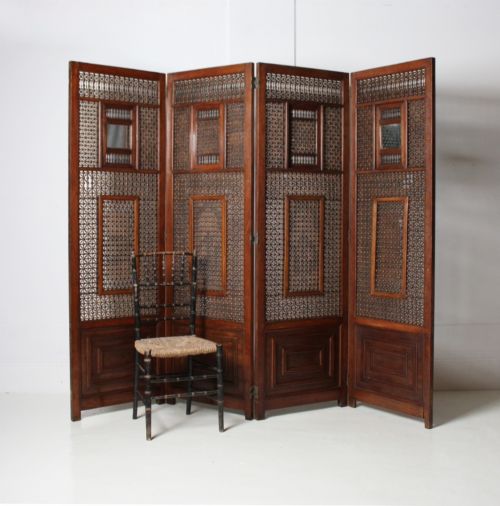
Buyers will encounter tall four-panel room dividers, adjustable pole screens with tripod bases, and smaller table screens featuring silk embroidery or bone inlay. Each variation reflects the domestic habits and decorative tastes of its period of origin.
Materials and construction
Makers utilised dense hardwoods such as rosewood, mahogany, oak, and general hardwood for the primary framework, ensuring structural stability for folding panels and upright pole screens. These woods were often deeply carved by hand, displaying relief motifs, pierced scrollwork, or geometric mashrabiya lattice patterns.
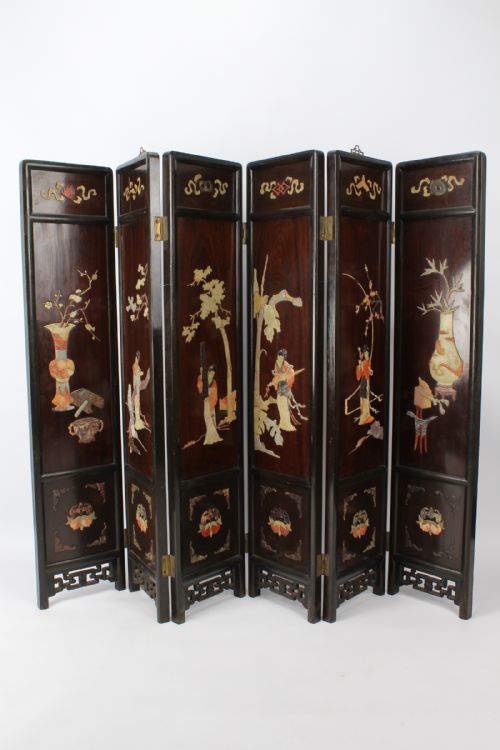
Secondary materials complete the panels, integrating glass, embossed brass, and lacquered wood alongside delicate textiles like silk embroidery, wool tapestry, and needlepoint. Japanese examples frequently incorporate bone inlay and Shibayama techniques into the hardwood structure.
Some nineteenth-century makers cleverly hid family coats of arms on brass firescreens, ensuring your ancestors could judge your hearth.
Assessing quality and execution
The refinement of the hand carving separates standard production from exceptional work, visible in the depth of relief, crispness of edge, and the absence of mechanical tooling marks. Superior pieces demonstrate careful timber selection, where the grain pattern complements the scale of the panel.
In textile-inset screens, the execution of the needlework, silk embroidery, or tapestry dictates the piece's standing, with finely rendered pictorial scenes or heraldic crests raising the standard. Structural integrity in the joints, stable tripod bases, and working adjustment mechanisms further distinguish superior examples.
Gillows
The Carved Dark Wood Screen Glossary
- Pole screen
- A freestanding firescreen featuring an adjustable panel mounted on a vertical wooden pole with a tripod or pedestal base. This design allowed the user to slide the screen up and down to block radiant heat from the fireplace.
- Mashrabiya
- An architectural wooden lattice screen traditionally composed of turned bobbins fitted closely together. It permits air circulation and light while maintaining privacy.
- Shibayama
- A Japanese decorative technique involving the inlay of precious materials such as ivory, mother-of-pearl, and bone into a wooden or lacquered surface to form pictorial motifs.
- Cheval screen
- A large firescreen mounted within a standing frame that allows the central panel to tilt or swing freely between two upright supports.
- Needlework
- Stitched textile art executed on canvas or mesh ground using wool or silk yarn. These panels frequently depict floral arrangements or historical scenes.
Carved Dark Wood Screen: Frequently Asked Questions
How were pole screens used?
Pole screens stood near fireplaces to shield a person's face from the intense heat of an open coal or wood fire. The adjustable panel could be raised or lowered along the central wooden shaft depending on the sitter's position.
They also served a social function in nineteenth-century drawing rooms, protecting ladies' wax-based facial cosmetics from melting in the hearth's glow.
What is the difference between a fire screen and a room divider?
Fire screens are single-panel pieces, often mounted on legs or a pole, designed specifically for placement in front of a domestic hearth when not in use. They focus on decorative needlework, glass, or carved panels.
Room dividers consist of multiple hinged panels that fold together, built larger to partition interior spaces or create private areas within a larger chamber.
Where should I place a table screen?
Table screens are compact decorative objects meant to sit upon desks, side tables, or mantelpieces rather than the floor. Their detailed carved stands and inset panels of silk embroidery or bone are best appreciated at eye level in a study or drawing room.
Position them away from direct, strong sunlight to protect delicate silk embroidery threads and natural wood finishes from fading.
How do I date a carved wooden screen?
Dating relies on identifying the prevailing style, timber choices, and construction methods characteristic of specific periods like the Victorian era or the William IV reign. Tool marks, joinery techniques, and the nature of any secondary materials like brass or textile provide further chronological clues.
For example, mid-nineteenth-century English pieces frequently utilise heavily carved rosewood with needlepoint inserts, whereas early twentieth-century Asian imports often feature bone inlay or double-sided silk embroidery.