
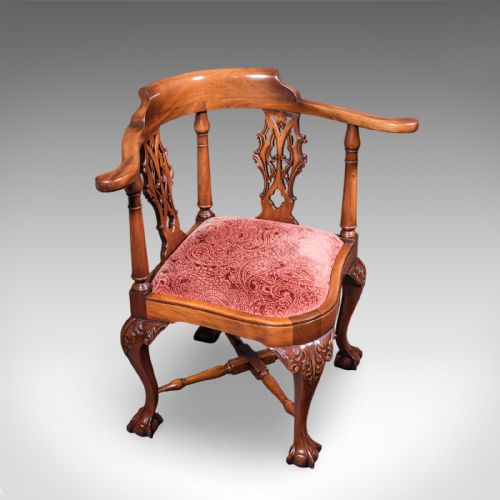


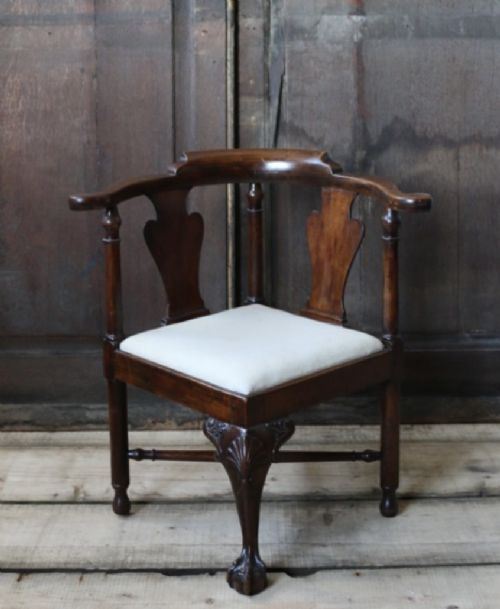


Carved Corner Seat
A carved corner seat fits neatly into a room, offering a distinct vantage point while turning unused angles to practical use.
Carved Corner Seat
A carved corner seat is a specialised chair designed to fit into the ninety-degree angle of a room, appearing in forms from eighteenth-century walnut examples to later Victorian and Edwardian iterations. The surviving pieces encompass distinct regional variations, including English mahogany and oak designs alongside Chinese export hardwood forms.
The most common items found under this heading are timber armchairs and accent seats featuring turned supports, pierced splats, and low backs intended for writing desks or parlour corners. Walnut and mahogany predominate among the earlier pieces, while oak and lighter hardwoods define the later Victorian and Edwardian selections.
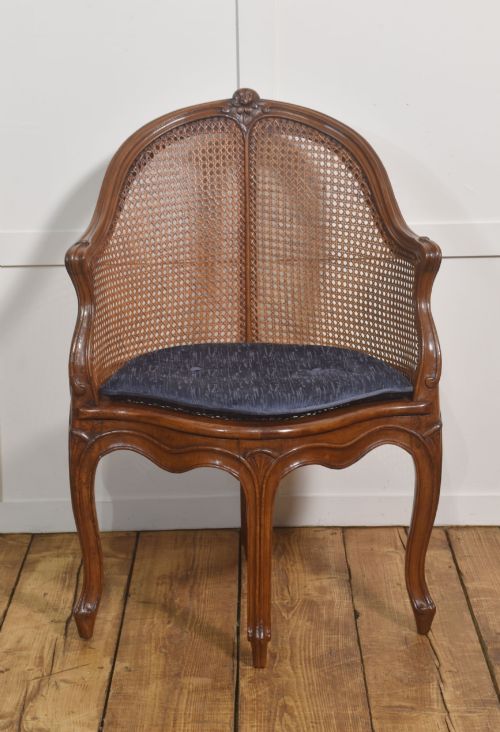
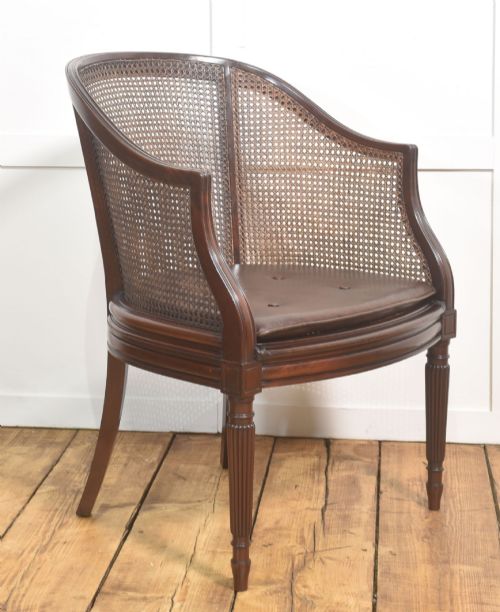
Makers often adapted the frame to include cane panels, leather upholstery, or inlaid marquetry, shifting the seating from a purely utilitarian room-filler to a decorative focal point. These chairs served various household functions, acting as desk chairs, dressing seats, or quiet parlour perches.
Materials and construction methods
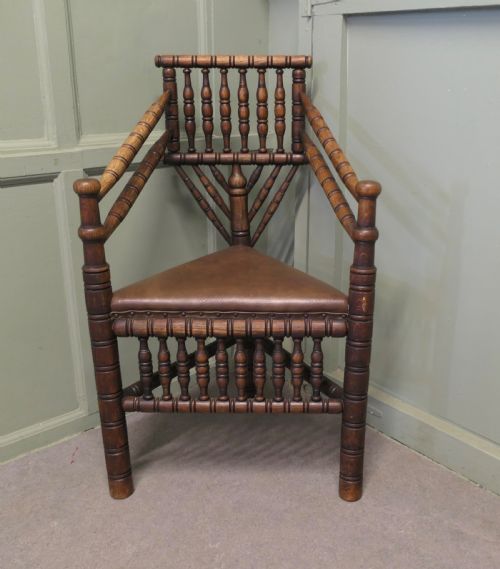
Cabinet makers relied primarily on solid timbers such as oak, walnut, and mahogany, shaping the structural frames with mortise and tenon joints to withstand the lateral stresses placed on corner seating. Turned spindle work, seen on Turner's chairs and Saxon-style variants, required expert lathe turning to align the intersecting arm rails and legs.
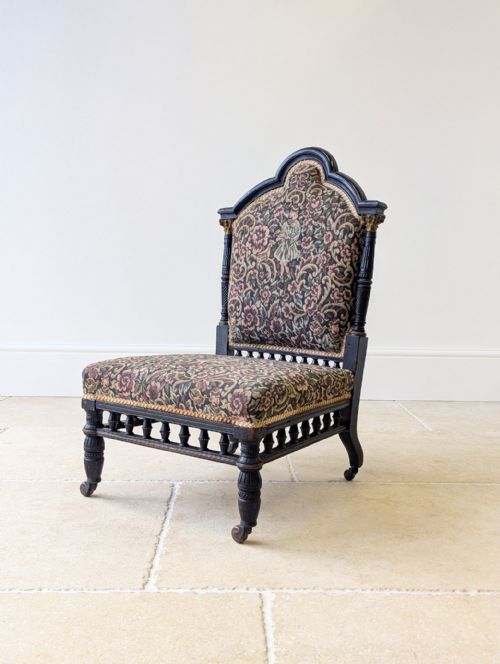
Carving was executed directly into the dense grain of the wood, utilising hand gouges and chisels to produce foliate motifs, scrollwork, and geometric Mashrabiya panels. Caning and fabric upholstery were subsequently integrated into the seats and backs using traditional webbing, cane strands, and brass tacks.
One chair arrives equipped for gossip, featuring an eccentric and curvaceous design intended for quiet corners.
Assessing quality in construction and detail
Quality rests in the crispness of the hand-carved detail and the selection of timber, where tightly figured walnut or quarter-sawn oak indicates superior material sourcing. Finer examples display continuous grain matching across structural joins and restrained, well-proportioned turning rather than heavy, uniform machine work.
The integrity of the frame's joinery dictates longevity, with superior pieces showing no undue looseness in the intersecting corner posts and arms despite centuries of use. The retention of original cane work, subtle marquetry inlay, or early upholstery fabric elevates the historical integrity of the piece.
Liberty and Co
The Carved Corner Seat Glossary
- Corner chair
- A chair specifically constructed with a diagonal plan to fit into the corner of a room, usually featuring a semicircular backrest supported by turned columns.
- Mashrabiya
- An architectural pierced wood-carving technique forming intricate lattice patterns, occasionally incorporated into nineteenth-century chair panels.
- Turner's chair
- A sturdy seat constructed entirely of turned wooden spindles and members, often associated with traditional vernacular forms from the seventeenth and nineteenth centuries.
- Caning
- A woven lattice made from rattan peel, utilised for lightweight and flexible seat and back panels in chairs from various periods.
Carved Corner Seat: Frequently Asked Questions
Where were corner chairs placed in a period home?
These seats were typically positioned in the dead angle of a parlour, bedchamber, or hallway to maximise floor space while providing an additional seating option.
They also served as convenient desk chairs in studies, as their diagonal orientation allowed writers to utilise corner writing tables effectively.
How do I identify an eighteenth-century corner chair?
Eighteenth-century examples generally display dense mahogany or walnut timber with patination, featuring drop-in seats and splats carved in styles like George II or Queen Anne.
They rely on pegged joinery and hand-cut dovetails rather than the machine-cut precision found in later revival pieces from the Victorian era.
What is a Turner's chair?
A Turner's chair is a heavy, tripartite armchair built from numerous turned wooden spindles, heavily rooted in traditional English vernacular design and revived during the Victorian period.
These pieces feature low elbow rests and solid wooden seats, often constructed from sturdy oak or beech.
Can I use an antique corner chair daily?
Most structural frames built from solid hardwoods remain robust enough for regular sitting, provided the joints have been checked and stabilized by a professional conservator.
Cane seats require more careful treatment to avoid puncturing the woven strands, whereas upholstered or solid wooden variants tolerate everyday use quite well.