




Triangular Turned Chair
These triangular turned chairs are sturdy nineteenth-century seats rooted in vernacular craftsmanship and early joined traditions.
Triangular Turned Chair
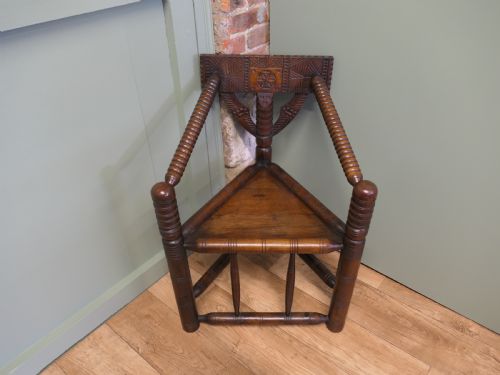
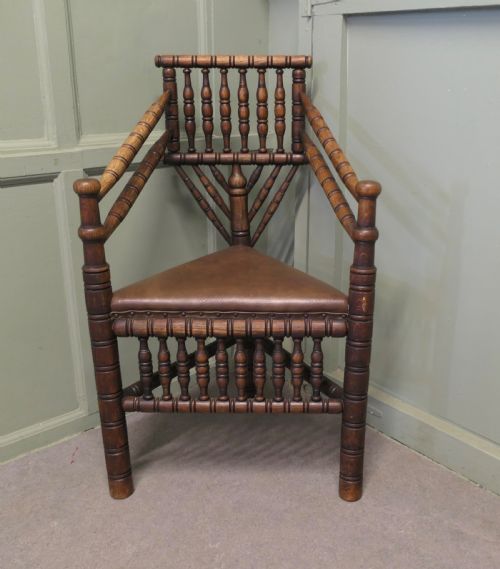
A triangular turned chair offers a distinctive three-legged footprint paired with a triangular seat, emerging primarily across nineteenth-century examples in this collection. These pieces draw on historic vernacular designs often styled as old Saxon chairs or turners chairs, typically taking the form of low armchairs or elbow seats.
Most items appearing here date from the Victorian era, spanning the nineteenth century up to around nineteen hundred. Alongside armchairs, the selection includes related items such as corner stools and library armchairs reflecting English country and Gothic revival influences.
How they were made
Construction relies heavily on turned timber components shaped from English oak and beech, occasionally supplemented by mahogany. Joinery utilises traditional spindle-turning techniques to form the structural framework and back supports.
Seats incorporate woven rush, leather, or upholstered fabric inserts fitted within the triangular frame. These materials combine to provide rigid wooden structures paired with functional, supportive seating surfaces.
Triangular Turned Chair Retail Price Guide 2026
Typical asking prices for triangular turned chair among the pieces listed under this phrase on Sellingantiques today, from the lower quarter to the upper quarter. They describe what is for sale here now, not the wider market.
What varies in quality
Quality rests upon the crispness of the spindle-turning and the density of the primary timber used in the frame, such as English oak. Stronger examples exhibit precise alignment in their three-legged geometry and careful joint retention.
The choice of seating material, whether woven rush, leather, or fitted fabric, influences the overall finish. Superior specimens maintain integrity in their turned components and original structural fastenings without excessive replacement.
The Triangular Turned Chair Glossary
- Turned chair
- A seat constructed entirely from cylindrical wooden components shaped on a lathe. These chairs represent ancient woodworking traditions.
- Saxon revival
- A nineteenth-century design movement inspired by early Anglo-Saxon artefacts and architecture. This style appears frequently in Victorian furniture descriptions.
- Vernacular
- Everyday objects made by regional craftsmen following local traditions rather than high-style academic designs. These pieces utilise accessible local materials like oak and beech.
- Rush
- Dried marsh grass woven into tight cords to form traditional seating surfaces. It provides a durable and flexible base for triangular frames.
Triangular Turned Chair: Frequently Asked Questions
How were these chairs used historically?
These seats served as practical everyday furnishings in domestic spaces and libraries. Their three-legged design provided stability on uneven floors.
The elbow seats and armchairs offered sturdy support for reading or working tasks. Today, they function effectively as decorative accent pieces.
What woods were used for these chairs?
Turners primarily utilised English oak and beech for the turned framework. Mahogany also appears in related nineteenth-century seating.
These timbers provided the necessary strength for intricate spindle construction. The wood was often left with a natural finish to highlight the grain.
How do you date a turned chair?
Dating relies on examining the turning style, timber species, and construction methods. Nineteenth-century examples frequently incorporate Victorian Gothic or Saxon revival motifs.
Reference to periods such as the Victorian era helps establish the age of the piece. Subtle variations in spindle profiles indicate specific manufacturing decades.
Are these chairs comfortable for daily use?
These chairs feature rigid wooden spindle backs and firm seats made from rush, leather, or fabric. They provide upright support rather than deep lounging comfort.
Their sturdy construction makes them reliable for occasional seating. Cushions can be added to soften the triangular seat base.