
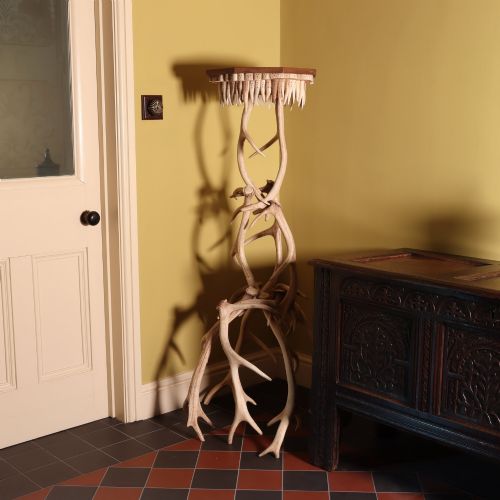
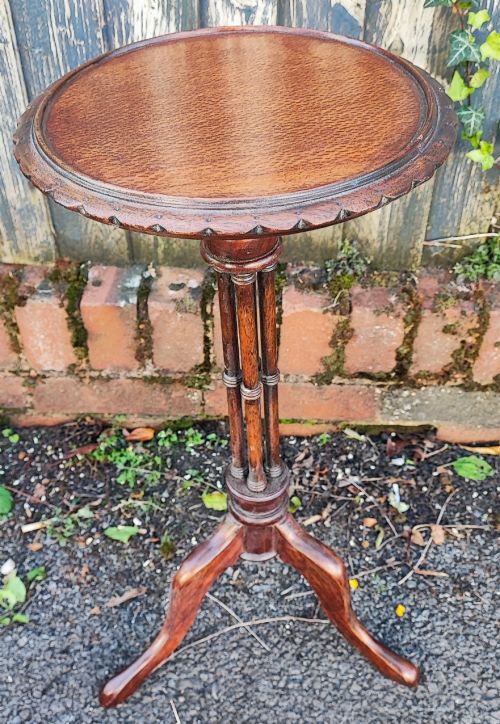


Carved Column Occasional Table
A carved column occasional table provides a sturdy central support for small surfaces, combining decorative turned woodwork with practical mobility.
Carved Column Occasional Table
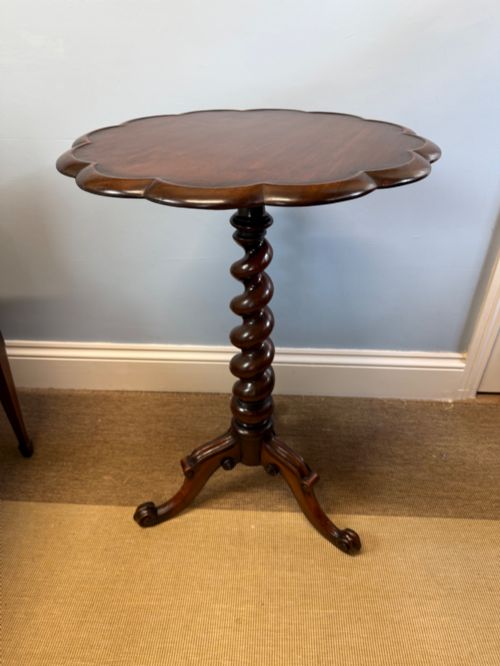
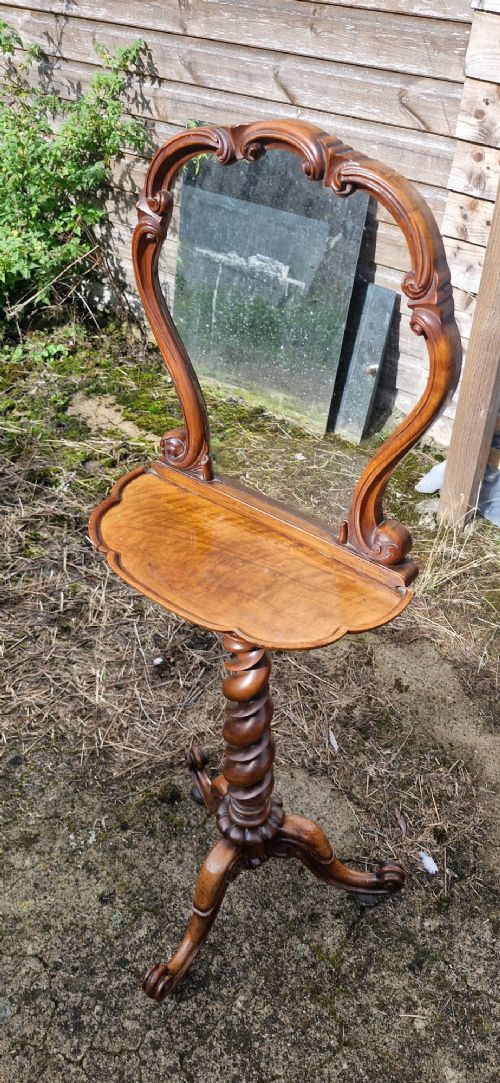
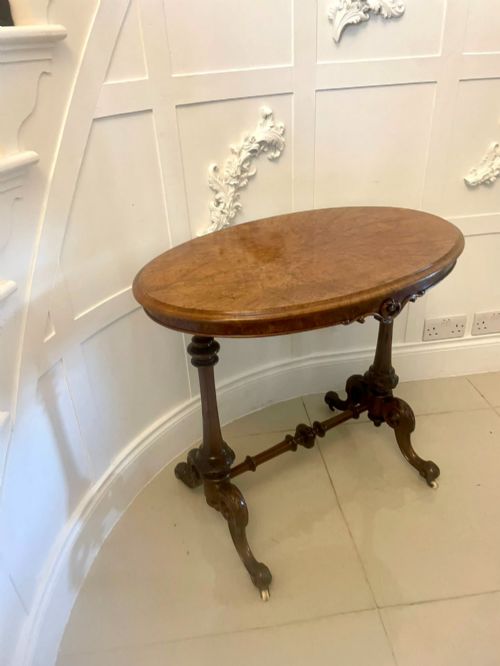
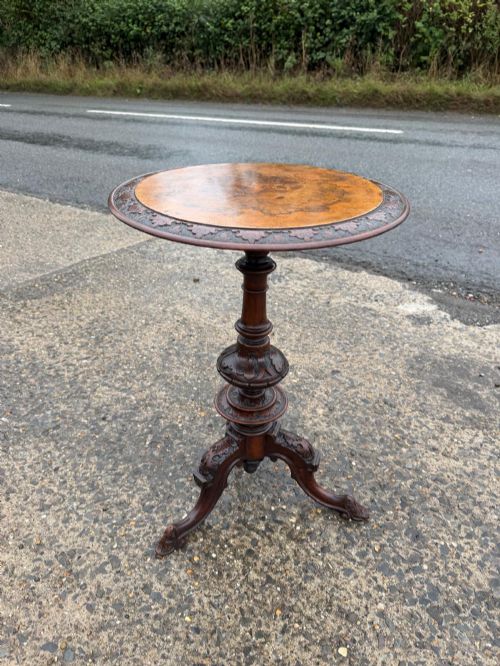
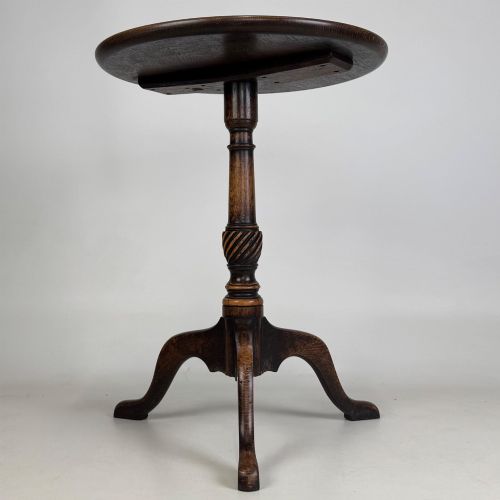
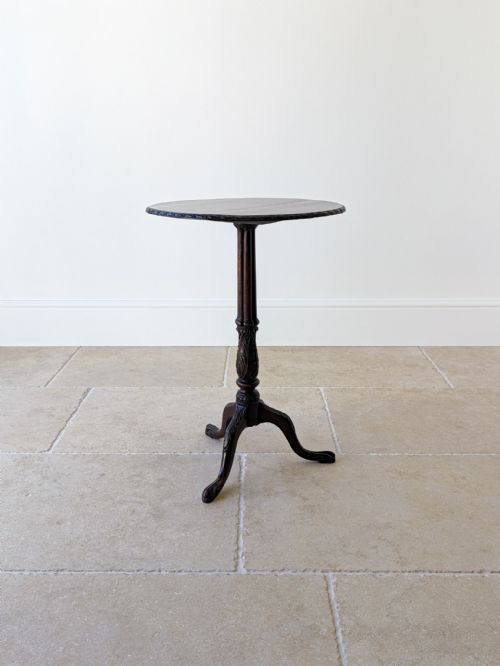
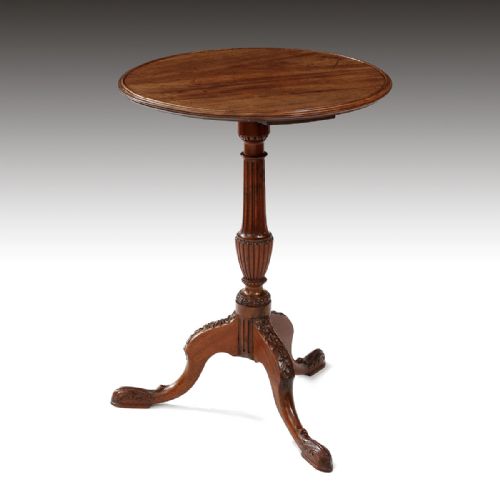
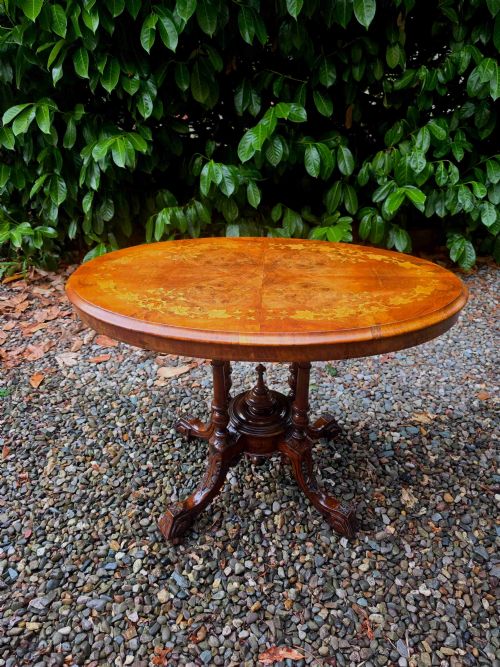
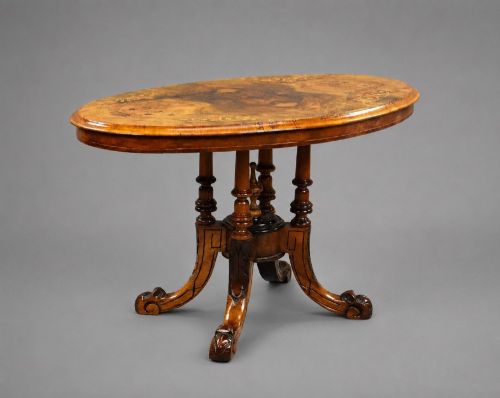
A carved column occasional table is a compact piece designed to stand beside chairs or in corners, holding lamps, drinks or decorative items. Most examples found here date from the nineteenth century, spanning Victorian, Regency and Georgian periods.
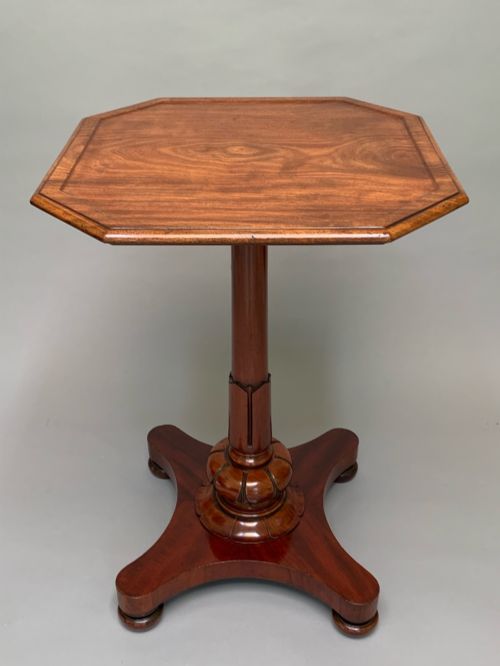
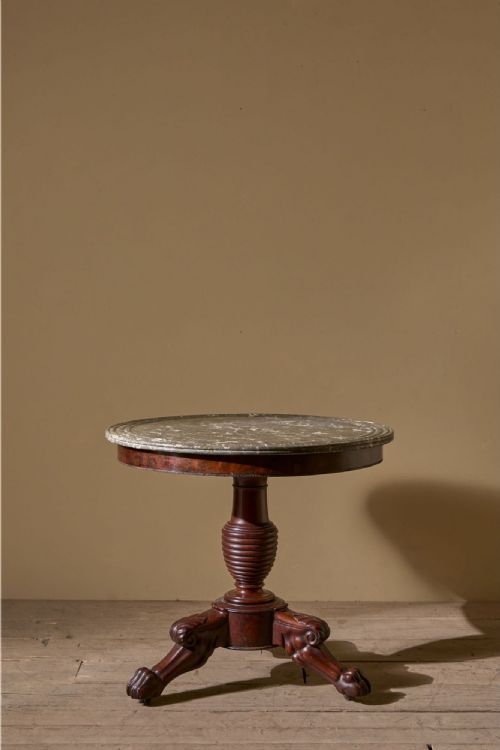
The form typically rests on a central pillar supported by tripod legs or a solid base, often featuring round or oval tops. Mahogany and walnut dominate the selection, frequently enhanced by burr veneers, marquetry inlay or tilt-top mechanisms.
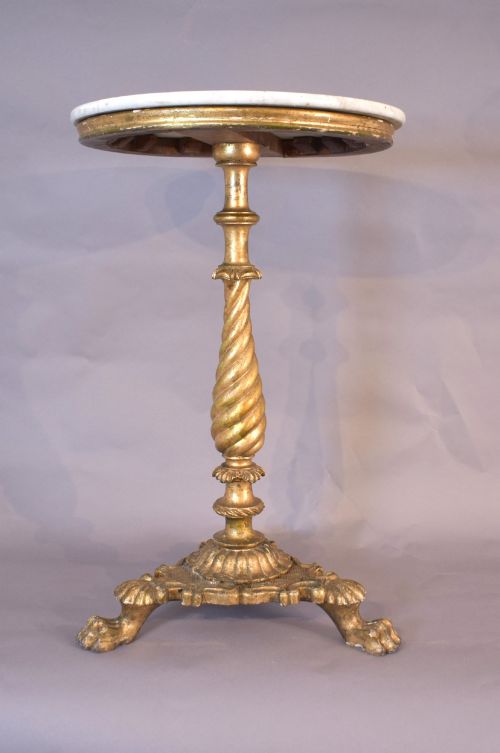
Variations include wine tables, candlestands, lamp tables and smaller centre tables. While some adhere to strict revival styles such as Chippendale or French provincial designs, others display plain turned columns with simple tripod feet.
Materials and construction methods
Cabinet makers built these tables using dense timbers like mahogany, walnut and oak, selecting figured sections such as burr walnut or fiddleback mahogany for the primary surfaces. Turning lathes shaped the central columns into reeded, barley twist or fluted profiles.
Joinery relied on sturdy tenons, dovetails and iron pivot mechanisms for tilt-top variants, ensuring the single pillar maintained stability beneath the weight of the top. Inlaid details utilised contrasting woods like boxwood set flush into the primary timber.
Listings feature woods including mahogany, walnut, burr walnut, oak, padouk and rosewood alongside marble and painted finishes.
Assessing quality in construction and finish
Quality rests upon the crispness of the column carving and the choice of timber figure on the tabletop. Superior pieces exhibit deeply undercut woodwork and well-matched veneers rather than printed or superficial surface decoration.
The structural integrity of the central column attachment dictates everyday usability, as inferior joints lead to a noticeable wobble in the tabletop. Original brass fittings, stable tilt mechanisms and intact inlay work distinguish finer workshops from standard production.
Gillow
The Carved Column Occasional Table Glossary
- Tripod base
- A three-legged support system commonly used beneath central columns to ensure stability on uneven floors.
- Tilt-top
- A hinged tabletop mechanism allowing the surface to fold vertically when not in use, saving space in smaller rooms.
- Gueridon
- A small ornamental table, often French in origin, designed to hold candles or decorative objects.
- Burr walnut
- Timber taken from a tree growth that produces intricate, swirling patterns highly prized for tabletops.
- Candlestand
- A tall, slender occasional table historically used to support lighting devices.
Carved Column Occasional Table: Frequently Asked Questions
What is a carved column occasional table used for?
These pieces serve as moveable surfaces for lamps, books and decorative objects in sitting rooms and hallways. Their compact footprints allow them to fit into tight corners beside seating.
Historically, specific variations functioned as wine tables or candlestands during evening gatherings. Today, they remain practical accent furniture for modern living spaces.
How do I date a nineteenth-century occasional table?
Dating relies on identifying timber choices, construction techniques and stylistic revival cues. Nineteenth-century pieces often feature mahogany or walnut with hand-turned central columns and traditional joinery.
Cabinet makers of the Victorian and Regency eras drew inspiration from earlier Georgian and French designs, adding characteristic marquetry or turning details specific to their decade.
Are tilt-top tables stable?
A well-maintained tilt-top table remains steady when locked into the horizontal position by its original brass catch or wooden wedge. The three legs of the tripod base distribute weight evenly across the floor.
Wear in the pivot mechanism can cause minor movement over time, which is normal for antique examples that have seen generations of daily use.
Where should I place a small pedestal table?
These tables fit naturally beside armchairs, sofas or at the end of a hallway where surface space is limited. Their narrow profiles prevent them from dominating a room.
Avoid placing antique polished wood directly in front of active heat sources or in strong direct sunlight to protect the fragile veneers and polished finishes.