





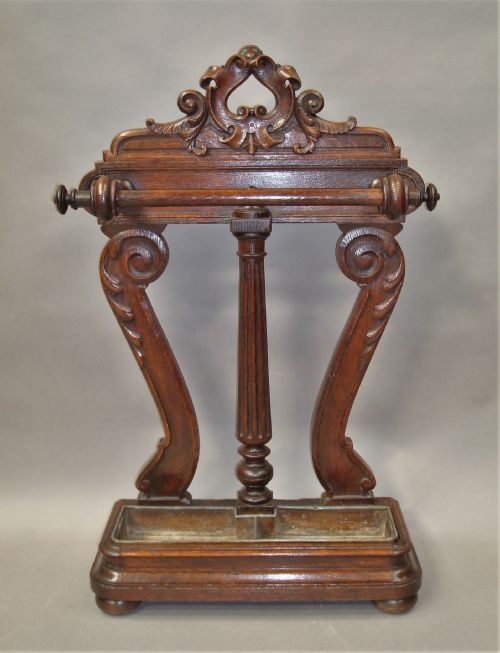

Carved Cane Rack
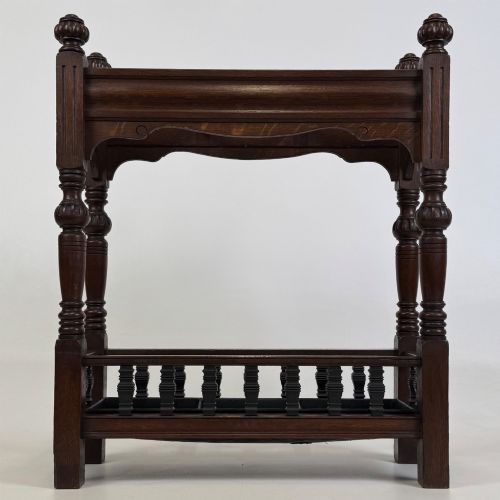
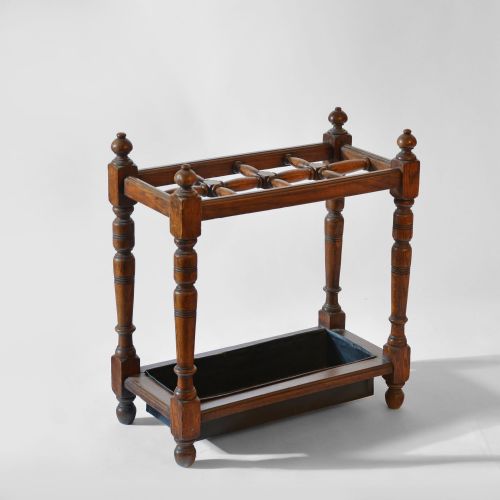
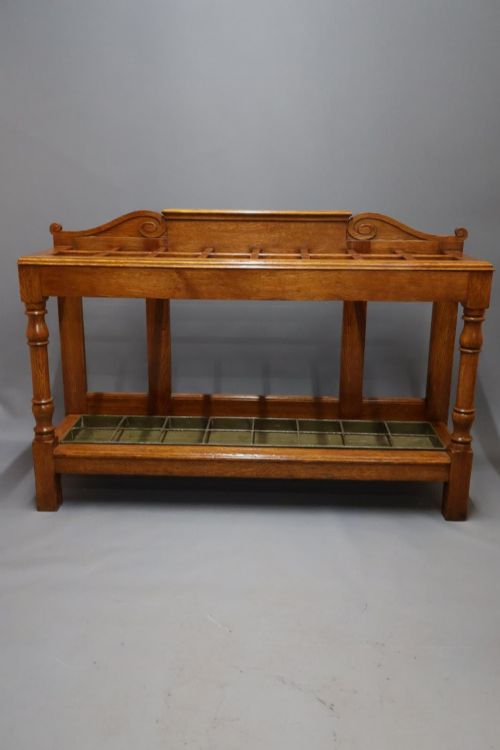
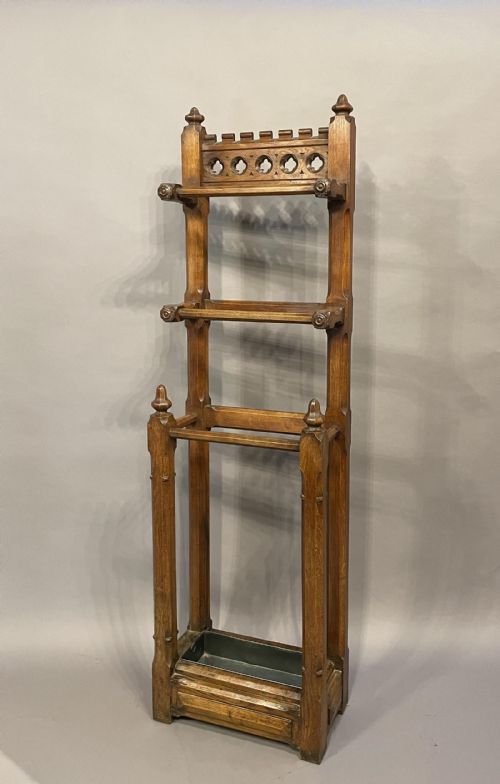
These carved cane rack examples are sturdy hall furnishings designed to hold walking sticks and umbrellas.
Carved Cane Rack
A carved cane rack serves as an organised storage piece in the hallway for walking sticks, canes and umbrellas. When searching for a carved cane rack, buyers encounter hall furniture primarily spanning the nineteenth and early twentieth centuries, including Victorian, Edwardian and Arts and Crafts examples.
Most pieces function as umbrella stands, stick stands or combined umbrella and stick stands designed to keep hallways tidy. Common forms include demi-lune shapes and upright stands positioned directly against entrance walls.
Origin variations include English country house designs alongside continental Black Forest and Italian workshop pieces. Oak forms dominate the selection, accompanied by walnut, mahogany, brass, metal and lindenwood.
What varies in quality
The distinction between standard utility items and finer examples lies in the depth and execution of the carved detailing. Crisp, expressive hand-carving on surfaces and figures elevates a piece above simpler, plain-timber hall stands.
Material selection also dictates overall grade, with dense, well-figured oak or rich walnut demonstrating superior craft compared to basic secondary timbers. Complete original hardware, such as matching metal drip trays and brass rails, preserves the integrity of the design.
Carved Cane Rack Retail Price Guide 2026
Typical asking prices for carved cane rack among the pieces listed under this phrase on Sellingantiques today, from the lower quarter to the upper quarter. They describe what is for sale here now, not the wider market.
Several continental pieces feature carved wooden bears patiently clutching the umbrella ring.
The Carved Cane Rack Glossary
- Demi-lune
- A half-moon shape used for hall stands designed to fit flat against an entrance wall. This space-saving profile appears frequently in country house furniture.
- Black Forest
- A style of wood carving originating from central Europe, characterised by realistic animal figures such as bears holding stick stands. Lindenwood is the primary medium for these sculptural works.
- Drip tray
- A metal or ceramic basin positioned at the base of a stand to catch water from wet umbrellas. These trays protect wooden flooring from dampness.
- Arts and Crafts
- A design movement favouring hand-craftsmanship, simple structural forms and honest use of materials like oak. Pieces from this period often display minimal ornament that highlights the grain of the wood.
Carved Cane Rack: Frequently Asked Questions
Where should I place a stick stand?
These pieces belong in hallways, entrance passages or mudrooms where guests deposit walking aids and wet umbrellas.
Position them against a stable wall near the primary entrance to ensure easy access upon entering or leaving the house.
How do I protect the wood from damp umbrellas?
Most stands include a metal, zinc or ceramic tray at the base to catch water dripping from wet canes and umbrellas.
Emptying and drying these trays regularly prevents moisture from damaging the surrounding timber base.
What is the difference between an umbrella stand and a stick stand?
While often used interchangeably in historical titles, umbrella stands typically feature wider openings for fabric canopies.
Stick stands often utilise tighter dividers or specific ring mounts to keep slender walking canes upright and separated.
How do I identify a Black Forest piece?
Black Forest stands are distinguished by intricate, naturalistic carvings of animals, most notably bears holding card trays or receptacles.
These continental works are typically carved from lindenwood rather than British oak.