




19th Century Umbrella Holder
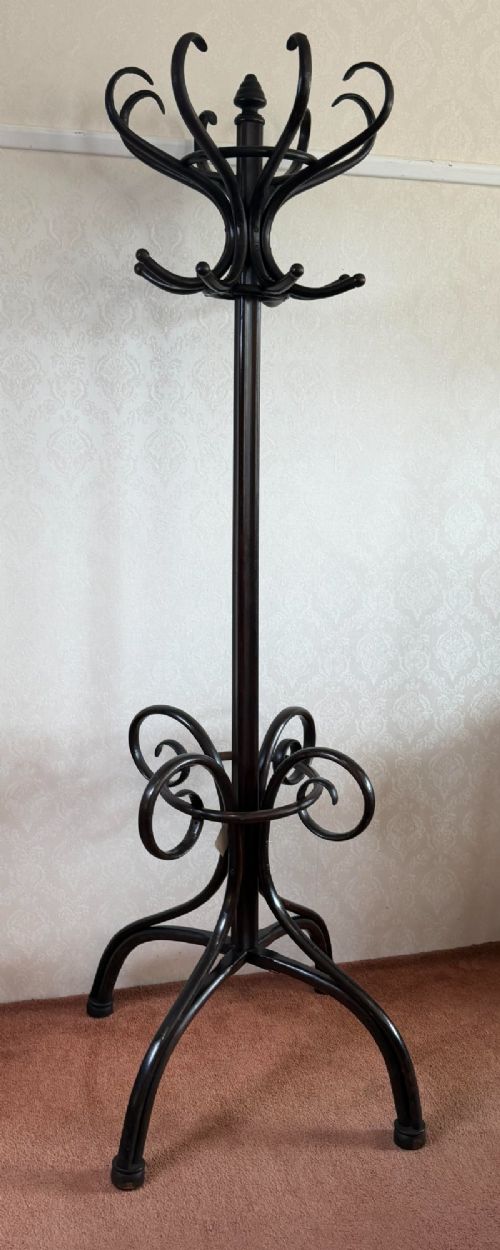
These 19th century umbrella holder pieces command a hallway with practical purpose and substantial presence.
19th Century Umbrella Holder
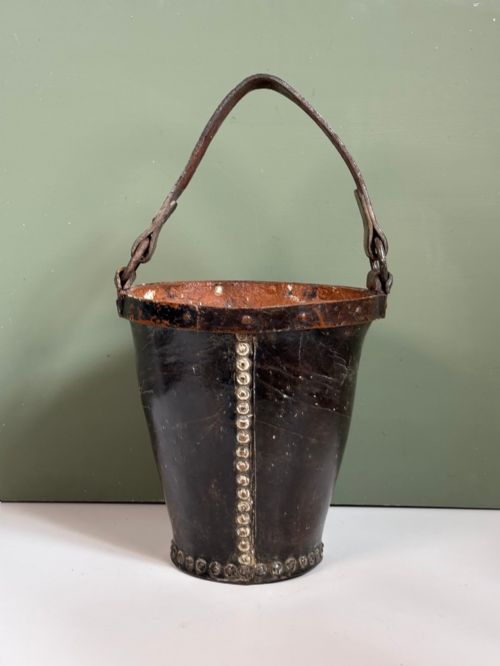
A 19th century umbrella holder serves as a functional anchor for entrance halls, taking the form of dedicated stick stands, multi-purpose hall stands, buckets, and coopered barrels. These pieces manage wet weather gear through robust construction, accommodating long walking sticks and heavy umbrellas alike.
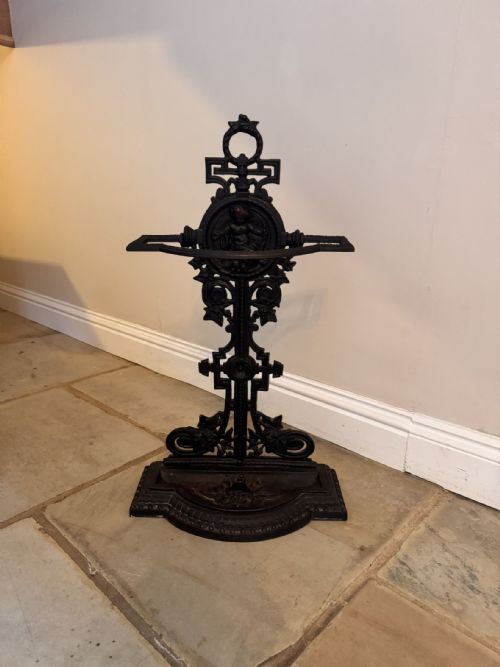
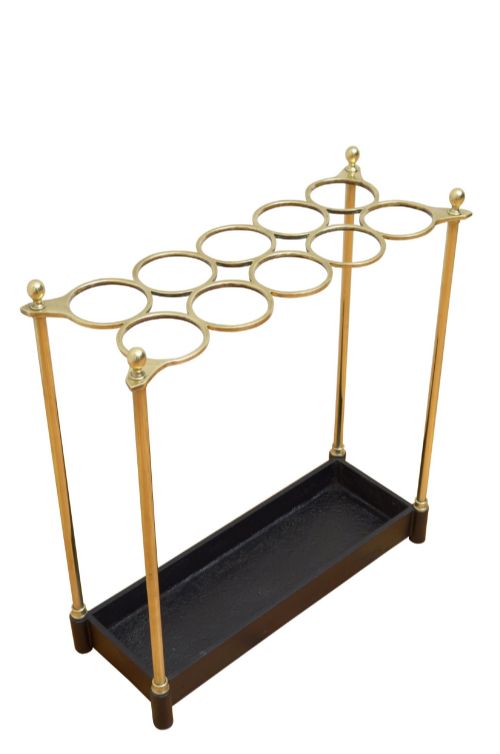
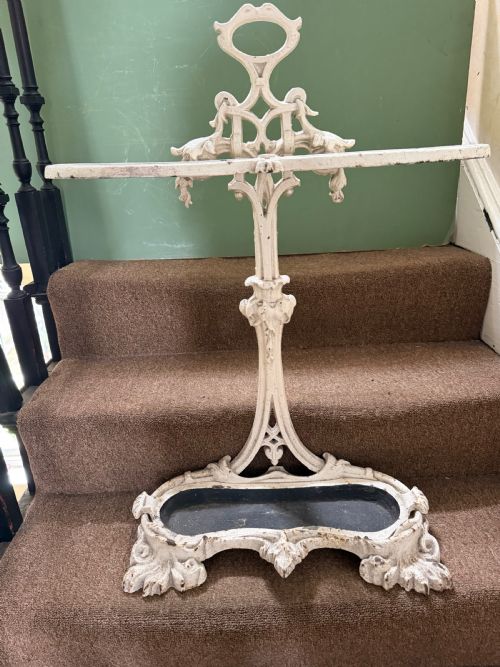
The versions met most frequently on this page span straightforward cast iron frames, polished brass and copper vessels, and carved timber hall stands. Oak, mahogany, walnut, and pine provide the wooden structural basis, whilst metal and ceramic variations introduce structural longevity and decorative contrast.
Origins stretch across English country houses, continental workshops, and specific stylistic revivals such as Gothic and Aesthetic movements. Pieces often combine umbrella storage with coat hooks, mirrors, or glove compartments, reflecting the multifaceted demands of period hallway organisation.
Materials and Construction Methods
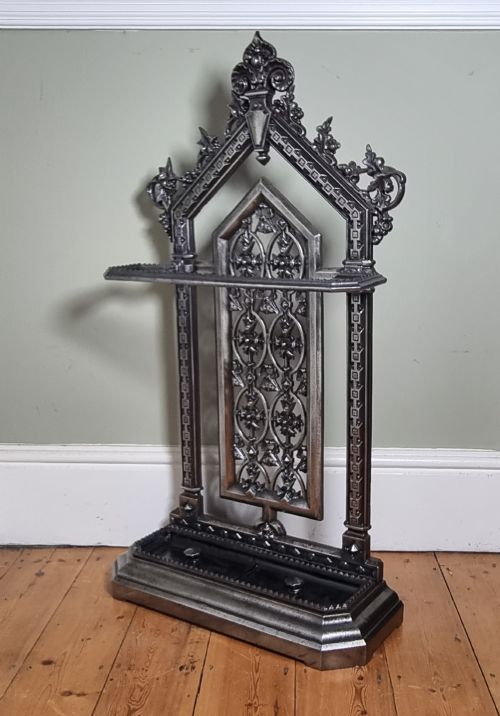
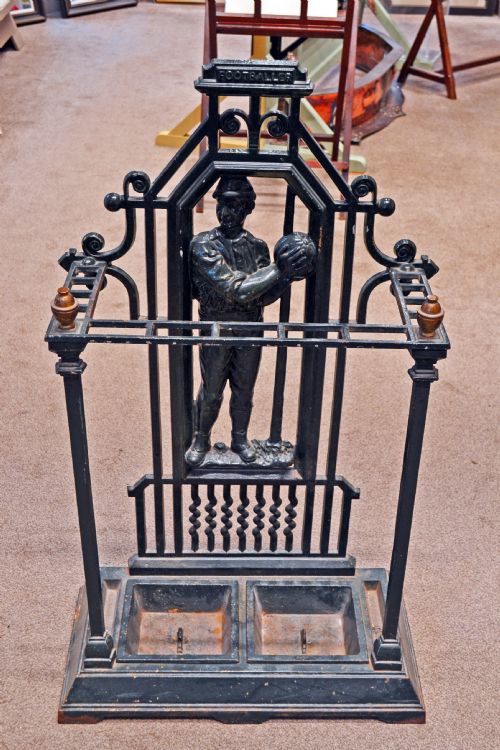
Foundry casting shapes the cast iron and brass elements, yielding intricate pierced patterns, faux bamboo stalks, and figurative designs like footballers or bears. Metal components frequently pair with heavy iron or copper bases designed to catch dripping water without rotting the surrounding floor.
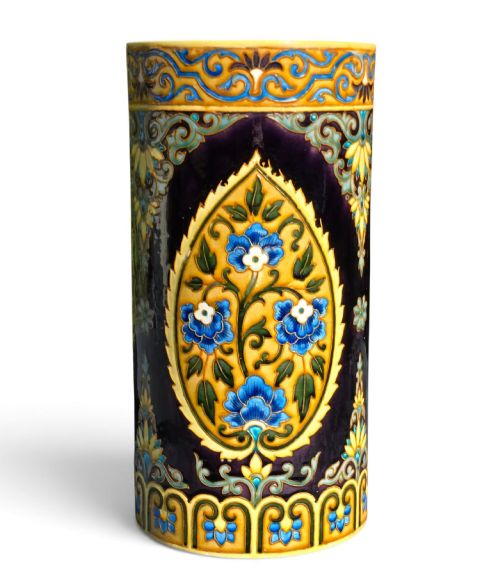
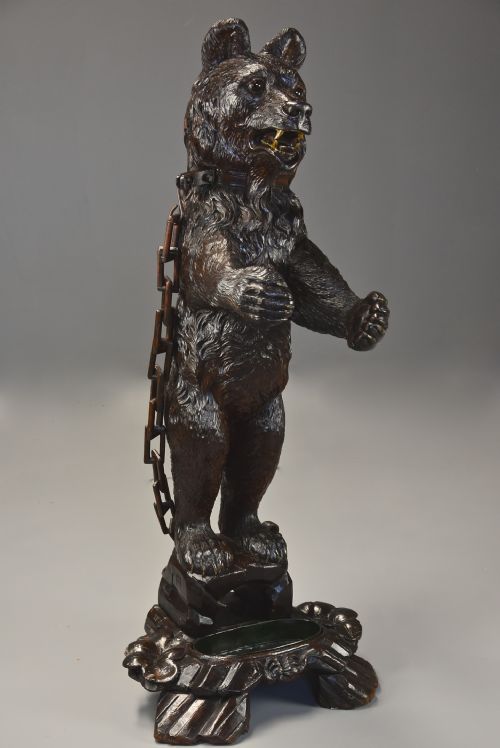
Cooperage and cabinetmaking govern the wooden examples, utilising oak, mahogany, walnut, and pitch pine secured with brass bands, braces, or carved mounts. Lindenwood appears in deeply carved Black Forest animal figures, while ceramic and pottery additions introduce glazed majolica and Iznik-revival surfaces.
19th Century Umbrella Holder Retail Price Guide 2026
Typical asking prices for 19th century umbrella holder among the pieces listed under this phrase on Sellingantiques today, from the lower quarter to the upper quarter. They describe what is for sale here now, not the wider market.
Carved bears double as sturdy valets for damp walking sticks.
Distinctions in Execution
The caliber of a 19th century umbrella holder rests upon the crispness of its metal casting, the depth of its timber carving, and the integrity of its joinery. Superior cast iron or brass stands exhibit sharp relief details and substantial weight, whereas lesser examples display softer moulding and lighter gauges of metal.
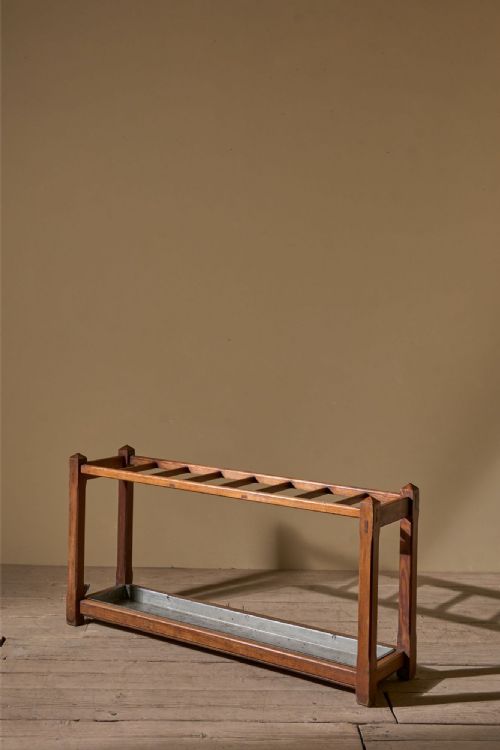
In wooden and coopered pieces, the tightness of barrel staves, the quality of brass mounts, and the sophistication of secondary woods separate standard utility items from exhibition-grade hall furniture. Carved animal motifs, particularly those from the Black Forest tradition, demonstrate quality through anatomical precision and scale.
Théodore Deck·Falkirk Ironworks
The 19th Century Umbrella Holder Glossary
- Hall Stand
- A large hallway item combining an umbrella holder with a mirror, hat hooks, and sometimes a glove box or marble shelf. These pieces anchor grand entrance spaces.
- Coopered
- Constructed from wooden staves bound together with metal hoops, a technique borrowed from barrel-making. This method suits cylindrical umbrella buckets.
- Majolica
- A heavy earthenware pottery covered with an opaque tin-glaze and painted with brightly coloured metallic oxides. It provides a waterproof lining for umbrella storage.
- Finial
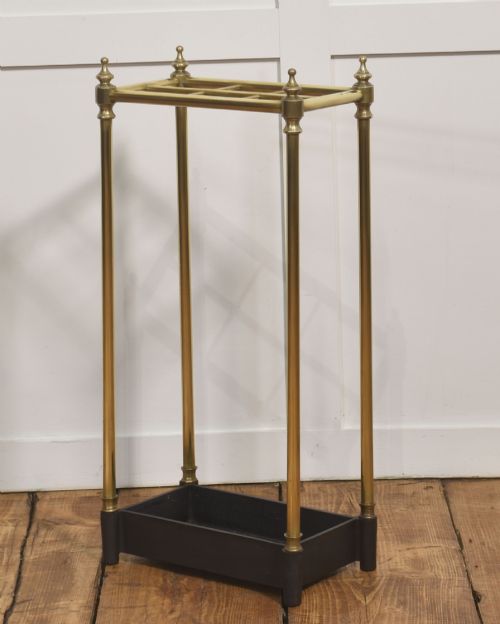
- A decorative terminal ornament placed on the top corners or finials of a metal stand. It offers a finished aesthetic punctuation point to the design.
19th Century Umbrella Holder: Frequently Asked Questions
What woods were used for these?
Oak, mahogany, walnut, pitch pine, and lindenwood form the primary structural timbers seen across these hallway pieces.
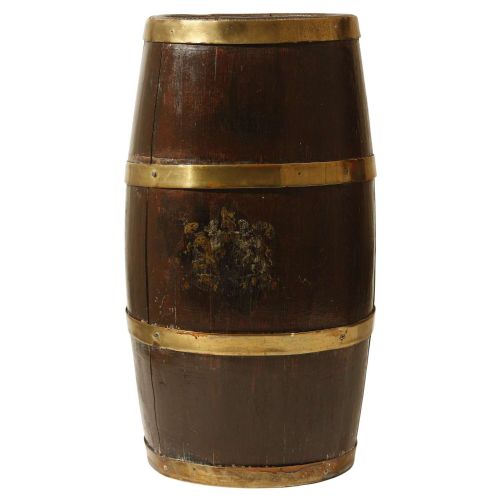
Coopered barrels frequently utilise oak bound with brass, while carved animal figures rely on dense woods like lindenwood.
How do I protect my floors?
Many metal and ceramic stands incorporate built-in drip trays or heavy waterproof bases designed to catch moisture from wet umbrellas.
Wooden barrels and stick stands historically relied on removable metal liners or direct evaporation, requiring modern owners to place discrete saucers inside.
Are cast iron stands very heavy?
Cast iron and brass combinations possess significant physical mass to prevent tipping when loaded with heavy walking sticks and damp umbrellas.
This inherent weight requires careful placement and secure lifting during rearrangement in a hallway.
What is Black Forest carving?
Black Forest pieces originate from central European workshops specialising in naturalistic animal carvings, particularly bears acting as umbrella supports.
These sculptures combine practical hallway furniture with dramatic regional artistry from the nineteenth century.