

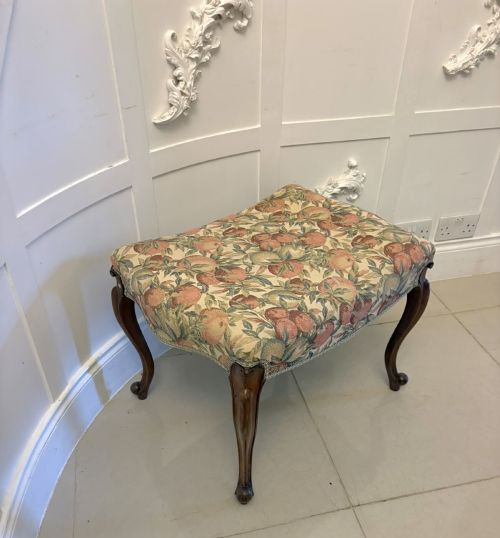
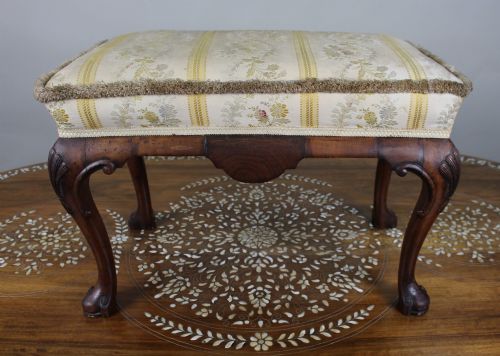
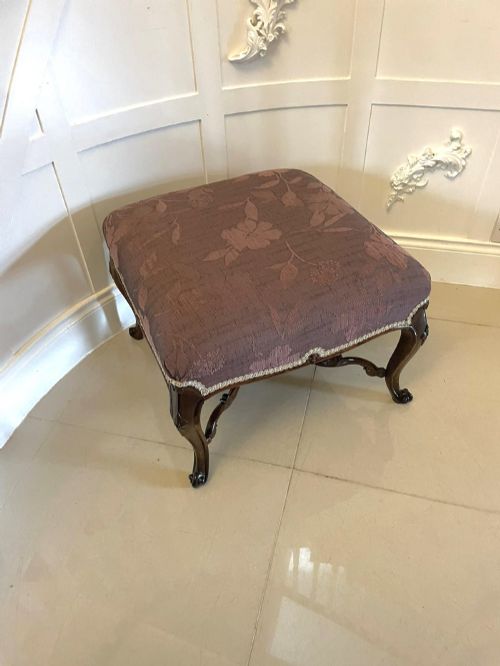
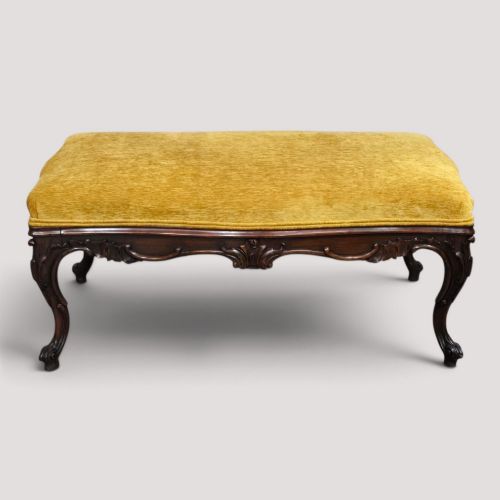
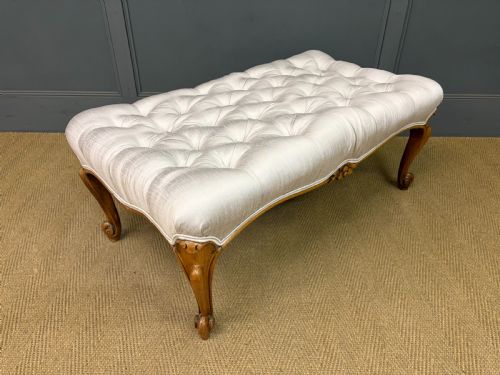
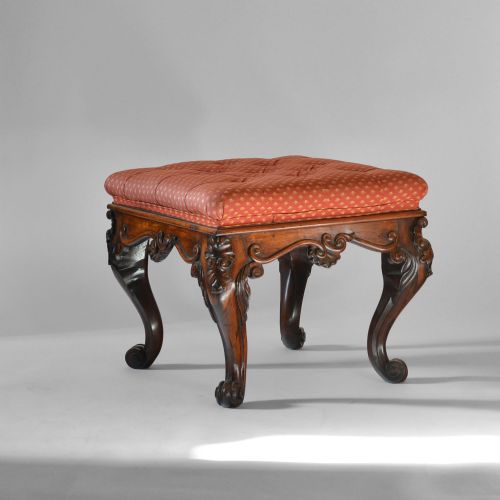
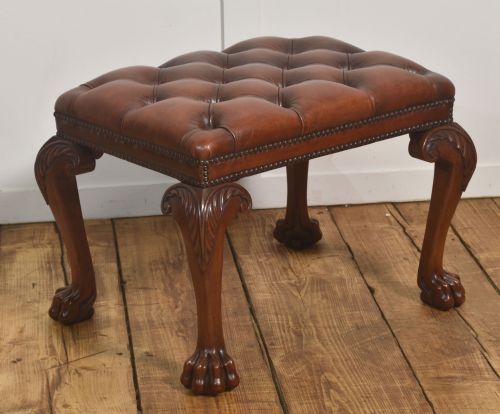
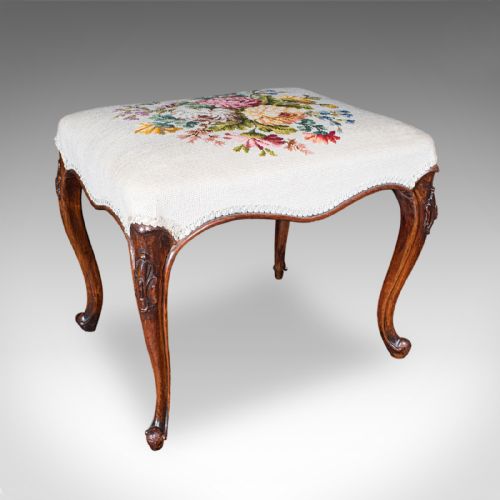
Carved Cabriole Leg Ottoman
These carved cabriole leg ottoman pieces and footstools bring solid timber frames and traditional upholstery together for daily seating.
Carved Cabriole Leg Ottoman
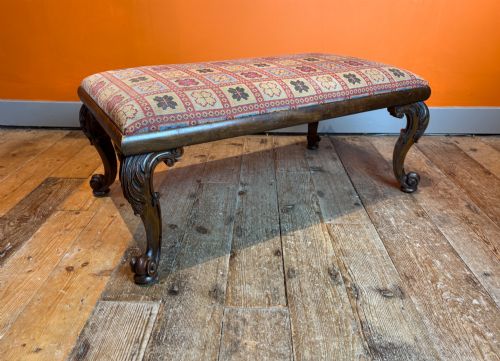
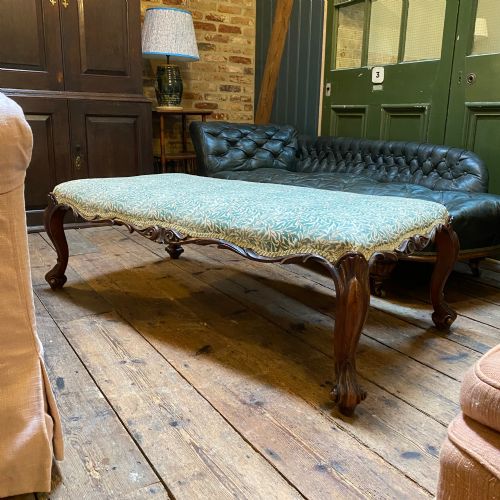
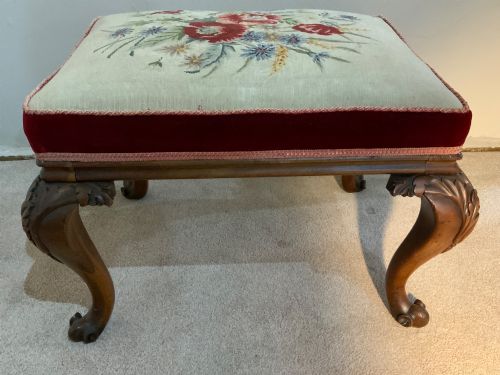
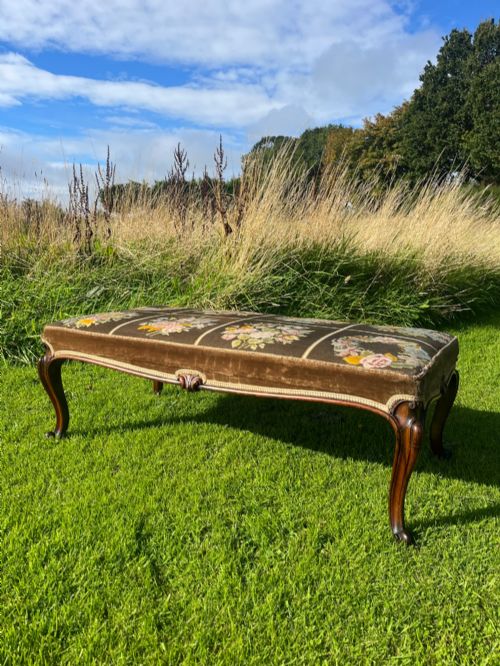
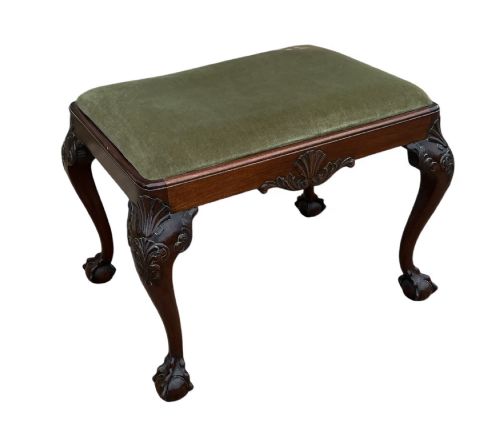
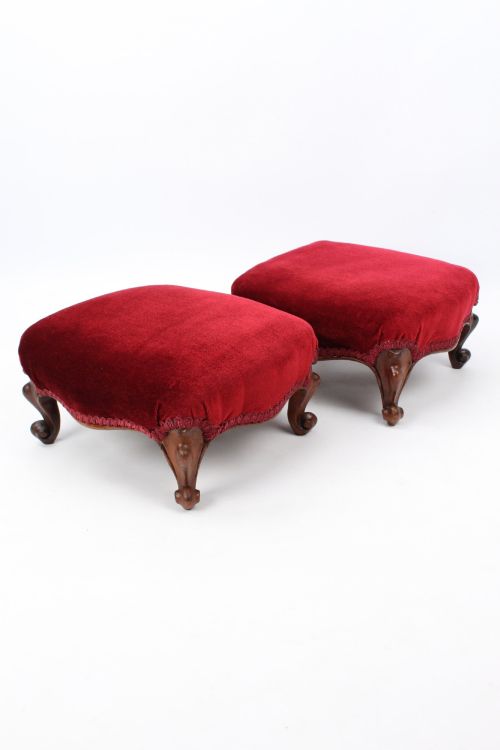
When you search for a carved cabriole leg ottoman, you encounter a selection of Victorian footstools, centre stools, and window seats rather than standard storage ottomans. The forms span the nineteenth century, with Victorian examples in walnut and rosewood appearing most frequently alongside revival styles.
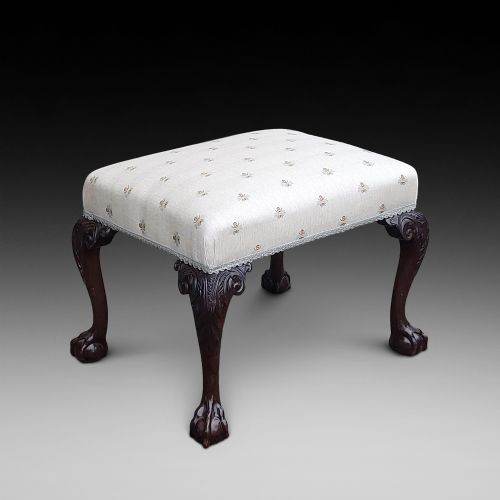
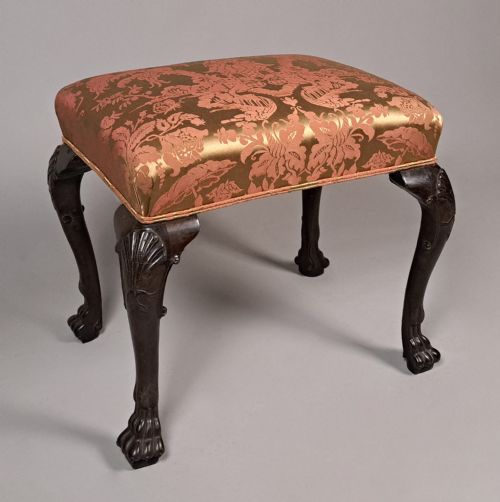
Makers shaped these low seats in mahogany and walnut, employing curving supports that end in scroll or pad feet. Many items function as footstools or fireside seats, while larger centre stools provide substantial proportions for drawing rooms.
Revival movements dominate the selection, referencing Queen Anne, Chippendale, and Rococo designs through carved woodwork and cabriole profiles. Upholstery ranges from original fabric and needlework tapestry to buttoned leather and plain textiles.
How they were made
Cabinetmakers shaped solid hardwoods such as walnut, rosewood, and mahogany into sturdy frames with integral corner blocks for stability. The defining cabriole legs were carved directly from the timber, incorporating scroll motifs, shell details, or plain polished contours.
Upholstery techniques involved webbing and horsehair stuffing secured over wooden frames before the final textile layer was applied. Needlepoint tapestry, leather, velvet, and patterned fabric were attached with brass tacks or decorative piping.
Carved Cabriole Leg Ottoman Retail Price Guide 2026
Typical asking prices for carved cabriole leg ottoman among the pieces listed under this phrase on Sellingantiques today, from the lower quarter to the upper quarter. They describe what is for sale here now, not the wider market.
Listings feature walnut, rosewood, and mahogany frames spanning the Victorian era, the Regency period, and revival styles.
What varies in quality
Timber selection and the crispness of the hand-carving determine the standing of each piece, with dense grain and deep relief work marking out superior examples. Frames built from solid rosewood or walnut command attention over simpler pine or mixed-timber carcasses.
Proportion and scale also separate standard seating from exceptional centre stools, particularly where large frames maintain balanced curves and sturdy joints. The integrity of the internal webbing and the retention of original upholstery materials influence the character of the piece.
The Carved Cabriole Leg Ottoman Glossary
- Cabriole leg
- A furniture leg that curves outward at the knee and tapers inward toward the ankle, finishing in a foot. This form derives from animal limbs and appeared widely in eighteenth-century and nineteenth-century revival furniture.
- Centre stool
- A large freestanding seat designed to sit in the middle of a room rather than against a wall. These items often feature generous proportions and elaborate carving on all four sides.
- Needlepoint
- Canvas worked with wool or silk yarn in a counted-thread stitch to create a dense tapestry pattern. This technique frequently appears on nineteenth-century footstool upholstery.
- Rococo revival
- A nineteenth-century design style characterised by asymmetrical ornament, C-scrolls, and naturalistic plant motifs. It drew inspiration from mid-eighteenth-century French decorative arts.
- Buttoned upholstery
- A method where upholstery is pulled tight and secured with buttons set in a geometric diamond pattern. This technique adds firmness and texture to leather or fabric covers.
Carved Cabriole Leg Ottoman: Frequently Asked Questions
What is a cabriole leg?
A cabriole leg is a curving furniture support that swells outward at the knee and tapers inward to a foot.
This classic outline appears frequently on nineteenth-century stools and provides visual balance to heavy timber frames.
How were these stools used?
Victorian households utilised these low seats beside firesides, in drawing rooms, and as window seats for resting feet or casual sitting.
Large centre pieces also served as movable resting surfaces in the middle of principal rooms.
Are the fabrics original?
Some pieces retain early needlepoint, tapestry, or leather coverings, while others arrive ready for new upholstery.
Listings often specify whether the textile is period fabric or a later replacement.
How do I identify the period?
Makers combined timber choices, carving styles, and structural proportions to indicate the date of manufacture.
Victorian walnut and rosewood pieces sit alongside earlier Georgian styles and later revival interpretations from the end of the century.