
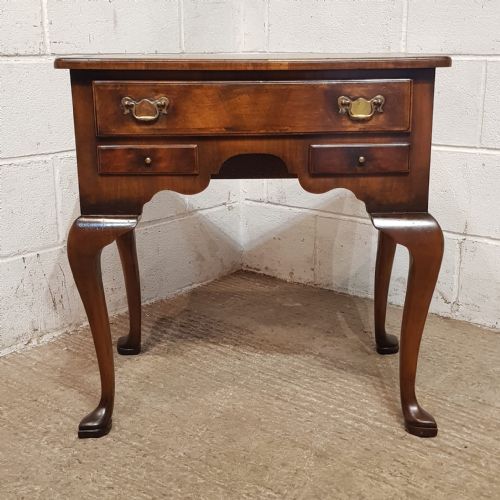
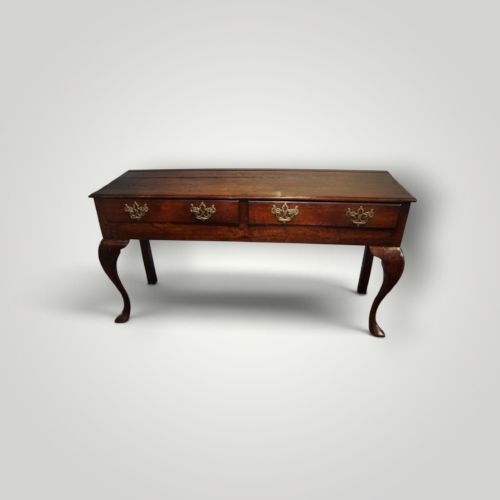
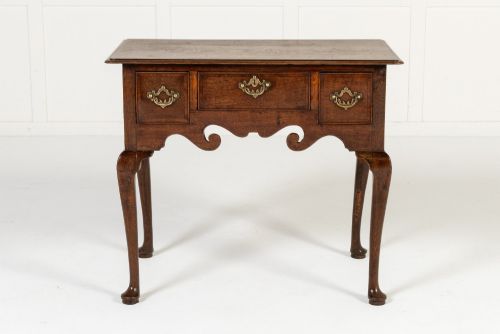
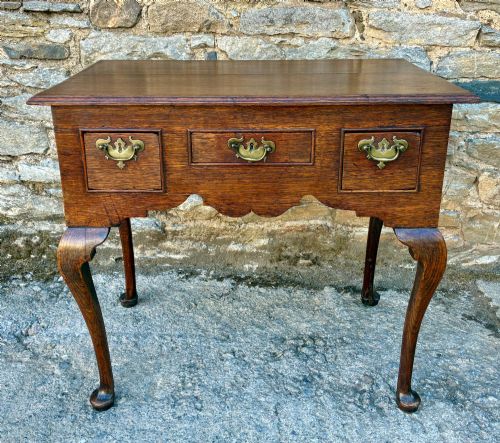


Carved Cabriole Leg Lowboy
A carved cabriole leg lowboy brings low-slung table storage into a room, offering a compact surface with drawers set on graceful, curving supports.
Carved Cabriole Leg Lowboy
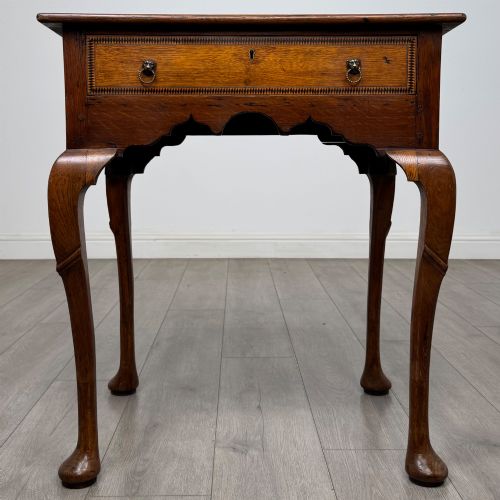
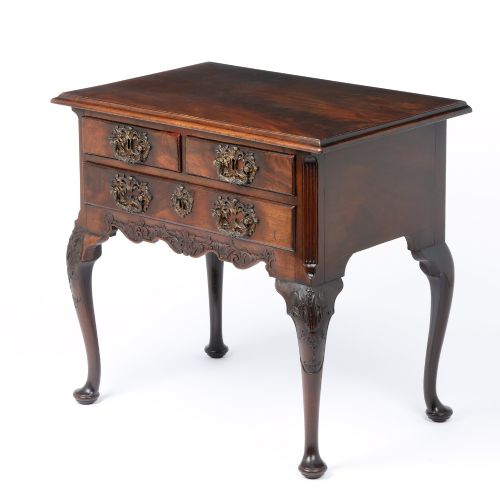
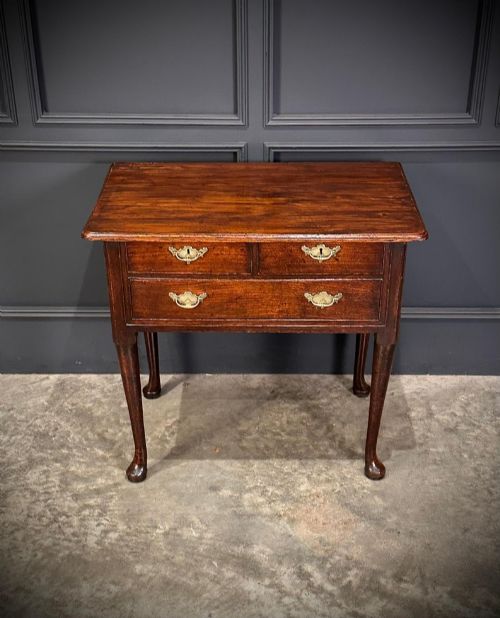
A carved cabriole leg lowboy is a small, waist-height table fitted with one or more drawers beneath the top surface. These pieces serve as side tables, dressing tables, or compact writing desks.
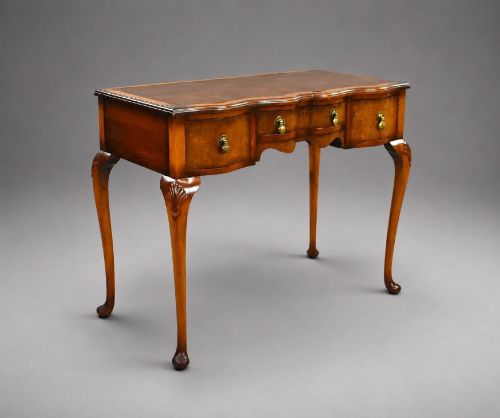
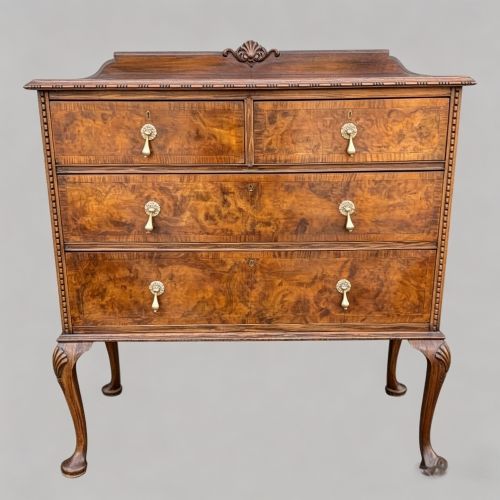
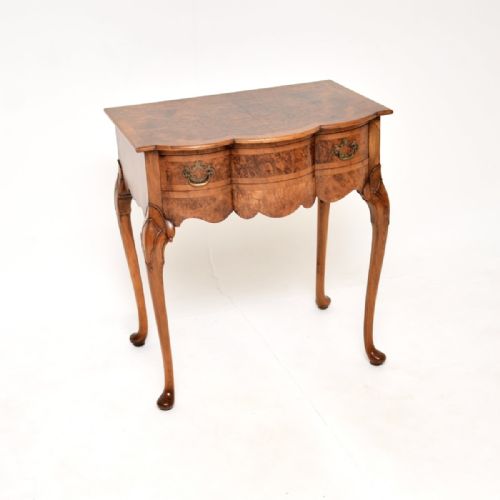
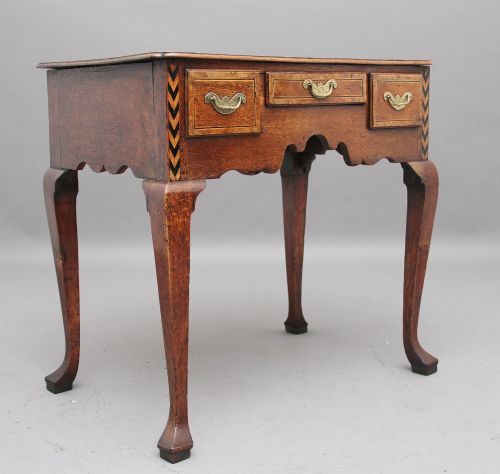
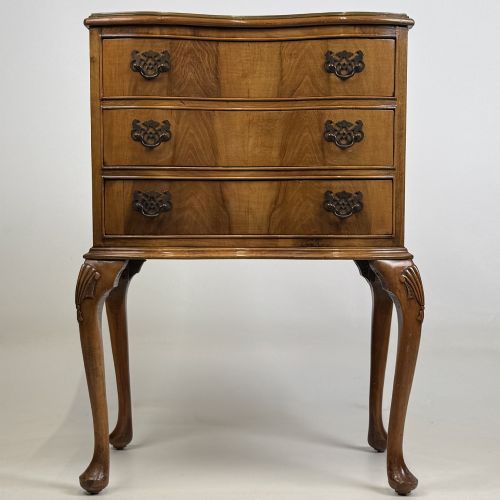
The form appears most frequently from the eighteenth century in oak and walnut, alongside revival interpretations produced in the twentieth century. Examples often feature shaped aprons below the drawers that transition into the distinctive curved legs.
Makers shaped the supports with outward-curving knees that taper down to pad, hoof, or claw-and-ball feet. Oak and walnut versions dominate the selections, accompanied by occasional mahogany pieces.
Materials and construction methods
Cabinet makers constructed these tables primarily in solid oak and walnut, frequently applying figured walnut veneers to the top surfaces and drawer fronts. Secondary timbers such as fruitwood appear in the internal drawer linings.
Legs were carved directly from solid timber blocks to form the characteristic double curve of the cabriole shape, sometimes incorporating carved shell or foliage motifs on the knees. Brass drop handles and backplates secure the drawer fronts.
Listings feature oak, walnut, and mahogany timbers across eighteenth-century originals and twentieth-century revival editions.
What separates examples in quality
Quality rests on the crispness of the timber carving, particularly on the knees of the cabriole legs and any decorative motifs on the lower apron. Finer pieces display well-figured grain matching across the drawer fronts and top boards.
Construction methods also divide the standard of work, visible in the hand-cut dovetails joining the drawer sides and the careful thickness of the solid timber panels. Well-preserved original brass hardware and stable frame joints elevate an example.
Elkington and Co·Muirhead Moffat and Co
The Carved Cabriole Leg Lowboy Glossary
- Cabriole leg
- A furniture leg that curves out at the knee and tapers inward toward the foot, mimicking animal limbs.
- Lowboy
- A small, low table with drawers, originating in the late seventeenth century and used for various household storage tasks.
- Dresser base
- The lower section of a kitchen or dining room storage unit, featuring drawers and sometimes cabriole supports.
- Pad foot
- A simple, flat-bottomed foot at the base of a cabriole leg that rests squarely on the floor.
- Dovetail
- A joint formed by interlocking wedge-shaped fingers, used primarily to secure drawer corners together.
Carved Cabriole Leg Lowboy: Frequently Asked Questions
What is a lowboy used for?
A lowboy functions as a compact side table, serving table, or dressing surface in a hallway, bedroom, or living space. The integrated drawers provide convenient storage for small household items while maintaining a low profile against a wall.
Historically, these tables held grooming equipment or writing materials. Modern interiors utilise them as accent pieces beneath mirrors or artwork.
How do I date a walnut lowboy?
Dating relies on examining timber selection, construction methods, and hardware styles across the piece. Eighteenth-century examples display hand-cut joinery and solid timber construction, whereas twentieth-century revival pieces often utilise modern glues and machine-cut elements alongside burr walnut veneers.
Hardware placement and drawer linings provide further clues to the period of manufacture. Original brass handles and backplates match the expected fastening styles of the era.
Are cabriole legs only found on Queen Anne furniture?
Cabriole legs appear prominently on Queen Anne and George II pieces from the eighteenth century, but they also recur on later revival items. Edwardian and 1920s makers frequently reproduced these curving leg forms on side tables and dressers.
The presence of the style spans multiple centuries of furniture design. Evaluating the timber age helps distinguish an eighteenth-century original from a twentieth-century interpretation.
What is the difference between oak and walnut lowboys?
Oak lowboys tend to display a robust, rustic character associated with earlier Georgian and country vernacular pieces. Walnut versions often feature decorative veneers and polished surfaces geared towards formal entertaining spaces.
Both timbers provide stable structures, but walnut allows for intricate grain patterns on top boards and drawer fronts. Oak surfaces wear down to a warm patina through centuries of use.