

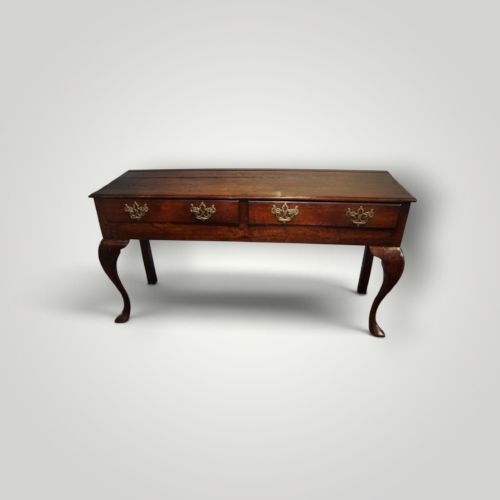
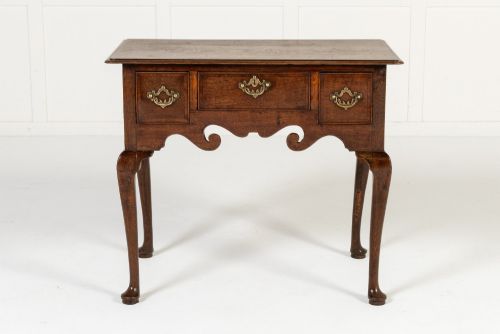
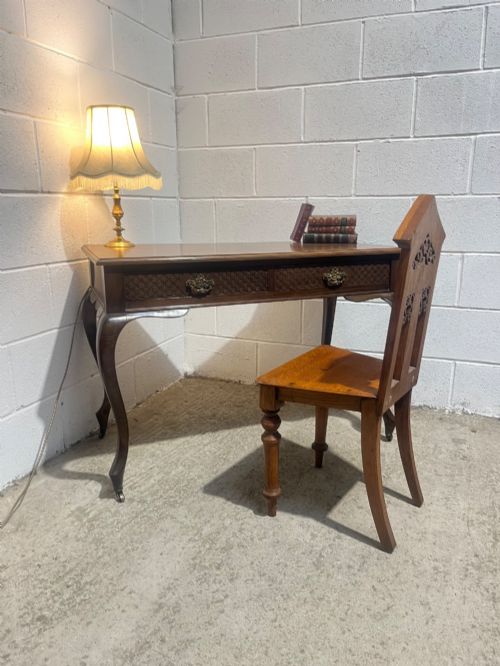
Carved Cabriole Leg Drawers
Carved cabriole leg drawers bring together graceful curved supports and functional storage across walnut, oak, and mahogany.
Carved Cabriole Leg Drawers
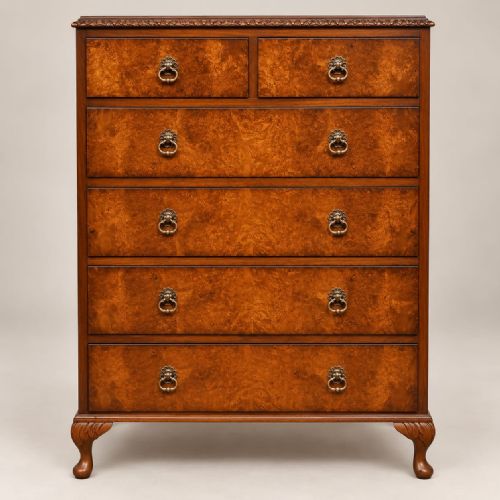
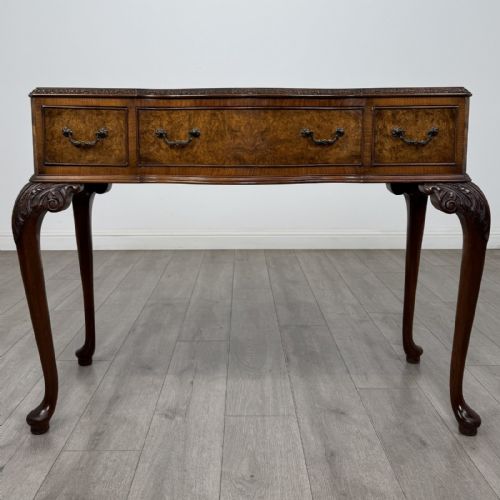
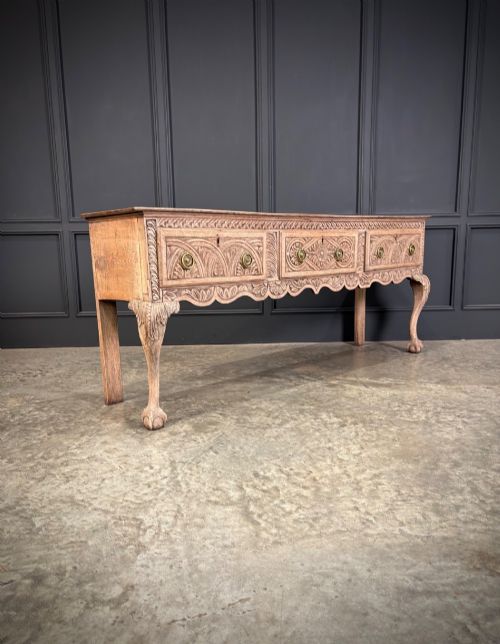
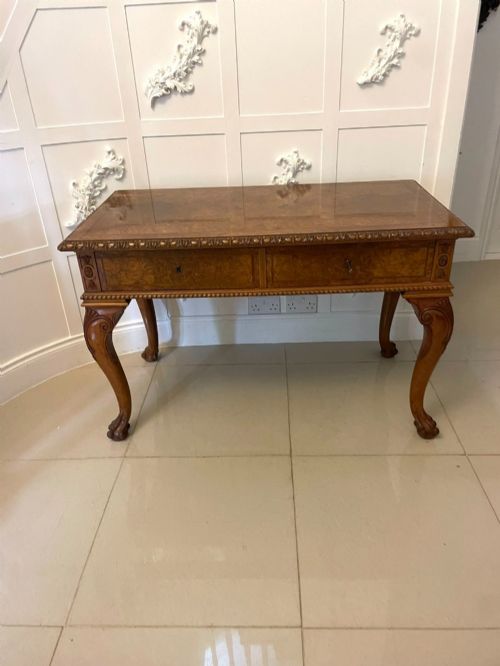
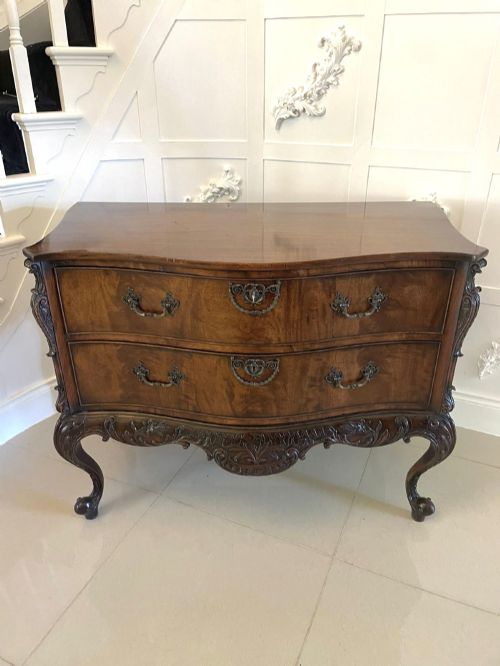
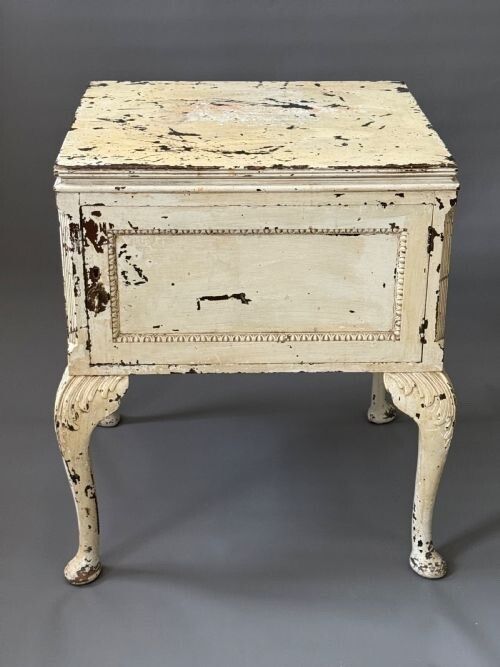
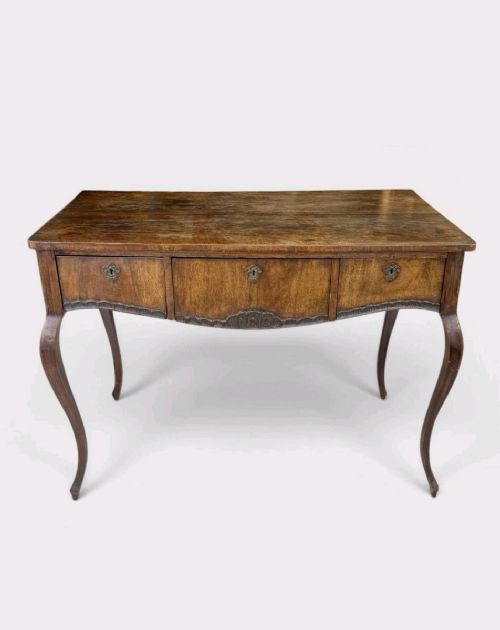
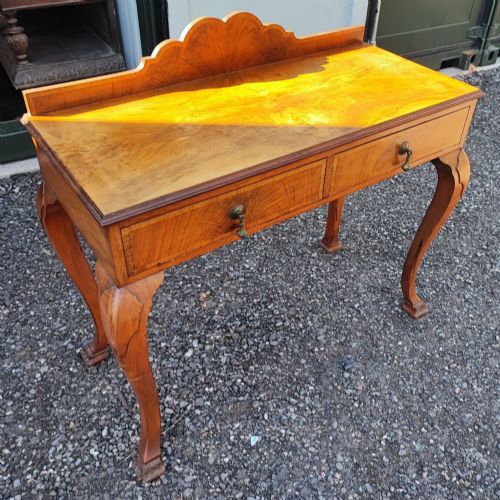
When you search for carved cabriole leg drawers, you encounter a diverse selection of furniture spanning from the eighteenth century through the Edwardian period and into the twentieth century. These pieces primarily manifest as chests of drawers, lowboys, side tables, and writing desks resting upon distinctive S-shaped legs.
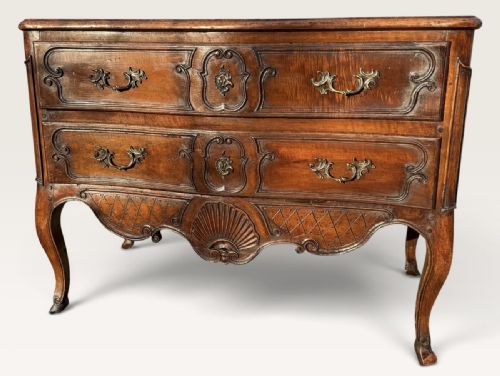
The versions you meet most frequently on this page belong to the Georgian and Edwardian eras, often adopting Queen Anne styles or French provincial influences. Makers utilised walnut, burr walnut veneer, and oak to construct these practical items.
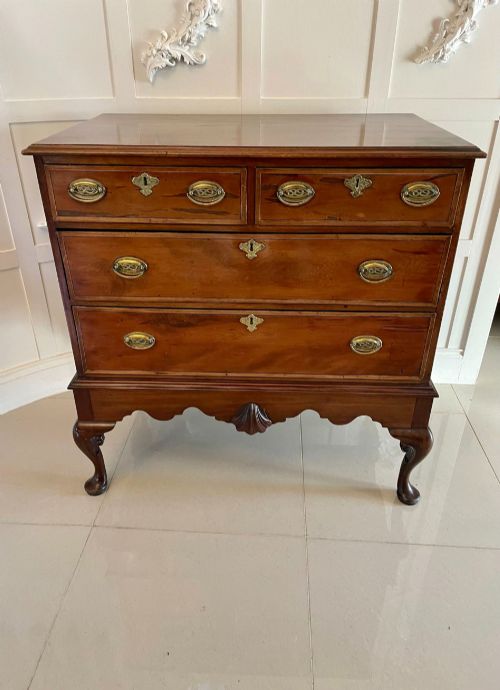
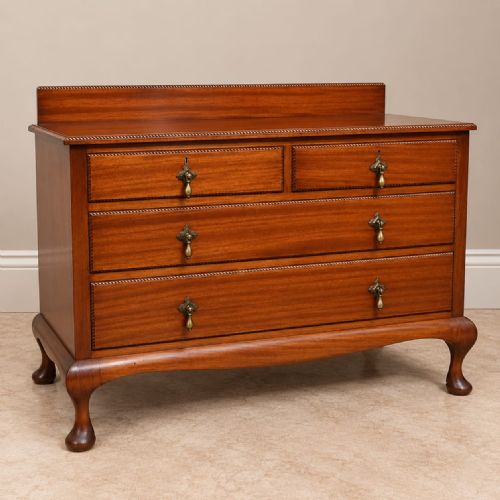
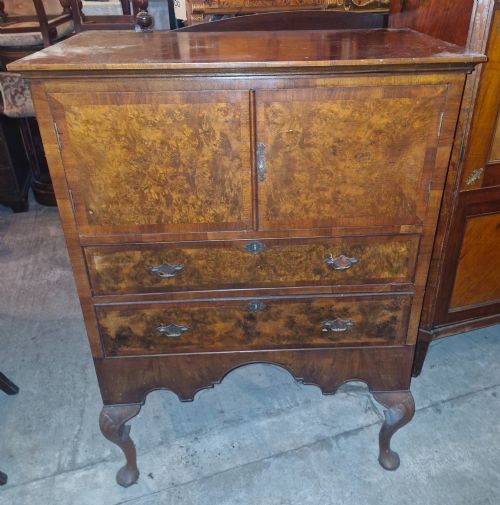
Forms range from compact bedside cabinets and serving tables to larger chests on stands and serpentine commodes. Each item balances storage utility with the decorative scrollwork typical of cabriole supports.
Materials and Technique
Cabinetmakers constructed these pieces utilising solid timbers like oak and mahogany, alongside decorative veneers such as burr walnut applied to carcases. Drawer linings and secondary woods demonstrate traditional joinery methods appropriate to each respective period.
Carved details on the knees and feet of the cabriole legs emerge directly from the solid timber of the support rather than via applied moulding. Brass hardware, leather inserts on writing surfaces, and occasional paint finishes complete the construction.
Even the modest bedside table insists on sporting an aristocratic knee.
Judgement of Quality
The distinction between standard examples and the finest items rests upon the depth and crispness of the carving on the cabriole legs and the selection of figured veneers. Superior pieces display harmonious proportions where the curves of the legs balance the mass of the drawer section above.
Internal construction, including the dovetailing of drawers and the preservation of original brass handles or timber surfaces, dictates the standing of an individual item. Finer examples maintain integrity in their structural joints and display careful matching of wood grains across drawer fronts.
Gillows·Gill & Reigate
The Carved Cabriole Leg Drawers Glossary
- Cabriole leg
- A furniture support inspired by animal legs, curving outward at the knee and tapering inward toward the foot. This form became central to Queen Anne and Georgian furniture design.
- Lowboy
- A small oak or walnut table with drawers, standing on four tall legs and frequently functioning as a dressing table or side table.
- Burr walnut
- A wood veneer taken from the wart-like growths on walnut trees, prized for its swirling, decorative grain patterns on drawer fronts and table tops.
- Serpentine front
- A furniture front characterised by a concave central section flanked by two convex ends, or the reverse. This undulating shape requires advanced woodworking skill.
- Chest on stand
- A drawer carcase elevated on a distinct frame with legs, combining storage capacity with a lighter visual profile.
Carved Cabriole Leg Drawers: Frequently Asked Questions
What periods do these pieces date from?
The listings span from the eighteenth century through the Victorian and Edwardian eras into the early twentieth century. Many items reflect earlier stylistic revivals such as the Queen Anne and Chippendale manners.
Craftsmen produced these varying forms across multiple decades, utilising prevailing regional timbers and construction methods suited to each specific era.
What is the difference between a lowboy and a side table?
A lowboy is traditionally a small table equipped with one or more tiers of drawers, standing on relatively tall legs. They originated primarily in the eighteenth century in oak or walnut.
Standard side tables may share similar dimensions and drawer configurations but often lack the specific proportions and kneehole recesses commonly found on lowboys.
Where should I place a chest on stand at home?
A chest on stand functions effectively in hallways, dining rooms, or living spaces where floor area is limited. Their elevated legs maintain an airy feel beneath the storage section.
These pieces work well against plain walls where the silhouette of the cabriole legs and the grain of the walnut or oak remain clearly visible.
How do I care for burr walnut veneer?
Burr walnut veneer requires protection from direct sunlight and excessive temperature fluctuations to prevent timber movement or cracking. Regular dusting with a dry cloth maintains the surface.
Application of appropriate furniture wax preserves the moisture content and highlights the intricate grain patterns without building up heavy residues.