

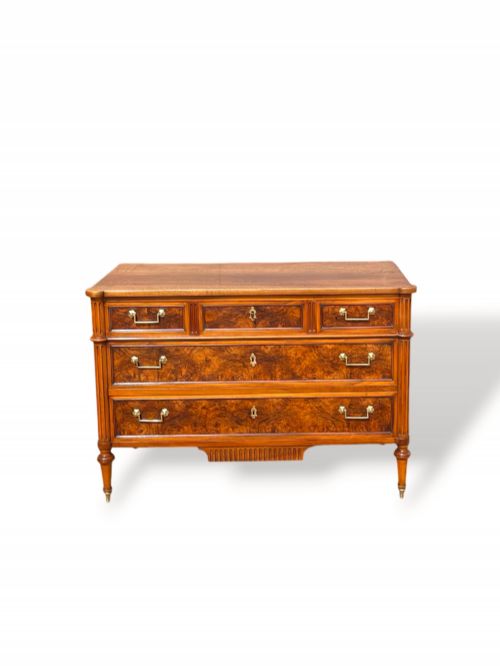


Carved Burr Walnut Sideboard
A carved burr walnut sideboard brings rich grain patterns and classical presence to a dining room or salon.
Carved Burr Walnut Sideboard
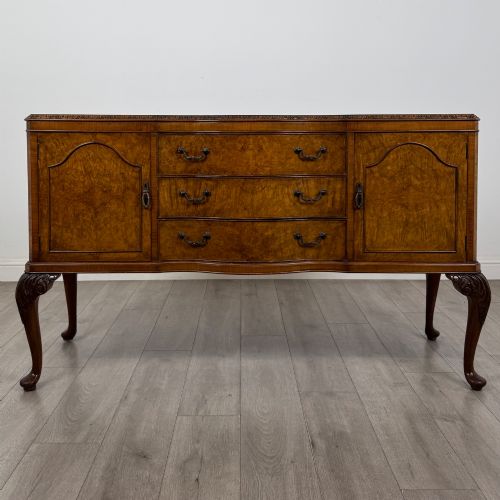
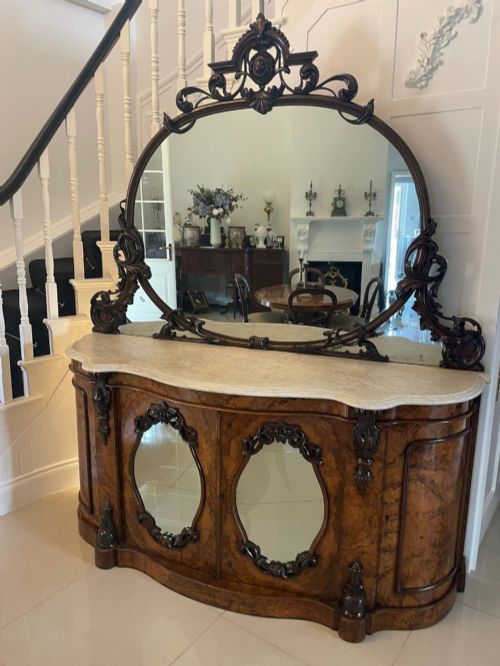
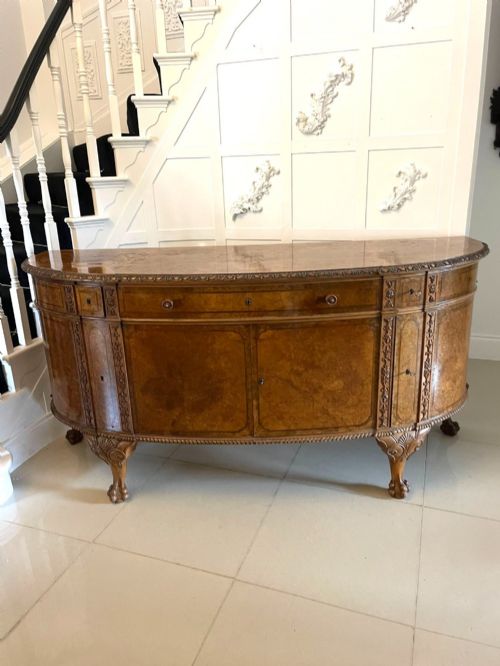
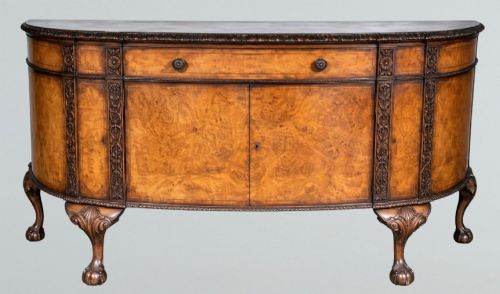
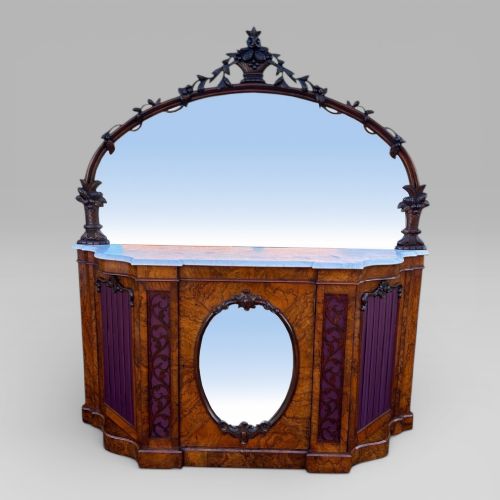
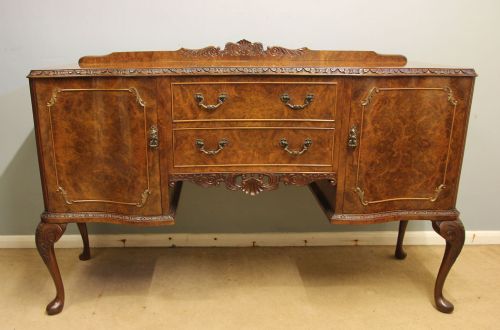
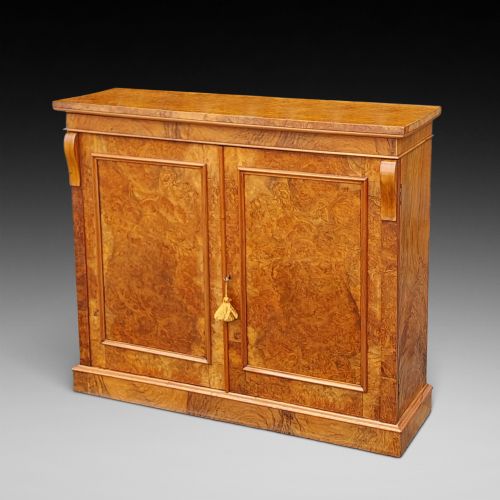
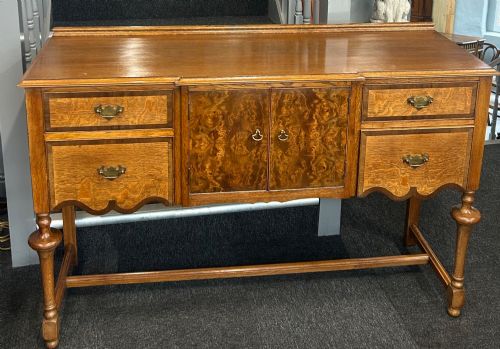
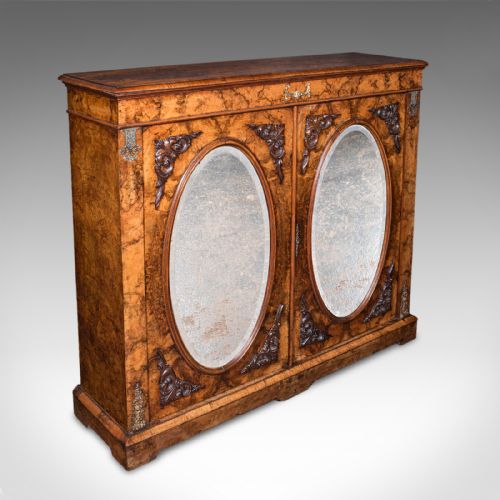
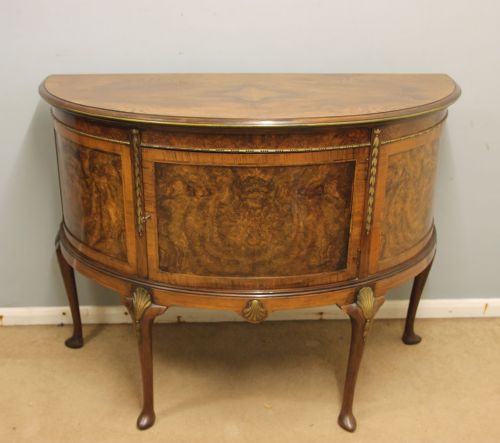
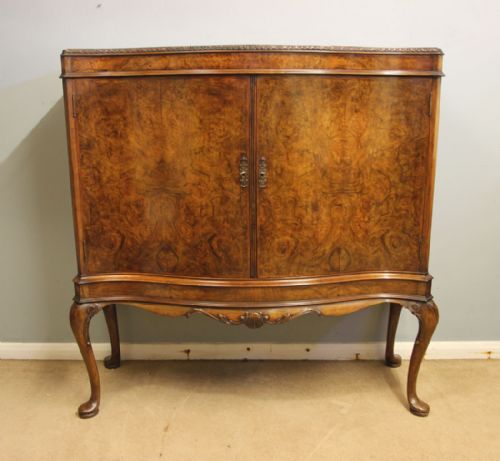
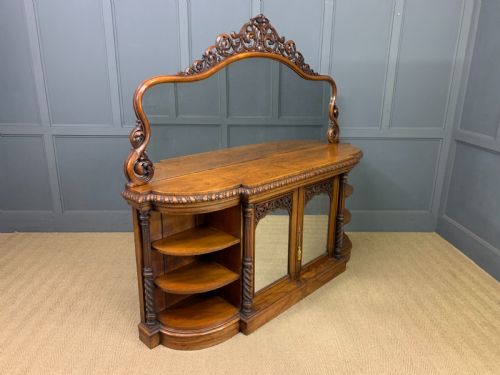
A carved burr walnut sideboard is a substantial serving and storage piece found across the Victorian, Edwardian, and 1930s periods. These items range from serpentine and bow-fronted sideboards to glazed credenzas, mirror-backed chiffoniers, and specialised cocktail cabinets.
Originating largely from British workshops and heritage makers, these pieces reflect changing domestic entertainments from formal dining rooms to cocktail hosting. The form adapts from deep Victorian credenzas to streamlined Art Deco server cabinets.
Materials and construction methods
Cabinetmakers utilised prized burr walnut veneers applied over secondary woods such as oak and pine to create swirling, highly figured grain patterns on the primary surfaces. Carved solid walnut mouldings, applied ornaments, and shaped panels define the structural borders and decorative trims.
Higher specifications incorporate secondary elements including white marble tops, bevelled mirror glass, and cast brass or ormolu mounts. Interiors often feature polished mahogany or oak shelving, dovetailed drawer construction, and glass doors for display purposes.
Several vintage cocktail cabinets conceal dedicated spaces designed specifically for storing twelve-piece cutlery sets and tall crystal decanters.
Assessing craftsmanship and execution
Quality rests heavily on the selection and matching of the burr walnut veneer across the doors and facade, where symmetrical grain alignment indicates superior cabinetmaking. The depth and crispness of the hand-carving on solid walnut framing distinguish ambitious workshop production from simpler commercial output.
Internal construction details, such as solid secondary timbers, careful dovetailing in drawers, and the integration of substantial marble slabs or original brass hardware, separate high-end exhibition pieces from standard domestic furniture.
Maple and Co·Hille of London·Epstein
The Carved Burr Walnut Sideboard Glossary
- Burr walnut
- A figured wood veneer harvested from the wart-like growths on walnut trees. It yields intricate, swirling circular patterns highly prized by cabinetmakers.
- Credenza
- A low dining room or salon cabinet often featuring central doors flanked by curved glass display sections. Victorian examples frequently include decorative mirror backs.
- Serpentine front
- A furniture facade shaped with a concave central section flanked by two convex curves, or the reverse. This technique requires considerable skill to veneer accurately.
- Demi-lune
- A half-moon shape characteristic of side cabinets and console tables designed to sit flush against a wall.
- Chiffonier
- A compact sideboard or low cupboard developed in the nineteenth century, typically topped with a shelf supported by scroll brackets or a mirror back.
Carved Burr Walnut Sideboard: Frequently Asked Questions
What rooms suit a carved burr walnut sideboard?
These sideboards anchor dining rooms, drawing rooms, and hallways by offering both surface display space and concealed storage.
Their rich timber grain works well alongside traditional architectural details and serves as a focal point in neutral modern spaces.
How do I distinguish Victorian from Art Deco models?
Victorian examples frequently display heavy carved mirror backs, serpentine fronts, and elaborate ormolu mounts. Edwardian and 1930s pieces tend to favour cleaner geometric lines, figured walnut veneers, and streamlined cocktail cabinet layouts.
Examining the internal drawer construction and hardware helps confirm the manufacturing era.
Were these pieces used for dining or entertaining?
Many served primarily as dining room servers for holding cutlery, linen, and serving dishes. Later twentieth-century versions evolved specifically to house cocktail sets, decanters, and glassware for salon hosting.
Fitted interiors often retain original divisions for bottles or cutlery sets.
How should I care for marble-topped sideboards?
Marble surfaces require gentle cleaning with neutral soap and water to avoid staining the porous stone. Regular dusting of the polished walnut veneer maintains the lustre of the grain.
Keeping the timber away from direct heat sources prevents veneer lifting and drying out.