

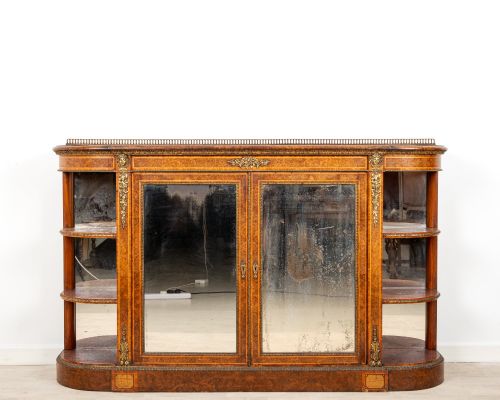

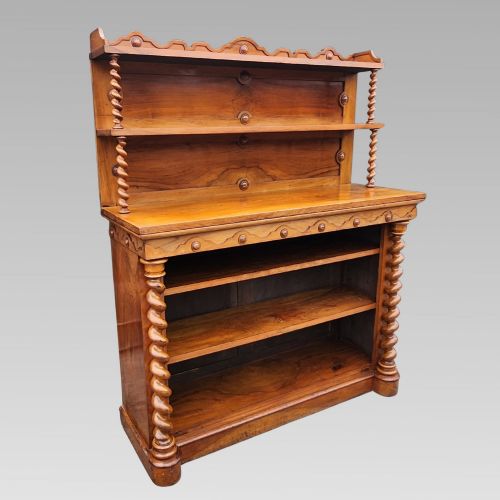


Victorian Walnut Buffet Cabinet
A victorian walnut buffet cabinet brings nineteenth-century presence to a room, offering substantial storage beneath polished wood surfaces.
Victorian Walnut Buffet Cabinet
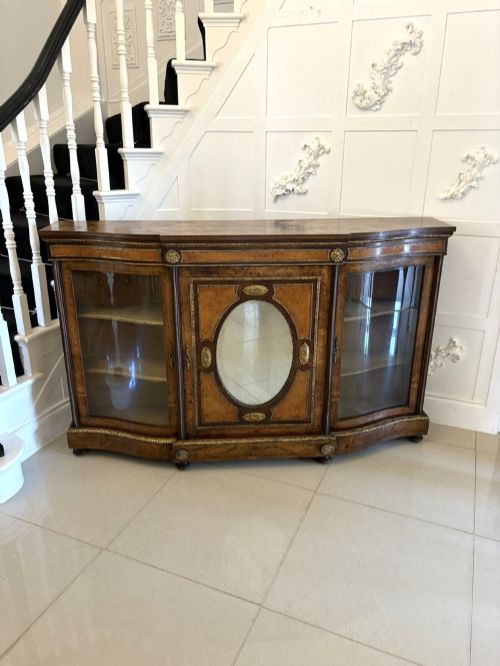
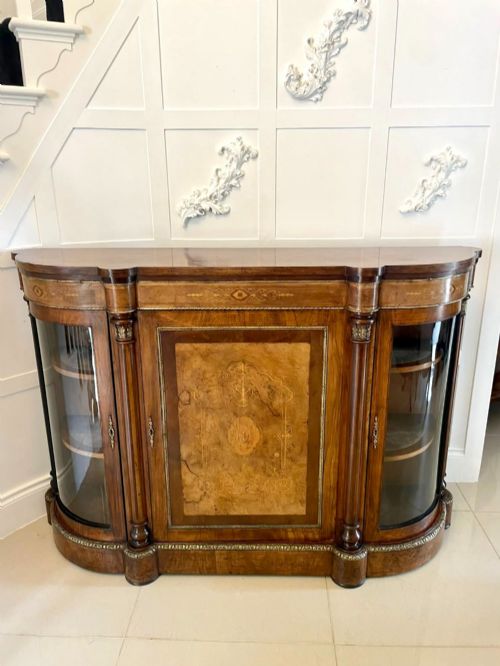
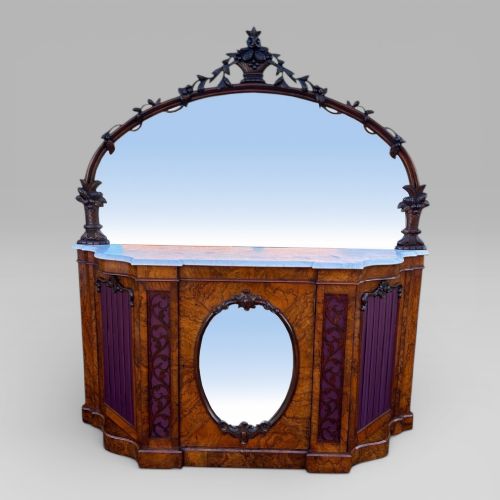
A victorian walnut buffet cabinet encompasses a range of formal storage furniture built during the nineteenth century, including credenzas, sideboards, and side cabinets. The examples met most frequently on this page date from the mid-Victorian period, particularly around eighteen-fifty to eighteen-eighty, showing the dominant aesthetic preferences of that era.
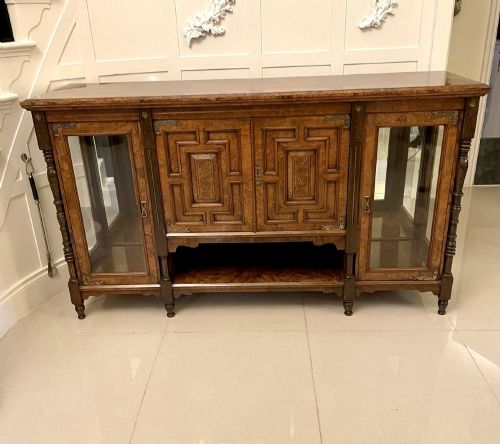
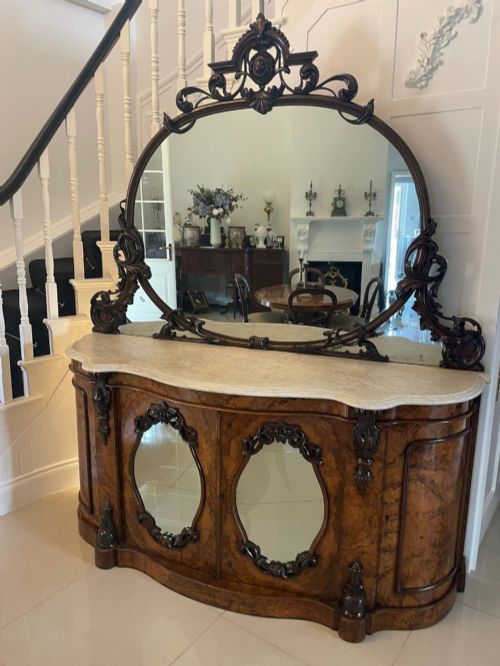
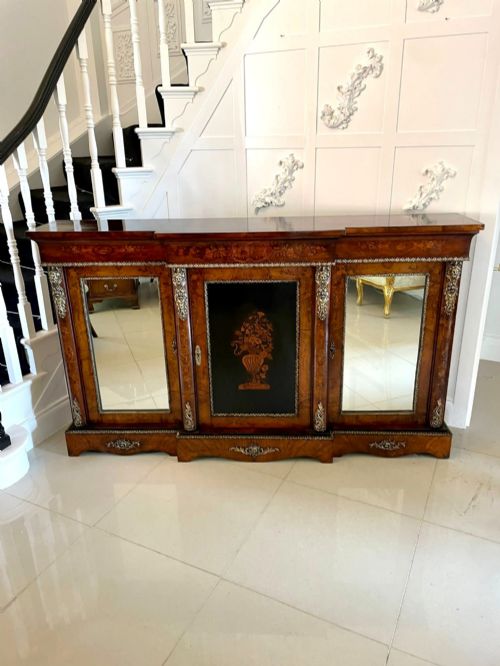
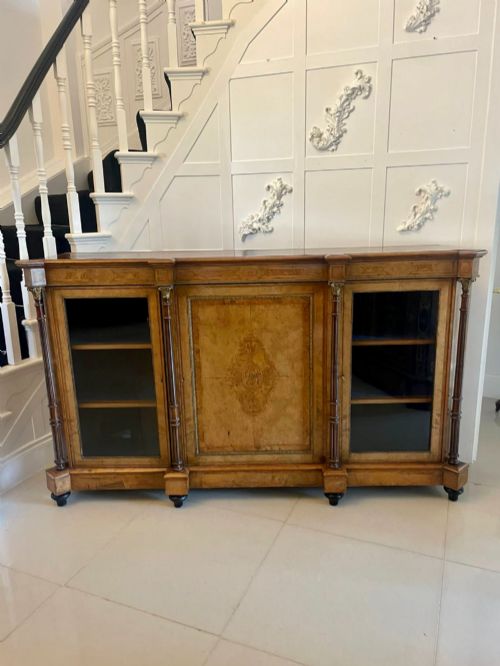
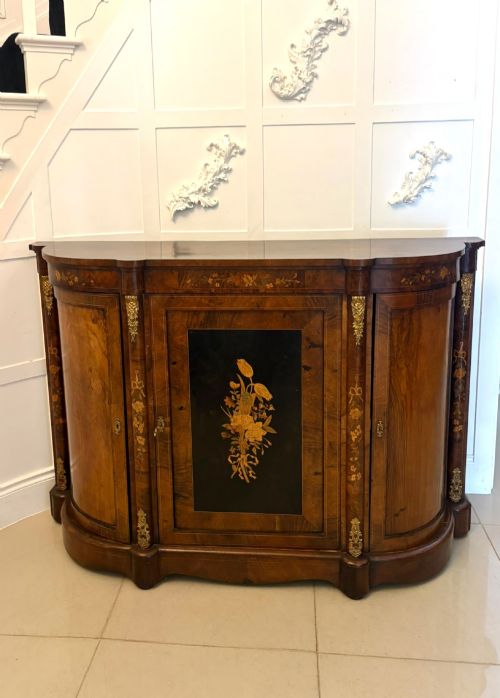
These forms frequently combine display and concealment, utilising glass doors, mirrored backs, and enclosed cupboards. Makers produced serpentine fronts, bow-fronted shapes, and straight-sided carcasses, adapting the basic storage function to various drawing room and dining room requirements.
Origins span standard Victorian production as well as specific stylistic revivals like Renaissance, French, and Gothic styles. Buyers encounter both simple side cupboards and large credenzas fitted with shelves and surface marble.
Materials and construction
Makers relied heavily on walnut and burr walnut veneer, applying figured sections to primary surfaces to create striking grain patterns. Carcasses incorporated secondary timbers, supporting heavy marble tops, mirrored glass panels, and shaped glass doors.
Decorative embellishment involved boxwood inlay, floral marquetry, and mother-of-pearl details set directly into the wood. Metalwork played a significant role, with cast ormolu mounts and brass fittings securing doors and framing panels.
Listings feature burr walnut, marble, ormolu, and glass across Victorian, Edwardian, and William IV periods.
Distinctions in craftsmanship
Quality rests upon the selection of the burr walnut veneer and the precision of the marquetry or boxwood inlay. Superior pieces display continuous grain alignment and meticulous hand-cut floral motifs rather than stamped or superficial ornamentation.
The integration of secondary materials such as Sevres porcelain plaques, carved wooden details, and heavy ormolu mounts determines the ambition of the piece. Rigorous joinery in serpentine curves and fitted interior doors separates standard workshop output from exceptional examples.
Gillow
The Victorian Walnut Buffet Cabinet Glossary
- Burr walnut
- A figured wood veneer taken from the growth excrescences of walnut trees, prized for its swirling, intricate grain patterns. It forms the primary visual surface on many nineteenth-century cabinet doors and panels.
- Credenza
- A low cabinet or sideboard, frequently featuring mirrored doors and side display cupboards, popular in Victorian drawing rooms. This form often includes ormolu mounts and decorative marquetry.
- Marquetry
- The art of applying pieces of veneer to a structure to form decorative patterns and pictures. Floral designs in boxwood and contrasting timbers appear frequently on nineteenth-century cabinet fronts.
- Ormolu
- Gilt bronze mounts used as decorative trim on furniture. These cast metal elements frame panels and accent corners on high-status Victorian pieces.
- Serpentine front
- A furniture front curved with a convex centre flanked by concave ends, creating a flowing wave shape. This contour requires advanced woodworking skill to construct accurately.
Victorian Walnut Buffet Cabinet: Frequently Asked Questions
What is a credenza?
A credenza is a low enclosed cabinet used primarily for storage and display in reception rooms. Nineteenth-century examples often feature central glass doors flanked by curved side cupboards.
These pieces typically stand on a plinth base and incorporate mirrored backs or marble surfaces. They served both practical storage needs and social display functions in Victorian homes.
How do I date these cabinets?
Dating relies on stylistic markers, construction techniques, and recorded periods such as the mid-nineteenth century or specific decades like eighteen-fifty and eighteen-eighty. Victorian pieces often combine walnut veneer with revival styles.
Later Victorian and Edwardian examples introduce different proportions and ebonised details. Examining the interior woodwork and hardware helps confirm the manufacturing era.
Where were these placed?
These cabinets sat against principal walls in drawing rooms, dining rooms, and grand hallways. Their finished backs and mirrored elements suited prominent placement where light reflected off the glass.
Buffets and sideboards also functioned in dining spaces for serving food and storing plateware. Smaller side cabinets accommodated smaller parlour settings.
How do I care for burr walnut?
Burr walnut requires stable humidity and protection from direct sunlight to prevent veneer cracking or fading. Regular dusting with a soft, dry cloth preserves the polished surface.
Avoid liquid cleaners and silicone polishes, which can damage nineteenth-century French polish or wax finishes. Gentle feeding with appropriate furniture wax maintains the wood's lustre.