


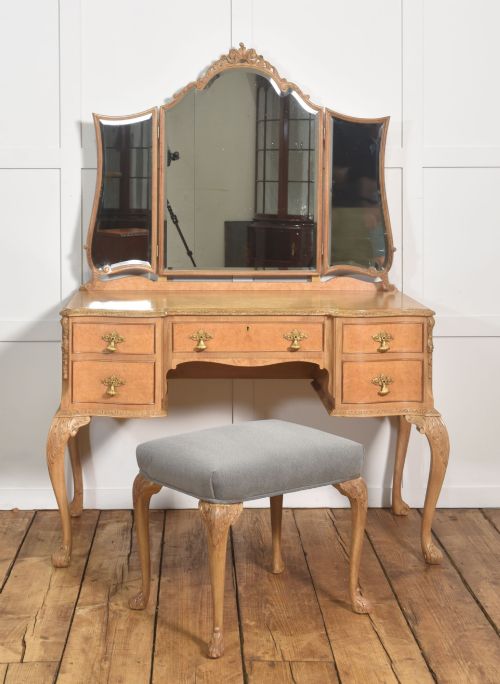
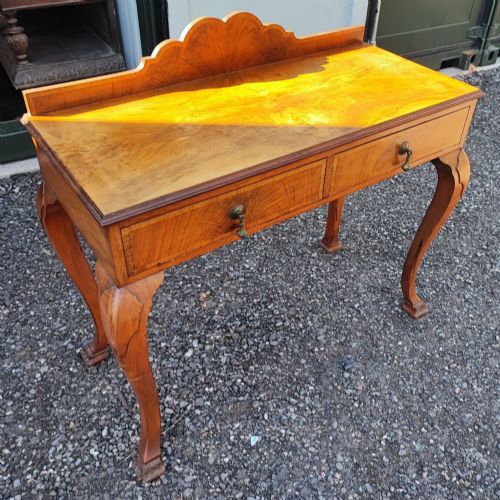
Carved Burr Walnut Desk
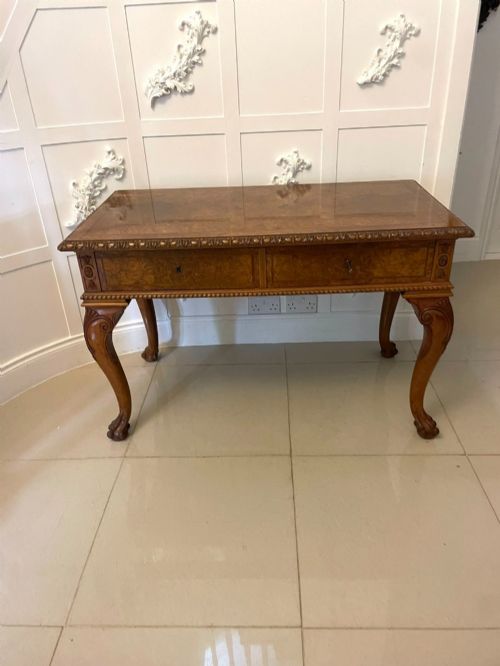
When you want a carved burr walnut desk, you are looking at richly figured timber surfaces shaped by Victorian and twentieth-century cabinet makers.
Carved Burr Walnut Desk
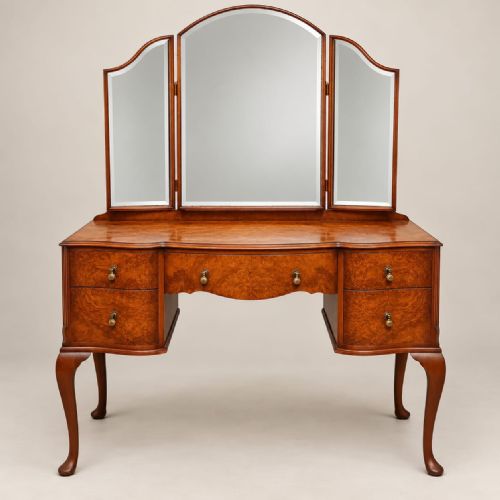
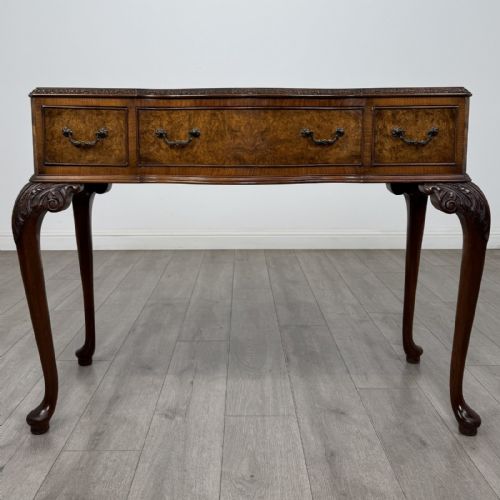
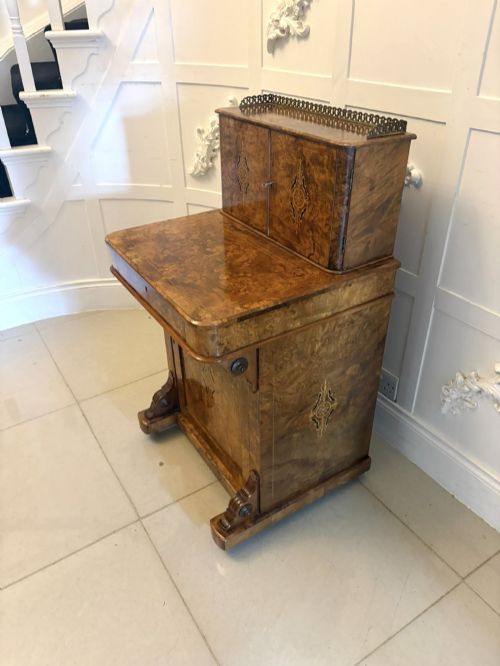
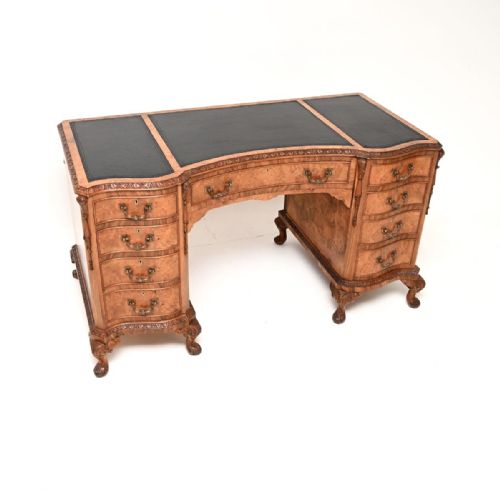
A carved burr walnut desk typically brings together pedestal forms, kneehole configurations, and writing tables dating from the Victorian era through the early twentieth century. These pieces serve as working surfaces while displaying the distinctive swirling grain patterns inherent to burr timber.
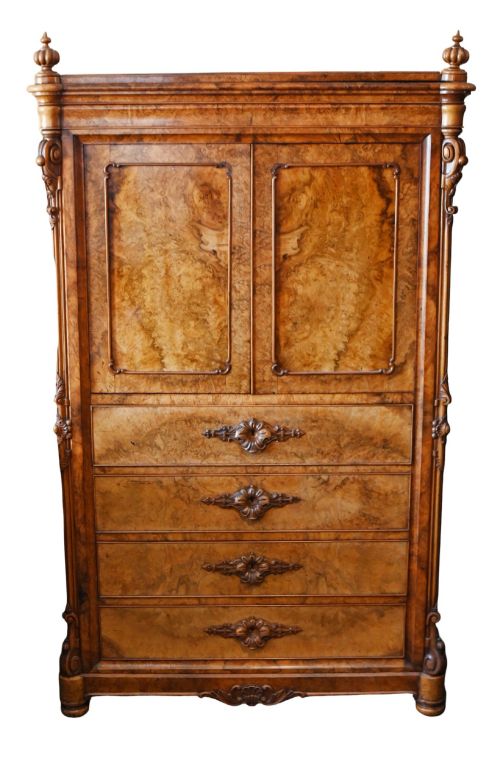
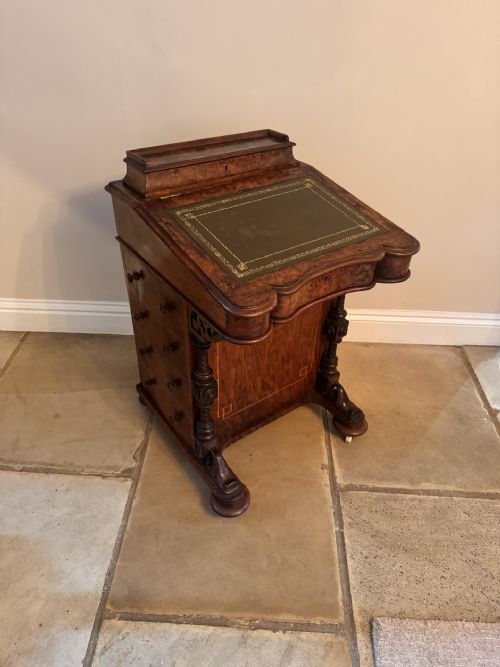
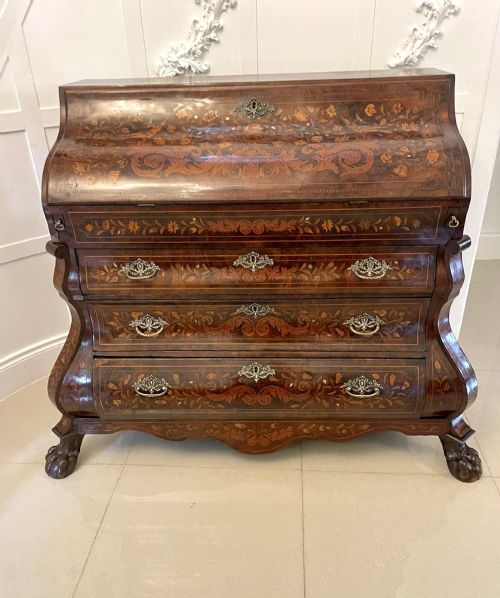
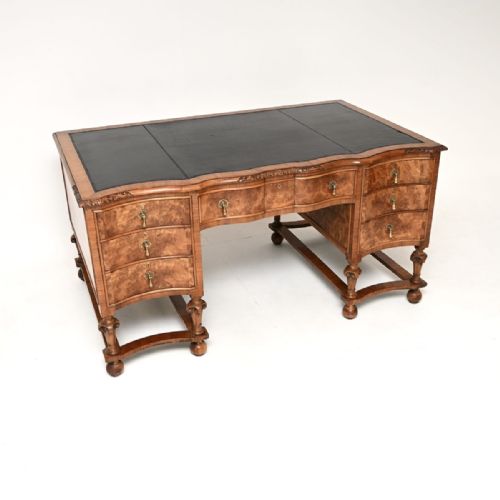
The selections available range from pedestal and partners desks fitted with leather writing surfaces to bureau writing desks and Davenport forms. Victorian examples often incorporate carved details and heavy proportions, while later pieces from the 1920s and 1930s lean into figured veneers and lighter frames.
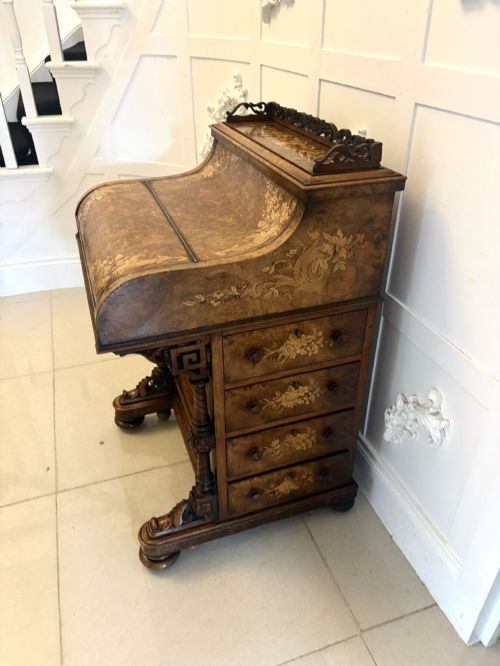
Originating across periods spanning the mid-nineteenth century to the 1930s, these desks frequently employ secondary timbers like oak alongside the primary walnut veneer. Buyers encounter variations including serpentine fronts, floral marquetry inlay, and carved paw feet.
How they were made
Cabinet makers constructed these desks by applying thin veneers of burr walnut over stable secondary woods such as oak and pine to prevent warping. This technique exposed the intricate, knotty grain patterns of the walnut burls while maintaining structural integrity.
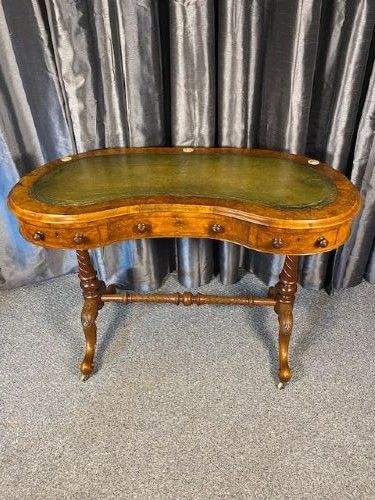
Surfaces frequently incorporated inset panels of tooled leather for writing, whilst brass handles, drawer pulls, and locks provided functional hardware. Carved elements on legs, pedestals, and borders were executed by hand in solid walnut to complement the figured veneer panels.
Some Victorian Davenport desks incorporate pop-up mechanisms, hiding stationery compartments that rise like mechanical toast when unlocked.
What varies in quality
Quality rests significantly in the selection and matching of the burr walnut veneer across the top and drawer fronts. Superior pieces exhibit continuous, symmetrical grain patterns that flow logically across the construction rather than disjointed patches of timber.
The depth and crispness of the hand-carving separate standard production from exceptional examples, particularly on paw feet, friezes, and pedestal mounts. Heavier secondary timbers and robust internal drawer construction also indicate a higher standard of original workshop production.
Charles Tozer·Maple and Co·Wylie and Lochhead Glasgow·Walker and Hall
The Carved Burr Walnut Desk Glossary
- Burr Walnut
- A timber derived from the abnormal growth or burl on a walnut tree, yielding highly figured, swirling grain patterns. Cabinet makers prized this veneer for high-status furniture fronts.
- Pedestal Desk
- A heavy writing desk supported by two pedestals of drawers with a central kneehole space. They often feature inset leather writing surfaces.
- Davenport Desk
- A compact Victorian writing desk featuring a sloping, hinged top above a set of side drawers. The interior typically contains small compartments for stationery.
- Marquetry
- The art of applying pieces of veneer to a structure to form decorative patterns and pictures. Floral motifs in lighter woods frequently adorn the surfaces of Victorian pieces.
- Partners Desk
- A large double-sided pedestal desk designed for two people to work opposite one another. These versions duplicate drawer arrangements on both long sides.
Carved Burr Walnut Desk: Frequently Asked Questions
What is a partner's desk?
A partner's desk is a large double-sided writing table designed with drawers and cupboards on both faces. This allows two people to sit and work opposite each other at the same piece of furniture.
Such desks were traditionally used in libraries, banks, and large offices where space was shared. They represent some of the larger pedestal formats available in walnut.
How do I care for burr walnut?
Burr walnut veneer requires protection from direct sunlight and extreme humidity changes to prevent the timber from drying out or splitting. Gentle dusting with a dry cloth and occasional application of appropriate furniture wax maintain the finish.
Avoid placing damp items or hot cups directly onto the wood or leather writing surfaces. Using coasters and blotters preserves both the polish and the underlying hide.
What distinguishes a Davenport desk?
A Davenport desk is a compact writing cabinet featuring a sloping lid that lifts to reveal storage space. Drawers traditionally open to one side rather than facing the user directly.
These pieces became popular during the Victorian period for domestic sitting rooms where space was limited. Their small footprints combined writing surfaces with enclosed stationery compartments.
Are these desks suitable for daily work?
These desks accommodate contemporary working habits, though vintage writing heights can occasionally differ from modern office standards. Their substantial timber construction provides stable platforms for writing and computing.
Care should be taken with leather writing surfaces, which benefit from gentle use and protective pads for modern writing instruments. The internal drawer layouts suit modern stationery organisation.