
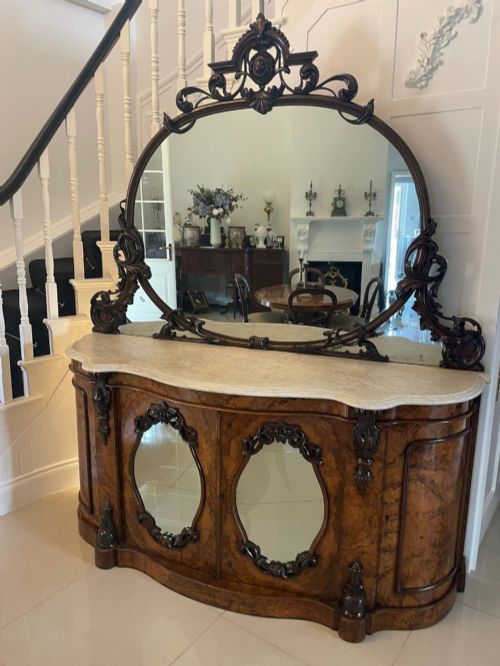
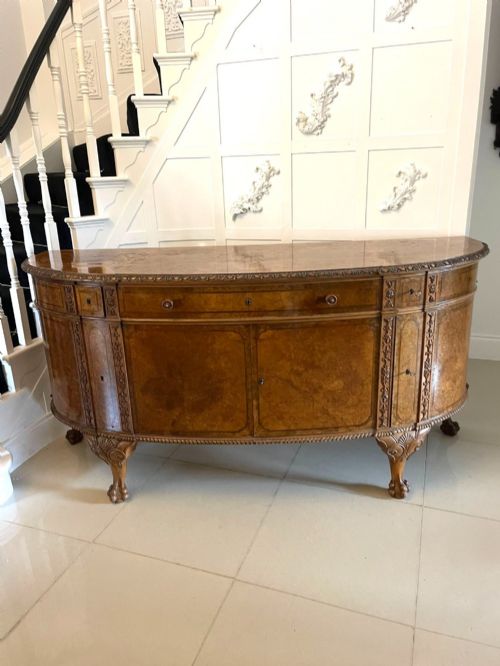
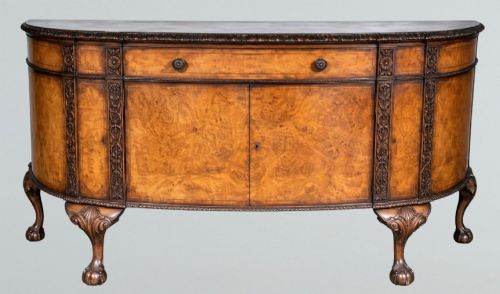
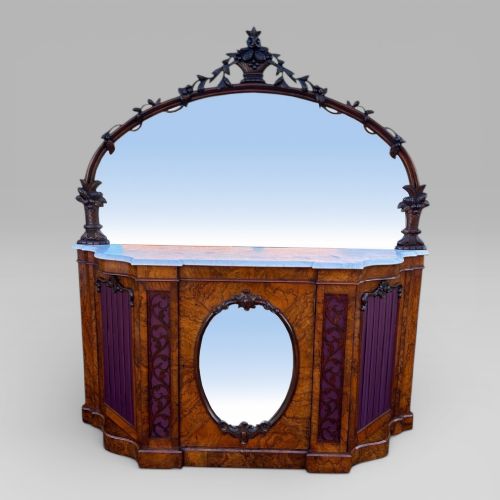
Carved Buffet Server
A carved buffet server brings robust timber and deep historic ornament to a dining room, designed for service and display.
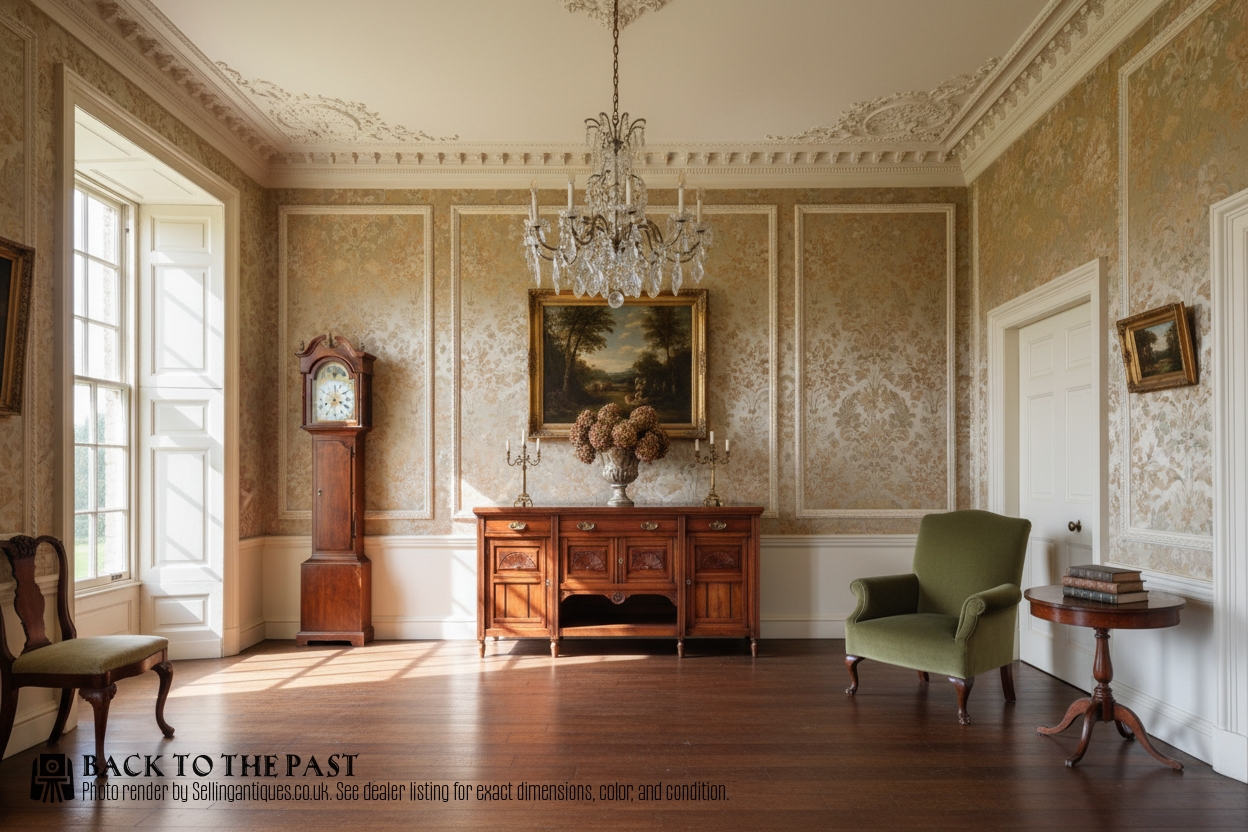
Carved Buffet Server
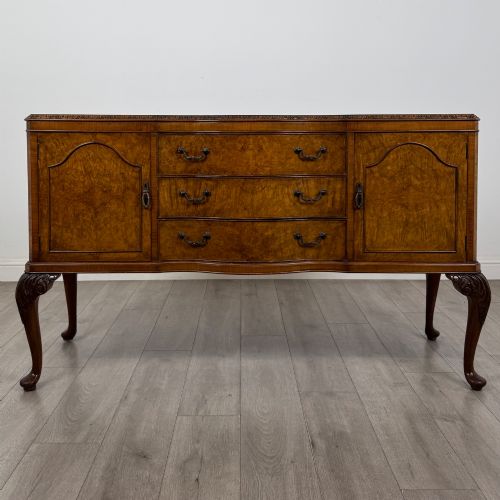
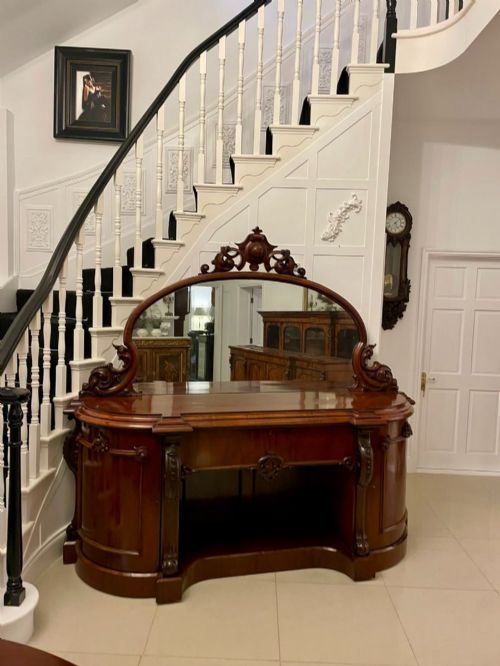
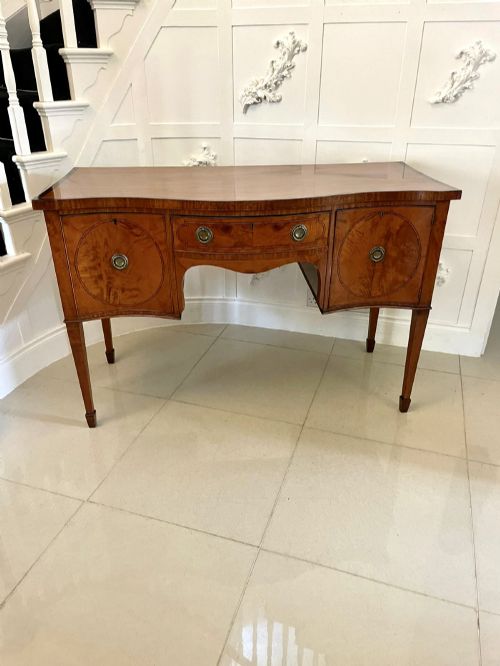
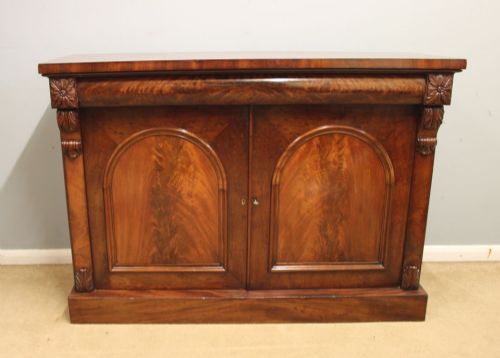
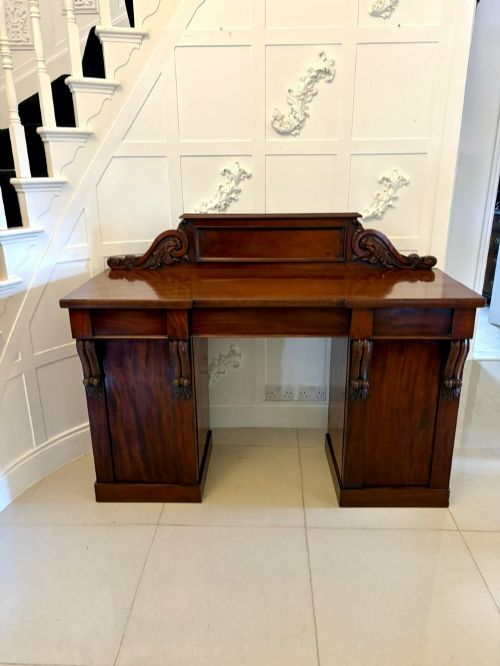
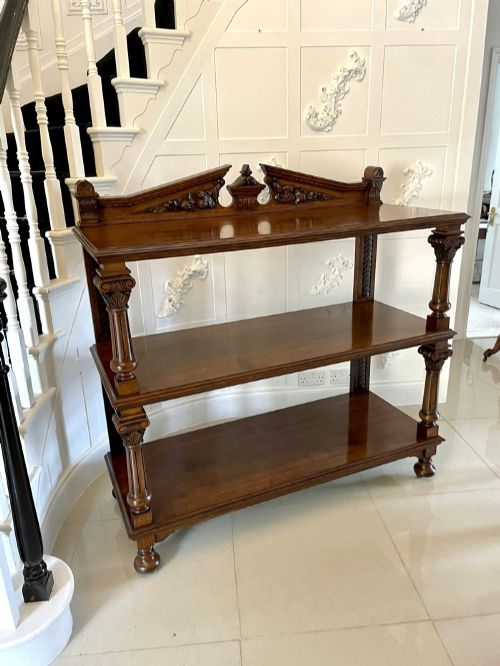
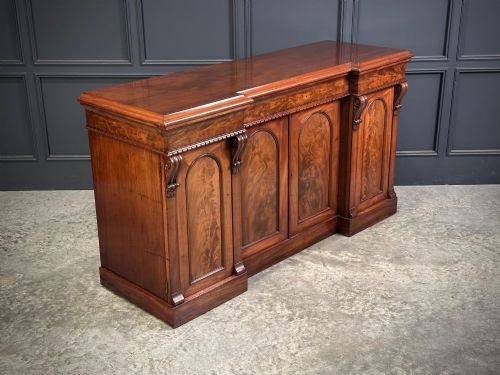
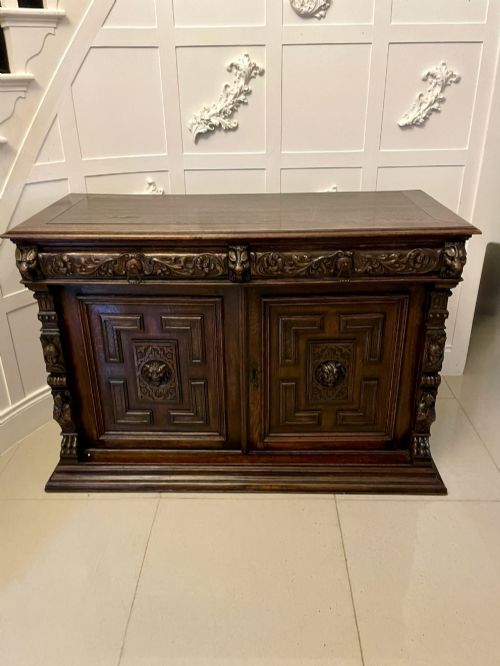
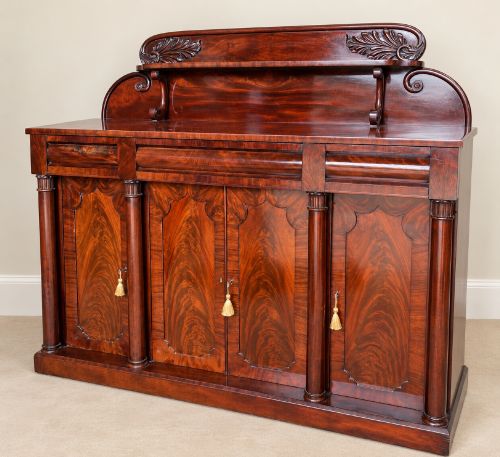
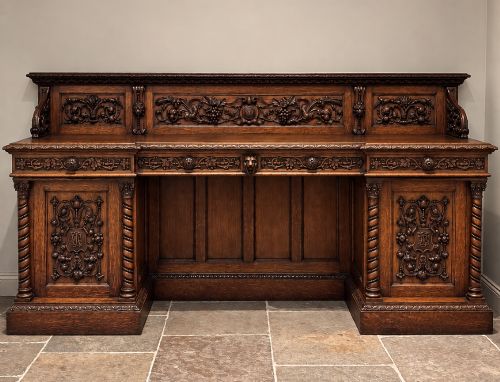
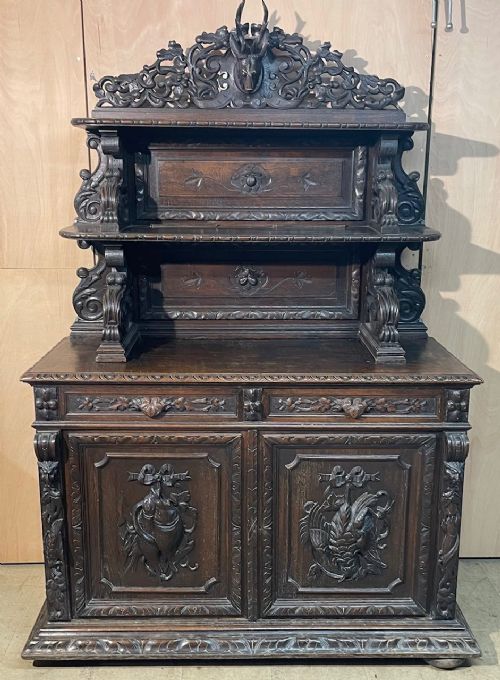
A carved buffet server is a substantial piece of dining furniture intended for storing tableware and presenting food. When searching for a carved buffet server, buyers encounter forms that span the nineteenth century and the Edwardian era, including sideboard hybrids, chiffoniers, and dresser bases.
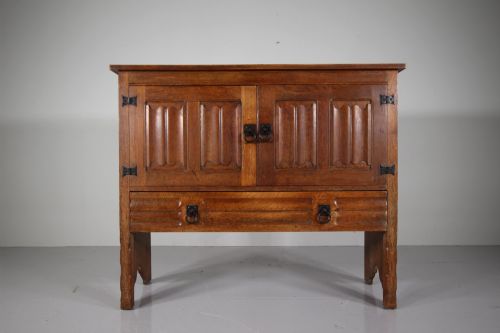
The pieces appearing most frequently on this page are constructed from oak and mahogany, often heavily carved with revivalist motifs. These items range from large Victorian mirror-backed constructions to narrow Gothic revival oak buffet servers and smaller Edwardian formats.
How They Were Made
Cabinetmakers utilised solid timbers such as oak, mahogany, and walnut, frequently selecting burr walnut and flame mahogany veneers for prominent display surfaces. Joinery methods combined traditional frame-and-panel construction with heavy architectural mouldings.
Carving was executed by hand, displaying deep relief work in styles from Jacobean and French Renaissance revivals to Arts and Crafts simplicity. Hardware in brass and iron complemented glass doors and marble tops where specific utility demanded.
Several pieces come equipped with specialised cutlery sets, ensuring the dining silver stays neatly housed behind heavy carved doors.
What Varies in Quality
Quality rests upon the crispness of the hand carving and the selection of timber figure, such as pollard oak or figured mahogany. Finer examples display harmonious proportions, substantial weight, and integration of architectural details like barley twist supports or mirror backs.
Secondary woods, drawer linings, and the integrity of the original hardware distinguish standard production items from exceptional workshop commissions. The depth of the carving and the cohesion of revival styles dictate the standing of the piece.
Ambrose Heal for Heal & Son
The Carved Buffet Server Glossary
- Credenza
- A dining room storage piece often featuring a mirror back and display shelves. It shares similarities with sideboard forms.
- Chiffonier
- A compact sideboard with enclosed cupboards and frequently a raised shelf structure upon the top surface.
- Dresser Base
- A low rectangular cabinet fitted with drawers and cupboards, originating as a functional kitchen and dining utility surface.
- Pollard Oak
- Timber taken from trees that have been pollarded, yielding a densely knotted and highly decorative grain pattern.
- Serpentine Front
- A furniture front curved in a concave-convex-concave shape, requiring advanced cabinetmaking skill to execute.
Carved Buffet Server: Frequently Asked Questions
How do I use a buffet server?
A buffet server acts as a principal surface for holding dishes and serving food during meals while storing cutlery and linen within its cupboards and drawers.
In daily life, the top surface accommodates lamps, decorative objects, and trays, placing heavy timber presence against a dining room wall.
What is the difference between a sideboard and a buffet?
Sideboards generally feature a combination of deep cupboards and long drawers designed specifically for dining room storage and service.
Buffets and servers often emphasise display tiers or open surfaces suited to presenting food and serving dishes.
How do I date a carved oak buffet?
Dating relies on identifying the revival style, such as Gothic, Jacobean, or Arts and Crafts, alongside construction methods like drawer dovetailing.
Victorian and Edwardian pieces often incorporate heavy mirror backs, machine-sawn elements, or stamped maker details that narrow the timeline.
Will a large server fit my dining room?
These pieces range from narrow proportions to expansive breakfront formats, requiring careful measurement of wall space and clearance for doors.
Consider the projection of drawers and the height of mirror-backed superstructures before placing the furniture in domestic rooms.