
Carved Brown Oak Table
A carved brown oak table brings rich grain and deep colour to a room, offering a sturdy surface shaped by centuries of use.
Carved Brown Oak Table
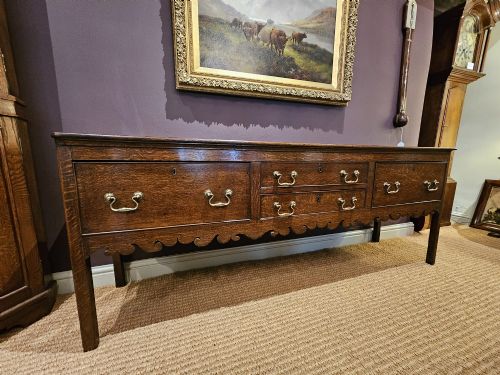
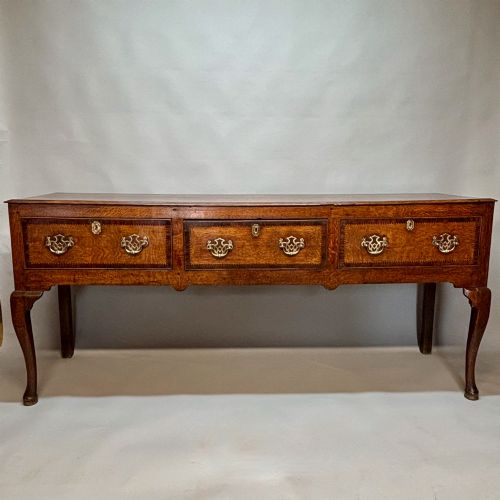
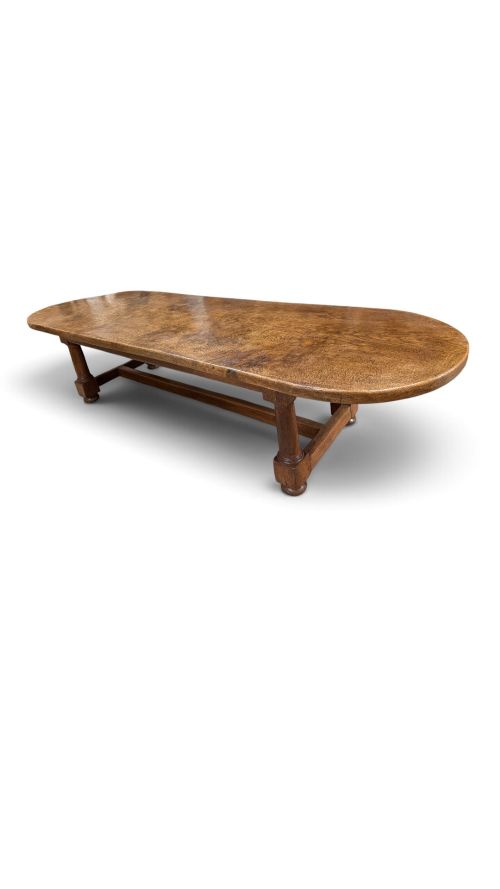
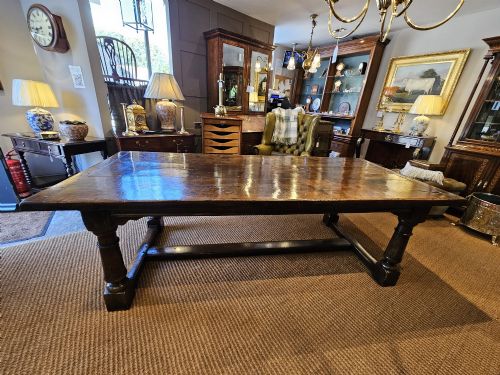
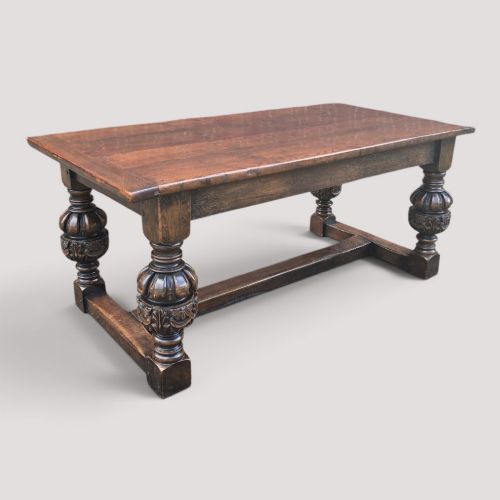
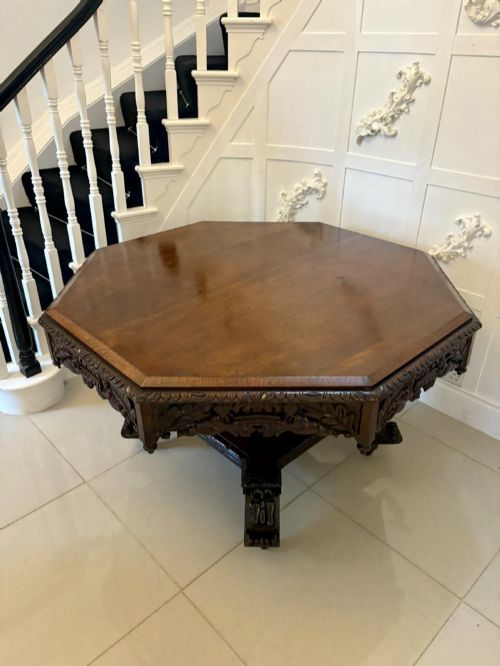
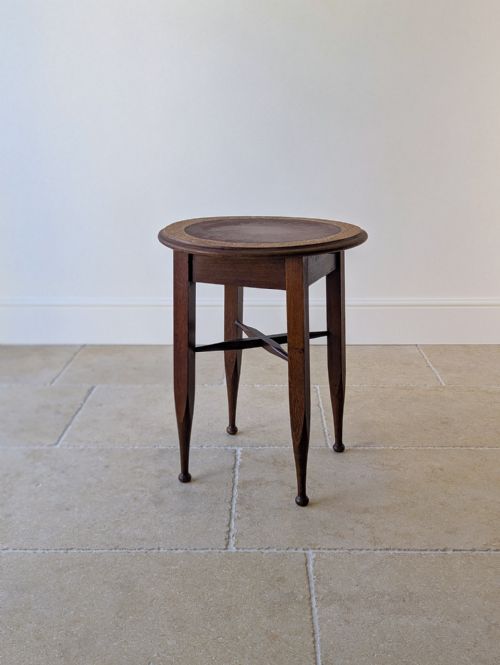
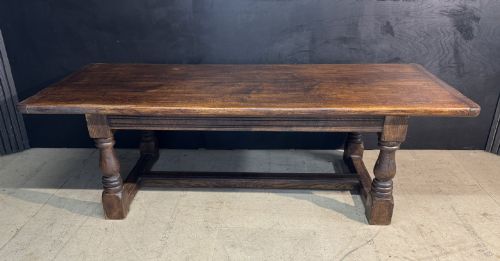
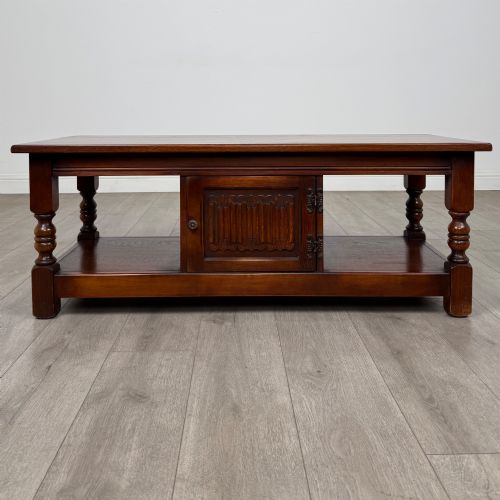
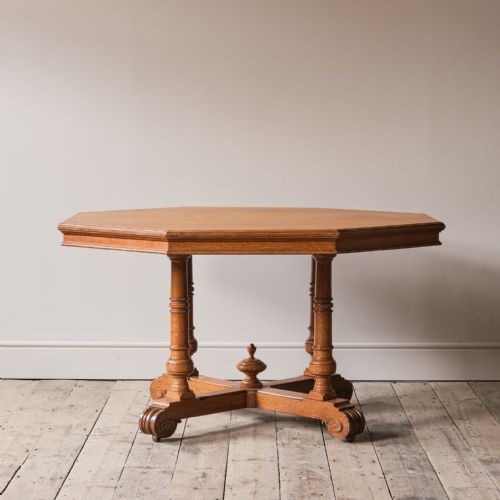
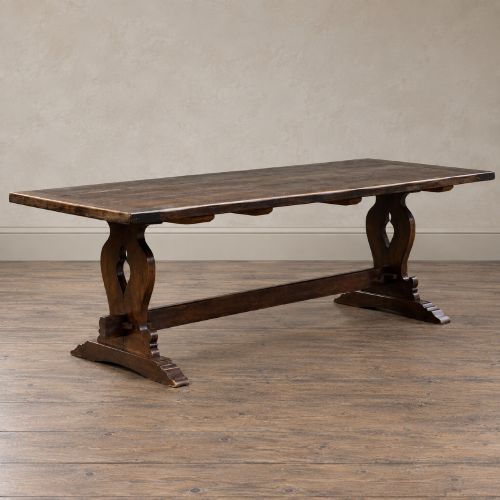
A carved brown oak table encompasses a wide variety of domestic furniture ranging from large refectory dining tables to compact occasional and side tables. Buyers seeking a carved brown oak table will encounter examples spanning multiple eras, notably the seventeenth century, the Georgian period, and the Edwardian revival styles.
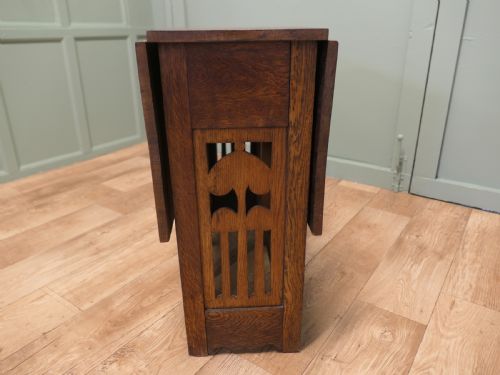
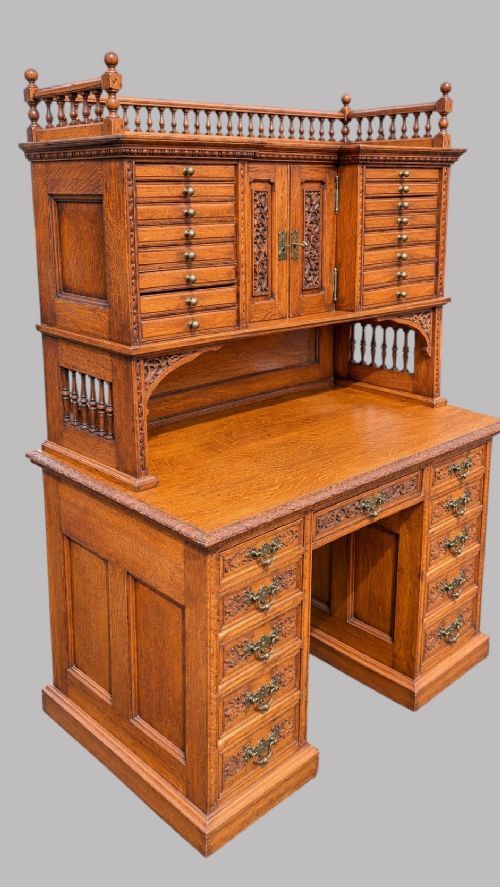
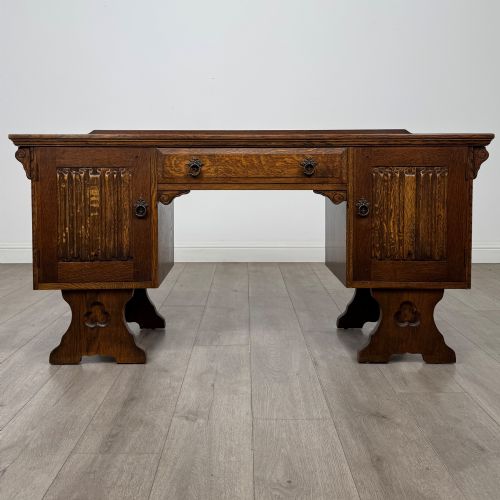
The selection includes specific forms such as gateleg tables, draw-leaf extending dining tables, kneehole desks, and centretables. Dining tables dominate the larger formats, while smaller side tables and coffee tables represent the domestic scale more commonly found in Edwardian production.
Materials and Construction
Makers utilised solid oak, often selected for its pronounced medullary rays and durable grain structure. Joinery relied heavily on traditional methods such as mortise and tenon joints, sometimes secured with wooden pegs in earlier periods.
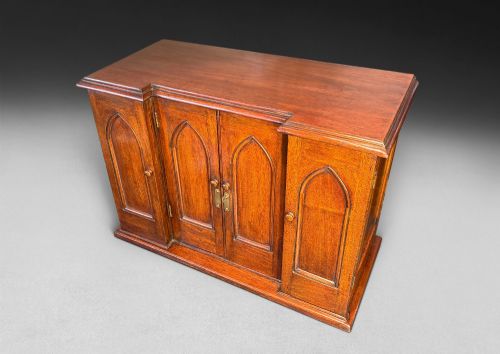
Carving was executed by hand directly into the dense timber, creating relief patterns, linenfold panels, and geometric motifs typical of Jacobean and Gothic revivals. Supporting elements frequently incorporated turned wood, including barley twist legs, alongside auxiliary materials like brass handles, iron brackets, and leather inserts.
Some tables arrive with hidden compartments and secret drawers, originally designed for stashing valuables away from curious household staff.
Distinctions in Standard
Quality rests upon the integrity of the timber selection and the crispness of the hand carving. Superior pieces display deep, well-defined chisel work that retains sharp edges, whereas lesser examples show softened or mechanical tooling.
Construction methods also dictate standard, with fully pegged solid oak framing and single-plank tops commanding greater appreciation than later veneered or heavily altered surfaces. The proportional balance and the depth of the natural patina accumulated over the brown oak further distinguish finer specimens.
The Carved Brown Oak Table Glossary
- Refectory table
- A long, narrow dining table traditionally used in monastic refectories and later adopted in large domestic halls. These pieces feature sturdy underframing and long stretcher rails.
- Draw-leaf table
- An extending dining table with two leaves stored beneath the main top that pull out to increase surface length. This clever mechanism allows the table to expand without removing the centre section.
- Linenfold
- A style of relief carving used on panels to imitate folded linen fabric. It appears frequently on the vertical surfaces of Tudor and revival cabinets and tables.
- Barley twist
- A type of turning shaped like a helix resembling a twisted rope. This decorative woodworking technique became popular during the seventeenth century and saw a major revival in Victorian furniture.
- Medullary rays
- Natural ribbons radiating from the centre of a tree trunk that appear as silvery flecks in quarter-sawn oak. Their presence indicates high-grade conversion of the timber.
Carved Brown Oak Table: Frequently Asked Questions
How do I clean a carved brown oak table?
Dust the surface regularly with a soft, dry cloth to prevent dirt accumulation in the carved recesses. Apply a traditional beeswax polish occasionally to nourish the timber and maintain its natural lustre without using modern silicone sprays.
Avoid placing the table near direct heat sources or strong sunlight, which can dry out the oak and cause the timber to split. Use felt pads under hot dishes and glassware to protect the antique polish from moisture rings and heat marks.
Are these tables suitable for everyday dining?
Many of these pieces were built precisely for daily meals and remain remarkably robust. Solid oak construction handles regular use well, provided proper care is taken with heat-resistant mats and prompt spill cleanups.
Extendable variants and refectory designs offer practical flexibility for modern households needing variable seating arrangements. Their durable nature means they withstand family life while retaining their historical character.
How can I tell a seventeenth-century table from a revival piece?
Original seventeenth-century pieces display authentic tool marks, hand-split or sawn timber surfaces, and wear patterns consistent with centuries of use. The construction often employs hand-turned pegs and irregular joinery that reveals individual craftsmanship.
Revival pieces, such as those from the Edwardian era, often feature more uniform machine assistance, standardised fixings, and cleaner internal construction. Examining the underside and the nature of the wood ageing helps clarify the true production period.
What is a draw-leaf mechanism?
A draw-leaf mechanism consists of a primary top flanked by two hidden leaves tucked directly beneath it. When guests arrive, the main top lifts slightly as the end leaves slide outward and drop smoothly into place.
This ingenious system provides extra dining space instantly without requiring loose boards stored separately. It remains one of the most practical space-saving inventions in antique table design.