




Carved Bronze Clock
A carved bronze clock brings striking metalwork and precise timekeeping into a room, spanning nineteenth-century revival styles and twentieth-century modernism.
Carved Bronze Clock
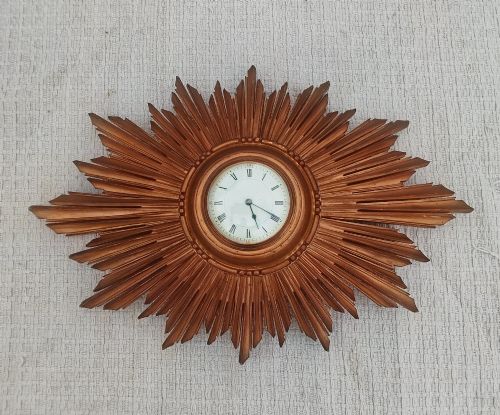
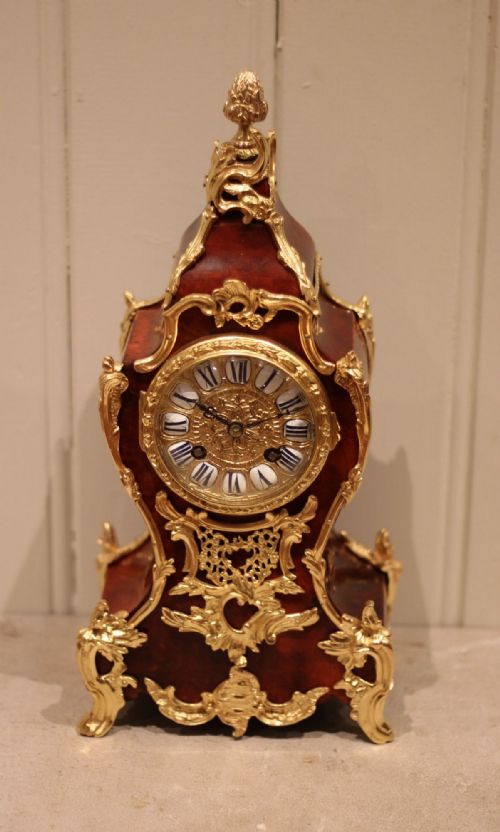
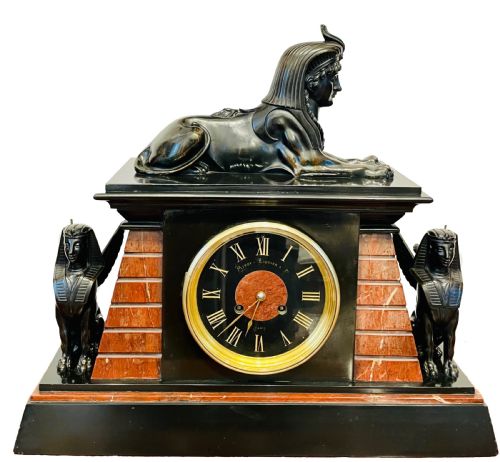
A carved bronze clock combines sculptural metalwork with mechanical timekeeping, mostly originating from French workshops during the nineteenth and early twentieth centuries. These pieces appear in forms such as mantel clocks, wall clocks, and complete clock sets paired with side ornaments.
The styles encountered span French Rococo, Rococo Revival, Neo-Classical, Restauration, and Art Deco, alongside Egyptian Revival and Louis XVI influences. Most examples use gilt bronze or ormolu, while others incorporate marble, brass, enamel, and mahogany to frame the dial.
How they were made
Maker-craftsmen cast bronze and brass using traditional methods before applying mercury gilding or ormolu to create the characteristic golden surface sheen. Details were chiselled and chased by hand to define the crisp foliage, scrolls, and figural motifs.
Cases often integrate contrasting materials such as white marble, mahogany, tortoiseshell, or giltwood, fitted with glass bezels protecting enamel dials and mechanical movements.
Listings feature periods spanning the Victorian era, the nineteenth century, and the early twentieth century up to the 1930s.
What varies in quality
The depth and sharpness of the hand-chased relief work separate standard production from superior examples, where every leaf and scroll retains distinct, crisp edges. The quality of the gilding also dictates visual richness, ranging from flat plating to deep, warm ormolu.
Material selection influences overall substance, with heavier marble bases and well-cast bronze framing providing greater architectural presence than lighter metal assemblies.
Samuel Marti
The Carved Bronze Clock Glossary
- Ormolu
- Gilt bronze produced by applying a mixture of gold and mercury to a bronze base, then firing to drive off the mercury. This technique creates a durable, golden finish characteristic of French luxury horology.
- Rococo Revival
- A nineteenth-century stylistic movement reviving the asymmetric curves, C-scrolls, and naturalistic foliage of the eighteenth-century French Rococo period. It dominates many nineteenth-century mantel clocks.
- Enamel dial
- A clock face made by fusing powdered glass to a metal substrate at high temperatures, usually featuring painted Roman or Arabic numerals. These dials provide a smooth, clean surface resistant to tarnishing.
- Clock set
- A decorative arrangement comprising a central mantel clock accompanied by matching side ornaments such as garnitures or urns. They share the same material, style, and foundry design.
- Gilt bronze
- Copper alloy coated with a layer of gold, providing a bright metallic lustre that resists oxidation. It forms the primary structural and decorative housing for many period timepieces.
Carved Bronze Clock: Frequently Asked Questions
How do I wind a period mechanical clock?
Use the designated key provided with the movement to turn the arbors gently until you feel firm resistance. Avoid over-winding, as this can strain or snap the internal mainspring.
Keep track of the winding schedule to ensure the clock maintains accurate time over its standard operational period, usually lasting seven or eight days.
Where should I place a heavy bronze clock?
Position the clock on a stable, level surface such as a sturdy mantelpiece, console table, or heavy sideboard. Because these pieces often incorporate dense bronze and marble, weight distribution matters for stability.
Ensure the furniture does not wobble, as a level foundation helps the pendulum swing evenly and keeps the escapement running smoothly.
How do I tell a Rococo clock from an Art Deco one?
Rococo and Rococo Revival pieces feature elaborate, asymmetric scrollwork, organic floral motifs, and flowing curves inspired by nature. They often gleam with heavily chased ormolu and deep bronze relief.
Art Deco clocks from the twentieth century rely on geometric discipline, clean lines, and stylised motifs reminiscent of designers like Sue et Mare.