




Carved Brass Coal Box
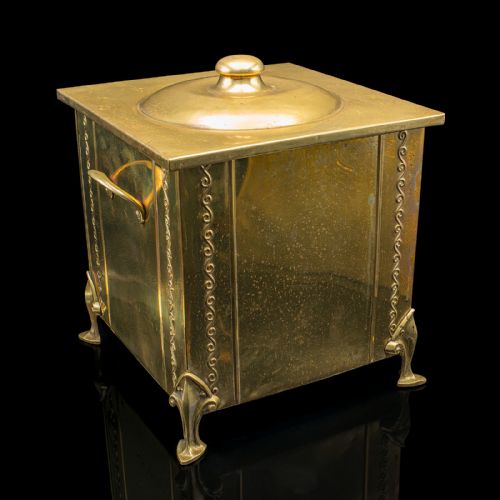
A carved brass coal box is a sturdy fireside companion designed to hold fuel, combining practical utility with ornate metalwork.
Carved Brass Coal Box
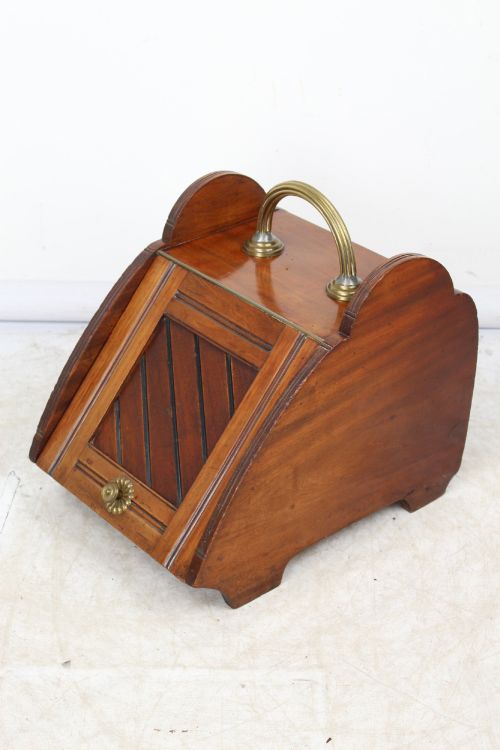
A carved brass coal box brings functional warmth to the hearth through practical forms like scuttles, purdoniums, and storage boxes. Most examples found here date from the Victorian and Edwardian periods, reflecting the heavy coal usage of nineteenth and early twentieth century homes.
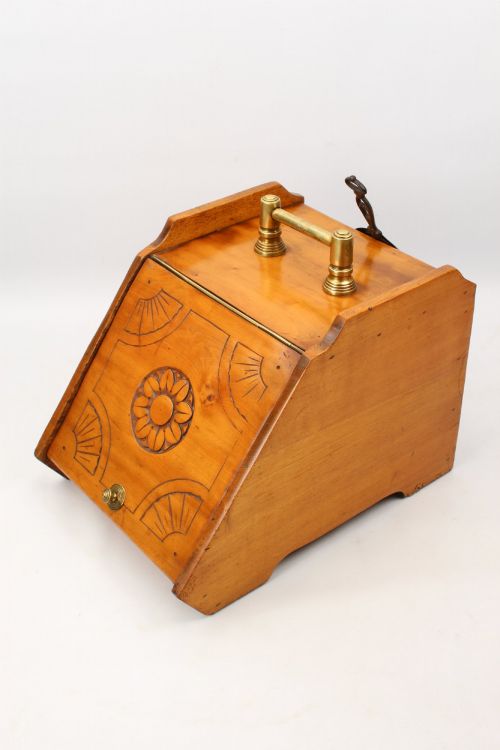
The objects combine timber bodies with decorative metal elements, frequently incorporating hinged lids, drop handles, and matching shovels. Variations range from simple lidded wooden scuttles to elaborate purdoniums featuring carved panels and embossed brass fittings.
Makers utilised durable woods such as oak, mahogany, and walnut to construct the main storage body, which protects the floor and keeps fuel contained. These household accessories sit neatly beside the fireplace, serving as both utility containers and decorative focal points in the room.
How they were made
Craftsmen built the structural carcass of each box from solid timbers like oak, mahogany, and walnut, often applying chip carving or moulded details directly to the wood. Metal components, particularly brass and copper, were fashioned through casting, beating, and embossing to create decorative plates and hinges.
Sheet brass and copper were frequently attached to the wooden bodies with small fixings to form protective mountings and decorative friezes. Internal tin or metal liners were included to hold the coal cleanly, preventing dirt and moisture from damaging the wooden structure.
Periods represented span from the early eighteenth century through the Victorian and Edwardian eras.
What varies in quality
The standard of carving on the wooden panels dictates much of the visual appeal, moving from simple plain surfaces to deeply worked chip carving and detailed foliage. Heavier timber construction and thicker gauges of brass create a more substantial, enduring piece.
Completeness alters the character of the item, particularly the presence of original metal liners and matching shovels. Better examples retain their structural integrity in the hinges and handles, showing careful joinery that withstands regular use.
The Carved Brass Coal Box Glossary
- Coal purdonium
- A specific type of coal box featuring a sloping front door that drops down to release fuel. These often include an internal metal shovel and a carrying handle.
- Coal scuttle
- A traditional vessel for carrying and storing coal, typically fitted with a swing handle over the top. Early versions often incorporate a flat base for standing by the hearth.
- Chip carving
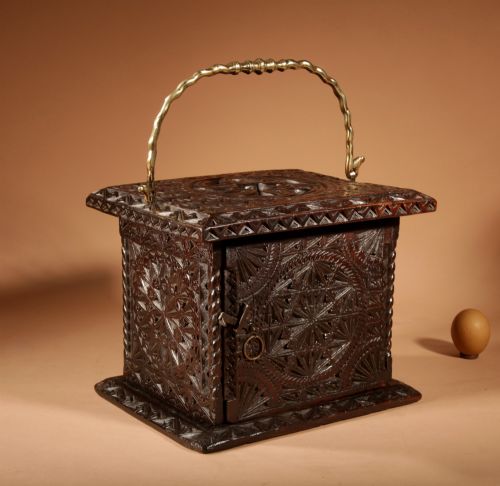
- A decorative technique where small chips are removed from a wooden surface to create geometric patterns. This method appears frequently on folk art pieces and period storage boxes.
- Embossed copper
- Sheet metal hammered or pressed from the reverse side to raise a design in relief. This technique provides decorative panels on nineteenth century fireside boxes.
Carved Brass Coal Box: Frequently Asked Questions
How do I clean a brass coal box?
Wipe the wooden surfaces with a soft, dry cloth and use mild furniture wax to nourish the grain periodically. Polish the brass elements gently with a dedicated metal cleaner, taking care not to let the polish stain the surrounding wood.
Avoid abrasive pads or harsh chemical dips that strip the aged patina from the metalwork. Regular dusting keeps the carved details and metal mounts free from soot and ash accumulation.
Can these boxes still hold coal?
Most of these vessels contain original or replacement metal liners designed to hold fuel safely without soiling the floor. Modern users often place logs, kindling, or bagged coal inside to protect the historic interior.
Heavy usage can dent the internal liners or scratch the wooden base over time. Using a modern container insert helps preserve the antique structure while keeping the hearth functional.
How do I date a Victorian coal box?
Examine the construction methods, handle attachments, and types of screws or fixings used on the interior and base. Hand-cut dovetails and heavy brass hinges usually indicate nineteenth-century production.
Style shifts also offer clues, as simpler mahogany scuttles often precede the heavily carved oak purdoniums of the later nineteenth century. The presence of registration marks or specific maker stamps can sometimes narrow down the decade of manufacture.
What is a Frisian foot stove?
A foot stove is a small wooden box with pierced holes in the top, traditionally containing a small earthen pot of hot embers. People placed their feet on top of the wooden lid to keep warm during cold weather.
Originating from the northern coastal region of the Netherlands, these folk art pieces feature intricate chip carving across the wood. They represent a different category of fireside warmth compared to large fuel storage boxes.