

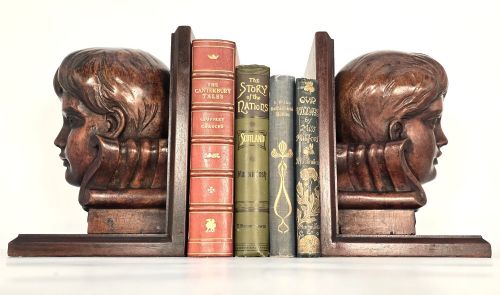
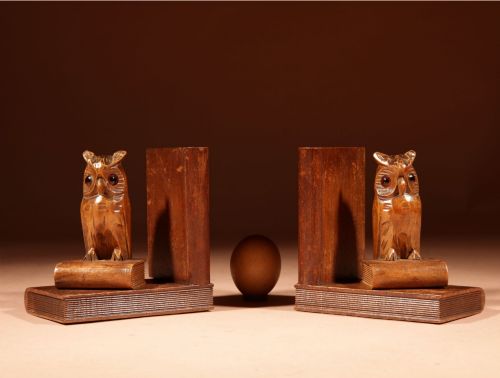

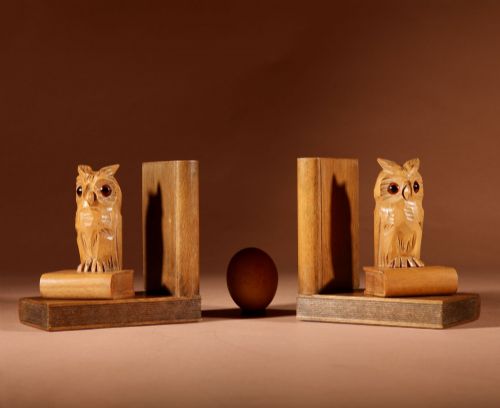
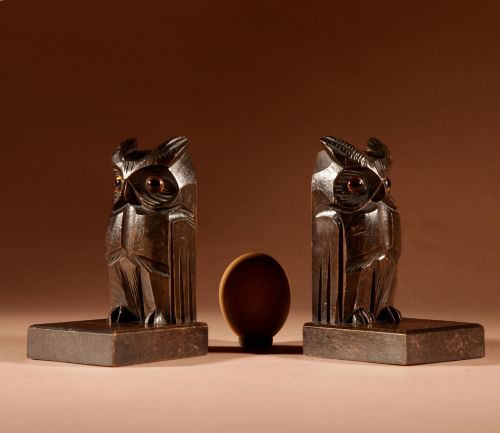


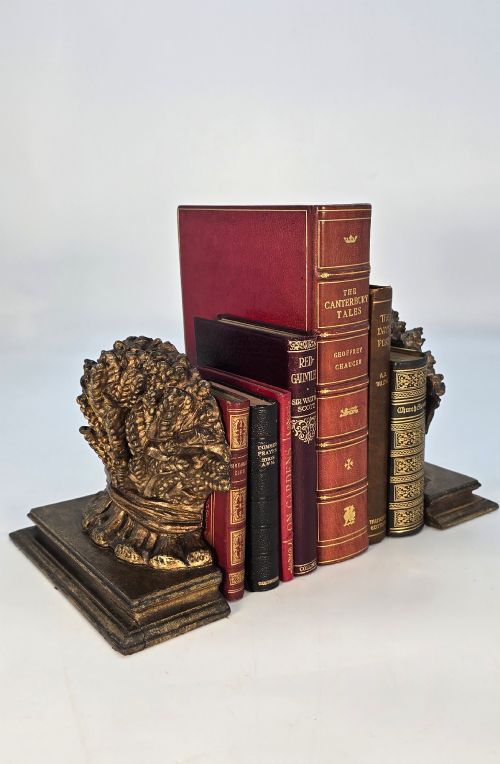


Carved Book Supports
These carved book supports hold heavy volumes upright while adding character to a shelf.
Carved Book Supports
When you search for carved book supports, you encounter items designed to keep libraries tidy, predominantly taking the form of bookends.
The selection ranges from Black Forest animal carvings featuring owls and bears to Art Deco hardwood sculptures and Victorian Gothic revival pieces.
Most examples date from the Victorian period through to the nineteen thirties, encompassing styles such as Regency, Anglo-Indian, and folk art.
Materials and construction
The pieces are fashioned from various woods including oak, mahogany, linden wood, beech, pine, and ebony, alongside stone materials such as marble and alabaster.
Makers utilised manual carving techniques to shape detailed figures of animals, putti, and wheat sheaves, often pairing timber with metal or glass elements.
Construction methods reflect the period of origin, from nineteenth-century ecclesiastical mahogany joinery to twentieth-century folk art and Art Deco hardboard sculptures.
Carved Book Supports Retail Price Guide 2026
Typical asking prices for carved book supports among the pieces listed under this phrase on Sellingantiques today, from the lower quarter to the upper quarter. They describe what is for sale here now, not the wider market.
Several pairs depict wise owls with alert expressions, ready to supervise your bookshelves at all hours.
Evaluating quality and execution
Quality rests upon the depth and precision of the carving, distinguishing lifelike animal forms and crisp architectural details from simpler, mass-produced items.
The choice of material dictates the tactile presence, with dense hardwoods, fine-grained linden wood, and polished alabaster elevating the character of the piece.
Composition and balance determine how successfully a pair holds volumes, as robust bases and stable weights ensure practical utility alongside decorative merit.
Thornton Smith Co.·V Ramirez Bolivia
The Carved Book Supports Glossary
- Black Forest
- A style of wood carving originating from the mountain region of central Europe, famous for naturalistic animal subjects such as bears and owls. These items typically display dark stained finishes and intricate detailing.
- Bookends
- A pair of heavy objects placed at either end of a row of books to keep them upright. They often feature decorative figural or architectural designs.
- Alabaster
- A soft, fine-grained stone used for ornamental carvings and book supports. Its translucent quality allows light to penetrate the surface.
- Gothic Revival
- An architectural and decorative style drawing inspiration from medieval forms. Pieces in this tradition often incorporate pointed arches and ecclesiastical motifs.
- Regency
- A period of British design spanning the early nineteenth century, characterised by classical restraint and refined proportions. Items from this era frequently utilise rich timbers like mahogany.
Carved Book Supports: Frequently Asked Questions
What periods do these book supports come from?
The available pieces span the nineteenth and twentieth centuries, including Regency, Victorian, and Edwardian examples. Later twentieth-century items reflect Art Deco designs.
Craftsmanship shifted from formal ecclesiastical and revivalist styles to more playful animal and sporting subjects as the decades progressed.
How were carved book supports used?
They functioned primarily to secure rows of volumes on open shelves and mahogany library bookcases. Heavy wooden or stone bases provided the necessary friction to prevent books from sliding.
Beyond simple utility, pairs were chosen to complement specific library aesthetics, ranging from solemn Gothic studies to domestic sitting rooms.
What materials are most common?
Wood is the predominant material, with linden wood, oak, mahogany, beech, pine, and ebony appearing across various styles. Animal carvings in softwoods and dense hardwoods are particularly prominent.
Stone materials such as alabaster and marble also feature, occasionally combined with metal components to add weight and stability.
How do I identify Black Forest carvings?
Black Forest pieces are typically rendered in linden wood or walnut, depicting natural subjects with considerable animation and texture. Owls, bears, and elephants are frequent motifs.
The carving style is expressive rather than rigidly formal, often capturing animals in amusing or unusual poses characteristic of the craft.