



Carved Bone Side Table
A carved bone side table brings intricate geometric patterns and exotic timber into a room, offering both a functional surface and a striking focal point.
Carved Bone Side Table
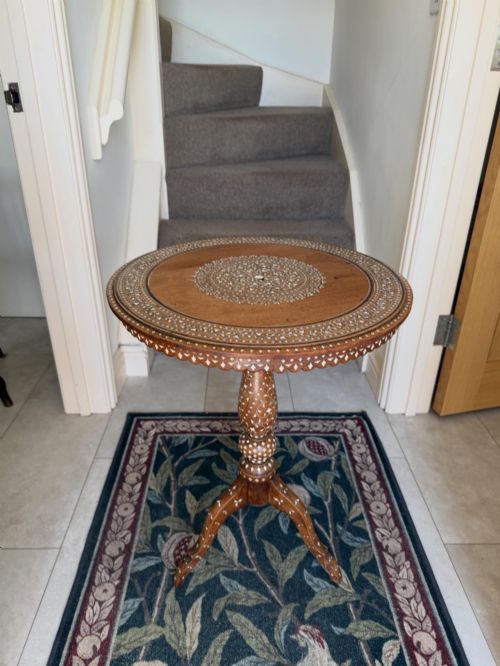
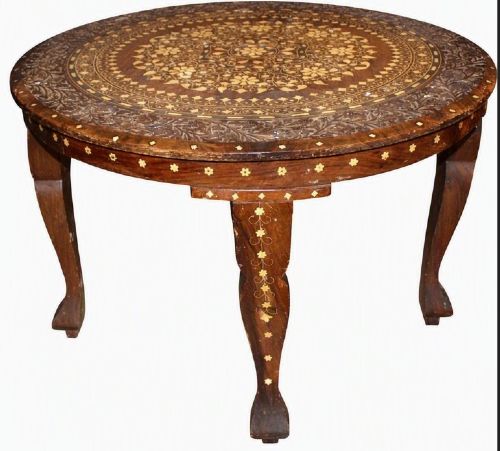
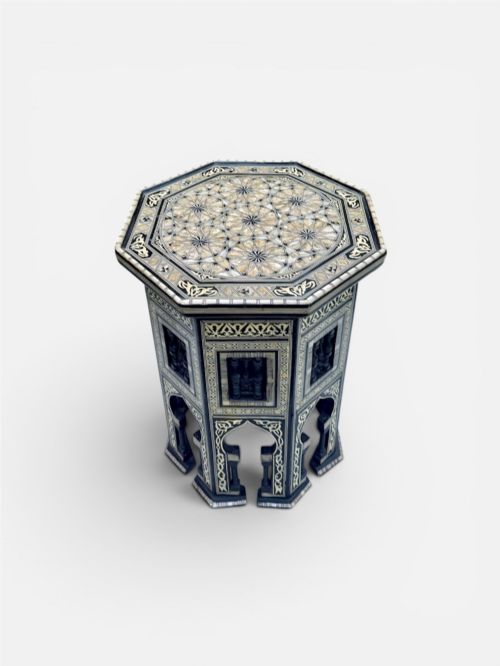
A carved bone side table encompasses a range of occasional tables, coffee tables, and games tables produced across the nineteenth and twentieth centuries. These pieces display distinct influences, including Anglo-Indian, Moorish Revival, Syrian, and Ottoman traditions.
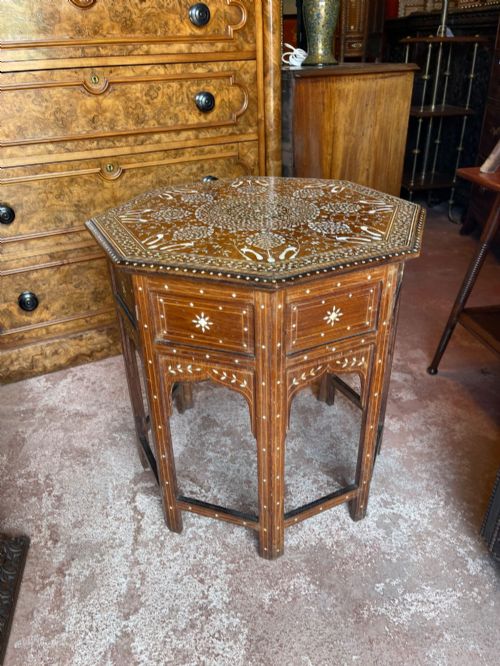
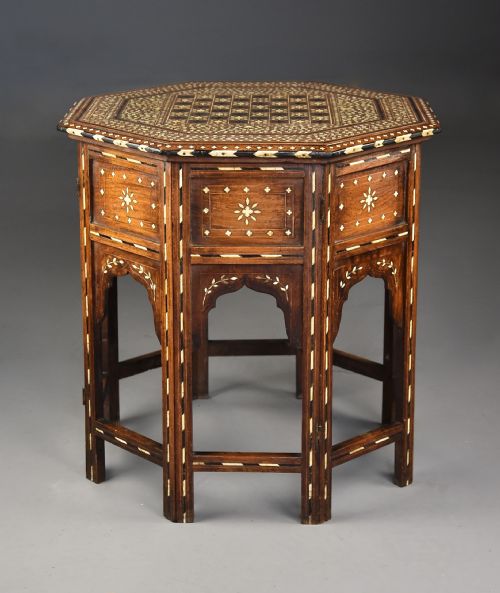
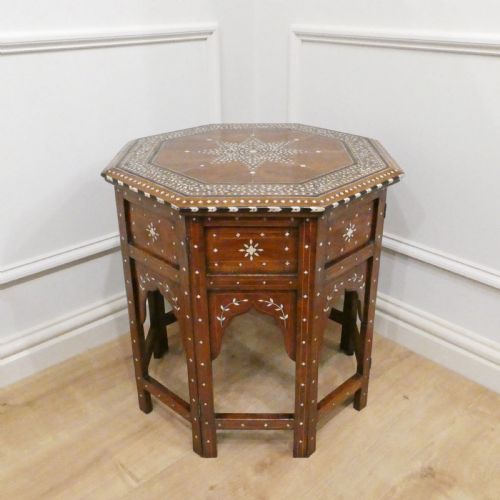
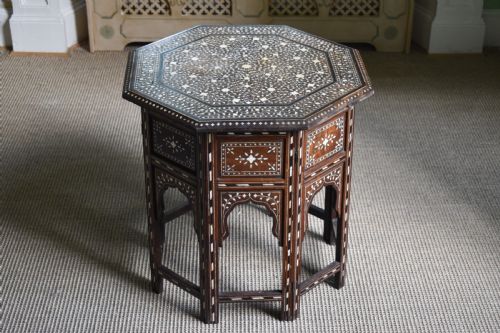
The version most commonly encountered on this page is the octagonal occasional table originating from Hoshiarpur or broader Indian workshops. These items often feature complex folding bases or pedestal supports designed for portability and display.
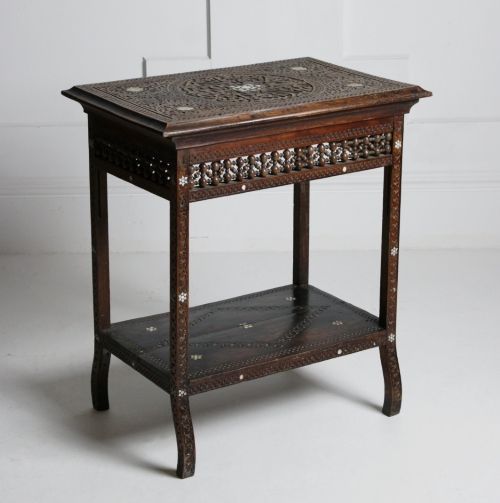
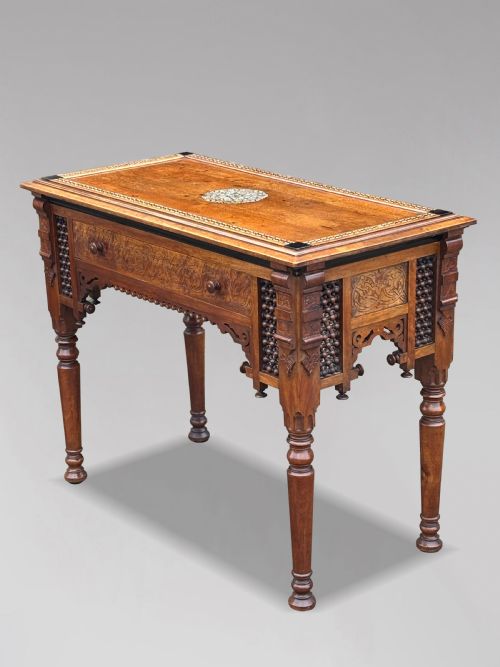
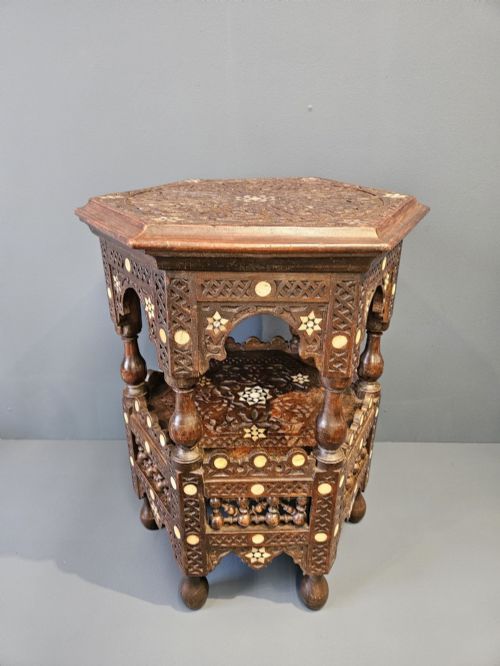
Beyond Indian production, the selection includes Middle Eastern and Bohemian examples incorporating mother-of-pearl alongside bone. Their varied forms span compact lamp tables to larger square and rectangular serving surfaces.
Materials and construction methods
Makers constructed these tables using a foundation of dense hardwoods such as teak, rosewood, walnut, padauk, sheesham wood, and sandalwood. Artisans then meticulously shaped bone and mother-of-pearl into individual tesserae to form elaborate floral and geometric surface patterns.
The decorative elements rely on intricate surface carving combined with precise inlay techniques, where thin segments of bone are pressed into hand-chiseled recesses within the timber. Certain examples integrate brass wire or ebonised finishes to heighten the contrast of the design.
Many structural components, particularly those associated with Hoshiarpur workshops, utilise clever folding designs hinged to allow the panels to collapse flat. This joinery demonstrates practical ingenuity alongside ornamental detail.
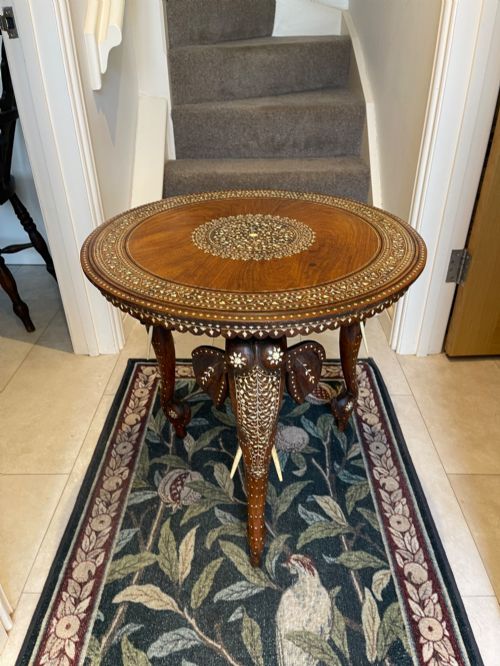
Several tables feature carved elephants supporting the top, proving that occasional furniture has long appreciated a touch of trunk-based charm.
Distinctions in quality and execution
The distinction between standard production and the finest work lies in the density and precision of the bone inlay. Superior examples display tightly fitted geometric tessellation with minimal filler, whereas simpler pieces show wider gaps and sparser decoration.
Carving depth and sharpness also dictate the grade of a table. Deeply undercut foliage and sculptural elements, such as elephant supports or articulated pedestals, require advanced carving skill compared to flat surfaces.
Maker attribution elevates certain pieces, particularly items associated with retailers like Liberty & Co. or specific regional hubs such as Hoshiarpur. Condition of the timber substrate and the retention of delicate bone sections further differentiate surviving examples.
Liberty & Co
The Carved Bone Side Table Glossary
- Hoshiarpur
- A city in Punjab, India, renowned historically for producing intricately carved wooden furniture inlaid with bone and shisham wood. Pieces attributed to this centre often feature dense foliate carving.
- Octagonal
- A geometric shape possessing eight sides, which serves as the predominant format for the top surfaces of these occasional tables. This configuration allows for symmetrical arrangement of inlaid geometric borders.
- Tessellation
- The process of arranging closely fitting tiles of bone and mother-of-pearl without gaps across a wooden substrate. This technique creates the striking mosaic surface characteristic of Moorish and Anglo-Indian design.
- Tripod
- A three-legged support structure utilised on specific occasional and lamp tables in the collection. This configuration provides stability on uneven historic floor surfaces.
- Ebonised
- Timber treated with a dark stain or chemical finish to imitate ebony. This treatment provides a dark background that accentuates the brilliant white of adjacent bone inlay.
Carved Bone Side Table: Frequently Asked Questions
What is an Anglo-Indian table?
An Anglo-Indian table is a piece of furniture manufactured in India during the colonial period, frequently combining traditional eastern woodworking techniques with British furniture forms such as occasional and coffee tables.
These items typically incorporate dense surface carving and bone inlay, reflecting a cultural exchange of design aesthetics during the nineteenth and early twentieth centuries.
How do I care for bone inlay?
Bone inlay requires gentle maintenance, avoiding excessive moisture, direct sunlight, and harsh chemical cleaning products that might damage the organic material or the surrounding timber substrate.
Dusting the surface regularly with a soft, dry cloth helps preserve the delicate tessellation and prevents grime from accumulating within the intricate carved recesses.
Are these tables sturdy enough for daily use?
Many of these tables were designed as occasional, lamp, or games surfaces, meaning they suit lighter functional duties rather than heavy daily service.
Folding versions and intricate tripod bases require careful handling when moved to ensure the hinges and structural joints remain stable over time.
How can I identify a Hoshiarpur table?
Hoshiarpur tables are generally characterised by all-over geometric and foliate carving executed on hardwoods like sheesham or teak, combined with intricate bone inlay.
They frequently feature octagonal tops and clever folding bases designed to collapse flat, representing the signature output of artisans from that specific region.