
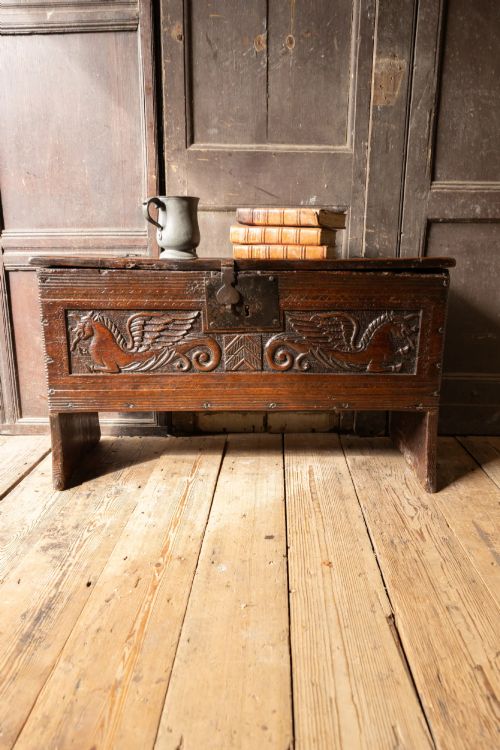
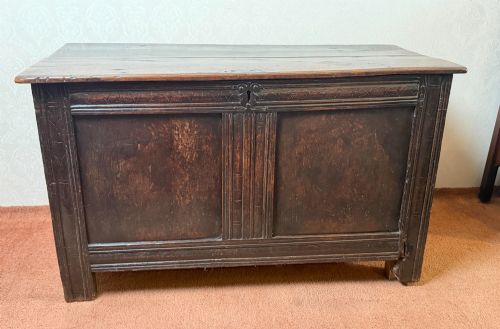
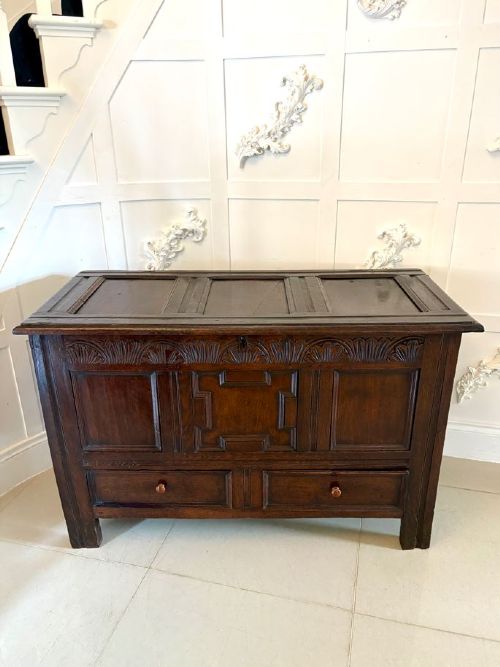
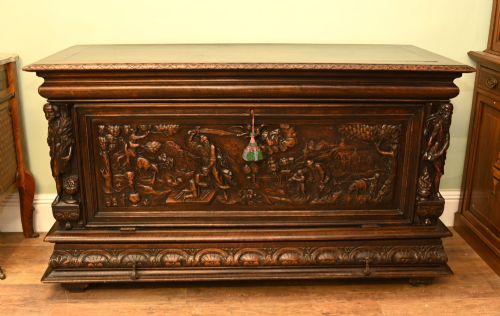
Carved Blanket Trunk
A carved blanket trunk is a robust storage piece offering deep history, and collectors prize these timber chests for their historic relief work and utility.
Carved Blanket Trunk
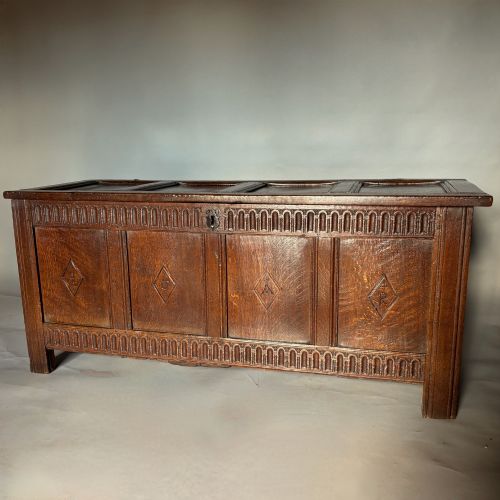
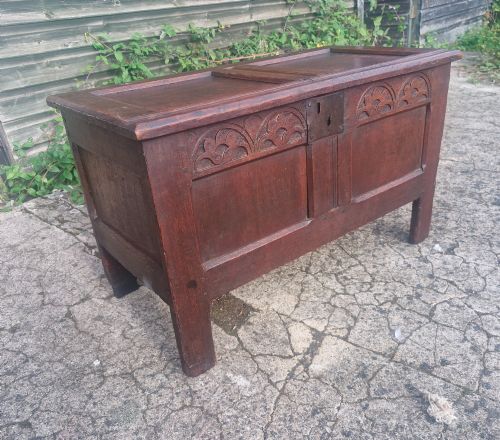
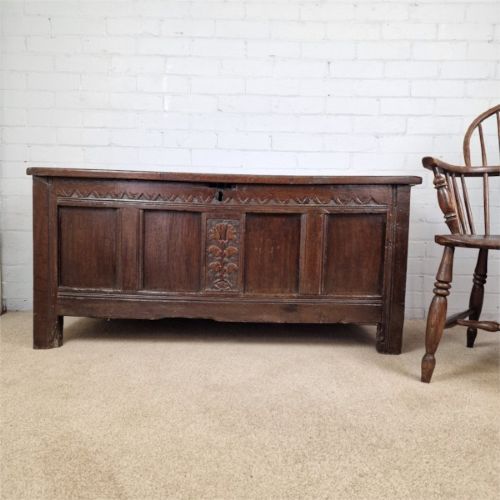
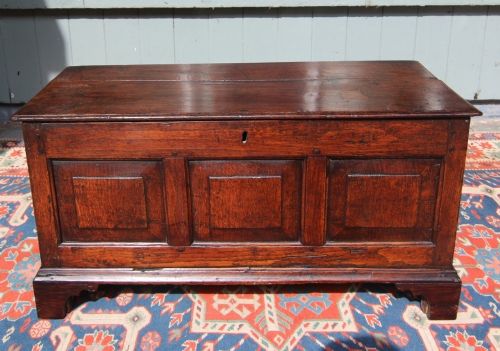
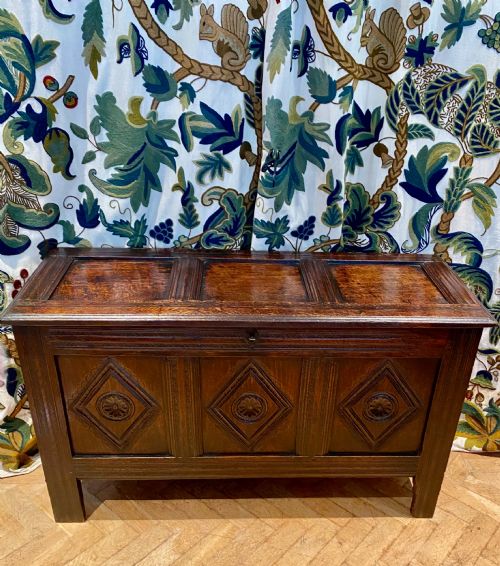
A carved blanket trunk takes the form of a sturdy storage box, most commonly met as an oak coffer or mule chest dating from the sixteenth to the eighteenth century. These pieces served generations of households for linen, garments, and valuables before evolving into decorative furniture for modern interiors.
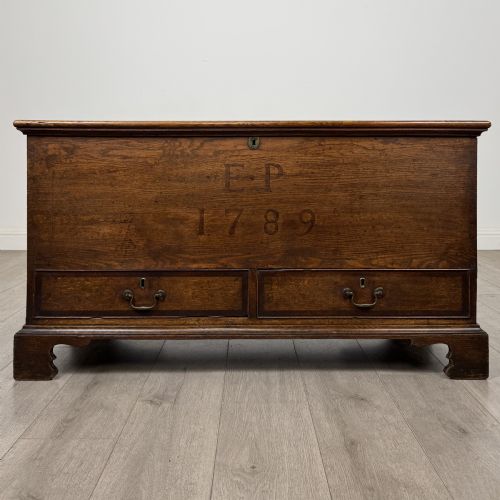
The selection here draws heavily from seventeenth and eighteenth-century British and European traditions, alongside later revival pieces and regional variations. Buyers encounter boarded, joined, and panelled forms, some outfitted with lower drawers or interior tills.
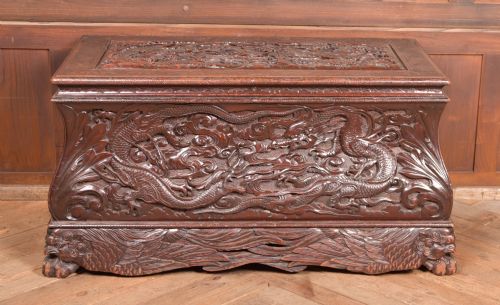
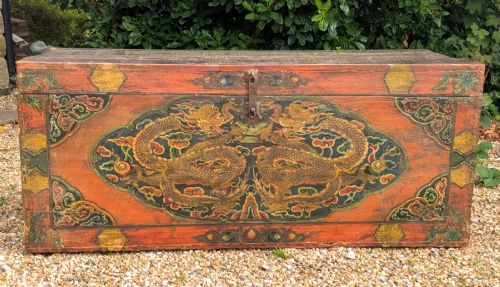
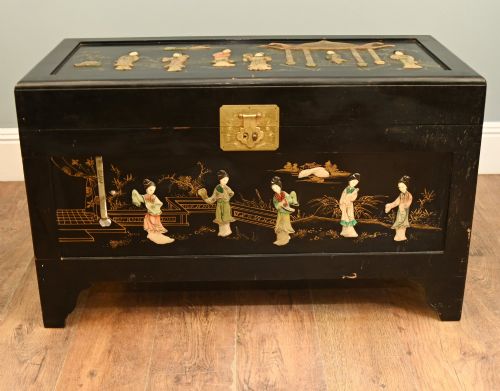
Beyond standard domestic chests, the inventory reaches across borders to include Chinese lacquer wedding boxes, Tibetan painted examples, and Middle Eastern inlaid trunks. Each regional type brings distinct surface treatments while fulfilling the same fundamental storage purpose.
How they were made
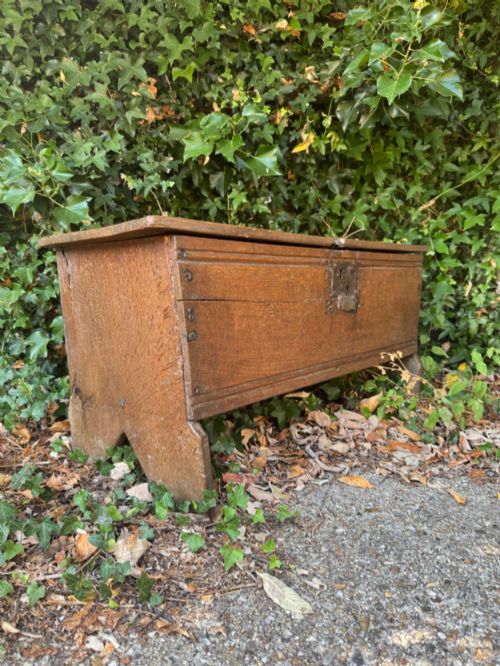
Carpenters built these trunks primarily from solid oak, walnut, and regional hardwoods, utilising pegged mortise and tenon joints for structural stability in panelled bodies. Early pieces often relied on simple plank construction held together by iron nails and braced corners.
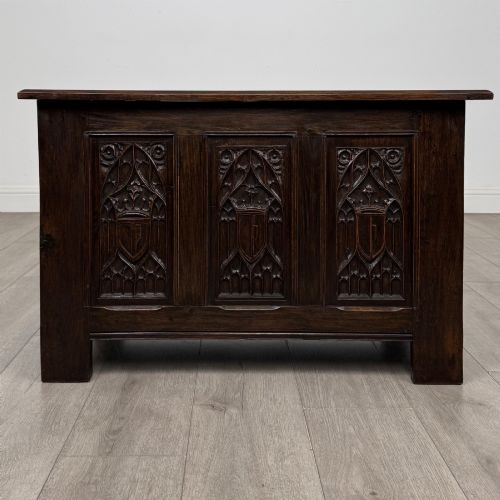
Surface decoration involved chip carving, gouge work, and low relief panels depicting foliage, geometric patterns, or figurative motifs. Artisans occasionally applied mineral pigment, lacquer, or marquetry inlay to enhance the timber grain and create striking visual contrast.
Some early trunks served double duty as travel luggage, strapped to the back of a mule during transit before settling permanently in the parlour.
What varies in quality
Quality rests upon the crispness of the original timber carving and the integrity of the primary construction materials. Pieces retaining their original hinges, boarded lids, and uncompromised internal structures stand apart from those altered or heavily restored over centuries.
The refinement of the joinery and the depth of the relief work signal the hand of a skilled workshop rather than standard village carpentry. Proportion and regional character also dictate distinction, particularly in documented forms like Welsh coffer bachs or early boarded chests.
The Carved Blanket Trunk Glossary
- Coffer
- A large wooden chest traditionally used for holding valuables, documents, or personal belongings. These sturdy boxes formed the backbone of early domestic storage.
- Mule chest
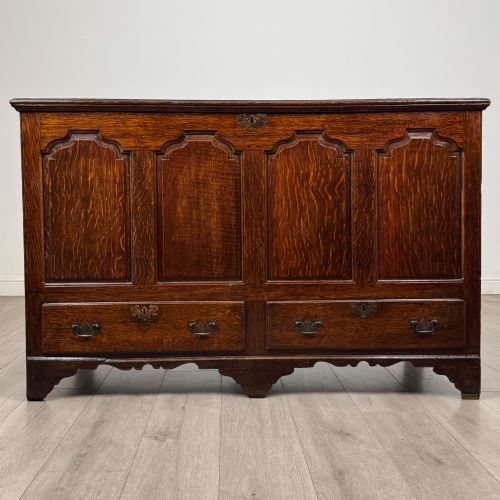
- An oak storage chest featuring one or more drawers built into the base beneath the main compartment. This hybrid form emerged to provide easier access to linens.
- Panelled
- A method of construction where vertical stiles and horizontal rails frame a thinner central wooden board. This technique allowed timber to expand and contract safely with seasonal humidity changes.
- Boarded chest
- An early form constructed from thick planks nailed or pegged at the edges rather than fitted into a frame. These represent some of the oldest surviving domestic furniture.
- Marquetry
- The art of applying decorative veneer pieces to a structural surface to form intricate patterns or pictures. Craftsmen utilised contrasting wood types to achieve subtle tonal variations.
- Till
- A small internal compartment or lidded box built into the upper corner of a trunk. It was designed to keep small valuables or documents separate from the main contents.
Carved Blanket Trunk: Frequently Asked Questions
How do I date a carved blanket trunk?
Dating relies on examining the construction methods, tool marks, and style of the carving. Seventeenth-century examples typically feature hand-riven oak, pegged frame-and-panel construction, and characteristic geometric or strapwork carving.
Later revival pieces from the nineteenth and twentieth centuries often display machine-sawn timber or incorrect proportions that betray their true age. Comparing hinges and nail types provides further clues to a piece's period.
What is the difference between a coffer and a mule chest?
A coffer is a simple chest with a single top-opening lid and a deep internal compartment. It represents the oldest primary form of domestic wooden storage.
By contrast, a mule chest includes one or more drawers fitted beneath the main storage box. This development allowed owners to retrieve items without lifting the heavy lid or disturbing the objects piled on top.
Where should I place a carved trunk in my home?
These versatile pieces work exceptionally well at the foot of a bed, beneath a hallway window, or as a living room coffee table. Their flat lids provide a convenient surface for lamps or displays while keeping clutter concealed inside.
Keep wooden trunks away from direct heat sources and radiators to prevent the dry air from splitting the aged timber. Maintaining stable room humidity preserves both the structural joinery and the historic surface finish.
How do I care for antique oak furniture?
Regular dusting with a soft, dry cloth prevents grime accumulation on carved surfaces. Applying a quality beeswax occasionally feeds the dry timber and maintains a soft sheen without building up heavy residues.
Avoid silicone-based polishes, as they penetrate the grain and damage historic finishes. Protecting the surface from direct sunlight ensures the natural oak colour and patina remain stable.