




Carved Bird Wall Mirror
These carved bird wall mirror pieces combine bold historic crests with functional glass, offering collectors a striking focal point for any traditional interior.
Carved Bird Wall Mirror
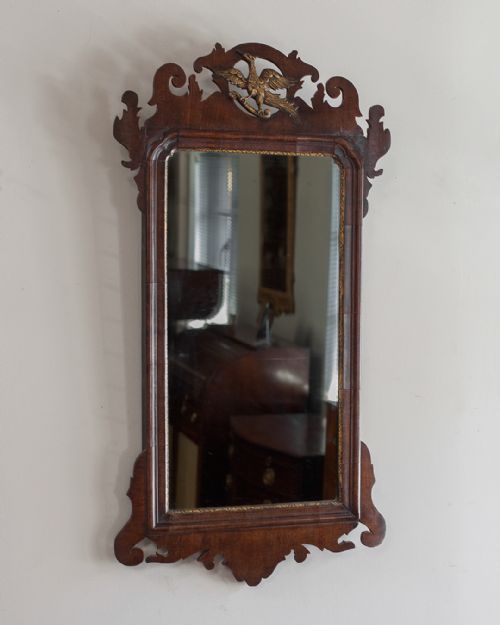
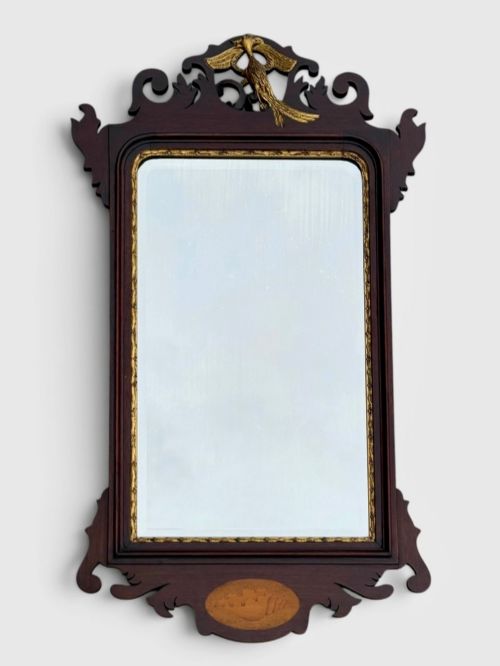
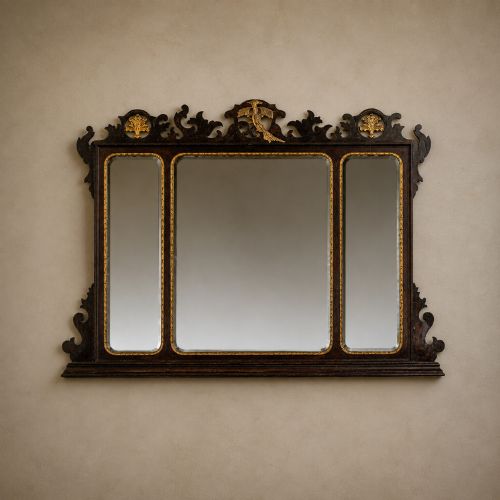
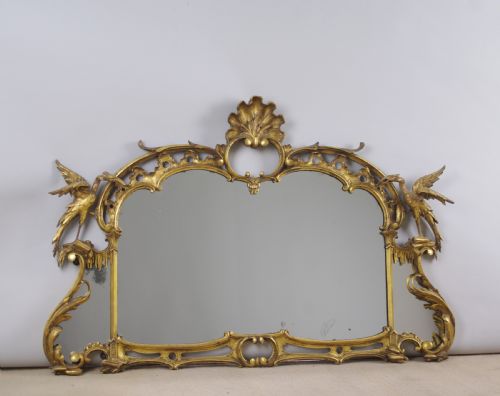
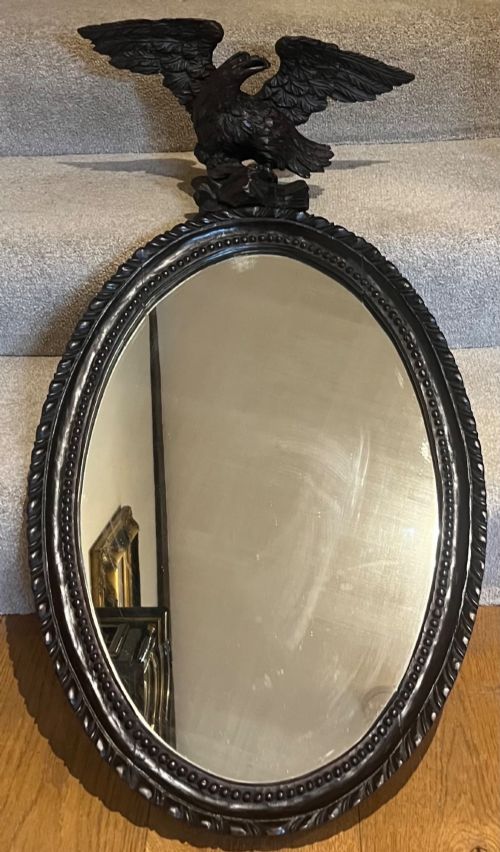
A carved bird wall mirror brings the dramatic crests of Georgian, Victorian, and Regency design directly into domestic spaces, featuring characteristic avian motifs at the top of the frame. When searching this phrase, buyers encounter everything from modest mahogany fretwork designs to monumental giltwood overmantels.
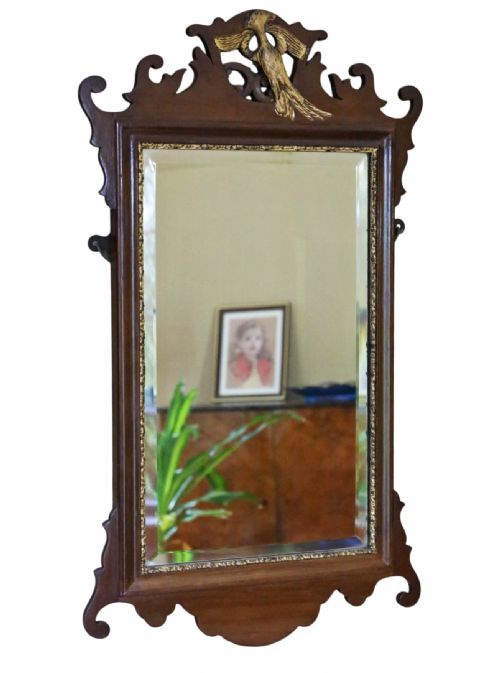
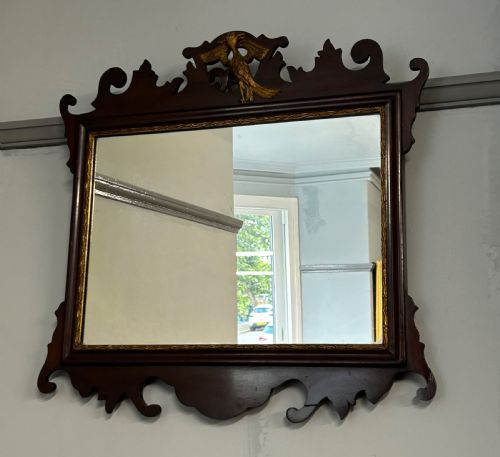
The most frequent examples on this page date from the eighteenth and nineteenth centuries, often taking the form of Chippendale style fret-cut panels or Black Forest carved wood. These pieces merge practical reflective glass with elaborate sculptural woodwork depicting eagles, pheasants, and fantastical birds.
Origins span English cabinetmaking traditions, French chateau aesthetics, and alpine Black Forest workshops. Whether rendered in dark mahogany or glittering gold leaf, each item uses the bird crest to anchor the composition above a mantelpiece or hallway console.
Materials and construction
Makers shaped these frames from solid timbers including mahogany, yew wood, and softwoods, frequently applying layers of gesso before gilding with gold leaf or finishing with paint. Carvers worked by hand to undercut intricate foliage, scrolling ribbons, and detailed plumage on the crests and aprons.
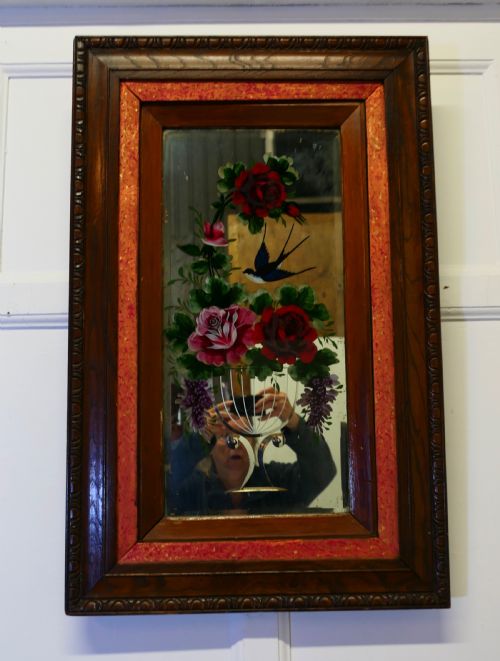
Fretwork panels were sawn from thin boards using fine-toothed fretsaws, relying on the grain strength of mahogany to support delicate pierced patterns. Glass plates were then secured from behind, sometimes utilising antique bevel-edged or reverse-painted panes that complement the ornate wooden surrounds.
Listings feature mahogany, giltwood, and yew wood frames across Georgian, Victorian, and Regency periods.
Distinctions in quality
The division between standard workshop production and superior output rests entirely on the depth and crispness of the carving. Finely rendered feather details, undercut foliage, and balanced proportions signal a maker who spent hours refining the wooden crest rather than relying on shallow surface moulding.
Original surfaces elevate a piece significantly, as untouched gold leaf, aged paint layers, and period mirror plates carry a visual depth that later interventions cannot replicate. The integration of the bird motif into the structural fretwork also determines the overall harmony of the design.
Gabriel Viardot
The Carved Bird Wall Mirror Glossary
- Ho-Ho Bird
- A stylized, exotic phoenix-like creature derived from Chinese art, commonly featured perched on the crests of eighteenth and nineteenth-century mirrors.
- Fretwork
- Openwork ornamentation carved or pierced from thin flat timber, frequently seen in geometric and scroll patterns on Chippendale style frames.
- Giltwood
- Timber that has been coated with fine gold leaf over a prepared gesso ground, creating a reflective metallic surface.
- Gesso
- A plaster-like mixture applied to wood frames to provide a smooth base for subsequent gilding or painting.
- Overmantel Mirror
- A wide mirror designed specifically to hang on the wall directly above a fireplace mantel.
Carved Bird Wall Mirror: Frequently Asked Questions
Where should I hang a carved bird wall mirror?
These mirrors suit principal reception rooms, grand hallways, or above a fireplace mantel where the crest can draw the eye upward. Placing them opposite a window helps amplify natural light within the space.
Ensure the wall fixings match the substantial weight of timber and gesso frames. Secure hanging wires or brackets directly into wall studs for safety.
How do I distinguish eighteenth-century examples from later revivals?
Eighteenth-century pieces typically exhibit hand-cut construction marks, older secondary timbers, and aged patination on the wood and mirror glass. Revivals from the nineteenth century often utilise machine-sawn fretwork or different backing boards.
Examining the fixings, plate glass characteristics, and tool marks helps clarify the period of manufacture. Consultation with stylistic conventions of the Georgian and Victorian eras confirms the dating.
What does the bird motif represent on these mirrors?
The birds, whether eagles, pheasants, or mythical Ho-Ho birds, symbolized status, power, and exotic taste within historic interior decoration. They served as a dramatic focal point that demonstrated the owner's appreciation for sophisticated design.
Carvers used these creatures to break the rigid rectangular lines of traditional mirror frames. This sculptural addition introduced organic movement to the top of the piece.
How do I care for antique giltwood and carved frames?
Dust the intricate carvings gently with a soft, dry brush to prevent dirt accumulation in the recessed areas. Avoid using liquid cleaners, polishes, or damp cloths on gilt surfaces, as moisture strips the gold leaf.
Keep the mirror away from direct sunlight and fluctuating humidity to protect the wood and gesso. Stable environmental conditions prevent the timber from warping and the gesso from cracking.